Variety Succulent · Crassulaceae
Echeveria 'Raindrops'
Echeveria 'Raindrops' · A variety of Echeveria
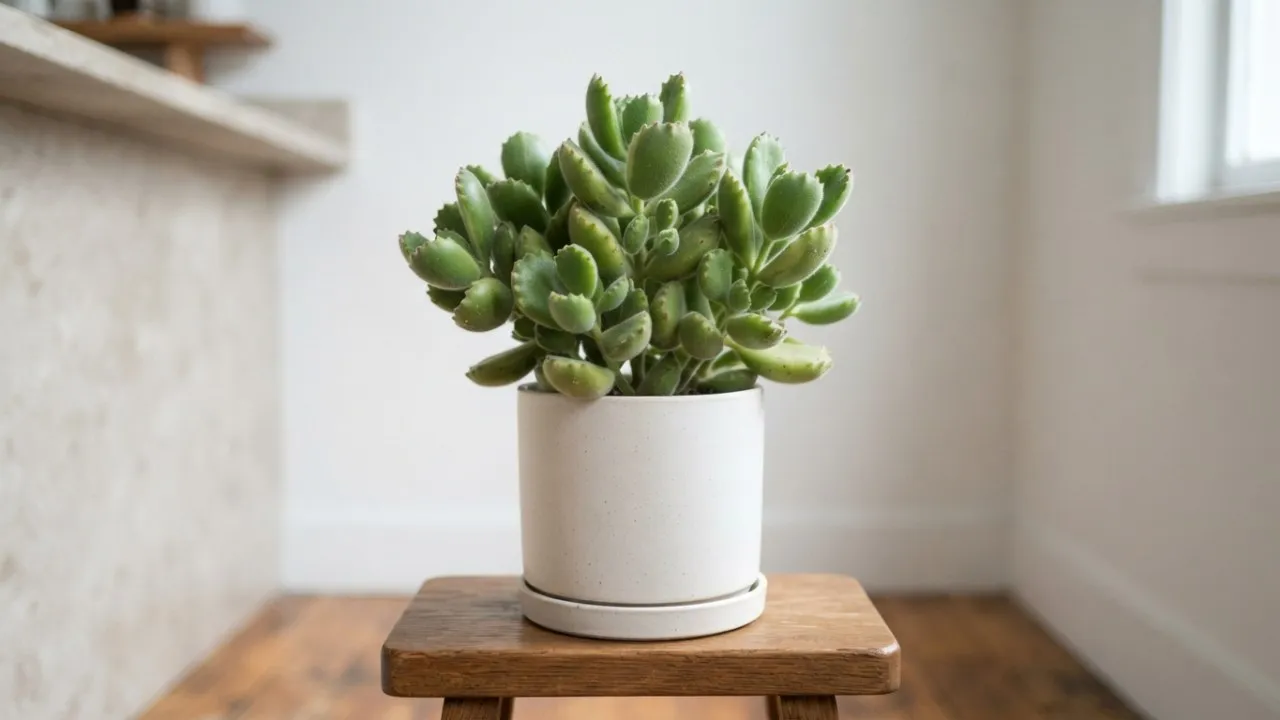
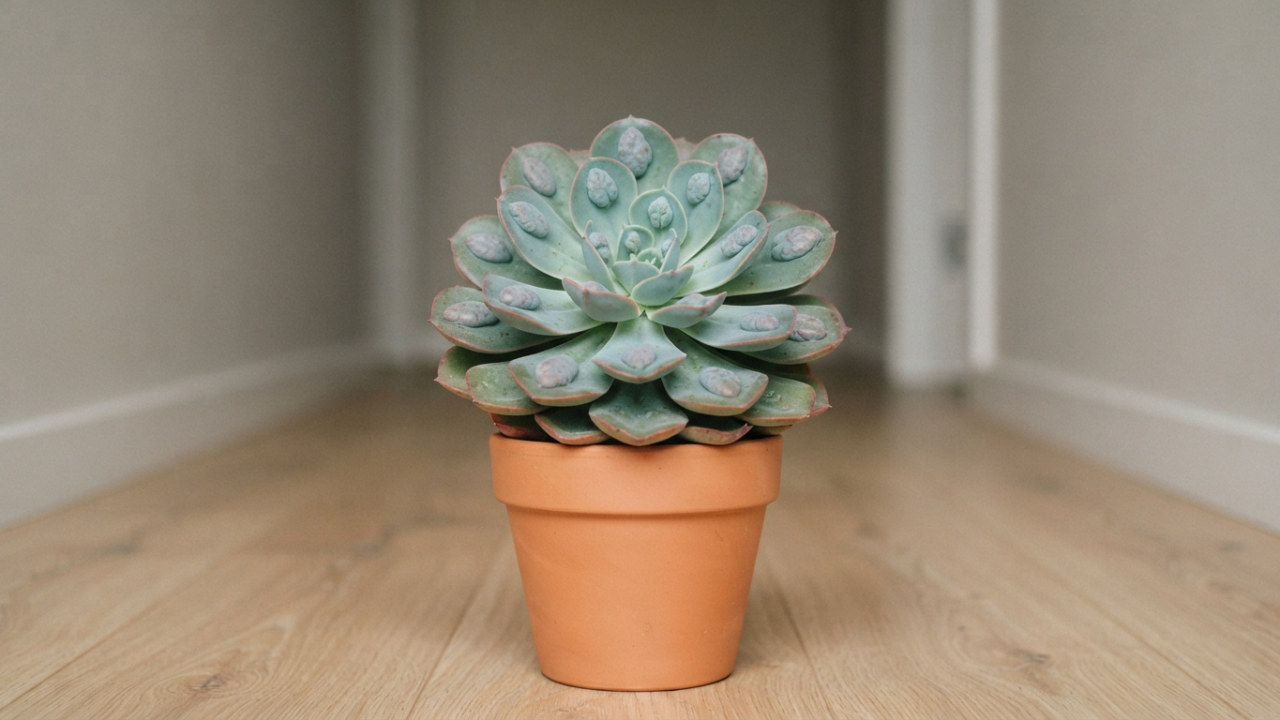
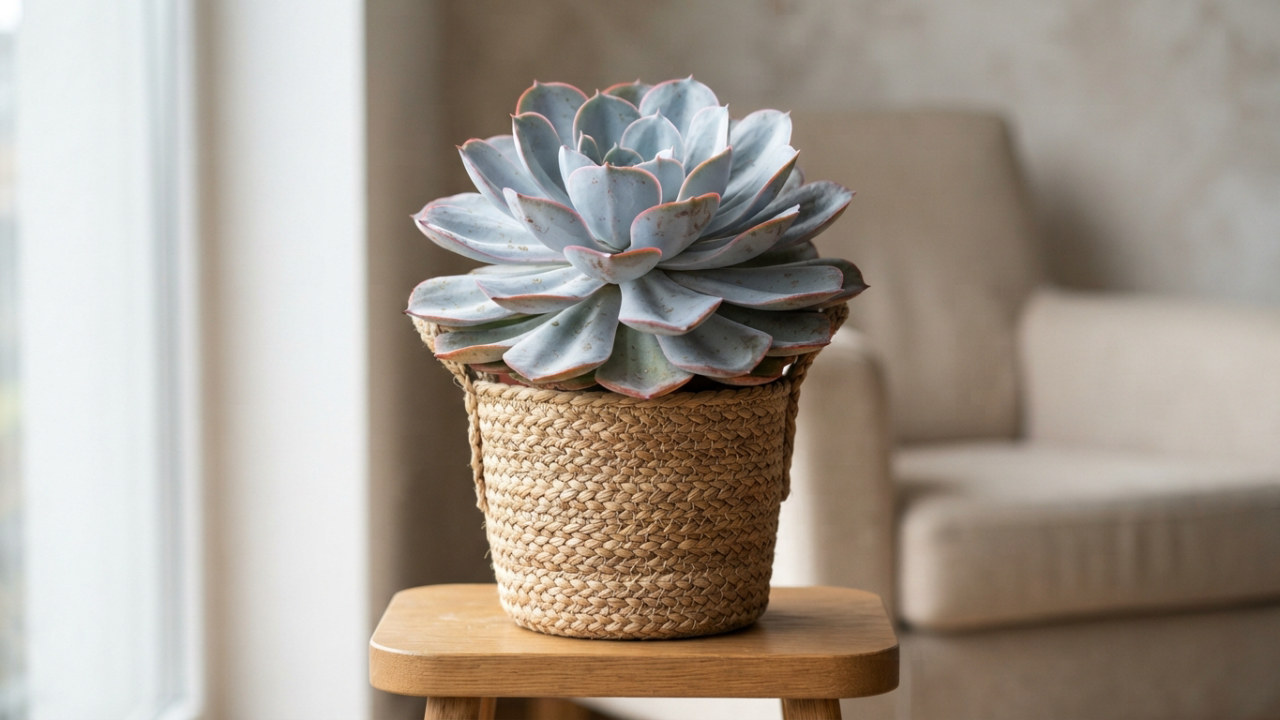
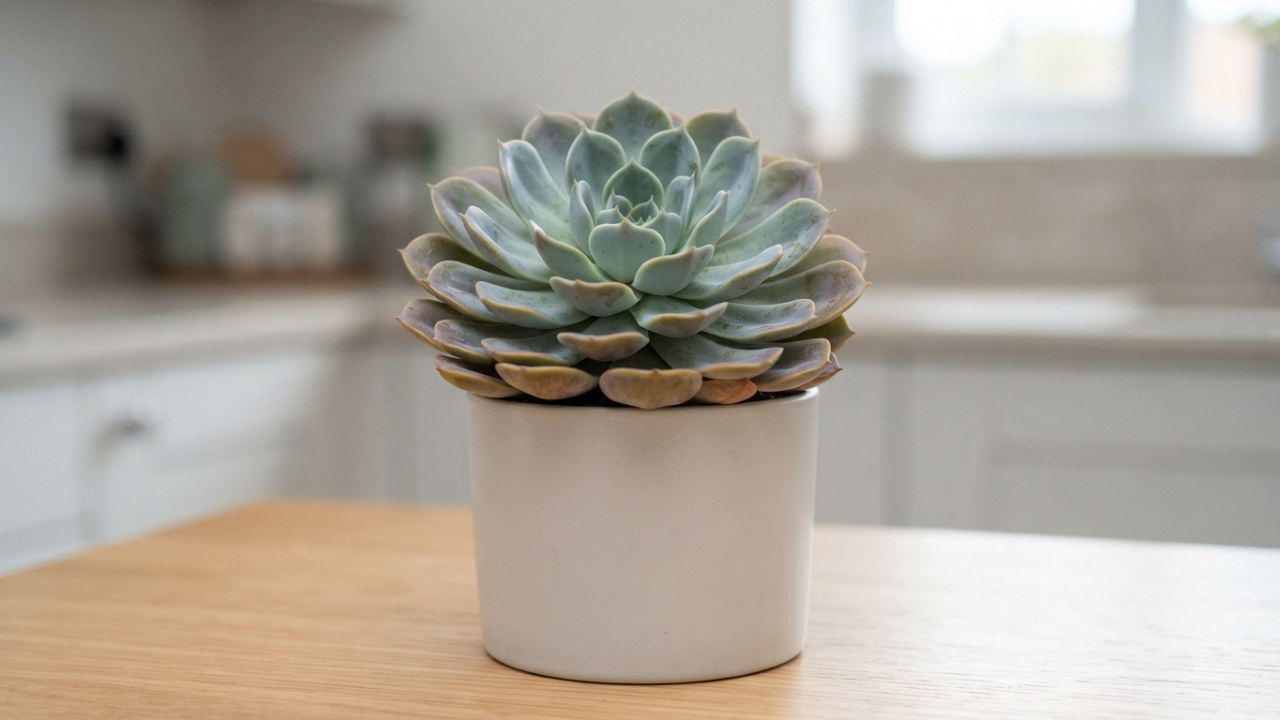
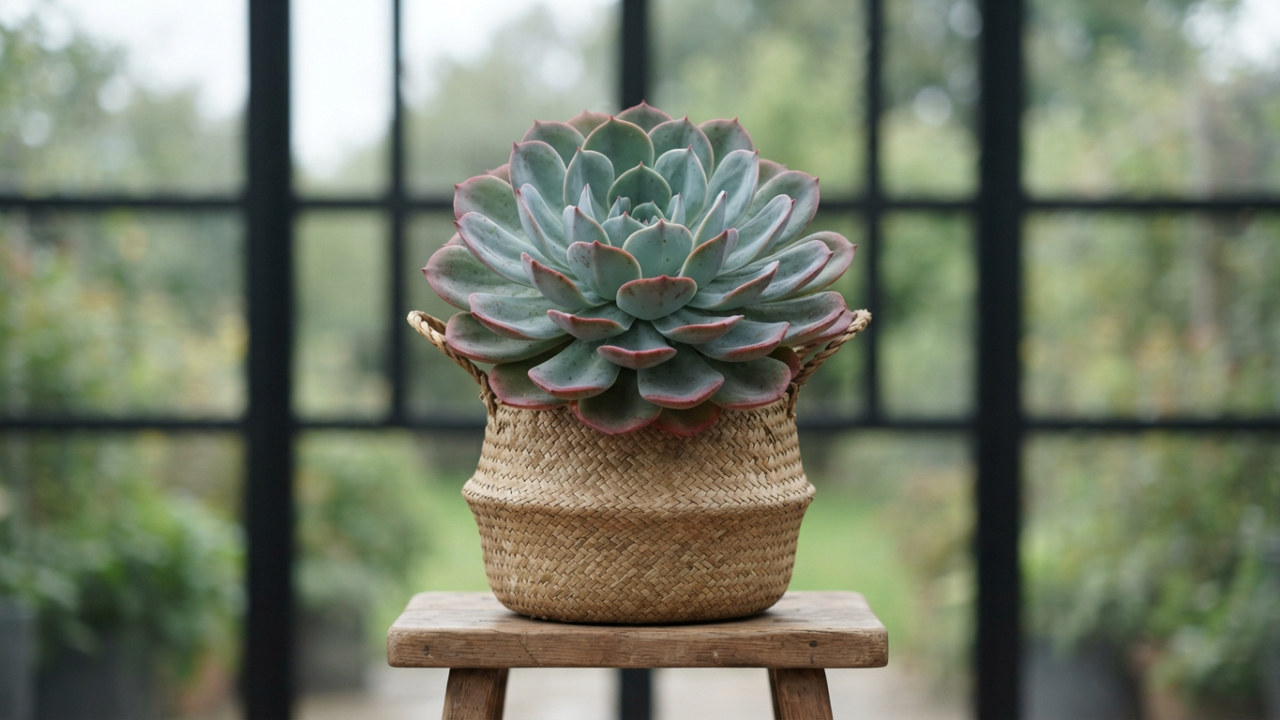
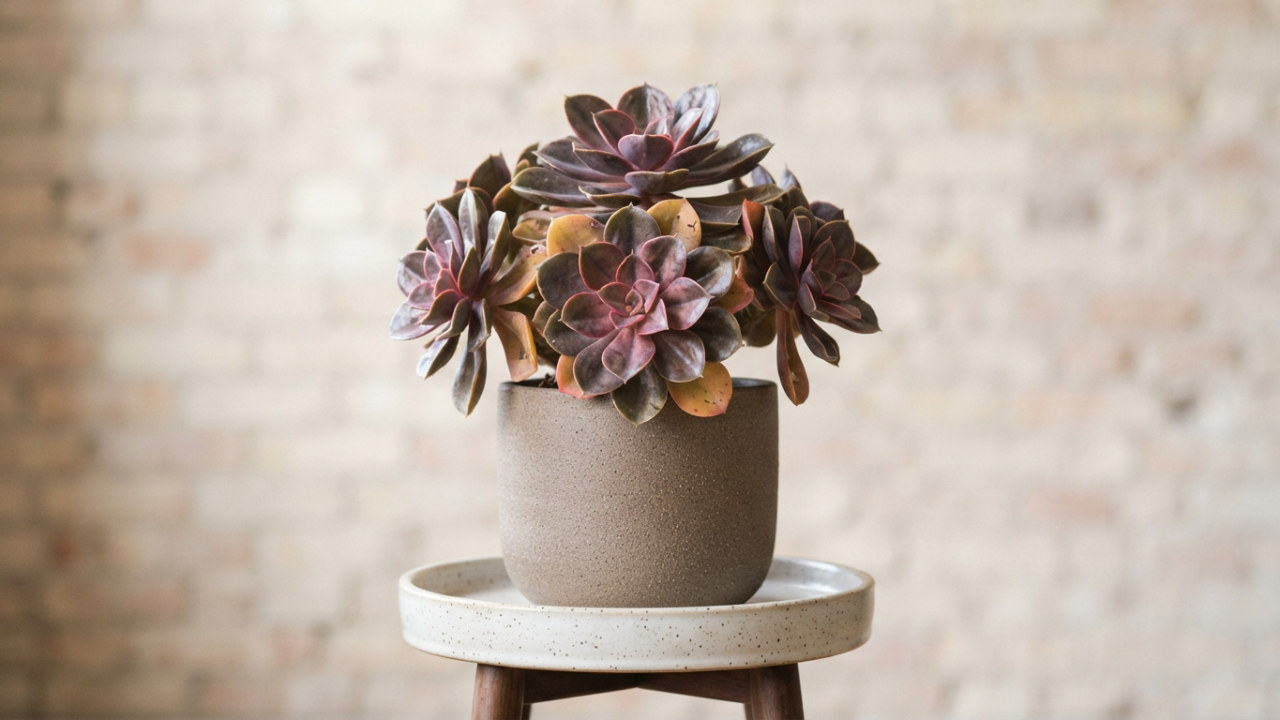
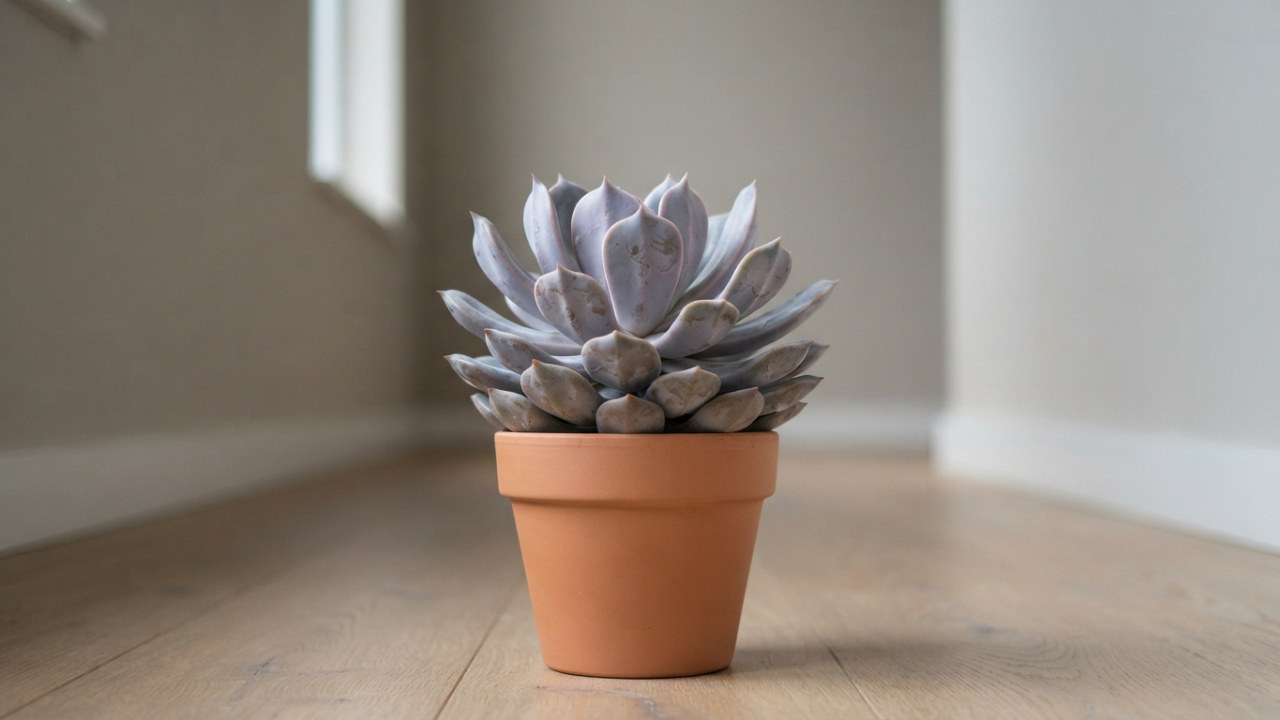
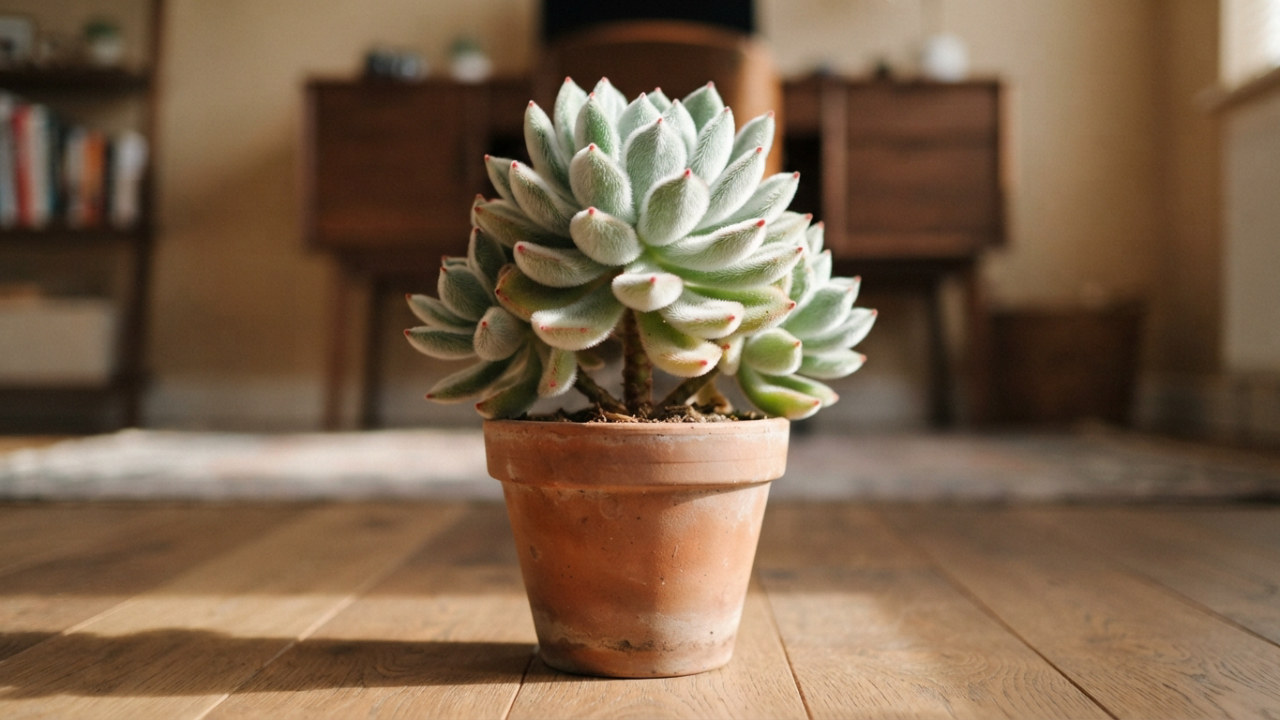
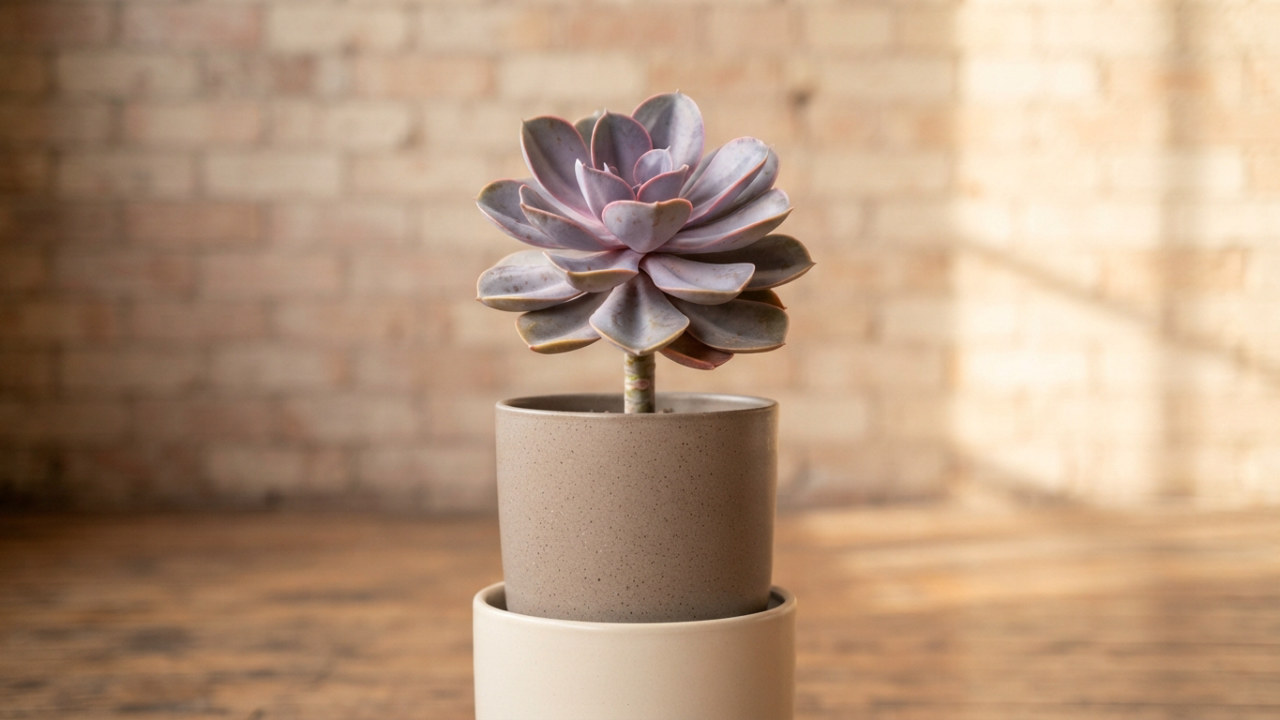
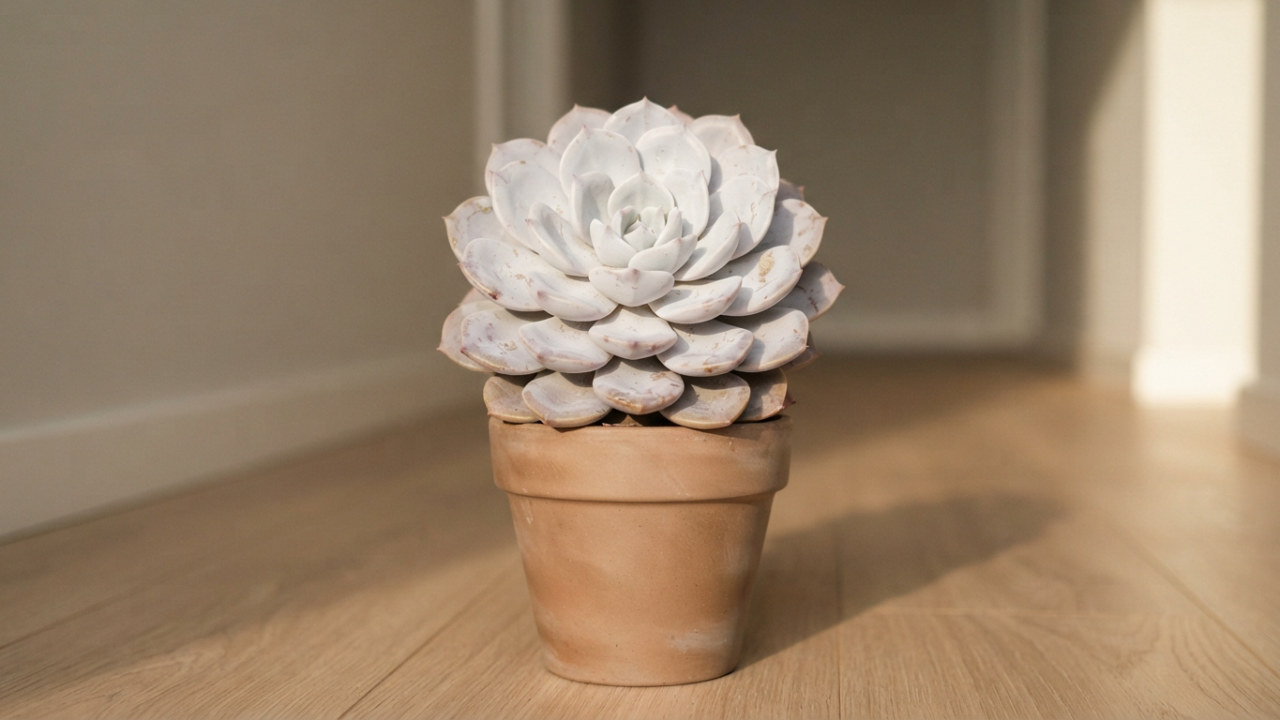
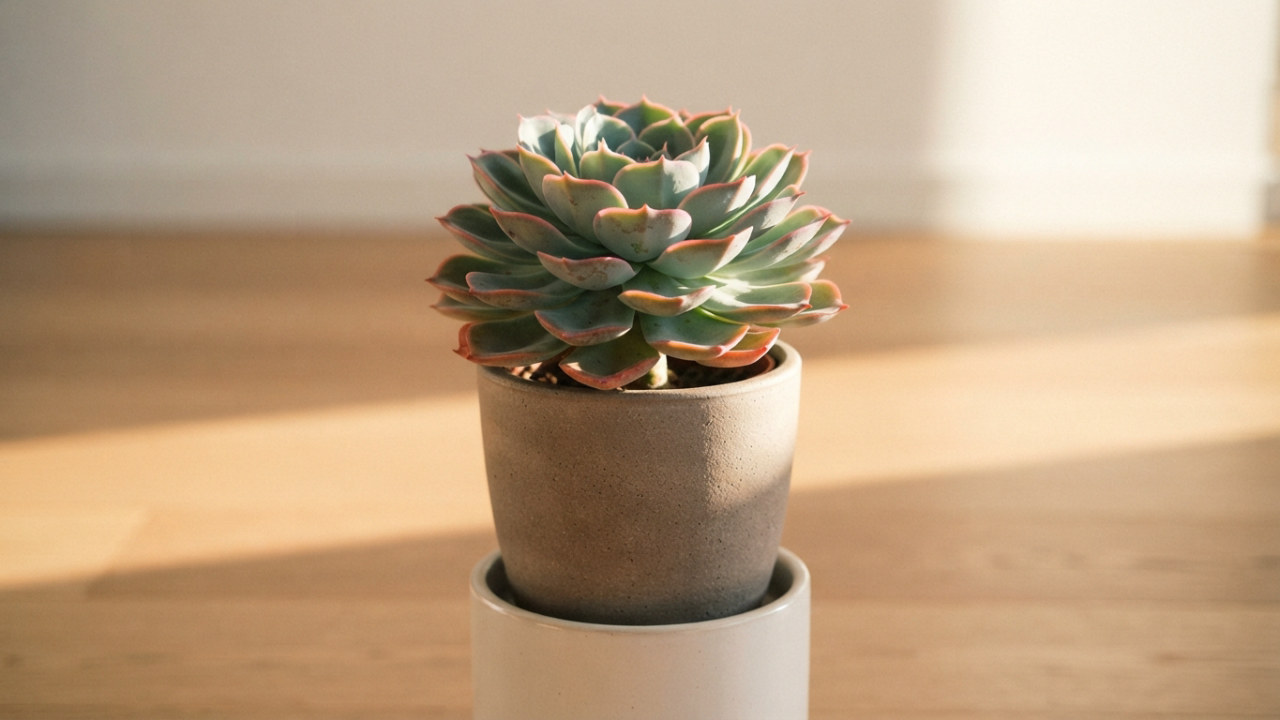
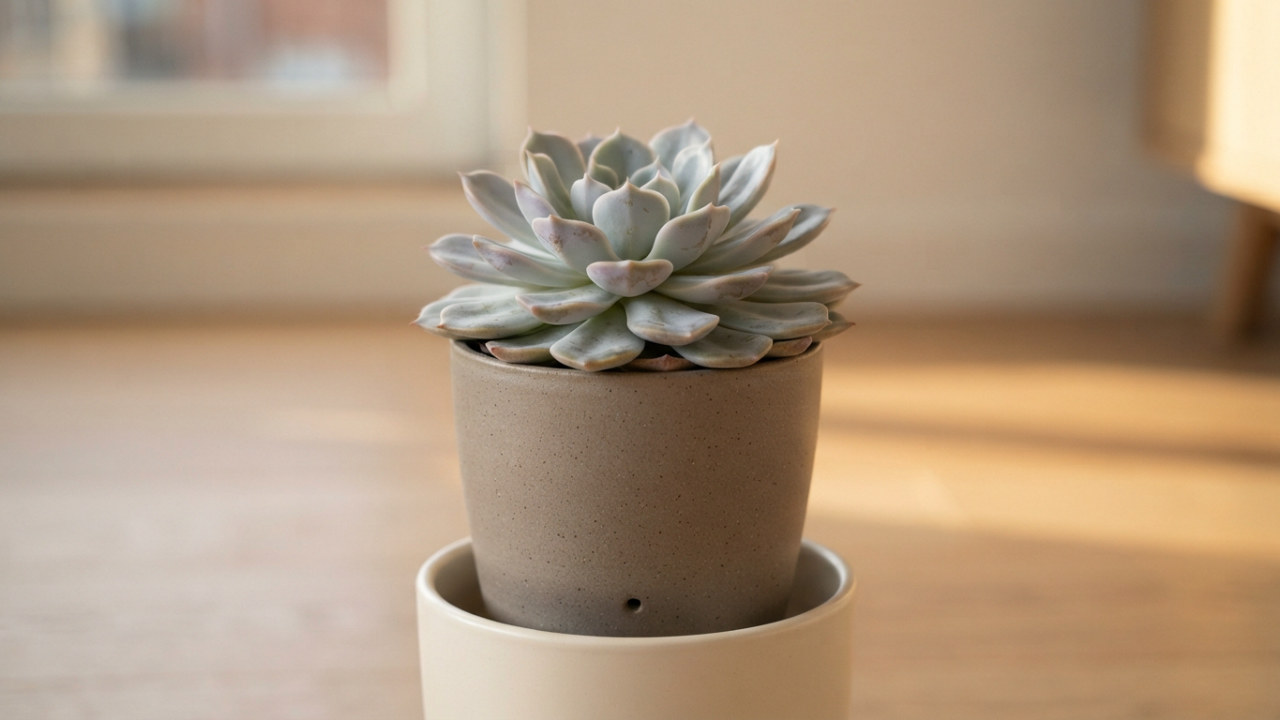
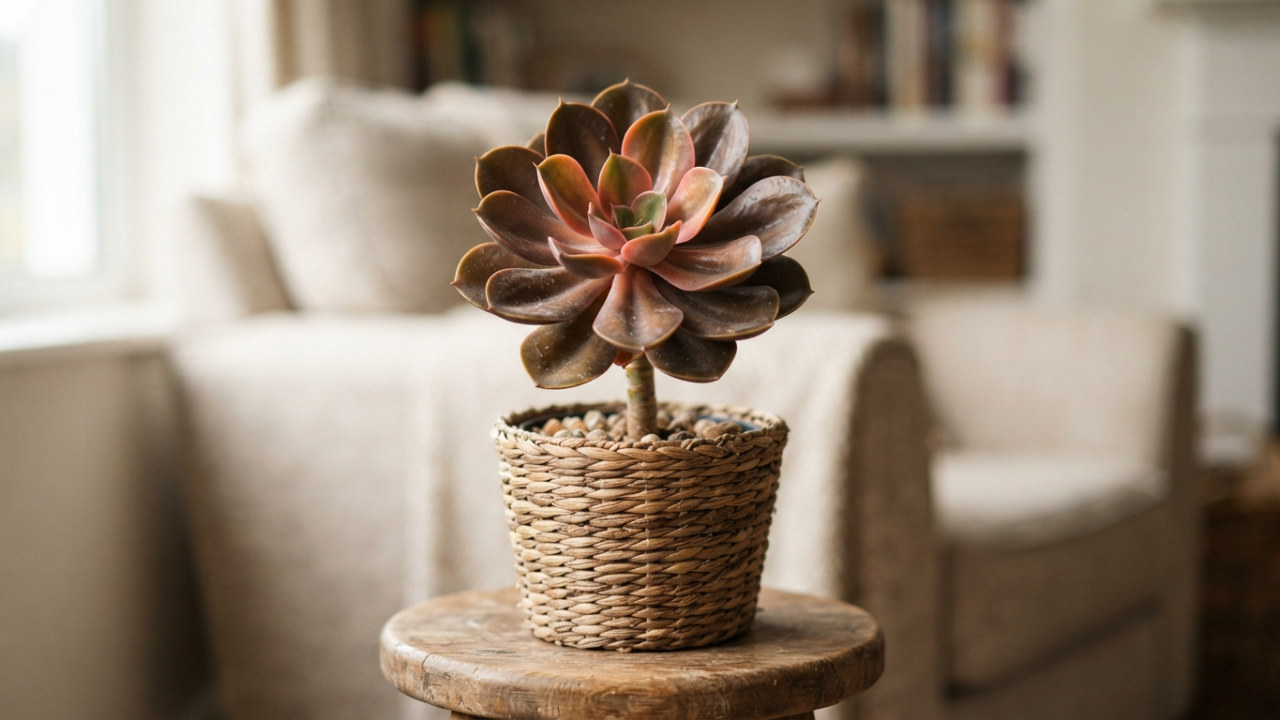
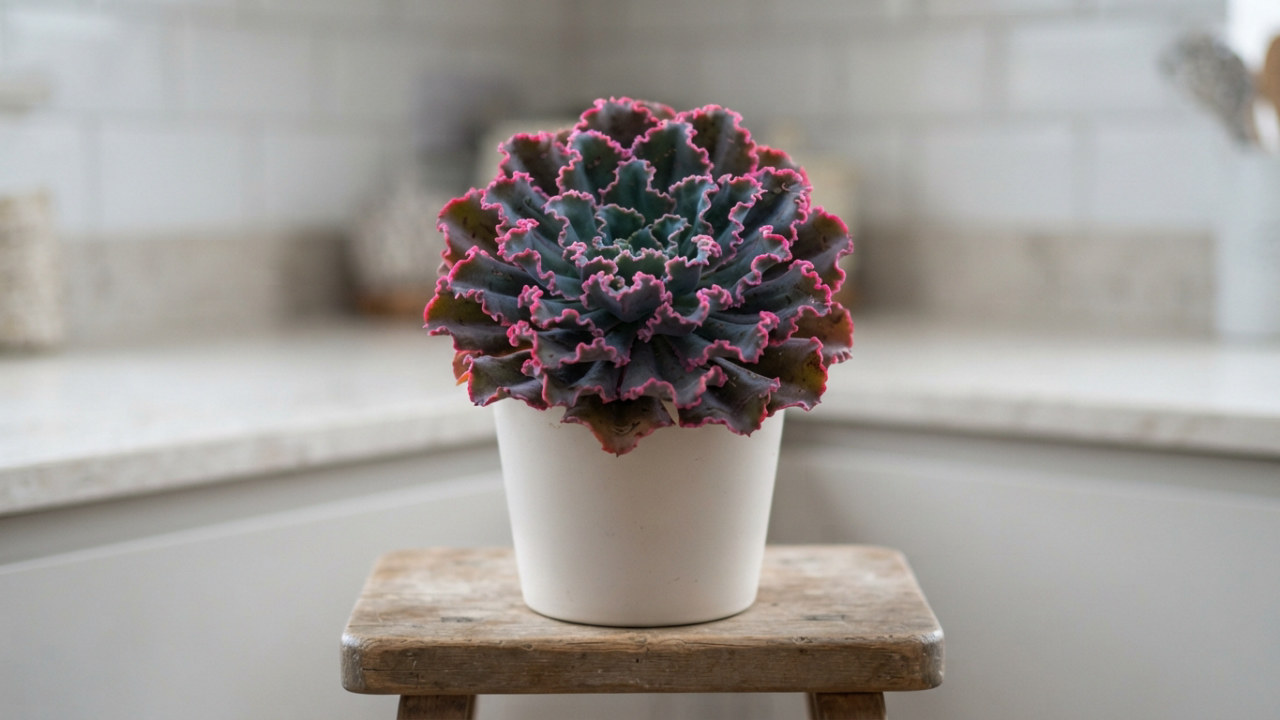
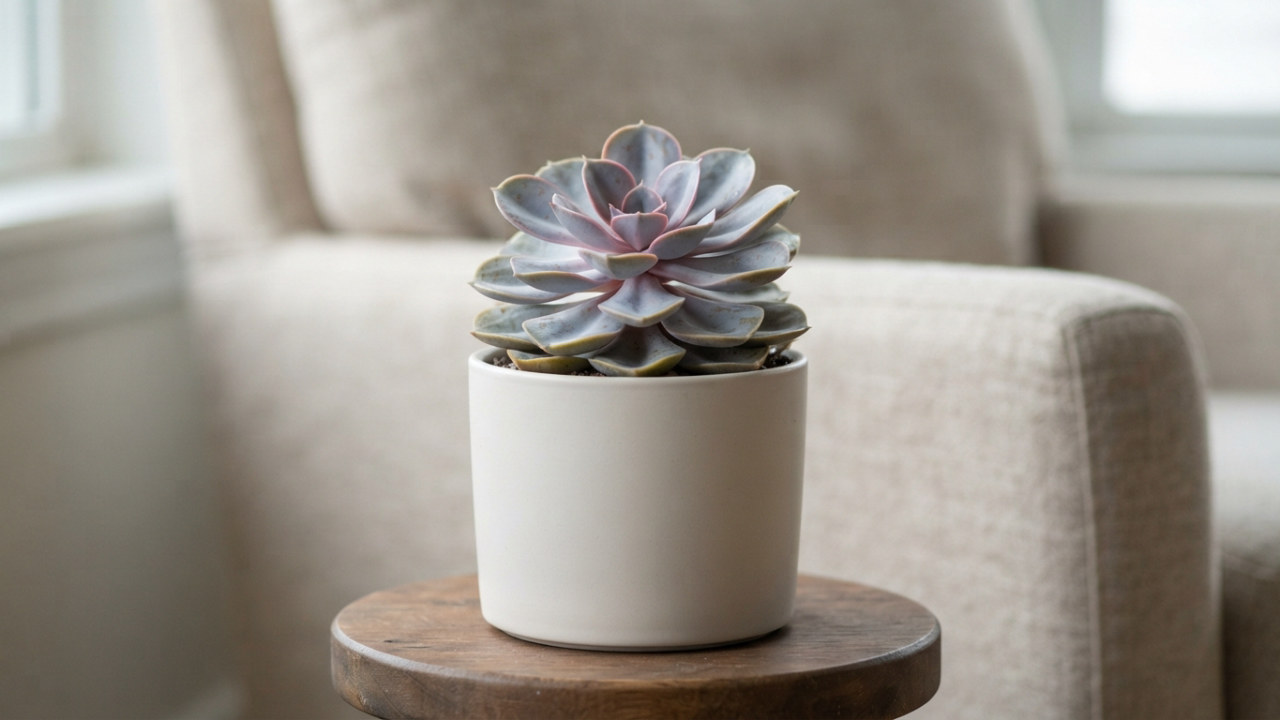
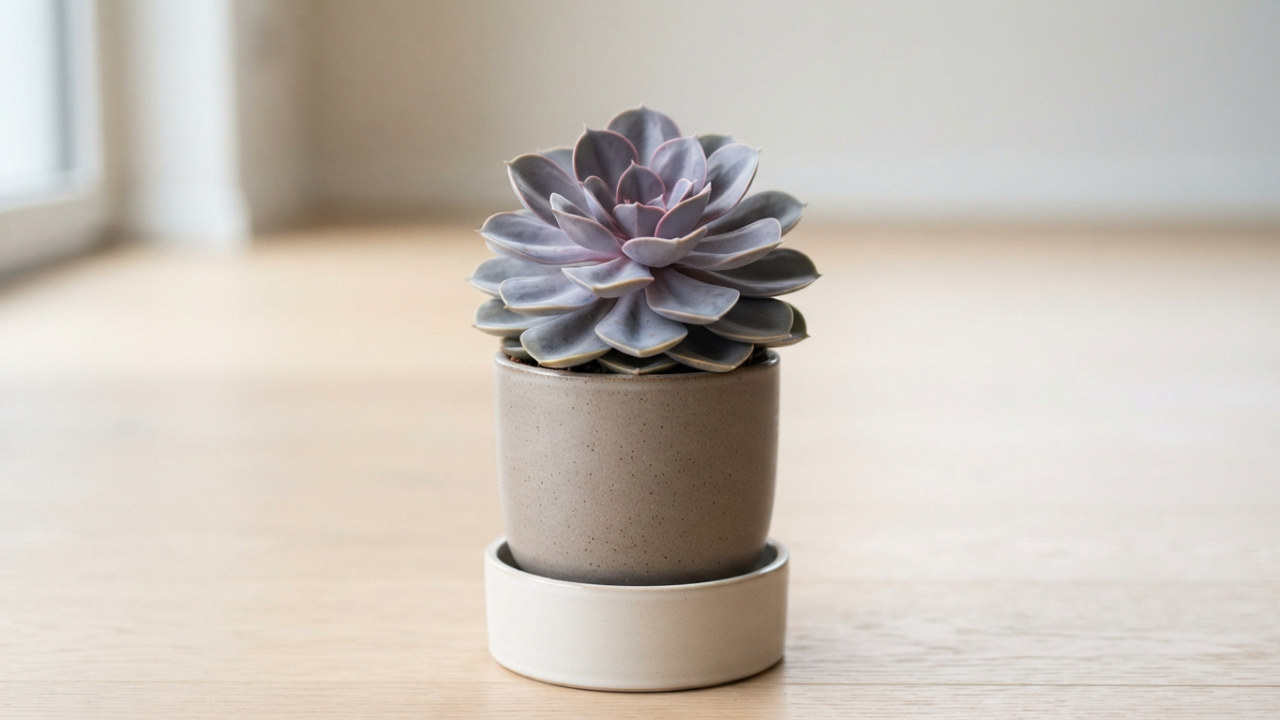
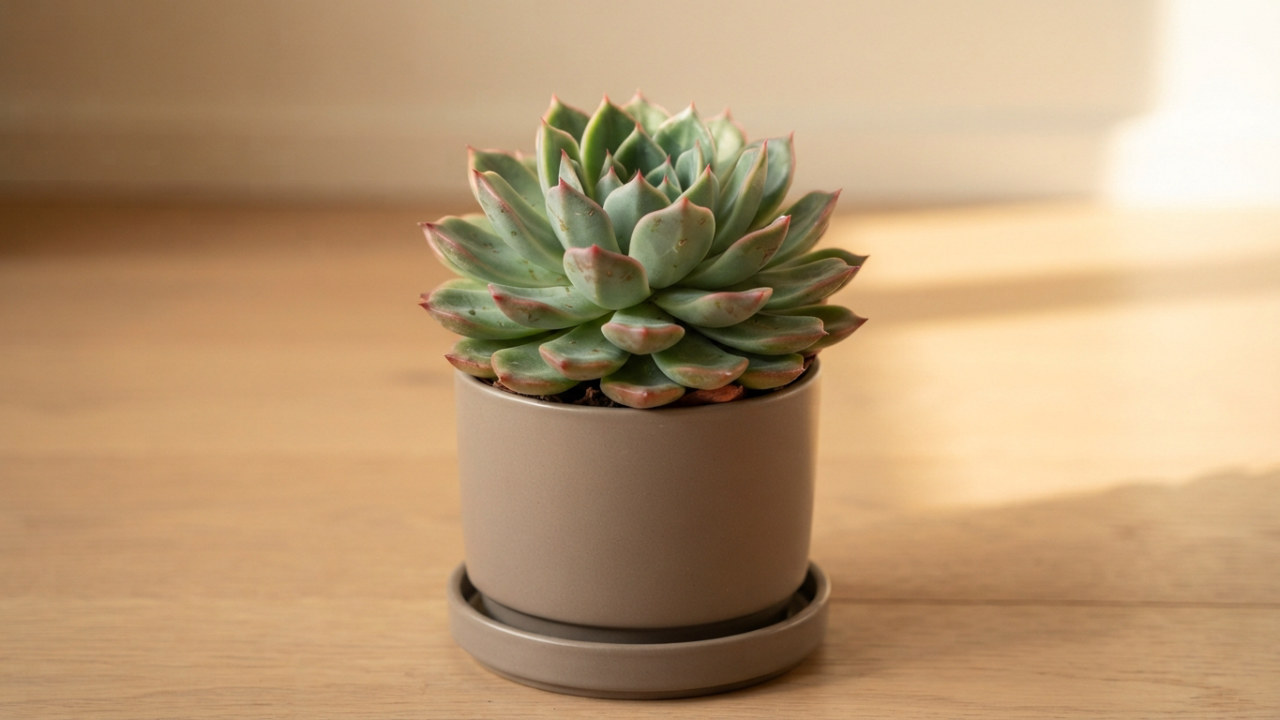
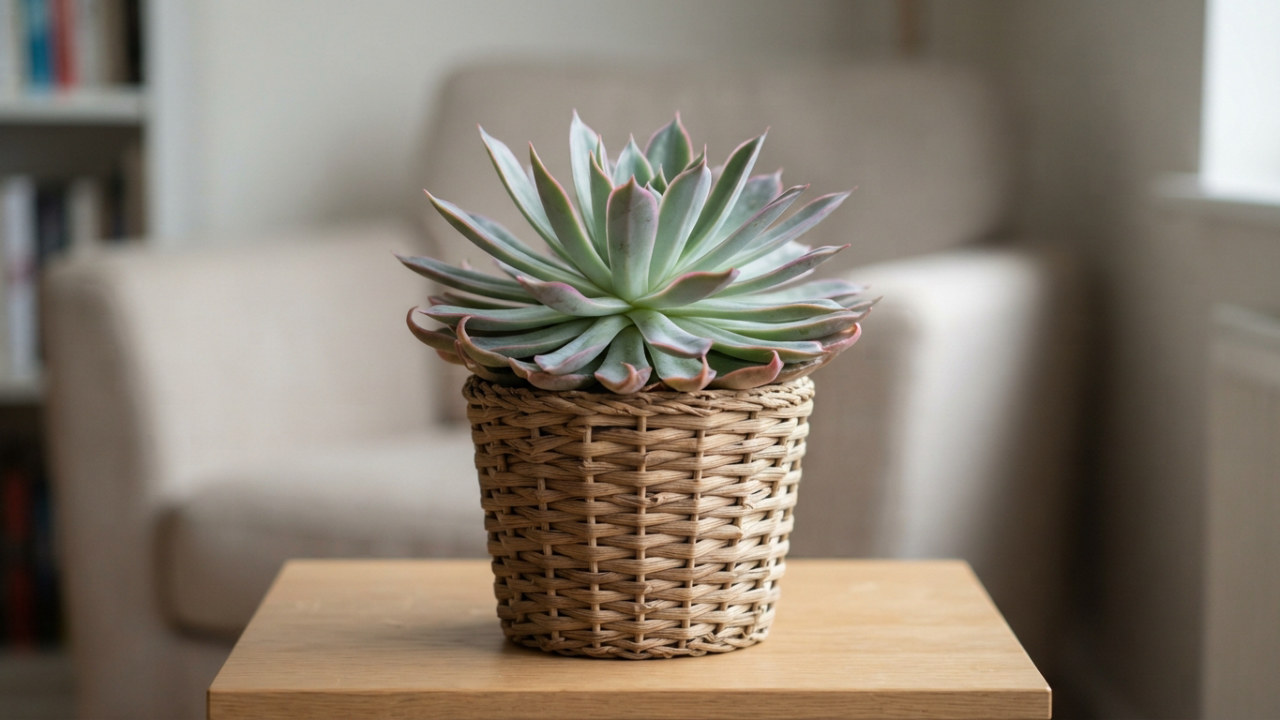
A compact rosette of pale green to blue-green leaves with pink margins and a round, droplet-like bump near the tip.
- Every 12 daysWatering
- Full sunLight
- 20–40 %Humidity
- 10–30 °CTemperature


Other varieties 20
How to care for your Echeveria 'Raindrops'
Everything you need to keep your Echeveria 'Raindrops' healthy: watering, light, humidity, feeding, repotting and pruning.
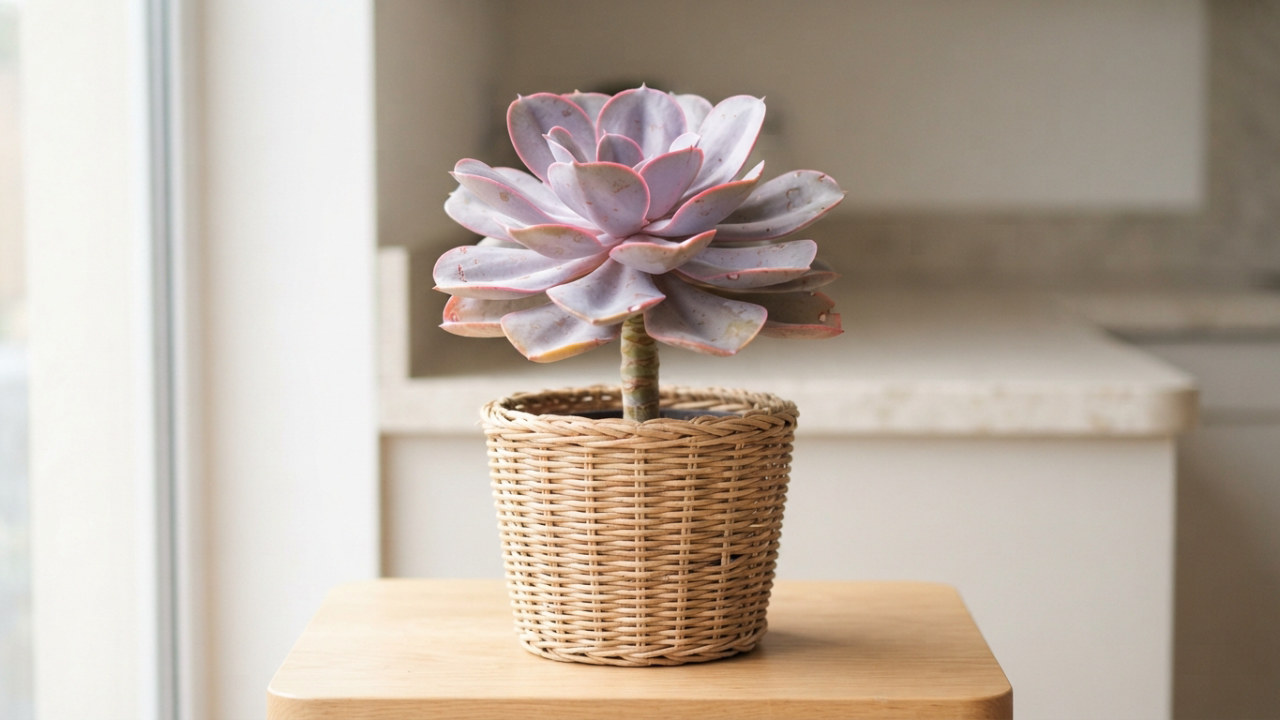
Echeveria 'Raindrops' is a hybrid raised by Dick Wright, from a line of echeverias with bumpy leaves. The spoon-shaped leaves are pale green to blue-green under a dusty, waxy bloom, with pink or reddish margins, and each mature leaf carries a round, droplet-like bump near its tip that looks like a raindrop. The rosette stays compact, up to about 15 cm across and 8 to 12 cm tall, and is mostly solitary; in spring and summer it can send up stalks of pinkish bells with yellow centers, indoors too if the light is bright.

How to recognise Echeveria 'Raindrops'
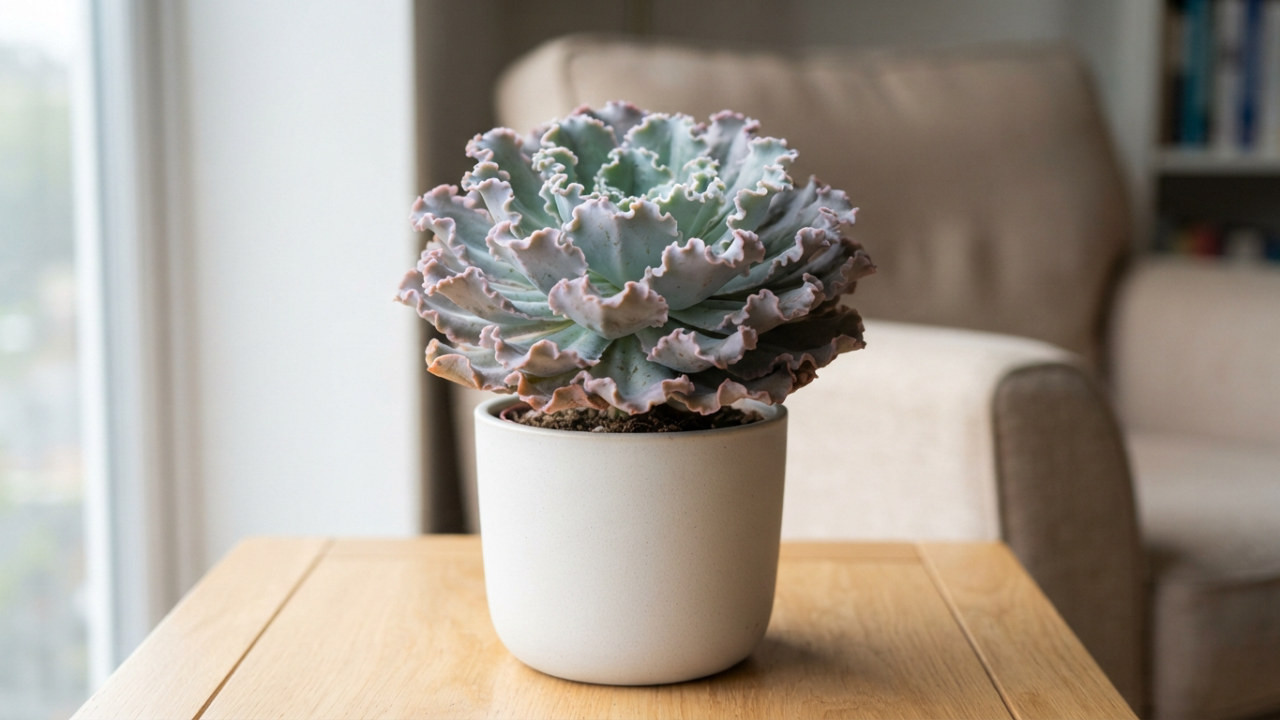
A compact, mostly solitary rosette, up to about 15 cm across, of pale green to blue-green, spoon-shaped, powdery leaves with pink or reddish margins and, on mature leaves, a round, droplet-like bump usually near the tip. 'Blue Bird', 'Blue Sky' and 'Blue Curls' have no bumps, and Echeveria gibbiflora 'Carunculata', which does, forms a much larger rosette of broad, ruffled leaves, 20 to 30 cm across.

Watering your Echeveria 'Raindrops'
Every 12 days
Water the soil at the base, away from the leaves and their bumps, and only when the whole pot is dry: about every 12 days from March to October and about every four weeks in winter.
How to know it needs water
- The mix has turned pale and crumbly, and a stick pushed down to the bottom of the pot comes out dry
- The leaves look slightly deflated and the pot has lost weight

How much light a Echeveria 'Raindrops' needs
Full sun
Give it bright light with four to eight hours of direct sun a day, filtered at the harshest hours, since some growers report that gentler sun helps the leaf bumps develop well.
- Direct sun tolerated
- 4 to 8 h a day
- Orientations that suit it
- South, South-east, South-west, East, West, North-east, North-west

Humidity and misting
20–40 %
Dry to ordinary air, around 20 to 40%, is right, and damp, still air invites rot. Never mist: water settling on the powdery leaves and around the bumps marks the coating and can start rot.

Feeding and fertiliser
Every 28 days
One feeding a month from April to September is plenty for a compact rosette, and it needs none from October to March.
- Recommended feed
- A cactus and succulent fertilizer low in nitrogen, diluted to half the label strength. · 2-7-7

Repotting your Echeveria 'Raindrops'
Every 24 months
Use a pot just wider than the rosette, with a drainage hole and fresh gritty cactus mix, and let the plant stay dry for several days before watering it.
- When
- Spring, from March to May, as growth restarts.
- Potting mix
- Cactus and succulent mix
- Mix in
- perlite, pumice, coarse sand
The tell-tale signs
- The rosette fills the pot and its lowest leaves rest on the rim
- Roots show at the drainage holes, or water runs through the old mix without soaking in

Pruning your Echeveria 'Raindrops'
Hardly any pruning is needed: take off dried lower leaves and cut the flower stalk once the flowers have faded. Twist dead leaves away gently and cut the spent stalk at its base with clean scissors, taking care not to rub the powdery coating or the bumps.

Through the year
Watering is not set once and for all: it follows the light and the growth. Allow 22 days between waterings in the depth of winter, against 10 in the growing season.
- 22 J
- 18 F
- 12 M
- 11 A
- 10 M
- 10 J
- 10 J
- 11 A
- 12 S
- 14 O
- 18 N
- 22 D
Active growth · Days between waterings

Good to know
- Dick Wright raised it as one of his bumpy-leafed echeverias.
- Its pinkish bell flowers have yellow insides and appear in spring and summer, even indoors in bright light.

Frequently asked questions about the Echeveria 'Raindrops'
How do you care for a Echeveria 'Raindrops'?
Water it every 12 days. Give it full sun. Ideal humidity: 20–40 %. Ideal temperature: 10–30 °C. Water the soil at the base, away from the leaves and their bumps, and only when the whole pot is dry: about every 12 days from March to October and about every four weeks in winter.
How often should you water a Echeveria 'Raindrops'?
Every 12 days Water the soil at the base, away from the leaves and their bumps, and only when the whole pot is dry: about every 12 days from March to October and about every four weeks in winter. How to know it needs water : The mix has turned pale and crumbly, and a stick pushed down to the bottom of the pot comes out dry ; The leaves look slightly deflated and the pot has lost weight.
How much light does a Echeveria 'Raindrops' need?
Full sun Give it bright light with four to eight hours of direct sun a day, filtered at the harshest hours, since some growers report that gentler sun helps the leaf bumps develop well. 4 to 8 h a day
Is the Echeveria 'Raindrops' toxic to cats and dogs?
No, the Echeveria 'Raindrops' is not listed as toxic to cats and dogs. That is still no reason to let your pets chew on it.
Why are my Echeveria 'Raindrops' leaves turning yellow?
Yellowing most often comes from too much water: the mix stays wet and the roots suffocate. Check that the pot drains, empty the saucer, and let the mix dry before watering again. Too little light or a cold draught cause the same symptom.
When should you repot a Echeveria 'Raindrops'?
Repot every 24 months, ideally in spring, from march to may, as growth restarts.. Use a pot just wider than the rosette, with a drainage hole and fresh gritty cactus mix, and let the plant stay dry for several days before watering it.

At a glance
- Family
- Crassulaceae
- Category
- Succulent
- Placement
- Indoor and outdoor
- Mature height
- 15 cm
- Growth
- Moderate
- Temperature
- 10–30 °C
- Pot materials
- terracotta, ceramic
- Growth
- Reaches maturity in 3 years
These figures are for an average plant. In the app they are recalculated for yours, based on your room, its orientation and the season.
And for your plant, in your home?
In the app this plant becomes yours: a watering schedule tuned to your home, health tracking from photos, and reminders at the right moment.