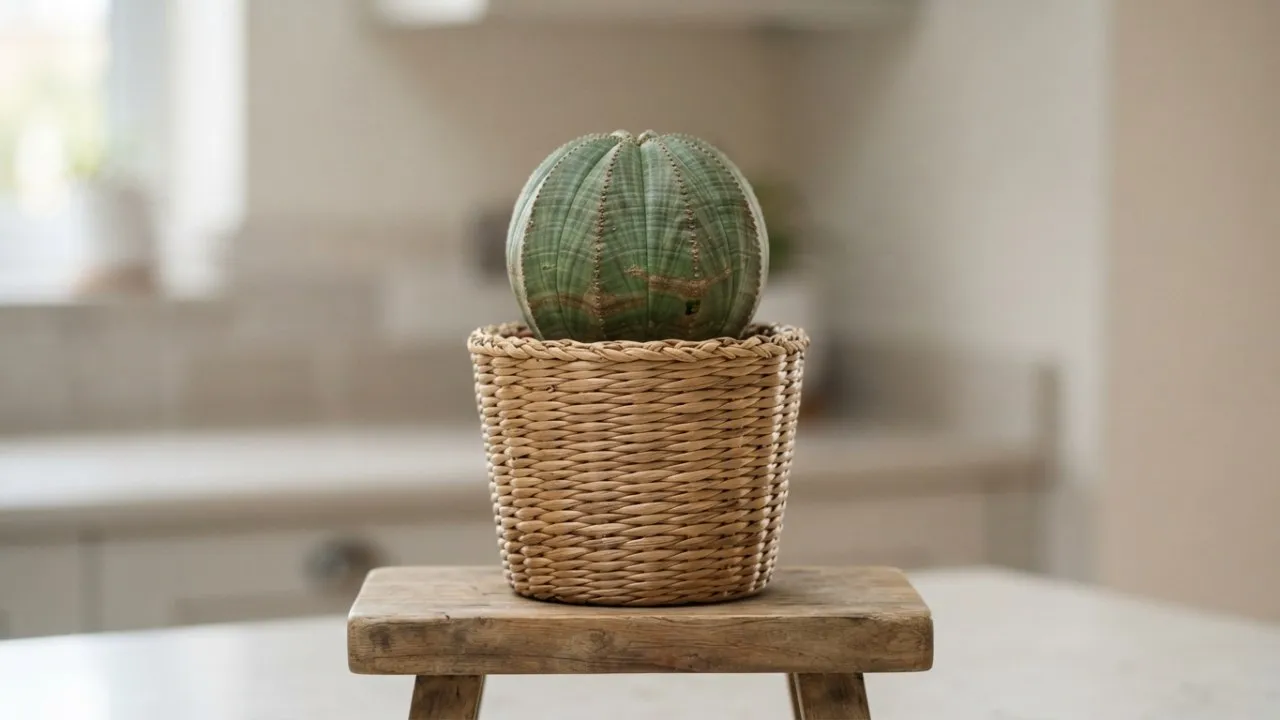
Baseball Plant
Euphorbia obesa
A captivating, spherical succulent with distinct vertical ribs, resembling a baseball.
The essentials at a glance
-
Watering
Every 14 days
-
Light
Full sun
-
Humidity
30–50 %
-
Temperature
10–28 °C


How to care for your Baseball Plant
Everything you need to keep your Baseball Plant healthy: watering, light, humidity, feeding, repotting and pruning.
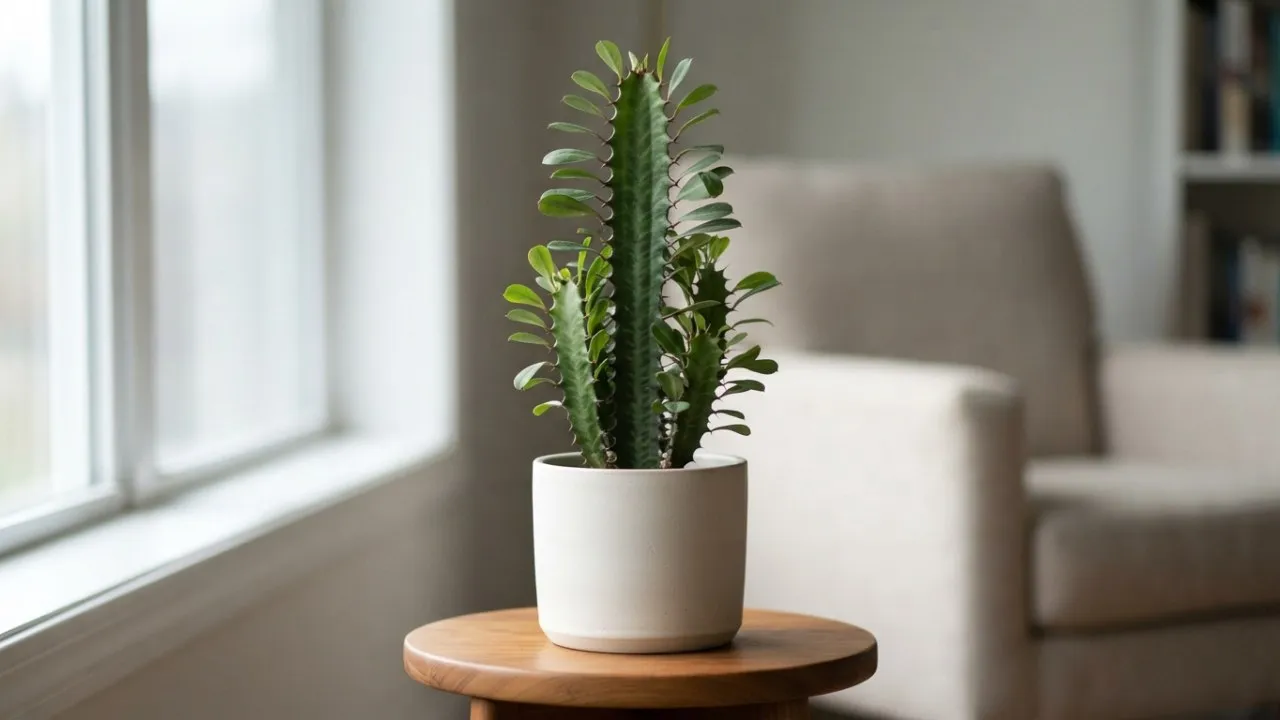
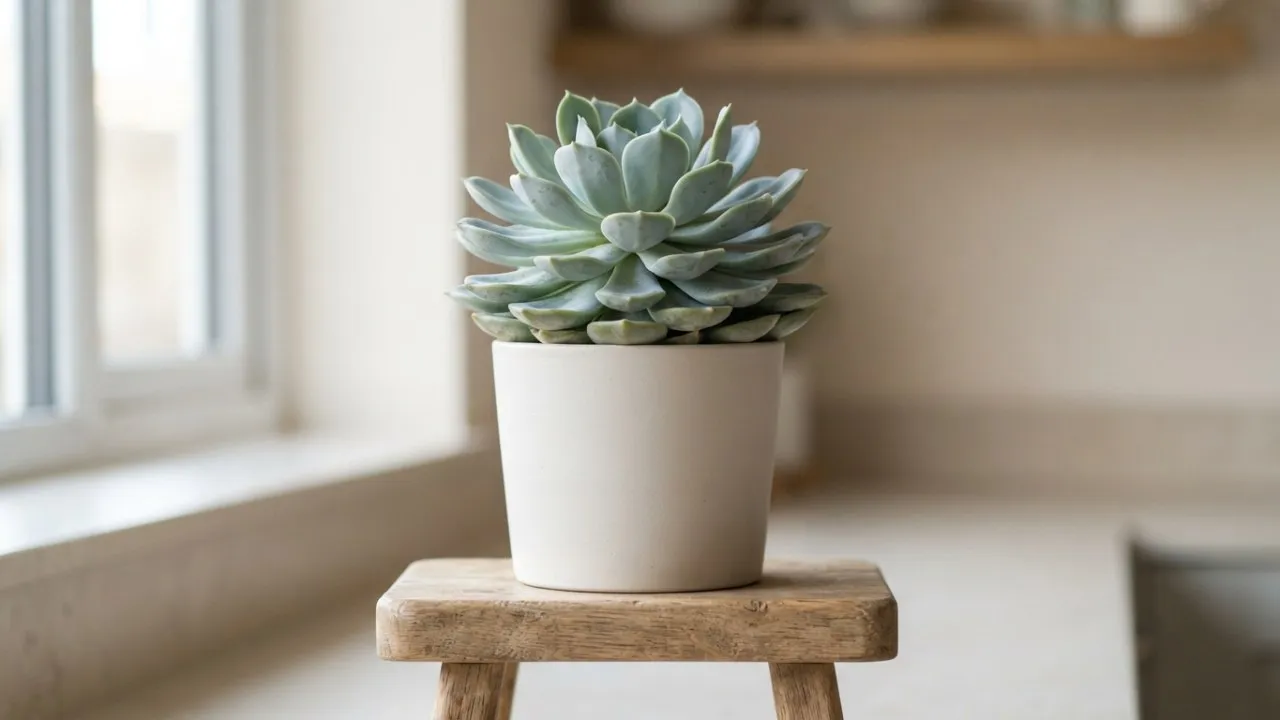
Euphorbia obesa, aptly named the Baseball Plant, is an iconic succulent admired for its striking, symmetrical, spherical form. Its body is typically green-grey, adorned with eight prominent ribs that are often marked with purple-brown cross-bands. This slow-growing plant remains spherical for many years, eventually becoming more columnar with age. It is a dioecious species, meaning individual plants are either male or female. Despite its charming appearance, caution is advised as its white milky sap is highly toxic and can cause severe irritation.

Watering your Baseball Plant
Every 14 days
Water deeply when the soil is completely dry to the touch.
How to know it needs water
- Body slightly softens
- Pot is very light

How much light a Baseball Plant needs
Full sun
Full sun to bright indirect light.
- Direct sun tolerated
- 4 to 8 h a day
- Orientations that suit it
- South, South-east, South-west, East, West

Humidity and misting
30–50 %
Low (30-50%) Misting is not needed and can encourage fungal spots on the body.

Feeding and fertiliser
Every 90 days
Fertilize sparingly during the growing season; can go without.
- Recommended feed
- Low-nitrogen cactus fertilizer, diluted. · 1-7-6

Repotting your Baseball Plant
Every 36 months
Handle with gloves, repot in very gritty, well-draining cactus mix.
- When
- Spring
- Potting mix
- Cactus and succulent mix
- Mix in
- pumice, coarse sand
The tell-tale signs
- Outgrowing its pot
- Stunted growth
- Soil degradation

Pruning your Baseball Plant
Rarely needed, only to remove offsets if desired. Use sharp, sterile tool with gloves; allow cuts to callus.

Through the year
Watering is not set once and for all: it follows the light and the growth. Allow 25 days between waterings in the depth of winter, against 10 in the growing season.
- 25 J
- 22 F
- 17 M
- 11 A
- 10 M
- 10 J
- 10 J
- 10 A
- 11 S
- 17 O
- 22 N
- 25 D
Active growth · Days between waterings

Toxicity
Highly toxic. All parts, especially the white milky sap (latex), cause severe skin/eye irritation and internal poisoning if ingested. Wear gloves when handling.

Good to know
- Resembles a baseball with its spherical, ribbed body.
- Known for its unique 'seed-firing' mechanism.

Frequently asked questions about the Baseball Plant
How do you care for a Baseball Plant?
Water it every 14 days. Give it full sun. Ideal humidity: 30–50 %. Ideal temperature: 10–28 °C. Water deeply when the soil is completely dry to the touch.
How often should you water a Baseball Plant?
Every 14 days Water deeply when the soil is completely dry to the touch. How to know it needs water : Body slightly softens ; Pot is very light.
How much light does a Baseball Plant need?
Full sun Full sun to bright indirect light. 4 to 8 h a day
Is the Baseball Plant toxic to cats and dogs?
Yes. Highly toxic. All parts, especially the white milky sap (latex), cause severe skin/eye irritation and internal poisoning if ingested. Wear gloves when handling. Keep it out of reach of your pets and call a vet if any is swallowed.
Why are my Baseball Plant leaves turning yellow?
Yellowing most often comes from too much water: the mix stays wet and the roots suffocate. Check that the pot drains, empty the saucer, and let the mix dry before watering again. Too little light or a cold draught cause the same symptom.
When should you repot a Baseball Plant?
Repot every 36 months, ideally in spring. Handle with gloves, repot in very gritty, well-draining cactus mix.

At a glance
- Family
- Euphorbiaceae
- Category
- Succulent
- Placement
- Indoor and outdoor
- Mature height
- 20 cm
- Growth
- Slow
- Temperature
- 10–28 °C
- Pot materials
- terracotta, ceramic
- Growth
- Reaches maturity in 10 years
These figures are for an average plant. In the app they are recalculated for yours, based on your room, its orientation and the season.
And for your plant, in your home?
In the app this plant becomes yours: a watering schedule tuned to your home, health tracking from photos, and reminders at the right moment.