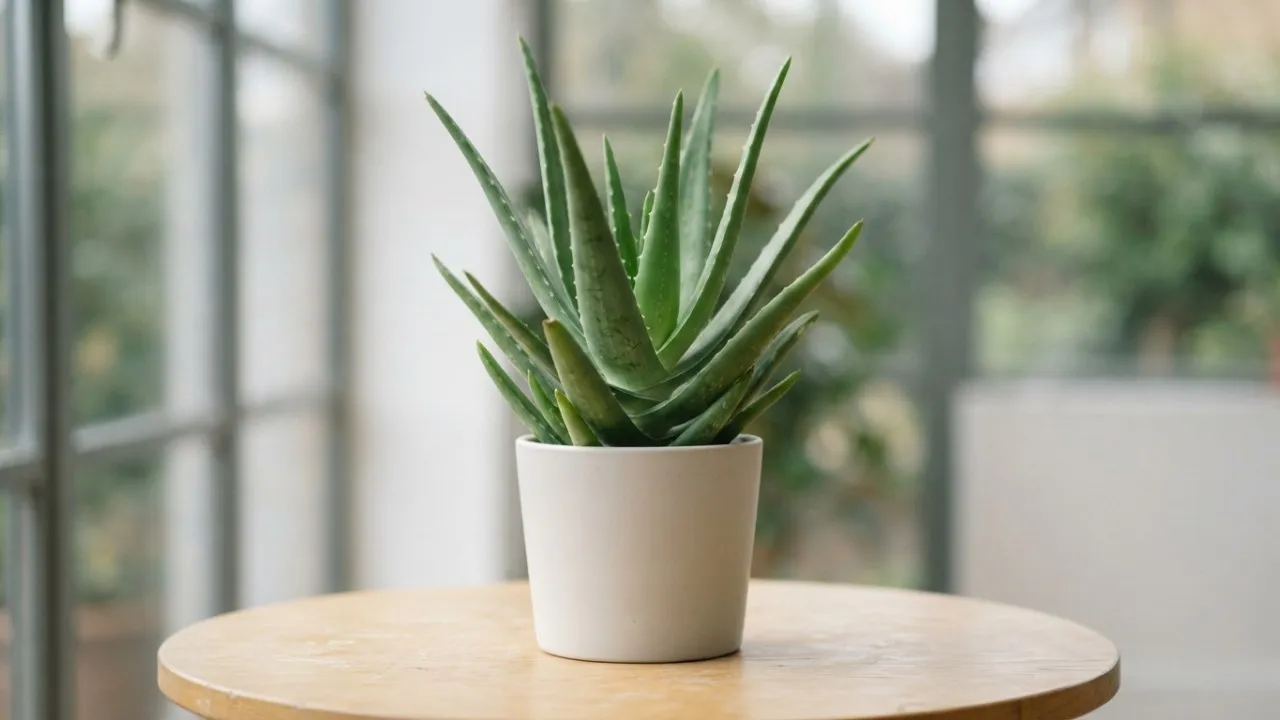
Aloe Vera
Aloe vera
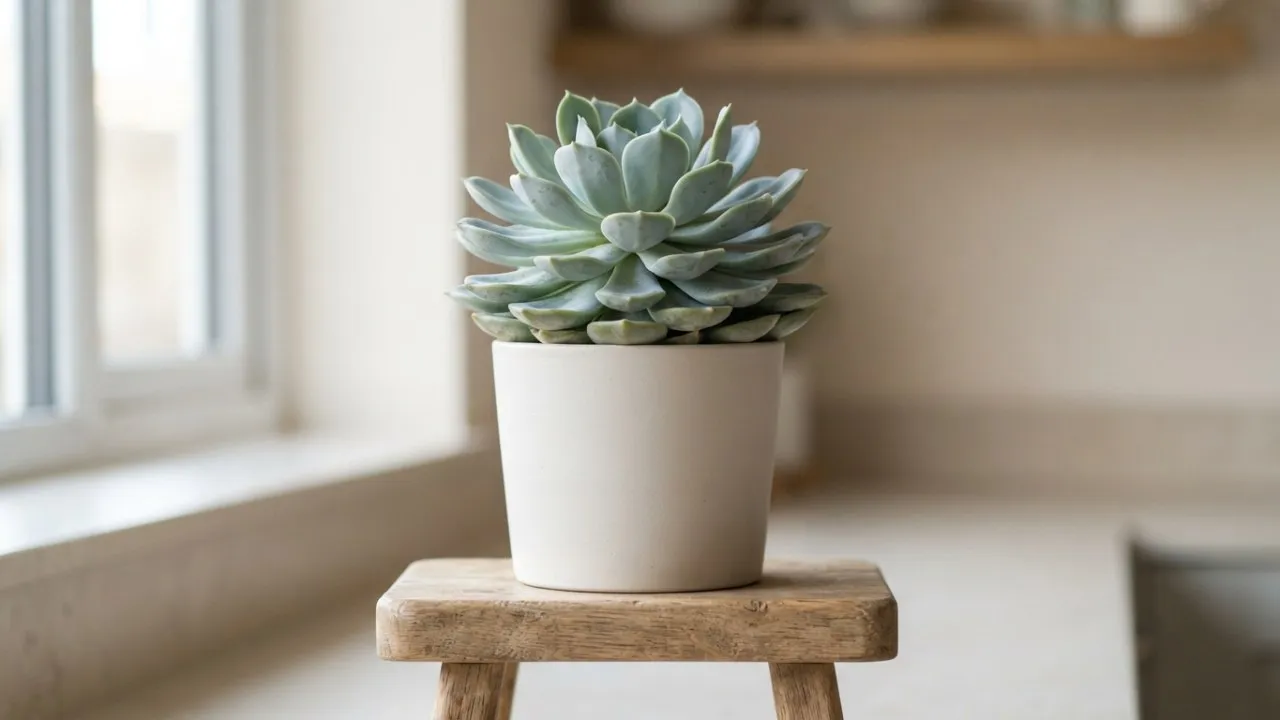
Aloe vera is a medicinal succulent with fleshy leaves filled with gel.
The essentials at a glance
-
Watering
Every 14 days
-
Light
Full sun
-
Humidity
30–40 %
-
Temperature
13–35 °C


How to care for your Aloe Vera
Everything you need to keep your Aloe Vera healthy: watering, light, humidity, feeding, repotting and pruning.
Aloe vera is a succulent plant native to the Arabian Peninsula and North Africa. Cultivated for millennia for its medicinal properties, it is today one of the most popular houseplants. Its fleshy leaves contain a clear gel with numerous skin benefits. It is extremely drought-resistant and requires very little maintenance.

Watering your Aloe Vera
Every 14 days
Water deeply, then allow the substrate to dry out completely before the next watering; err on the side of underwatering.
How to know it needs water
- Substrate completely dry throughout
- Outer leaves slightly wrinkled or soft

How much light a Aloe Vera needs
Full sun
Full sun to bright direct light; a south-facing windowsill is ideal.
- Direct sun tolerated
- 6 to 12 h a day
- Orientations that suit it
- South, South-east, South-west, East, West

Humidity and misting
30–40 %
Low (30–40%) Do not mist; this species dislikes moisture on its foliage and is highly susceptible to fungal rot.

Feeding and fertiliser
Every 60 days
Apply sparingly two or three times during the growing season (spring to summer); never fertilise in winter.
- Recommended feed
- Cactus and succulent fertilizer (low nitrogen) · 2-7-7

Repotting your Aloe Vera
Every 24 months
Use a specialised cactus/succulent mix in a terracotta pot with excellent drainage; allow the root ball to dry for 24 hours before repotting.
- When
- Spring
- Potting mix
- Cactus and succulent mix
- Mix in
- perlite, coarse sand, pumice
The tell-tale signs
- Numerous offsets (pups) overflowing the rim
- Roots emerging from drainage holes

Pruning your Aloe Vera
Remove dry, shrivelled or damaged outer leaves as needed. Cut cleanly at the leaf base with a sterilised knife; allow the cut to callous before watering.

Through the year
Watering is not set once and for all: it follows the light and the growth. Allow 22 days between waterings in the depth of winter, against 11 in the growing season.
- 21 J
- 17 F
- 14 M
- 13 A
- 11 M
- 11 J
- 11 J
- 13 A
- 14 S
- 15 O
- 18 N
- 22 D
Active growth · Days between waterings

Toxicity
The inner gel is widely used in cosmetics but the yellow latex (aloin) is toxic to cats and dogs, causing vomiting and lethargy.

Good to know
- Used in medicine for over 6000 years
- Its gel contains more than 75 active compounds

Frequently asked questions about the Aloe Vera
How do you care for a Aloe Vera?
Water it every 14 days. Give it full sun. Ideal humidity: 30–40 %. Ideal temperature: 13–35 °C. Water deeply, then allow the substrate to dry out completely before the next watering; err on the side of underwatering.
How often should you water a Aloe Vera?
Every 14 days Water deeply, then allow the substrate to dry out completely before the next watering; err on the side of underwatering. How to know it needs water : Substrate completely dry throughout ; Outer leaves slightly wrinkled or soft.
How much light does a Aloe Vera need?
Full sun Full sun to bright direct light; a south-facing windowsill is ideal. 6 to 12 h a day
Is the Aloe Vera toxic to cats and dogs?
Yes. The inner gel is widely used in cosmetics but the yellow latex (aloin) is toxic to cats and dogs, causing vomiting and lethargy. Keep it out of reach of your pets and call a vet if any is swallowed.
Why are my Aloe Vera leaves turning yellow?
Yellowing most often comes from too much water: the mix stays wet and the roots suffocate. Check that the pot drains, empty the saucer, and let the mix dry before watering again. Too little light or a cold draught cause the same symptom.
When should you repot a Aloe Vera?
Repot every 24 months, ideally in spring. Use a specialised cactus/succulent mix in a terracotta pot with excellent drainage; allow the root ball to dry for 24 hours before repotting.

At a glance
- Family
- Asphodelaceae
- Category
- Succulent
- Placement
- Indoor and outdoor
- Mature height
- 60 cm
- Growth
- Moderate
- Temperature
- 13–35 °C
- Pot materials
- terracotta, ceramic
- Growth
- Reaches maturity in 3 years
These figures are for an average plant. In the app they are recalculated for yours, based on your room, its orientation and the season.
And for your plant, in your home?
In the app this plant becomes yours: a watering schedule tuned to your home, health tracking from photos, and reminders at the right moment.