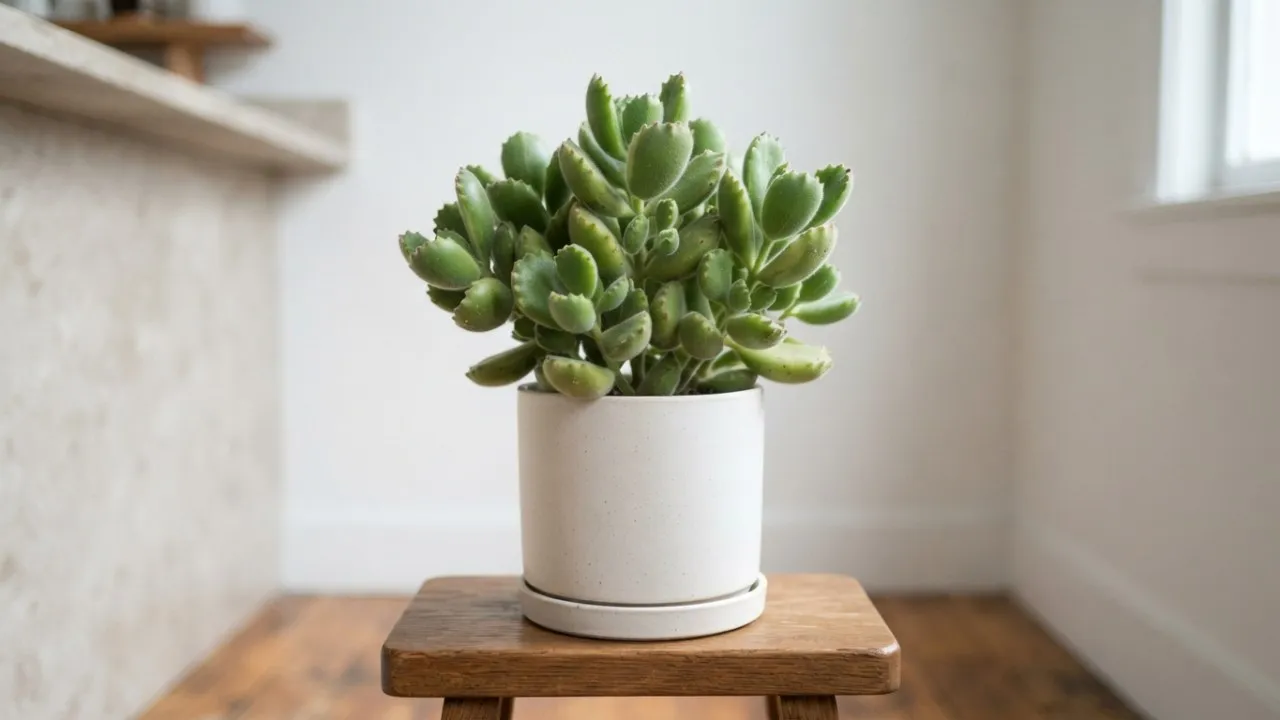
Bear's Paw
Cotyledon tomentosa
An adorable succulent with thick, fuzzy, paw-shaped leaves featuring distinct teeth or 'claws'.
The essentials at a glance
-
Watering
Every 14 days
-
Light
Full sun
-
Humidity
30–50 %
-
Temperature
10–27 °C


How to care for your Bear's Paw
Everything you need to keep your Bear's Paw healthy: watering, light, humidity, feeding, repotting and pruning.
Cotyledon tomentosa, universally known as Bear's Paw, is an irresistibly charming succulent famous for its unique foliage. Its thick, velvety leaves are densely covered in fine white hairs, giving them a soft, fuzzy texture. Each leaf is shaped like a small paw, complete with distinct reddish-brown 'claws' at the tips, which become more pronounced with ample sunlight. This slow-growing plant is a delightful addition to any succulent collection, perfect for small pots or arrangements, but caution is advised due to its toxicity.

Watering your Bear's Paw
Every 14 days
Water thoroughly when the soil is completely dry.
How to know it needs water
- Leaves feel soft and slightly deflated
- Pot is very light

How much light a Bear's Paw needs
Full sun
Full sun to bright indirect light.
- Direct sun tolerated
- 4 to 8 h a day
- Orientations that suit it
- South, South-east, South-west, East, West

Humidity and misting
30–50 %
Low (30-50%) Avoid misting; the fuzzy leaves can trap moisture and rot.

Feeding and fertiliser
Every 90 days
Fertilize sparingly during spring and summer; avoid during dormancy.
- Recommended feed
- Weak liquid succulent fertilizer. · 2-7-7

Repotting your Bear's Paw
Every 24 months
Gently remove, prune roots if needed, repot in fast-draining succulent mix.
- When
- Spring
- Potting mix
- Cactus and succulent mix
- Mix in
- perlite, pumice, coarse sand
The tell-tale signs
- Root-bound
- Stunted growth
- Overgrown for the pot

Pruning your Bear's Paw
To maintain shape or propagate cuttings. Use clean, sharp shears to trim leggy stems; allow cuttings to callus.

Through the year
Watering is not set once and for all: it follows the light and the growth. Allow 28 days between waterings in the depth of winter, against 11 in the growing season.
- 21 J
- 21 F
- 14 M
- 11 A
- 11 M
- 11 J
- 11 J
- 11 A
- 14 S
- 14 O
- 21 N
- 28 D
Active growth · Days between waterings

Toxicity
Highly toxic to pets and humans. Ingestion can cause severe gastrointestinal distress and neurological symptoms like ataxia. Keep away from children and animals.

Good to know
- Its fuzzy, paw-shaped leaves with 'claws' resemble a bear's paw.
- The 'claws' blush red under bright light.

Frequently asked questions about the Bear's Paw
How do you care for a Bear's Paw?
Water it every 14 days. Give it full sun. Ideal humidity: 30–50 %. Ideal temperature: 10–27 °C. Water thoroughly when the soil is completely dry.
How often should you water a Bear's Paw?
Every 14 days Water thoroughly when the soil is completely dry. How to know it needs water : Leaves feel soft and slightly deflated ; Pot is very light.
How much light does a Bear's Paw need?
Full sun Full sun to bright indirect light. 4 to 8 h a day
Is the Bear's Paw toxic to cats and dogs?
Yes. Highly toxic to pets and humans. Ingestion can cause severe gastrointestinal distress and neurological symptoms like ataxia. Keep away from children and animals. Keep it out of reach of your pets and call a vet if any is swallowed.
Why are my Bear's Paw leaves turning yellow?
Yellowing most often comes from too much water: the mix stays wet and the roots suffocate. Check that the pot drains, empty the saucer, and let the mix dry before watering again. Too little light or a cold draught cause the same symptom.
When should you repot a Bear's Paw?
Repot every 24 months, ideally in spring. Gently remove, prune roots if needed, repot in fast-draining succulent mix.

At a glance
- Family
- Crassulaceae
- Category
- Succulent
- Placement
- Indoor and outdoor
- Mature height
- 30 cm
- Growth
- Slow
- Temperature
- 10–27 °C
- Pot materials
- terracotta, ceramic
- Growth
- Reaches maturity in 5 years
These figures are for an average plant. In the app they are recalculated for yours, based on your room, its orientation and the season.
And for your plant, in your home?
In the app this plant becomes yours: a watering schedule tuned to your home, health tracking from photos, and reminders at the right moment.