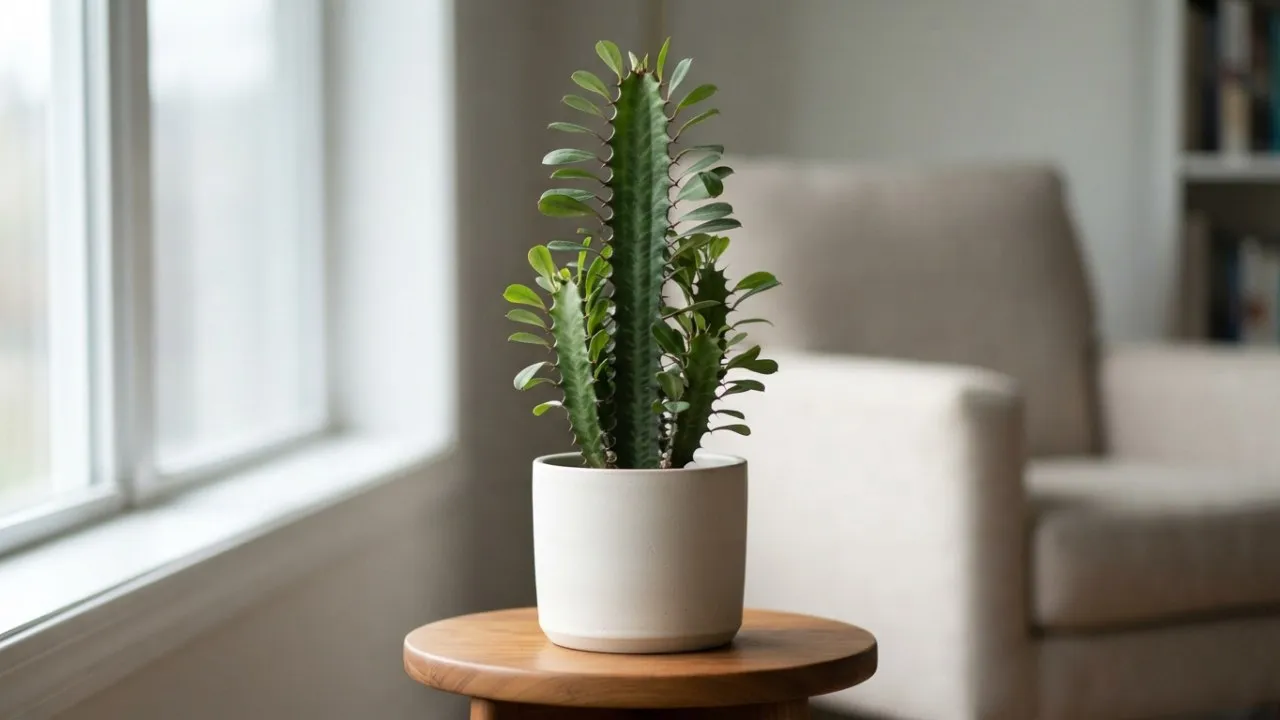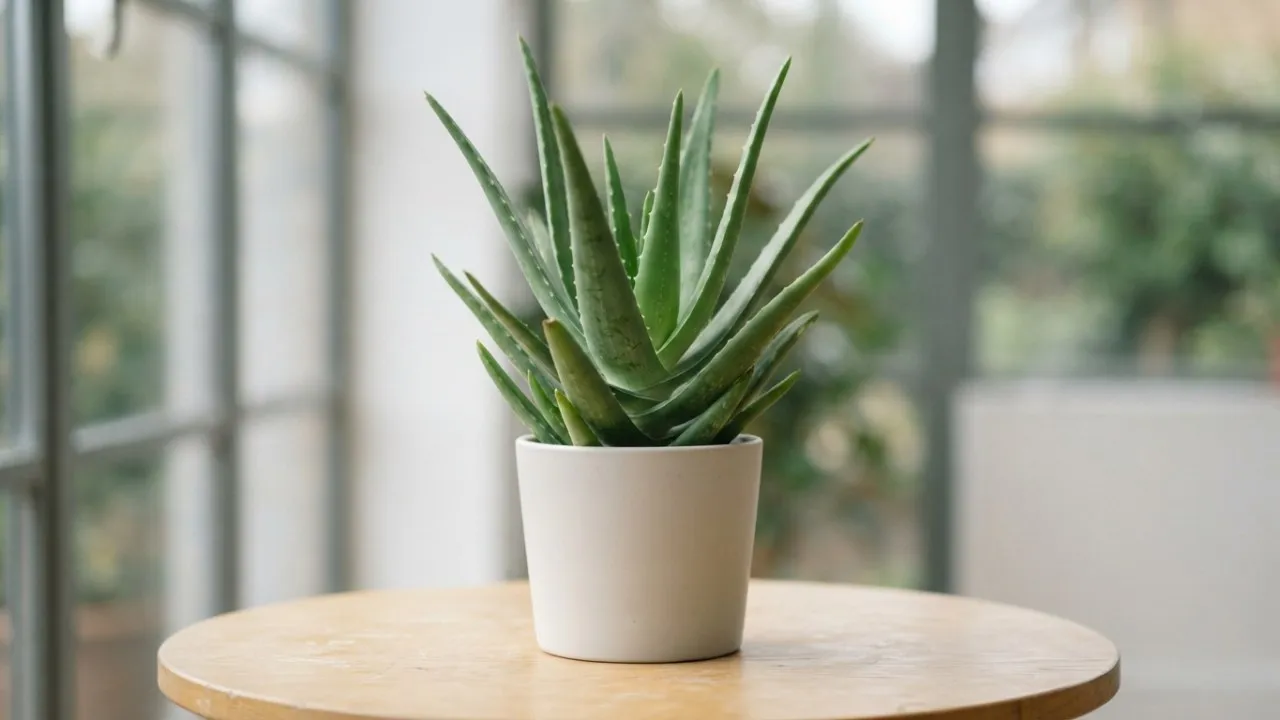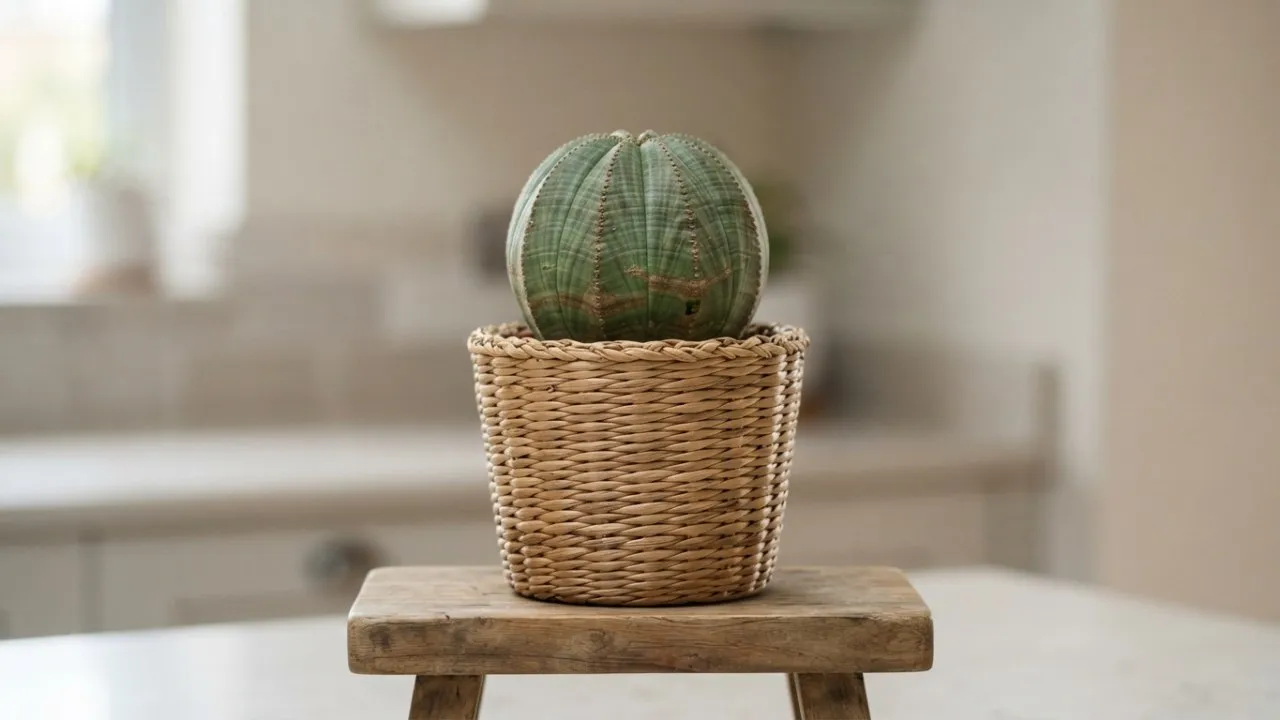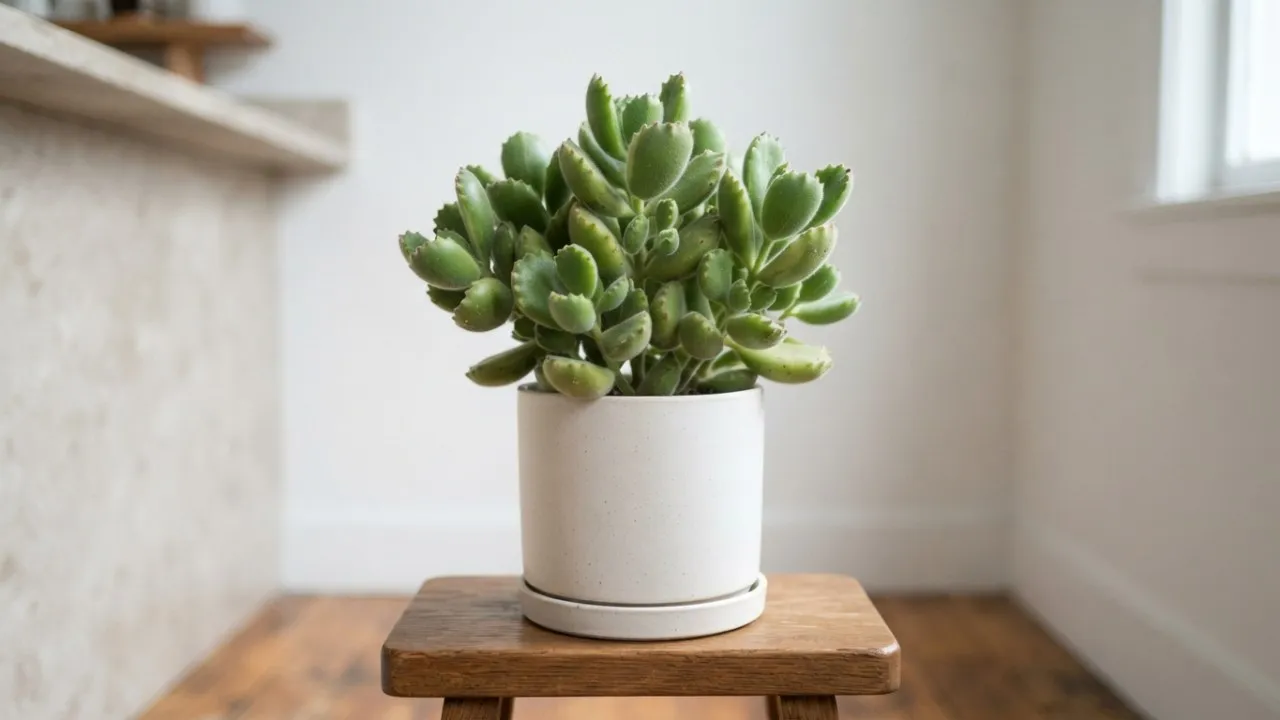
Variety Succulent · Crassulaceae
Lavender Scallops 'Variegata'
Kalanchoe fedtschenkoi 'Variegata' · A variety of Lavender Scallops
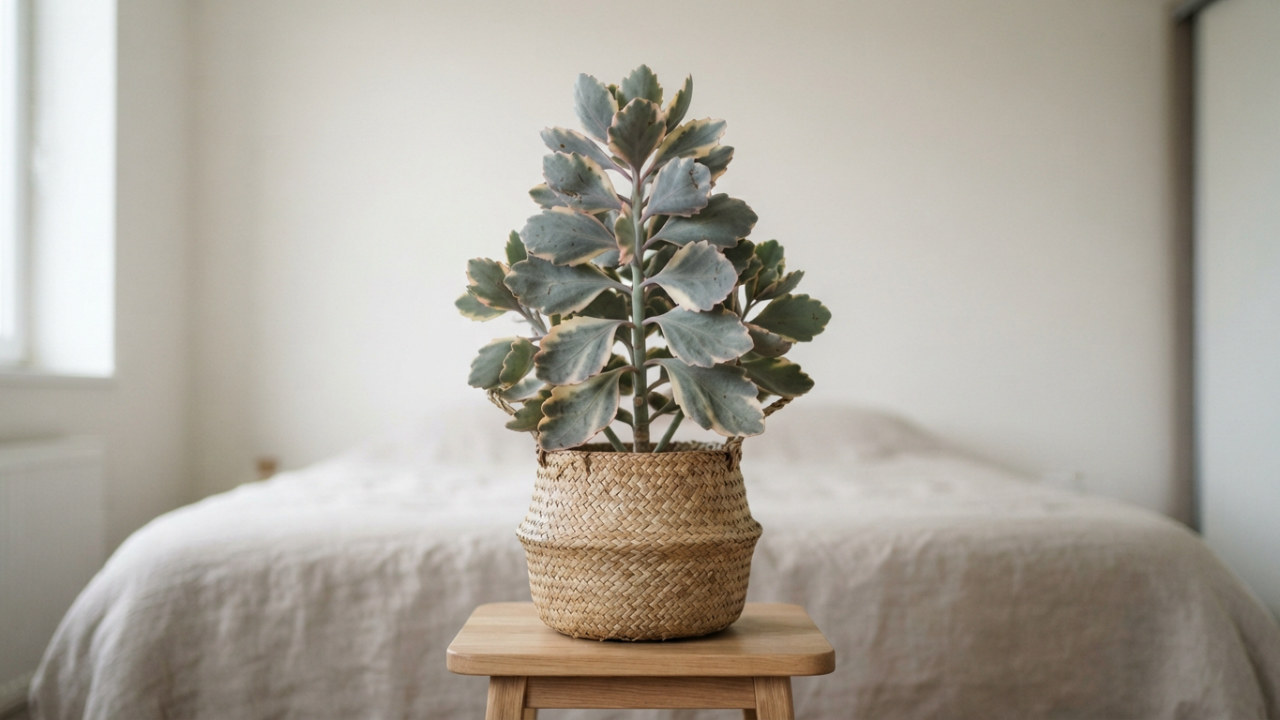
Scalloped, lavender-gray leaves splashed with cream and pink along the margins, on a slow, spreading shrubby plant.
- Every 12 daysWatering
- Bright indirect lightLight
- 30–50 %Humidity
- 18–27 °CTemperature


How to care for your Lavender Scallops 'Variegata'
Everything you need to keep your Lavender Scallops 'Variegata' healthy: watering, light, humidity, feeding, repotting and pruning.
A variegated garden form of Kalanchoe fedtschenkoi, a species from Madagascar. Its thick, fleshy, scalloped leaves are lavender-gray-green with cream markings along the edges, and the margins flush pink or red under strong light or drought. The shrubby stems reach about 45 cm, spread and root where they touch the ground, forming colonies. Pendant bell flowers with a yellow-green calyx and orange-red petals appear in late spring and early summer. It is sold as 'Aurora Borealis' too.

How to recognise Lavender Scallops 'Variegata'
Blue-gray scalloped leaves edged in cream and pink, where the species Kalanchoe fedtschenkoi has plain blue-gray leaves. Variegated Crassula and Sedum have smaller leaves and no scalloped edge.

Watering your Lavender Scallops 'Variegata'
Every 12 days
Water at the soil and let the pot dry out completely between waterings, keeping the leaves dry.
How to know it needs water
- The leaves look a little thinner and less glossy
- The soil is dry all the way down

How much light a Lavender Scallops 'Variegata' needs
Bright indirect light
Give it bright light with three to five hours of gentle direct sun; the pink and cream fade in shade, and midday summer sun can scorch the pale margins.
- Direct sun tolerated
- 3 to 5 h a day
- Orientations that suit it
- North, North-east, East, South-east, South, South-west, West, North-west

Humidity and misting
30–50 %
Dry to average indoor air, around 30 to 50 percent humidity, suits it. Do not mist: wet leaves spot and rot, and the plant stores water in its leaves.

Feeding and fertiliser
Every 28 days
Feed about once a month from April to September and stop in autumn and winter.
- Recommended feed
- A diluted cactus and succulent fertilizer. · 2-7-7

Repotting your Lavender Scallops 'Variegata'
Every 24 months
Move it to a pot a little larger with gritty mix, and leave it dry a few days afterwards.
- When
- Repot in spring, from March to May.
- Potting mix
- Cactus and succulent mix
- Mix in
- perlite, pumice, coarse sand
The tell-tale signs
- The stems sprawl over the rim and root into the table
- Roots appear at the drainage holes

Pruning your Lavender Scallops 'Variegata'
Pinch and trim in spring, when growth restarts. Cut leggy stems back to a pair of leaves; the pieces root easily on dry mix, and plain green shoots should be removed at the base.

Through the year
Watering is not set once and for all: it follows the light and the growth. Allow 22 days between waterings in the depth of winter, against 11 in the growing season.
- 18 J
- 18 F
- 14 M
- 12 A
- 11 M
- 11 J
- 11 J
- 11 A
- 12 S
- 14 O
- 18 N
- 22 D
Active growth · Days between waterings

Toxicity
Toxic to cats, dogs and people if eaten, because it contains bufadienolides that can cause vomiting, diarrhea and, rarely, an irregular heartbeat.

Good to know
- Its stems root wherever they touch the ground, which is how it spreads into a colony.
- Strong light or drought can turn the pale margins pink or red.

Frequently asked questions about the Lavender Scallops 'Variegata'
How do you care for a Lavender Scallops 'Variegata'?
Water it every 12 days. Give it bright indirect light. Ideal humidity: 30–50 %. Ideal temperature: 18–27 °C. Water at the soil and let the pot dry out completely between waterings, keeping the leaves dry.
How often should you water a Lavender Scallops 'Variegata'?
Every 12 days Water at the soil and let the pot dry out completely between waterings, keeping the leaves dry. How to know it needs water : The leaves look a little thinner and less glossy ; The soil is dry all the way down.
How much light does a Lavender Scallops 'Variegata' need?
Bright indirect light Give it bright light with three to five hours of gentle direct sun; the pink and cream fade in shade, and midday summer sun can scorch the pale margins. 3 to 5 h a day
Is the Lavender Scallops 'Variegata' toxic to cats and dogs?
Yes. Toxic to cats, dogs and people if eaten, because it contains bufadienolides that can cause vomiting, diarrhea and, rarely, an irregular heartbeat. Keep it out of reach of your pets and call a vet if any is swallowed.
Why are my Lavender Scallops 'Variegata' leaves turning yellow?
Yellowing most often comes from too much water: the mix stays wet and the roots suffocate. Check that the pot drains, empty the saucer, and let the mix dry before watering again. Too little light or a cold draught cause the same symptom.
When should you repot a Lavender Scallops 'Variegata'?
Repot every 24 months, ideally in repot in spring, from march to may.. Move it to a pot a little larger with gritty mix, and leave it dry a few days afterwards.

At a glance
- Family
- Crassulaceae
- Category
- Succulent
- Placement
- Indoor
- Mature height
- 45 cm
- Growth
- Slow
- Temperature
- 18–27 °C
- Pot materials
- terracotta, ceramic
- Growth
- Reaches maturity in 5 years
These figures are for an average plant. In the app they are recalculated for yours, based on your room, its orientation and the season.
And for your plant, in your home?
In the app this plant becomes yours: a watering schedule tuned to your home, health tracking from photos, and reminders at the right moment.