Succulent · Crassulaceae
Lavender Scallops
Kalanchoe fedtschenkoi
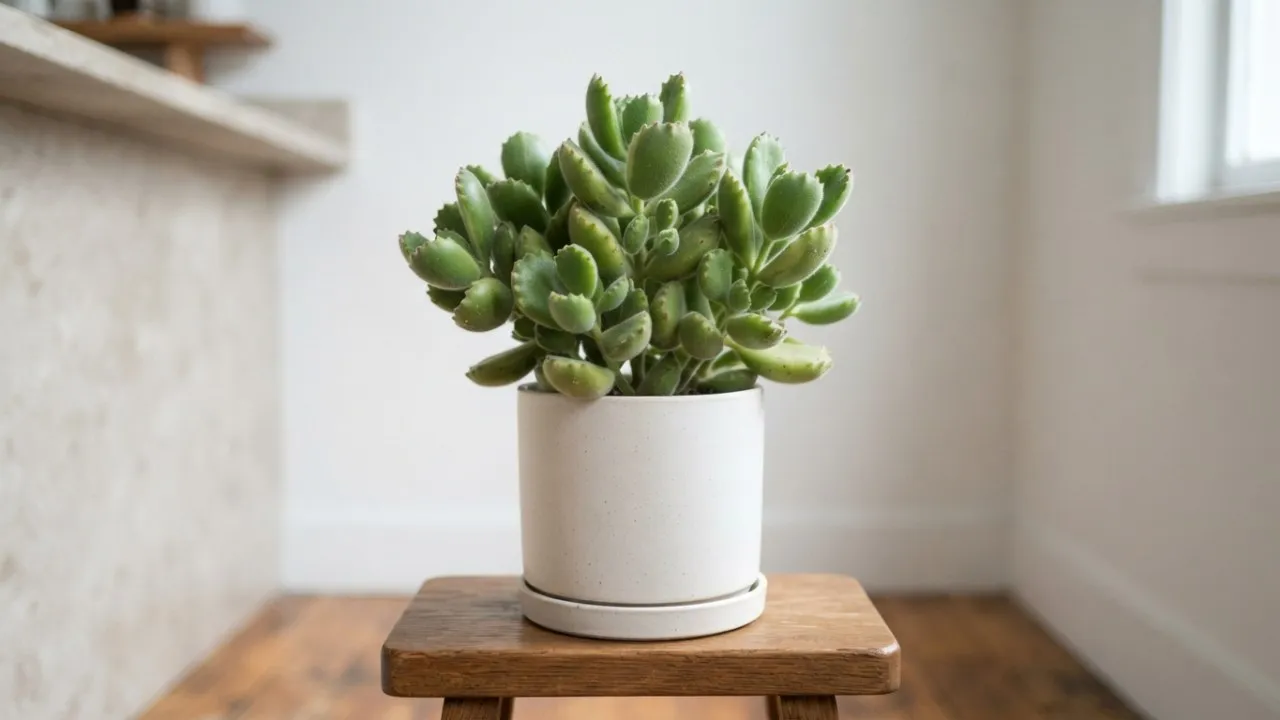
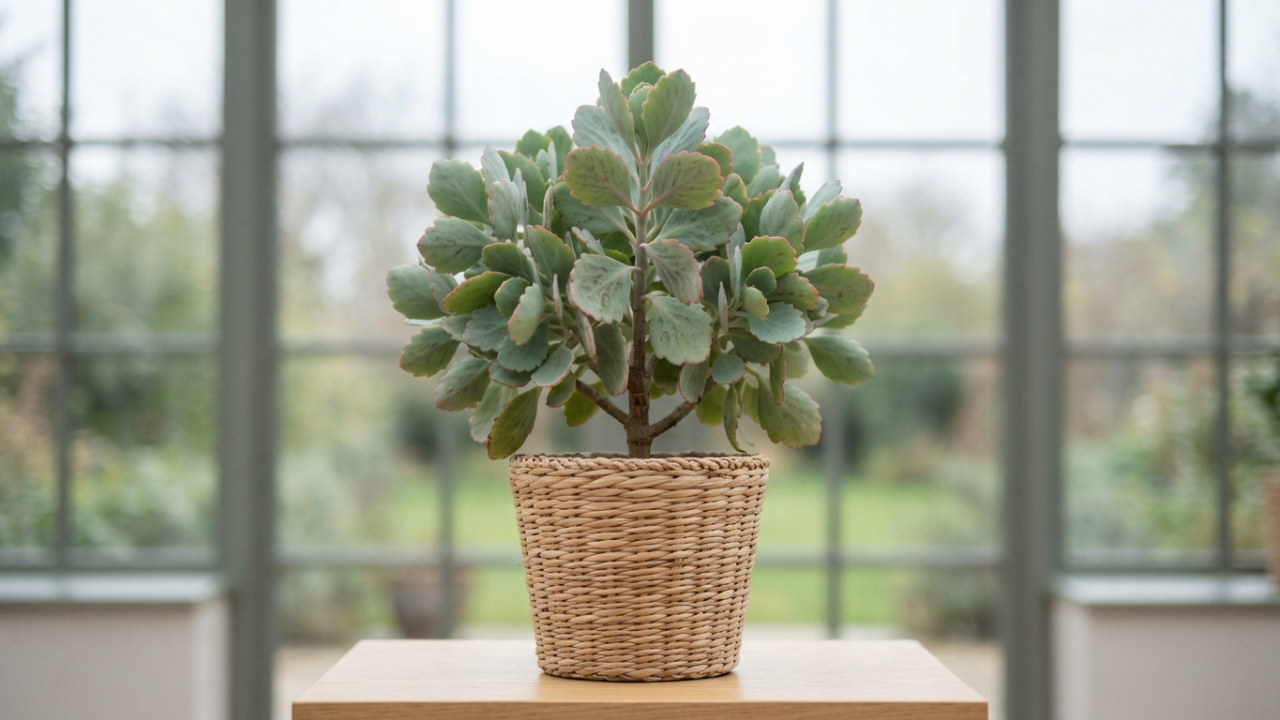
A shrubby succulent with smooth blue-gray scalloped leaves edged pink, upright then arching, rooting along its stems.
- Every 12 daysWatering
- Bright indirect lightLight
- 30–50 %Humidity
- 18–27 °CTemperature


Its varieties 1
How to care for your Lavender Scallops
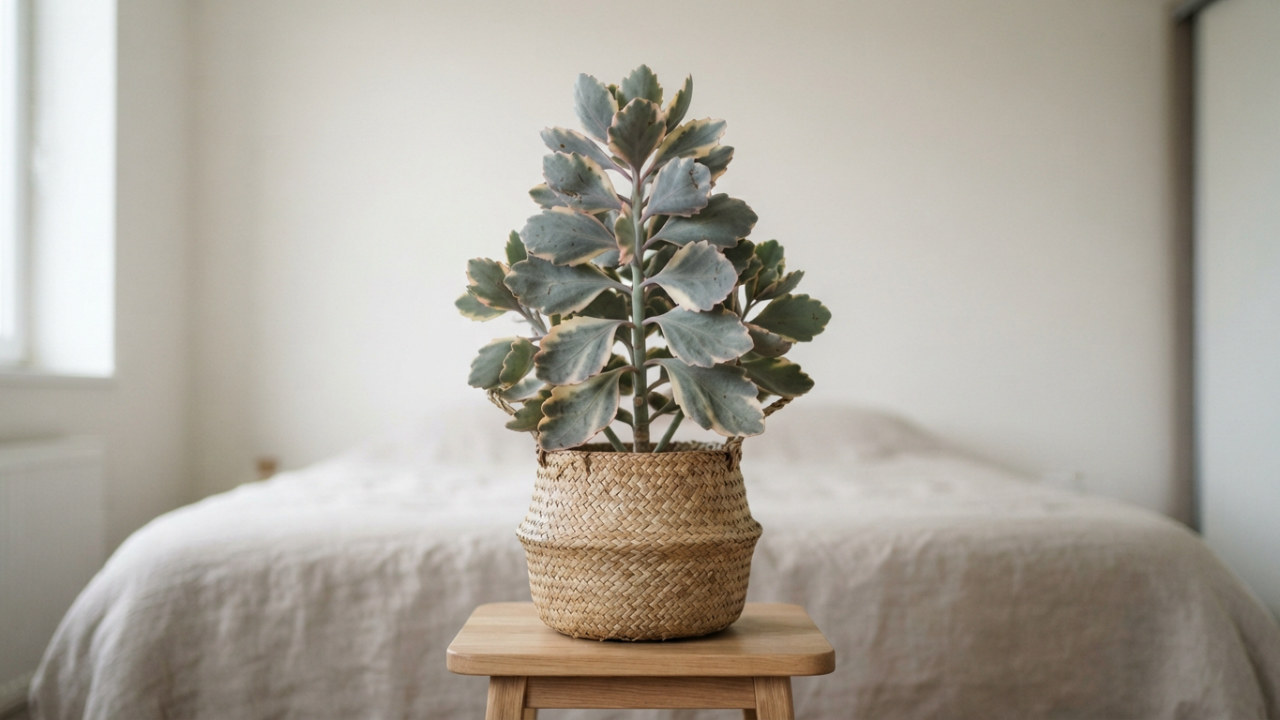
Everything you need to keep your Lavender Scallops healthy: watering, light, humidity, feeding, repotting and pruning.
Native to Madagascar, where it grows on rocks, this succulent is named after the Russian botanist Boris Fedtschenko. Its waxy, blue-green leaves are nearly round, with scalloped edges that turn pink or purplish in strong sun or drought. The stems rise, then arch and root where they touch the ground, and nodding bell flowers in reddish-brown appear in late spring.

How to recognise Lavender Scallops
Smooth, waxy blue-green leaves with scalloped edges tinted pink, on stems that arch and root. Not fuzzy like Kalanchoe tomentosa, not paddle-shaped like Kalanchoe thyrsiflora, and without the dark blotches of Kalanchoe marmorata.

Watering your Lavender Scallops
Every 12 days
Water the soil thoroughly, then wait until it has dried out completely before the next watering.
How to know it needs water
- The leaves soften slightly and lose their firm, plump look
- The soil is dry through the whole pot

How much light a Lavender Scallops needs
Bright indirect light
Bright light is best, from filtered sun to a few hours of direct sun, which also brings out the pink edges.
- Direct sun tolerated
- 2 to 5 h a day
- Orientations that suit it
- North, North-east, East, South-east, South, South-west, West, North-west

Humidity and misting
30–50 %
Normal dry indoor air is fine, around 30 to 50 percent humidity. Never mist, the leaves hold water at their base and rot easily.

Feeding and fertiliser
Every 28 days
Feed about once a month from spring to early fall, and not in winter.
- Recommended feed
- A diluted cactus and succulent fertilizer, low in nitrogen. · 2-7-7

Repotting your Lavender Scallops
Every 24 months
Use a gritty, fast-draining mix in a pot with drainage, and wait a few days before watering again.
- When
- Repot in spring, when growth restarts.
- Potting mix
- Cactus and succulent mix
- Mix in
- perlite, pumice, coarse sand
The tell-tale signs
- Rooted stems fill the pot and push against its edges
- Roots circle the surface or come out of the drainage holes

Pruning your Lavender Scallops
Trim in spring to keep the stems bushy, or whenever they become leggy. Cut stems with clean shears above a leaf pair, and root the cuttings in a dry, gritty mix.

Through the year
Watering is not set once and for all: it follows the light and the growth. Allow 22 days between waterings in the depth of winter, against 11 in the growing season.
- 18 J
- 18 F
- 14 M
- 12 A
- 11 M
- 11 J
- 11 J
- 11 A
- 12 S
- 14 O
- 18 N
- 22 D
Active growth · Days between waterings

Toxicity
It contains cardiac glycosides and is toxic to cats, dogs and people if eaten, causing vomiting, diarrhea and sometimes an abnormal heart rhythm, so keep it out of reach.

Good to know
- Stems that touch the soil send out roots, so the plant slowly forms a colony.
- The species name honors the Russian botanist Boris Alexeevich Fedtschenko.

Frequently asked questions about the Lavender Scallops
How do you care for a Lavender Scallops?
Water it every 12 days. Give it bright indirect light. Ideal humidity: 30–50 %. Ideal temperature: 18–27 °C. Water the soil thoroughly, then wait until it has dried out completely before the next watering.
How often should you water a Lavender Scallops?
Every 12 days Water the soil thoroughly, then wait until it has dried out completely before the next watering. How to know it needs water : The leaves soften slightly and lose their firm, plump look ; The soil is dry through the whole pot.
How much light does a Lavender Scallops need?
Bright indirect light Bright light is best, from filtered sun to a few hours of direct sun, which also brings out the pink edges. 2 to 5 h a day
Is the Lavender Scallops toxic to cats and dogs?
Yes. It contains cardiac glycosides and is toxic to cats, dogs and people if eaten, causing vomiting, diarrhea and sometimes an abnormal heart rhythm, so keep it out of reach. Keep it out of reach of your pets and call a vet if any is swallowed.
Why are my Lavender Scallops leaves turning yellow?
Yellowing most often comes from too much water: the mix stays wet and the roots suffocate. Check that the pot drains, empty the saucer, and let the mix dry before watering again. Too little light or a cold draught cause the same symptom.
When should you repot a Lavender Scallops?
Repot every 24 months, ideally in repot in spring, when growth restarts.. Use a gritty, fast-draining mix in a pot with drainage, and wait a few days before watering again.

At a glance
- Family
- Crassulaceae
- Category
- Succulent
- Placement
- Indoor
- Mature height
- 45 cm
- Growth
- Slow
- Temperature
- 18–27 °C
- Pot materials
- terracotta, ceramic
- Growth
- Reaches maturity in 5 years
These figures are for an average plant. In the app they are recalculated for yours, based on your room, its orientation and the season.
And for your plant, in your home?
In the app this plant becomes yours: a watering schedule tuned to your home, health tracking from photos, and reminders at the right moment.