Variety Succulent · Asphodelaceae
Haworthia pilifera
Haworthia cooperi var. pilifera · A variety of Windowpane Plant
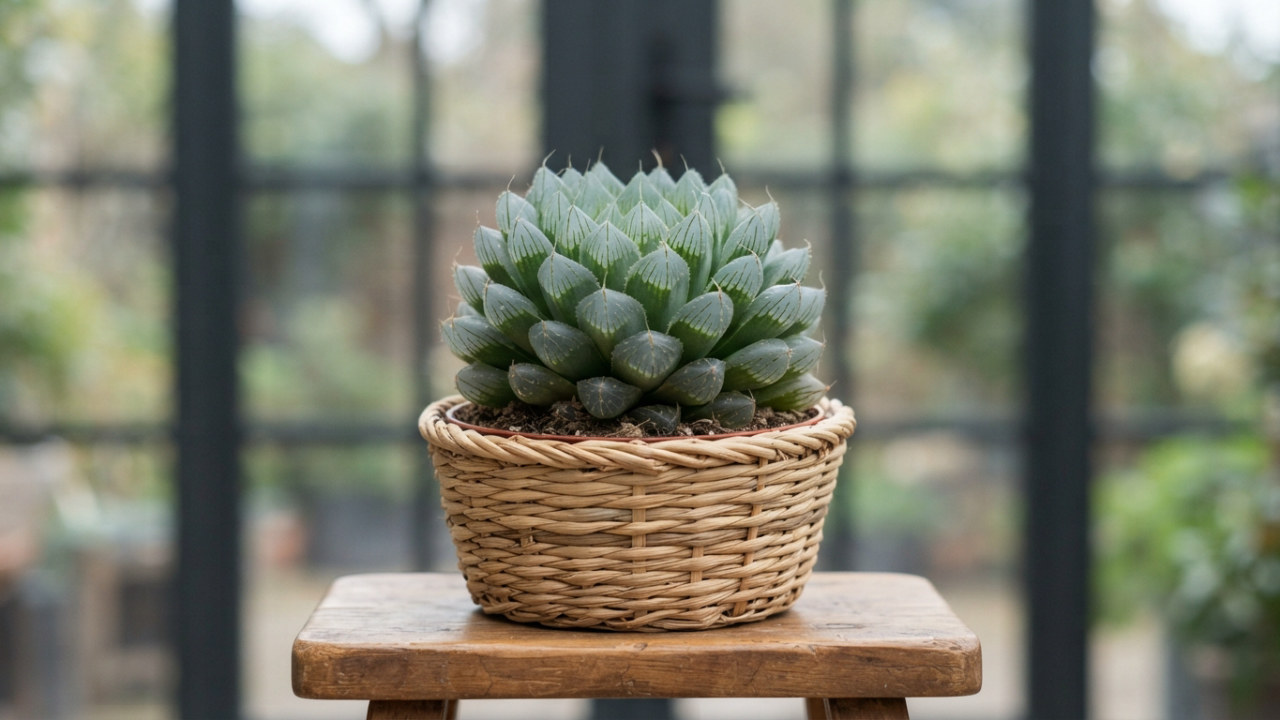
A windowed haworthia whose short, plump blue-green leaves each end in a fine, hair-like bristle.
- Every 12 daysWatering
- Bright indirect lightLight
- 40–60 %Humidity
- 10–27 °CTemperature


Other varieties 2
How to care for your Haworthia pilifera
Everything you need to keep your Haworthia pilifera healthy: watering, light, humidity, feeding, repotting and pruning.
Haworthia cooperi var. pilifera is native to the Eastern Cape of South Africa, from the Port Elizabeth area to Kingwilliamstown. Its short, plump, bluish-green leaves are translucent and end in a fine bristle, with marginal teeth fainter than those of the typical cooperi. The rosettes, 5 to 10 cm across, offset slowly into compact clumps. In parts of its range it blends into var. dielsiana, and shops often label it simply Haworthia cooperi.

How to recognise Haworthia pilifera
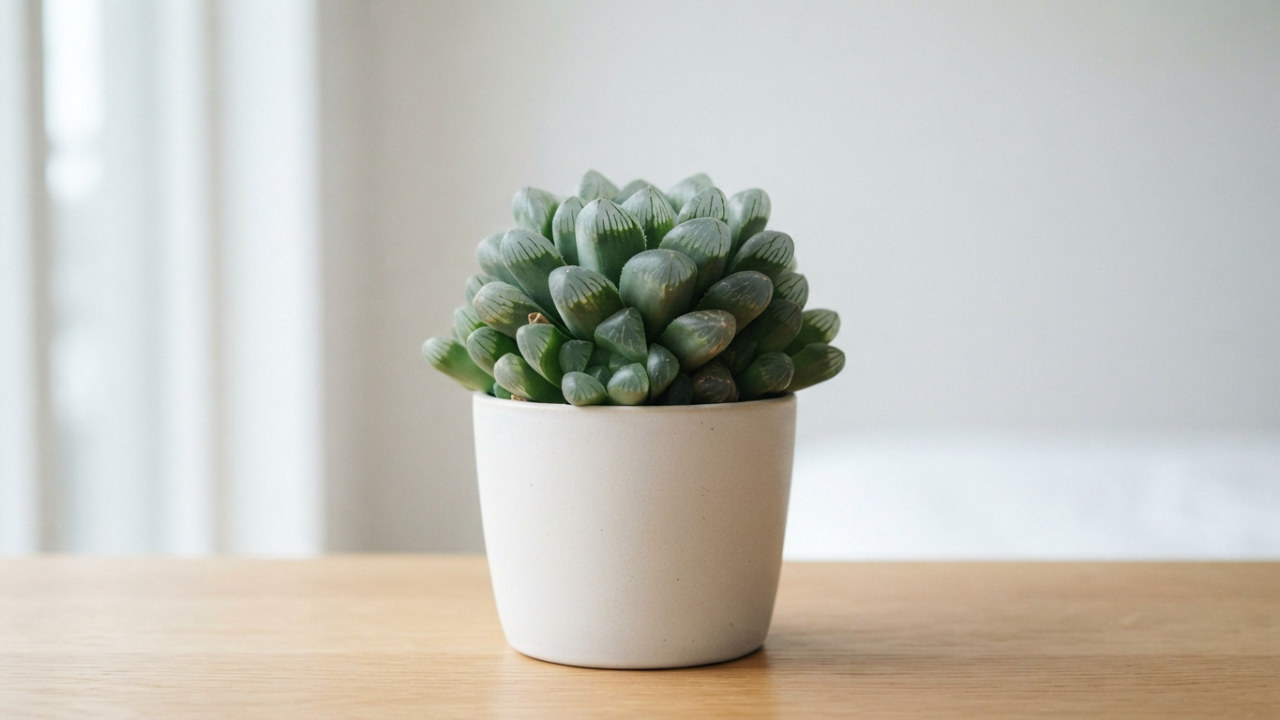
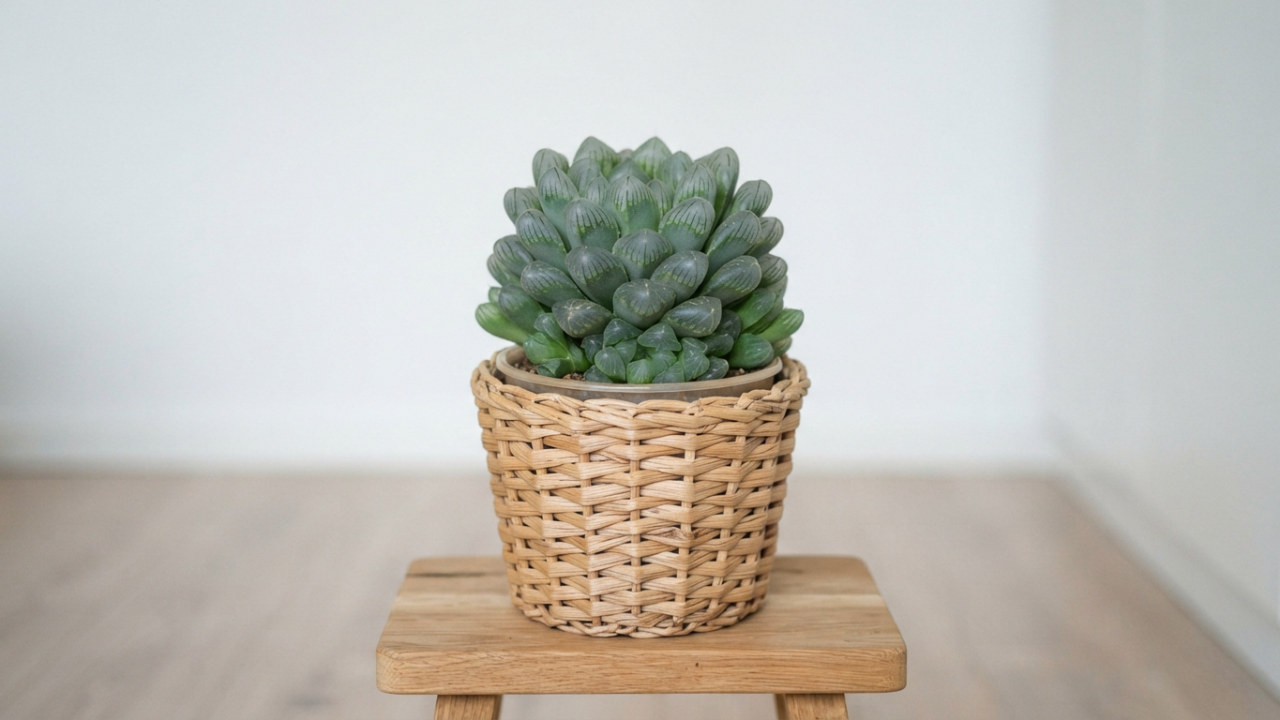
Translucent blue-green leaves, shorter and stubbier than those of typical Haworthia cooperi, with fainter marginal teeth and pointed tips that end in a fine hair-like bristle, unlike the cut-off tips of the truncata variety and the rounded, bristle-free tips of the dielsiana variety. Haworthia cymbiformis var. obtusa, the closest lookalike, has smooth margins and bright green, boat-shaped leaves with darker stripes and no bristle.

Watering your Haworthia pilifera
Every 12 days
Wet the whole mix at the edge of the pot, let the excess drain away, and water again only once a finger pushed in deep comes out dry.
How to know it needs water
- A wooden stick pushed to the bottom of the pot comes out completely dry
- The leaves lose some firmness and the rosette sits a little flatter

How much light a Haworthia pilifera needs
Bright indirect light
Bright light from a window, with direct sun reaching it for no more than two hours in the morning or late afternoon; hot midday sun can scorch the leaf tips.
- Direct sun tolerated
- 0 to 2 h a day
- Orientations that suit it
- North, North-east, East, North-west, West, South-east, South

Humidity and misting
40–60 %
Average household humidity, 40 to 60%, is enough, and it dislikes stuffy, damp corners. Skip the spray bottle: the plant gets by on ordinary room air, and moisture trapped at the leaf bases leads to rot.

Feeding and fertiliser
Every 28 days
One feeding every four weeks from April to September is plenty, and none at all from October to March.
- Recommended feed
- A liquid fertilizer rich in phosphorus and potassium, as sold for cacti, diluted to half strength. · 2-7-7

Repotting your Haworthia pilifera
Every 36 months
Divide crowded clumps by hand, let cut roots dry for a day or two, then pot each piece in a shallow pot of gritty mix and wait a week before watering.
- When
- Spring, from March to May, once the plant is waking up.
- Potting mix
- Cactus and succulent mix
- Mix in
- perlite, pumice, coarse sand
The tell-tale signs
- The clump has filled the pot and offsets lean over its rim
- The mix has broken down into fine dust and drains slowly

Pruning your Haworthia pilifera
When the outer leaves shrivel with age, and after flowering. Pull off shriveled leaves gently, and cut the spent flower stalk close to the base.

Through the year
Watering is not set once and for all: it follows the light and the growth. Allow 18 days between waterings in the depth of winter, against 10 in the growing season.
- 18 J
- 14 F
- 12 M
- 10 A
- 10 M
- 10 J
- 10 J
- 10 A
- 12 S
- 12 O
- 14 N
- 18 D
Active growth · Days between waterings

Good to know
- Pilifera is Latin for bearing hairs, a nod to the fine bristle at each leaf tip.
- Where its range meets that of var. dielsiana, plants grade into one another, so intermediate forms are common.

Frequently asked questions about the Haworthia pilifera
How do you care for a Haworthia pilifera?
Water it every 12 days. Give it bright indirect light. Ideal humidity: 40–60 %. Ideal temperature: 10–27 °C. Wet the whole mix at the edge of the pot, let the excess drain away, and water again only once a finger pushed in deep comes out dry.
How often should you water a Haworthia pilifera?
Every 12 days Wet the whole mix at the edge of the pot, let the excess drain away, and water again only once a finger pushed in deep comes out dry. How to know it needs water : A wooden stick pushed to the bottom of the pot comes out completely dry ; The leaves lose some firmness and the rosette sits a little flatter.
How much light does a Haworthia pilifera need?
Bright indirect light Bright light from a window, with direct sun reaching it for no more than two hours in the morning or late afternoon; hot midday sun can scorch the leaf tips. 0 to 2 h a day
Is the Haworthia pilifera toxic to cats and dogs?
No, the Haworthia pilifera is not listed as toxic to cats and dogs. That is still no reason to let your pets chew on it.
Why are my Haworthia pilifera leaves turning yellow?
Yellowing most often comes from too much water: the mix stays wet and the roots suffocate. Check that the pot drains, empty the saucer, and let the mix dry before watering again. Too little light or a cold draught cause the same symptom.
When should you repot a Haworthia pilifera?
Repot every 36 months, ideally in spring, from march to may, once the plant is waking up.. Divide crowded clumps by hand, let cut roots dry for a day or two, then pot each piece in a shallow pot of gritty mix and wait a week before watering.

At a glance
- Family
- Asphodelaceae
- Category
- Succulent
- Placement
- Indoor and outdoor
- Mature height
- 10 cm
- Growth
- Slow
- Temperature
- 10–27 °C
- Pot materials
- terracotta, ceramic, plastic
- Growth
- Reaches maturity in 5 years
These figures are for an average plant. In the app they are recalculated for yours, based on your room, its orientation and the season.
And for your plant, in your home?
In the app this plant becomes yours: a watering schedule tuned to your home, health tracking from photos, and reminders at the right moment.