
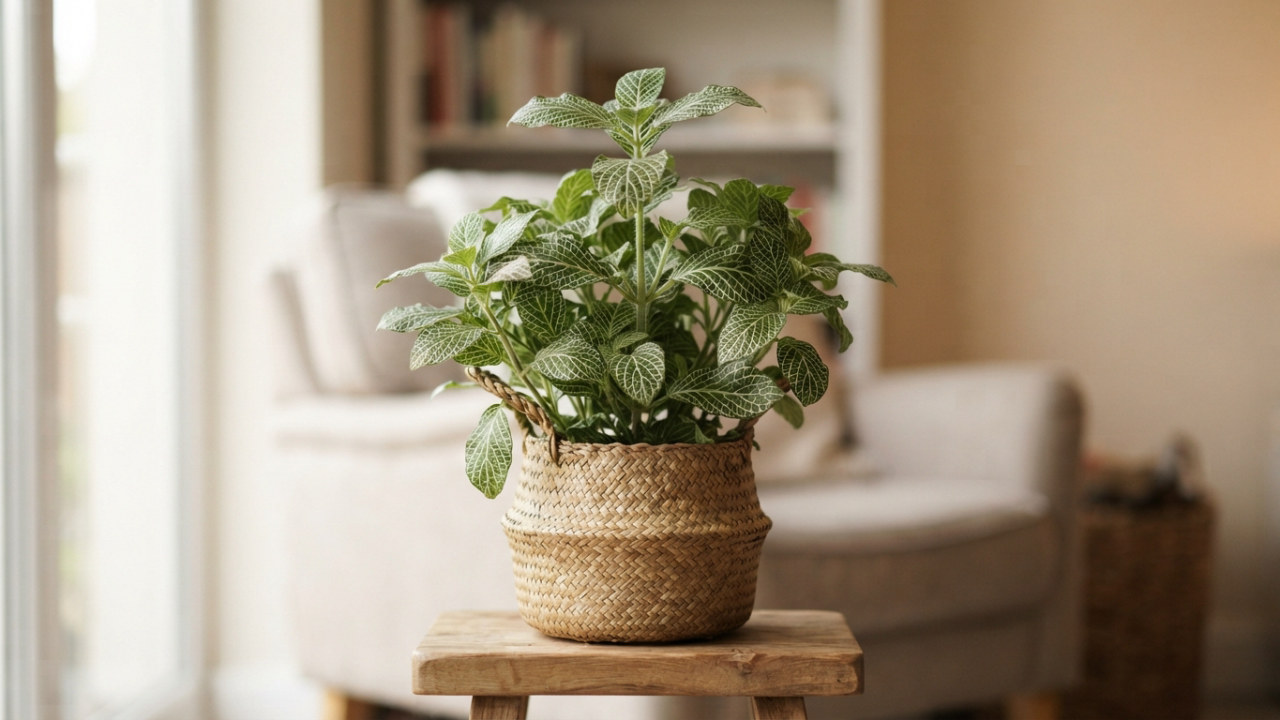
Variety Tropical · Acanthaceae
White-veined nerve plant (Argyroneura Group)
Fittonia albivenis Argyroneura Group · A variety of Nerve Plant
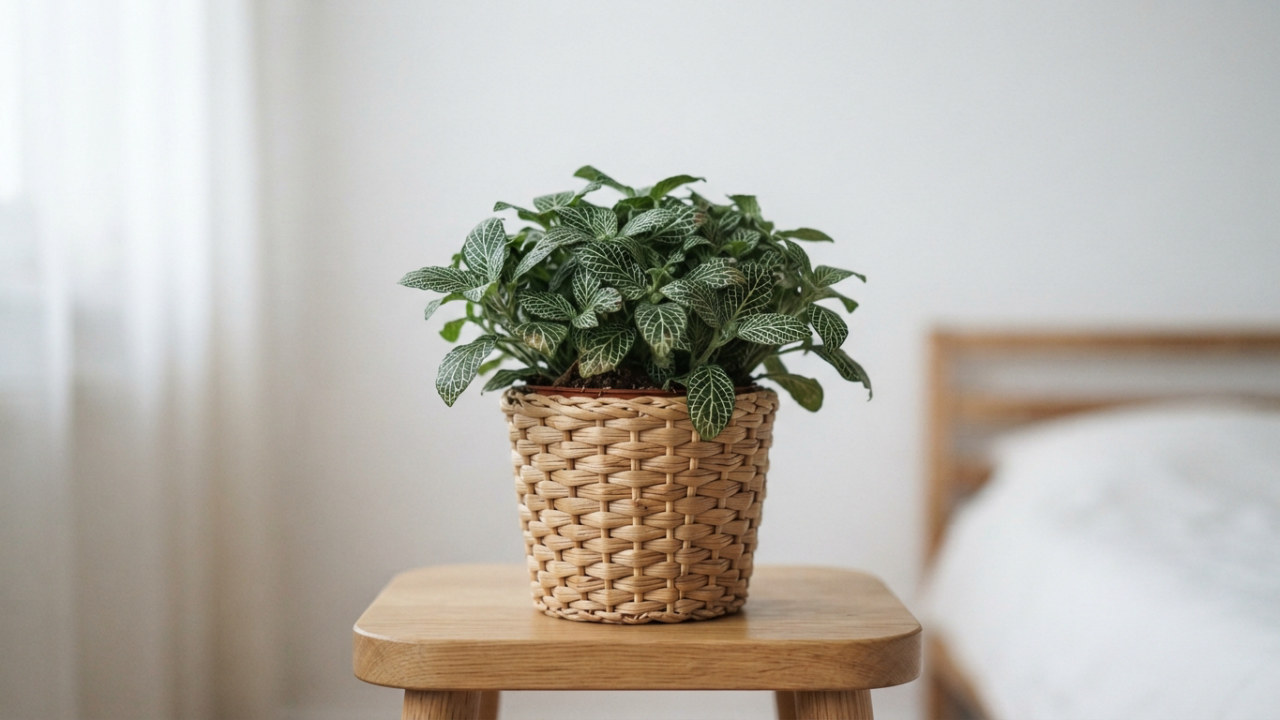
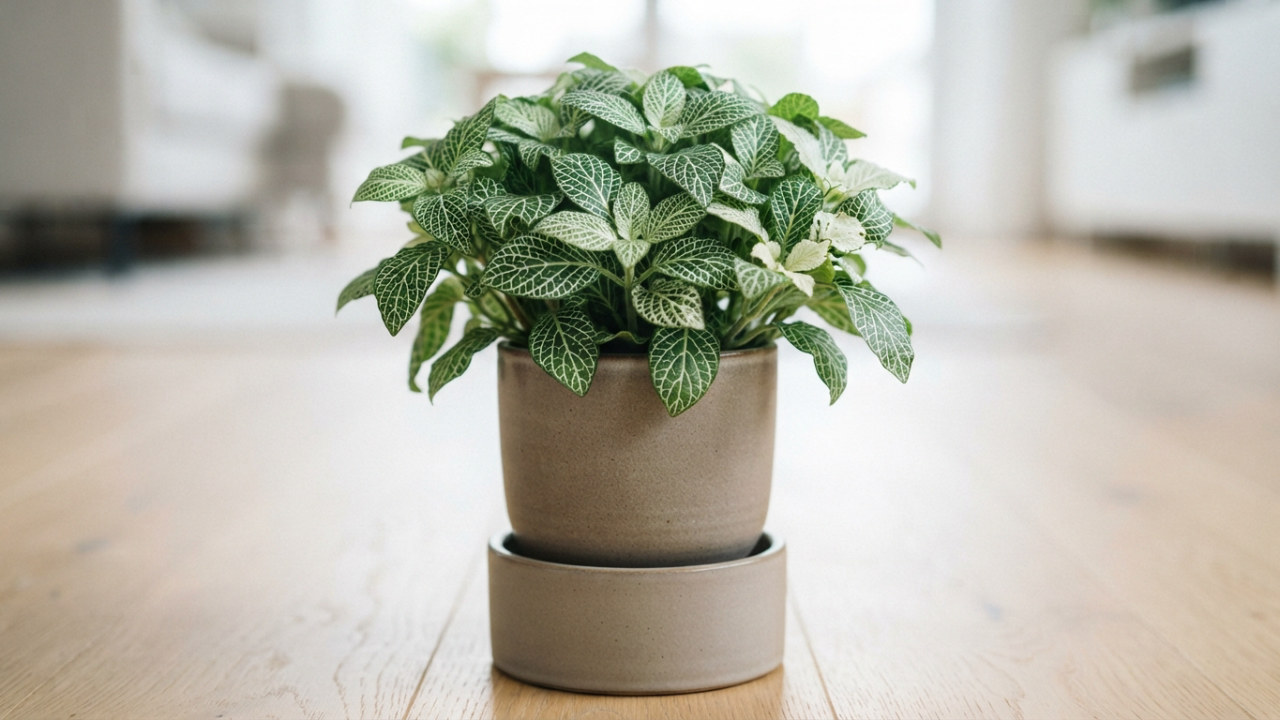
The white-veined group of the nerve plant: deep olive-green oval leaves crossed by a net of silvery white veins.
- Every 4 daysWatering
- Bright indirect lightLight
- 60–80 %Humidity
- 18–27 °CTemperature


Other varieties 8

How to care for your White-veined nerve plant (Argyroneura Group)
Everything you need to keep your White-veined nerve plant (Argyroneura Group) healthy: watering, light, humidity, feeding, repotting and pruning.
The Argyroneura Group covers the nerve plants with white veins, the look that gives the species its name albivenis. The oval leaves are deep olive-green, up to about 10 cm long, and the plant forms a dense, low mat of foliage 8 to 20 cm tall, spreading to roughly 30 to 45 cm. It was once sold as the separate species Fittonia argyroneura. It does best in the steady warmth and humidity of a bright bathroom or a terrarium.

How to recognise White-veined nerve plant (Argyroneura Group)
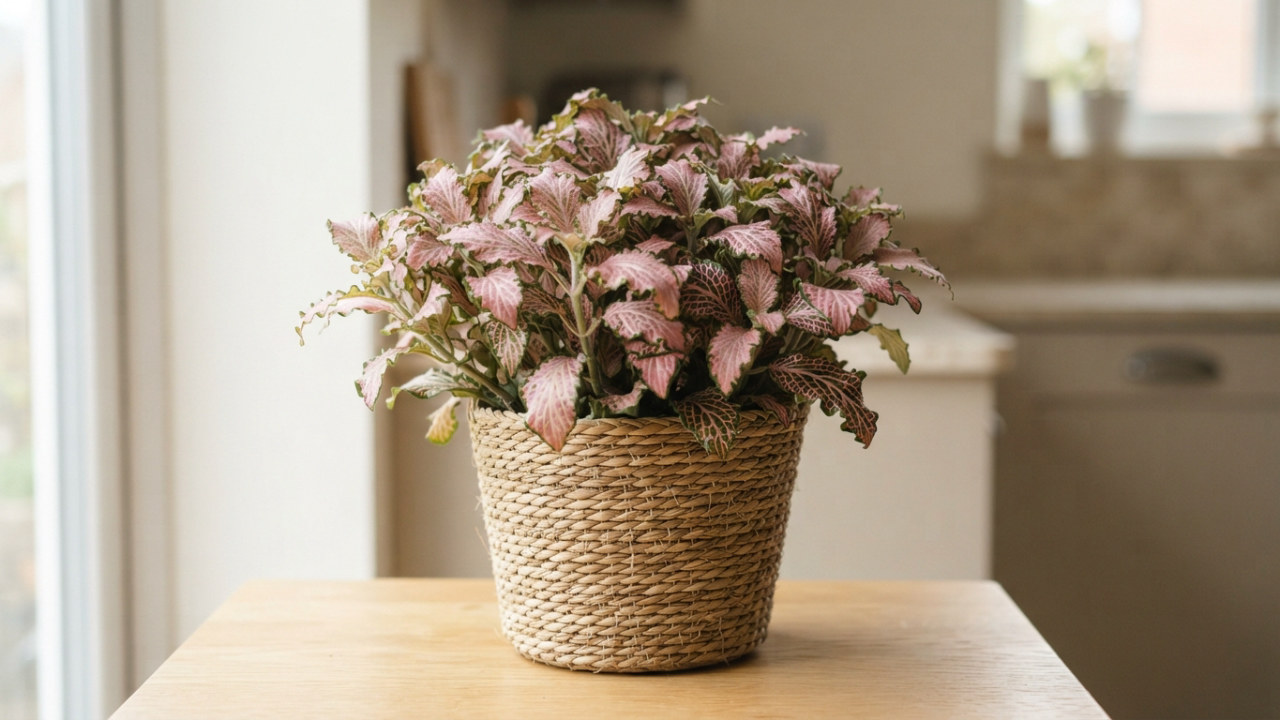
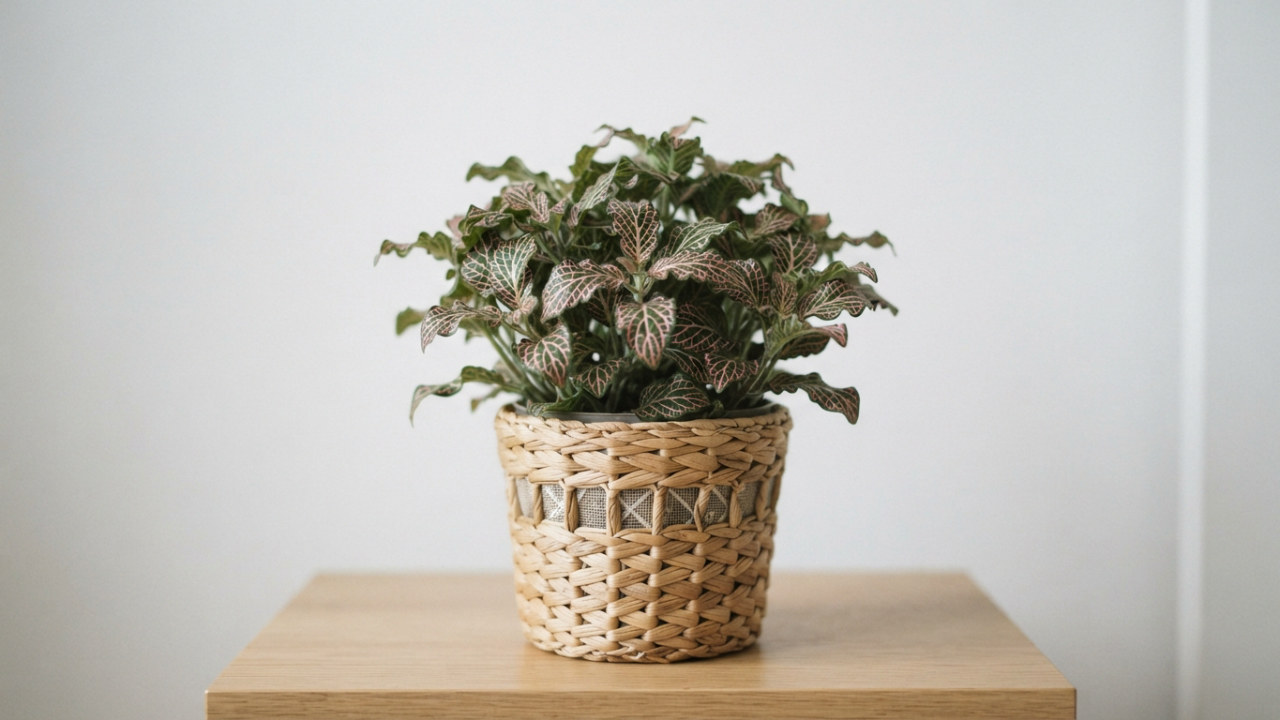
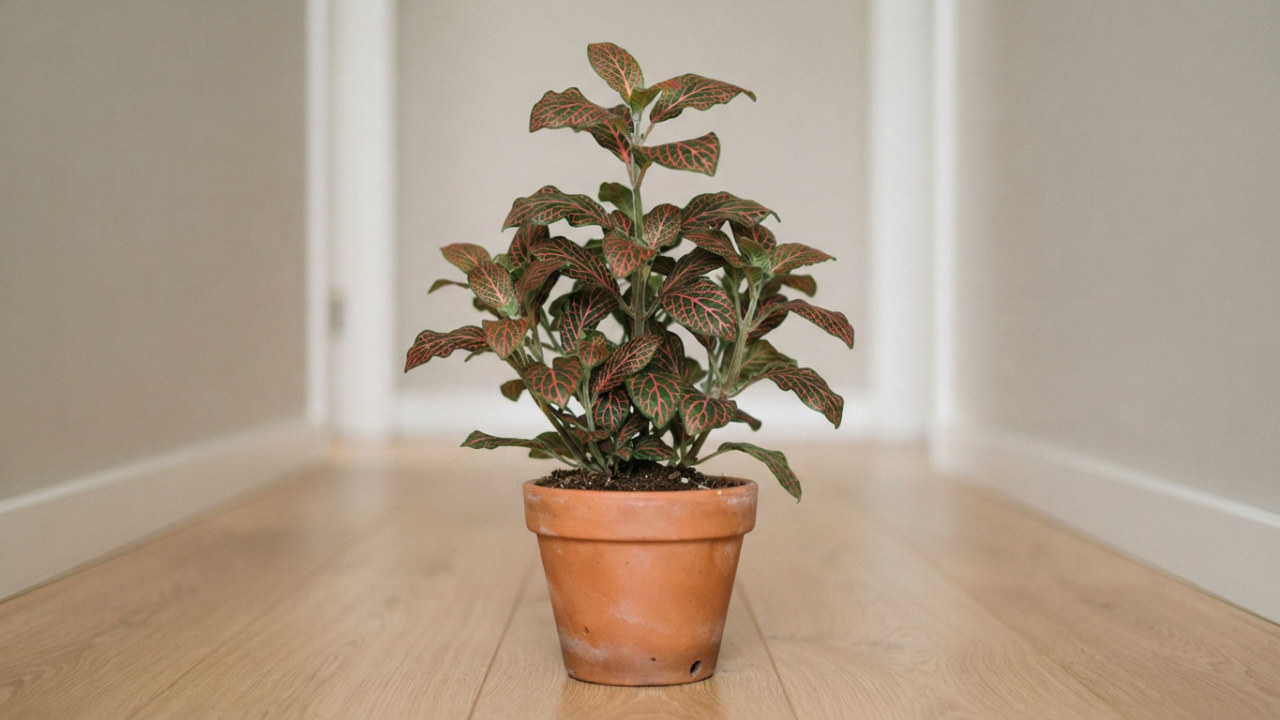
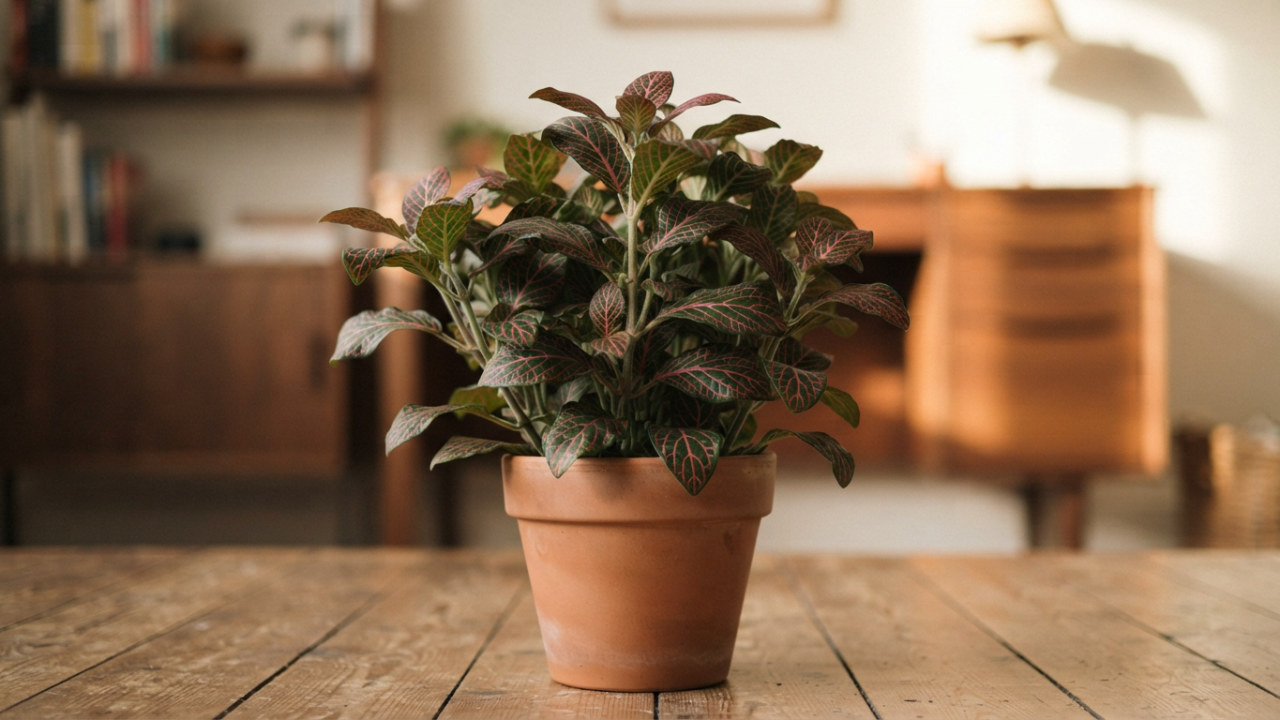
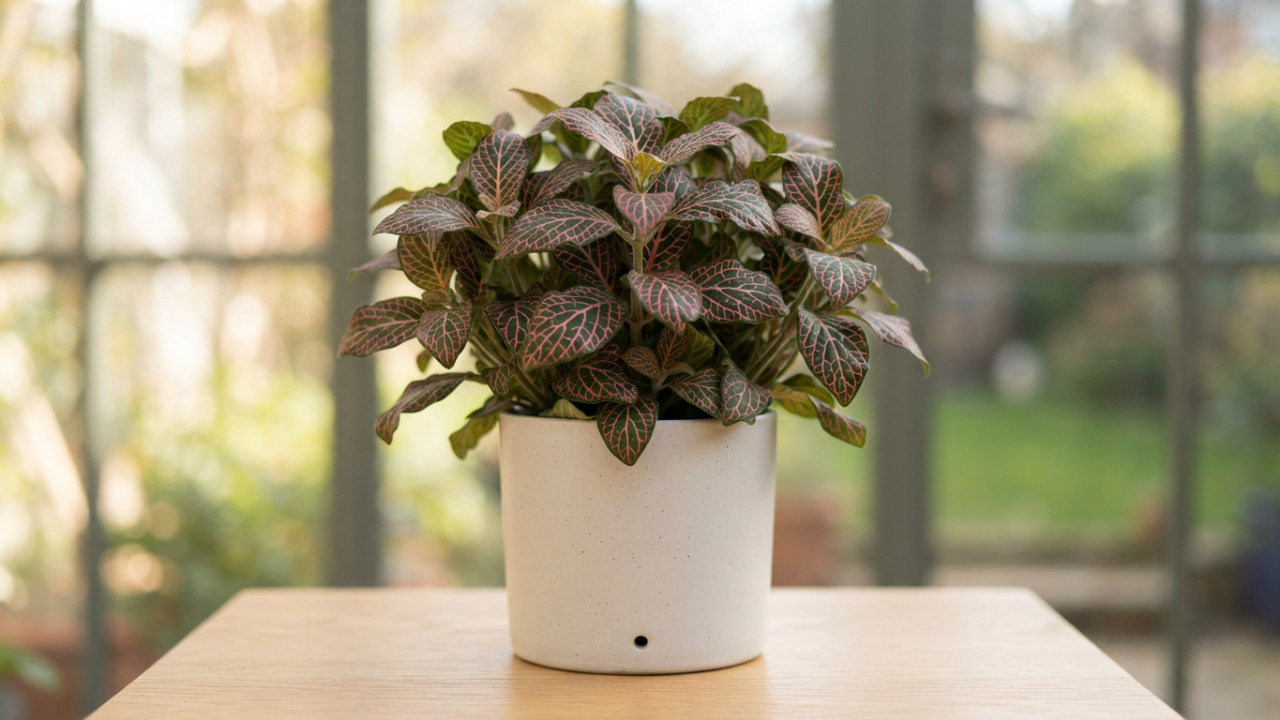
Olive-green leaves with white veins, a plain look next to the red-veined Verschaffeltii group, 'Red Anne' and 'Ruby Red'. 'Nana' has much smaller leaves, and 'White Anne' is denser and paler, almost whiter than green. Hypoestes has speckles, not veins.

Watering your White-veined nerve plant (Argyroneura Group)
Every 4 days
Water from above with room-temperature water once the surface starts to dry, keeping the mix evenly moist without leaving it wet.
How to know it needs water
- The leaves wilt and hang limp
- The top of the mix looks dry and pale

How much light a White-veined nerve plant (Argyroneura Group) needs
Bright indirect light
Bright indirect light, away from direct sun, which burns the leaves and dulls the white veins.
- Direct sun tolerated
- No direct sun
- Orientations that suit it
- North, North-east, East, North-west

Humidity and misting
60–80 %
60 to 80%, kept even throughout the year. Mist about every three days, or stand the pot on a tray of damp pebbles.

Feeding and fertiliser
Every 28 days
Feed every four weeks from March to September at half strength, and pause for the cooler months.
- Recommended feed
- Liquid fertilizer for foliage plants, diluted to half strength. · 2-1-2

Repotting your White-veined nerve plant (Argyroneura Group)
Every 12 months
Repot into a shallow pot one size larger, with a light, airy mix of potting soil, perlite and coco fiber.
- When
- Spring
- Potting mix
- All-purpose potting mix
- Mix in
- perlite, coco fibre
The tell-tale signs
- Roots escape through the drainage holes
- The mat has filled the pot and dries out in a day

Pruning your White-veined nerve plant (Argyroneura Group)
In spring and summer, when the stems stretch and the mat thins. Pinch the tips with your fingers or trim above a node with clean scissors, and cut off the flower spikes.

Through the year
Watering is not set once and for all: it follows the light and the growth. Allow 4 days between waterings in the depth of winter, against 3 in the growing season.
- 4 J
- 4 F
- 4 M
- 3 A
- 3 M
- 3 J
- 3 J
- 3 A
- 4 S
- 4 O
- 4 N
- 4 D
Active growth · Days between waterings

Good to know
- Fittonia argyroneura, the old name for this look, is now considered a synonym of Fittonia albivenis.
- Its stems root at the nodes as they creep, so a pinched-off tip makes an easy cutting.

Frequently asked questions about the White-veined nerve plant (Argyroneura Group)
How do you care for a White-veined nerve plant (Argyroneura Group)?
Water it every 4 days. Give it bright indirect light. Ideal humidity: 60–80 %. Ideal temperature: 18–27 °C. Water from above with room-temperature water once the surface starts to dry, keeping the mix evenly moist without leaving it wet.
How often should you water a White-veined nerve plant (Argyroneura Group)?
Every 4 days Water from above with room-temperature water once the surface starts to dry, keeping the mix evenly moist without leaving it wet. How to know it needs water : The leaves wilt and hang limp ; The top of the mix looks dry and pale.
How much light does a White-veined nerve plant (Argyroneura Group) need?
Bright indirect light Bright indirect light, away from direct sun, which burns the leaves and dulls the white veins. No direct sun
Is the White-veined nerve plant (Argyroneura Group) toxic to cats and dogs?
No, the White-veined nerve plant (Argyroneura Group) is not listed as toxic to cats and dogs. That is still no reason to let your pets chew on it.
Why are my White-veined nerve plant (Argyroneura Group) leaves turning yellow?
Yellowing most often comes from too much water: the mix stays wet and the roots suffocate. Check that the pot drains, empty the saucer, and let the mix dry before watering again. Too little light or a cold draught cause the same symptom.
When should you repot a White-veined nerve plant (Argyroneura Group)?
Repot every 12 months, ideally in spring. Repot into a shallow pot one size larger, with a light, airy mix of potting soil, perlite and coco fiber.

At a glance
- Family
- Acanthaceae
- Category
- Tropical
- Placement
- Indoor
- Mature height
- 15 cm
- Growth
- Moderate
- Temperature
- 18–27 °C
- Pot materials
- ceramic, plastic
- Growth
- Reaches maturity in 2 years
These figures are for an average plant. In the app they are recalculated for yours, based on your room, its orientation and the season.
And for your plant, in your home?
In the app this plant becomes yours: a watering schedule tuned to your home, health tracking from photos, and reminders at the right moment.
In the same spirit
 Every 7 days


Air Plant
Tillandsia ionantha

 Every 6 days
Alocasia amazonica
Alocasia amazonica
 Every 7 days
Alocasia baginda
Alocasia baginda
 Every 4 days
Angel Wings
Caladium bicolor
