
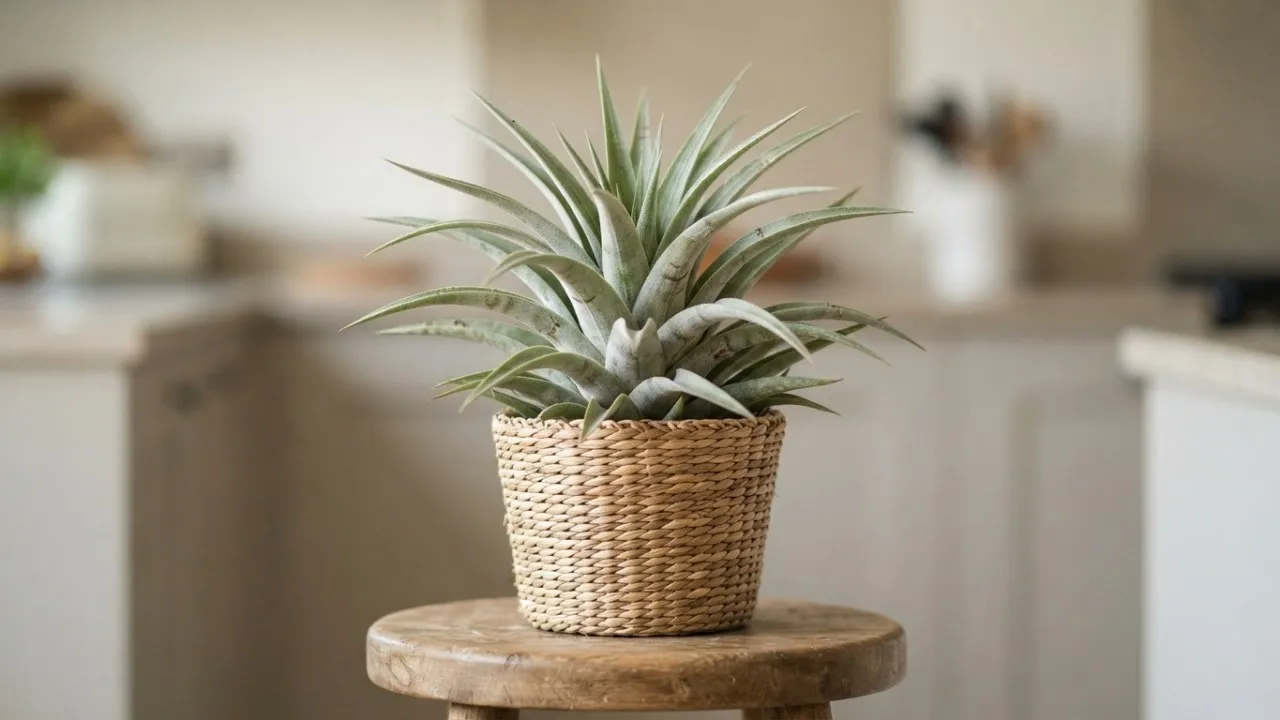
Air Plant
Tillandsia ionantha
An epiphytic plant without terrestrial roots that lives suspended in the air, absorbing water and nutrients through its silvery leaves.
The essentials at a glance
-
Watering
Every 4 days
-
Light
Bright indirect light
-
Humidity
50–70 %
-
Temperature
12–30 °C


How to care for your Air Plant
Everything you need to keep your Air Plant healthy: watering, light, humidity, feeding, repotting and pruning.
Tillandsia ionantha is a small epiphytic plant native to Central America and Mexico, belonging to the bromeliad family like the pineapple. Having no functional roots for absorption, it draws all its water and nutrients directly from the ambient air through the trichomes covering its leaves. Before flowering, its foliage turns a striking red, and a small violet flower emerges from the center of the rosette. Easy to care for, it can be attached to any decorative support.

Watering your Air Plant
Every 4 days
Submerge the entire plant in water for 20–30 minutes, then shake well and allow to dry upside down to prevent water pooling in the centre of the rosette. Use rainwater or demineralised water.
How to know it needs water
- Leaves curling inward on themselves
- Leaf colour turning greyish and dull
- Plant feels lighter than usual

How much light a Air Plant needs
Bright indirect light
Bright indirect light. Tolerates a few hours of direct morning sun. Avoid intense afternoon sun which dehydrates the plant.
- Direct sun tolerated
- 0 to 2 h a day
- Orientations that suit it
- North, North-east, East, South-east, South, South-west, West, North-west

Humidity and misting
50–70 %
50–70% Mist generously between soaks, especially in heated indoor spaces. The silver trichomes on the leaves capture ambient moisture.

Feeding and fertiliser
Every 30 days
Mist or soak in a nutrient solution once a month during the growing season. Tillandsias absorb nutrients through their leaves via the trichomes.
- Recommended feed
- Specialist tillandsia fertilizer or very dilute orchid fertilizer (quarter dose). · 5-5-5

Repotting your Air Plant
No repotting in the traditional sense. Attach the plant to a support (wood, stone, shell) with non-toxic glue or wire. Never use soil or plant in compost.
- When
- Spring
- Potting mix
- Grown in water
The tell-tale signs
- No repotting needed as the plant grows without substrate
- Detach offsets when they reach one third of the size of the mother plant

Pruning your Air Plant
After flowering, to remove the dry flower spike. When basal leaves brown naturally. Gently remove dry leaves at the base by pulling softly. Separate offsets (pups) when they reach one third of the size of the mother plant.

Through the year
Watering is not set once and for all: it follows the light and the growth. Allow 6 days between waterings in the depth of winter, against 3 in the growing season.
- 6 J
- 5 F
- 4 M
- 3 A
- 3 M
- 3 J
- 3 J
- 3 A
- 4 S
- 4 O
- 5 N
- 6 D
Active growth · Days between waterings

Good to know
- Tillandsias don't need soil to live: they absorb water and nutrients directly through their leaves using microscopic structures called trichomes.
- Before flowering, Tillandsia ionantha turns spectacularly red, changing from green to bright red in just a few days.

Frequently asked questions about the Air Plant
How do you care for a Air Plant?
Water it every 4 days. Give it bright indirect light. Ideal humidity: 50–70 %. Ideal temperature: 12–30 °C. Submerge the entire plant in water for 20–30 minutes, then shake well and allow to dry upside down to prevent water pooling in the centre of the rosette. Use rainwater or demineralised water.
How often should you water a Air Plant?
Every 4 days Submerge the entire plant in water for 20–30 minutes, then shake well and allow to dry upside down to prevent water pooling in the centre of the rosette. Use rainwater or demineralised water. How to know it needs water : Leaves curling inward on themselves ; Leaf colour turning greyish and dull ; Plant feels lighter than usual.
How much light does a Air Plant need?
Bright indirect light Bright indirect light. Tolerates a few hours of direct morning sun. Avoid intense afternoon sun which dehydrates the plant. 0 to 2 h a day
Is the Air Plant toxic to cats and dogs?
No, the Air Plant is not listed as toxic to cats and dogs. That is still no reason to let your pets chew on it.
Why are my Air Plant leaves turning yellow?
Yellowing most often comes from too much water: the mix stays wet and the roots suffocate. Check that the pot drains, empty the saucer, and let the mix dry before watering again. Too little light or a cold draught cause the same symptom.
When should you repot a Air Plant?
Repot , ideally in spring. No repotting in the traditional sense. Attach the plant to a support (wood, stone, shell) with non-toxic glue or wire. Never use soil or plant in compost.

At a glance
- Family
- Bromeliaceae
- Category
- Tropical
- Placement
- Indoor
- Mature height
- 15 cm
- Growth
- Slow
- Temperature
- 12–30 °C
- Pot materials
- ceramic, glass, wood
- Growth
- Reaches maturity in 3 years
These figures are for an average plant. In the app they are recalculated for yours, based on your room, its orientation and the season.
And for your plant, in your home?
In the app this plant becomes yours: a watering schedule tuned to your home, health tracking from photos, and reminders at the right moment.
In the same spirit
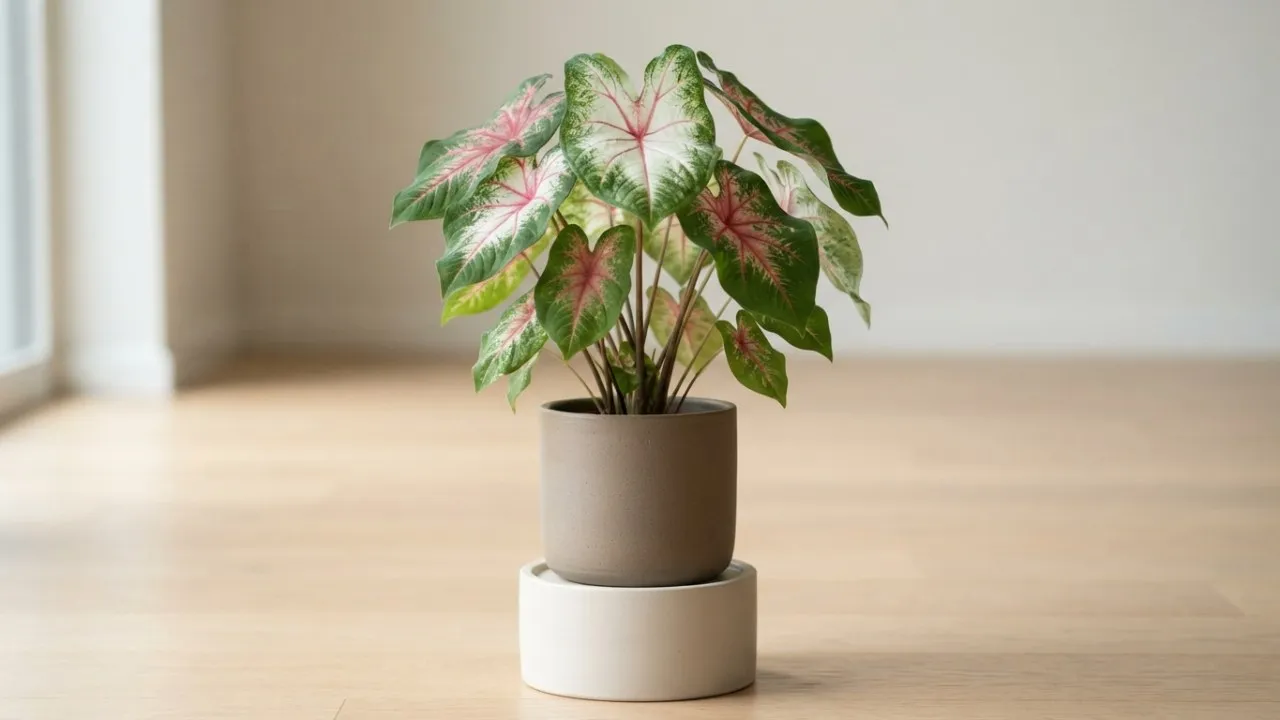 Every 3 days
 Angel Wings
Caladium bicolor

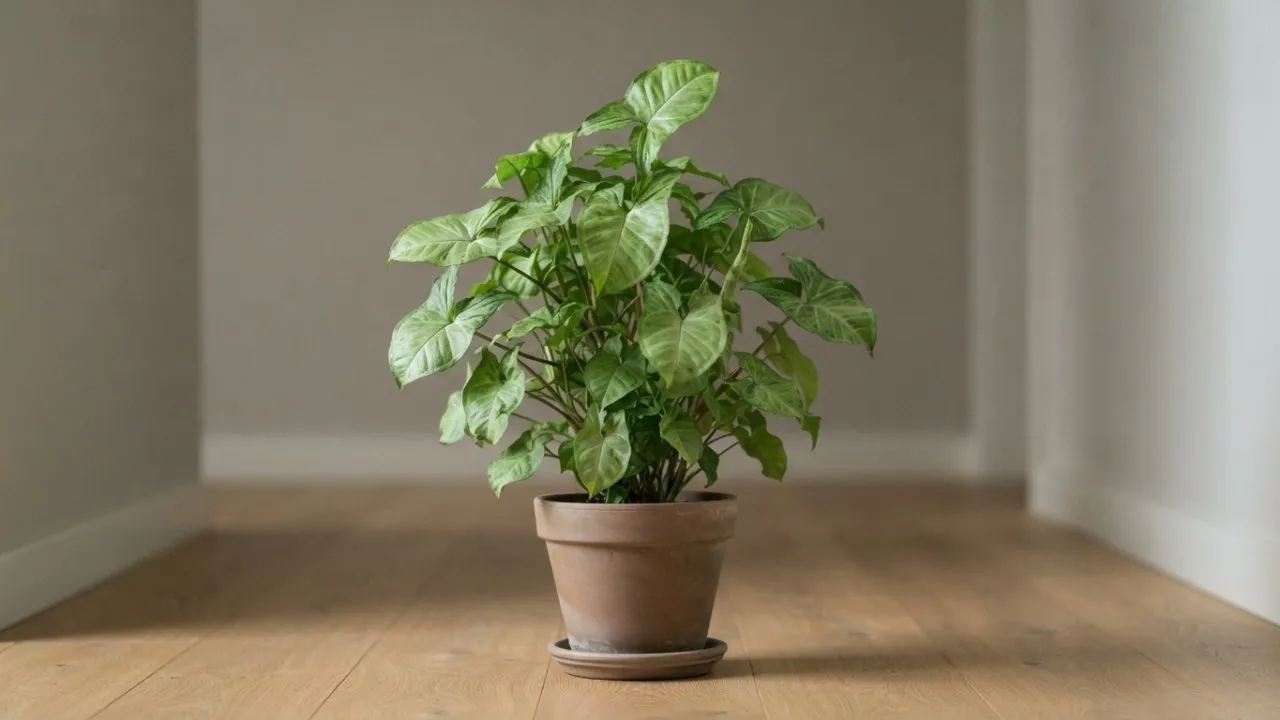 Every 7 days
 Arrowhead Plant
Syngonium podophyllum
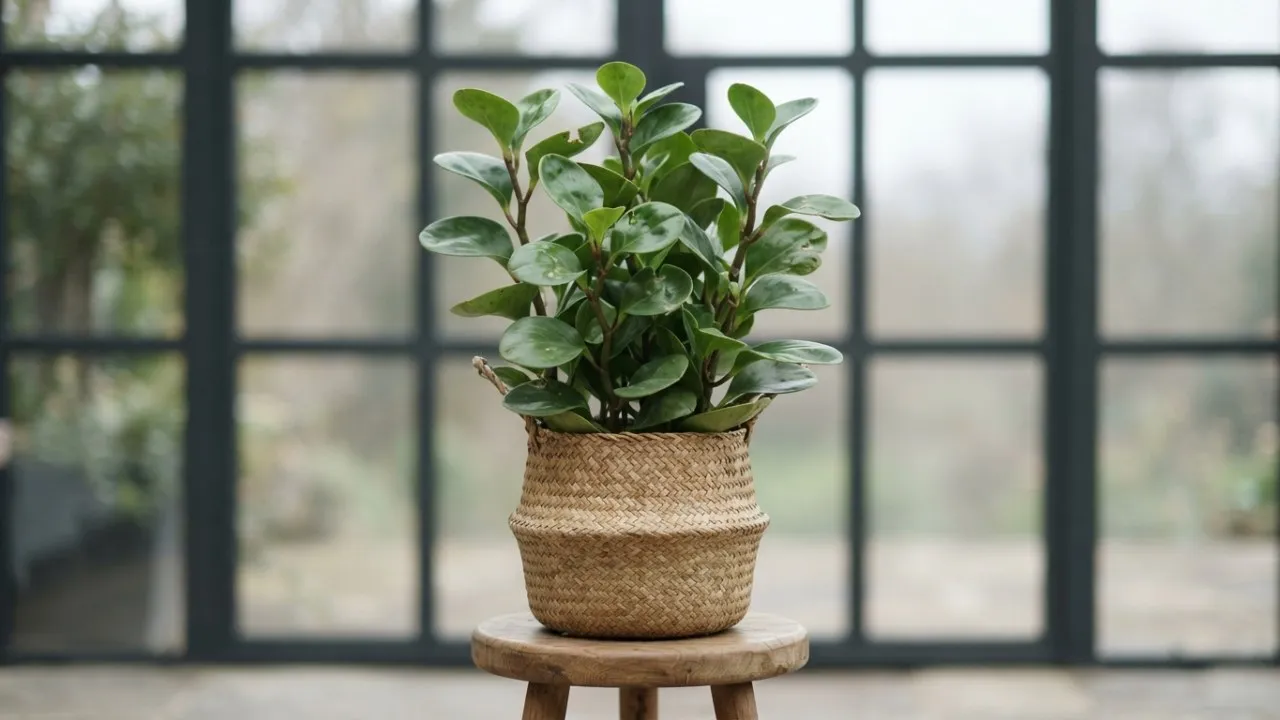 Every 10 days
 Baby Rubber Plant
Peperomia obtusifolia
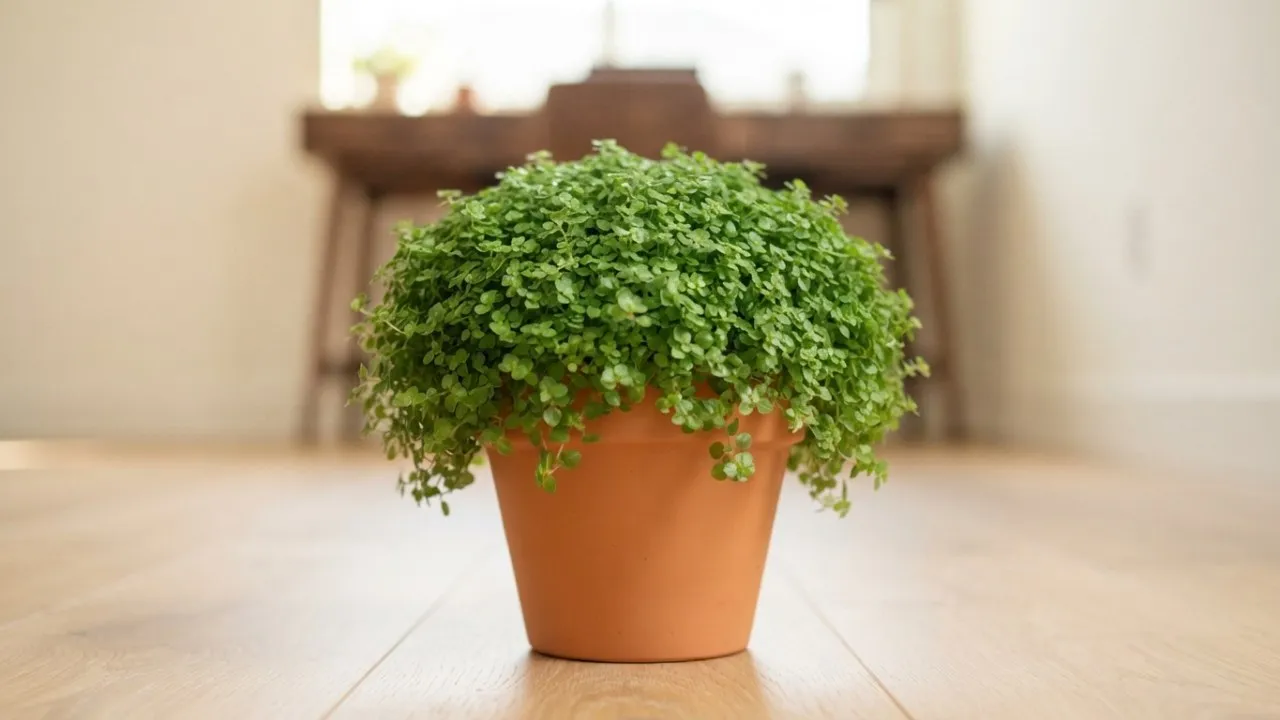 Every 3 days
 Baby's Tears
Soleirolia soleirolii