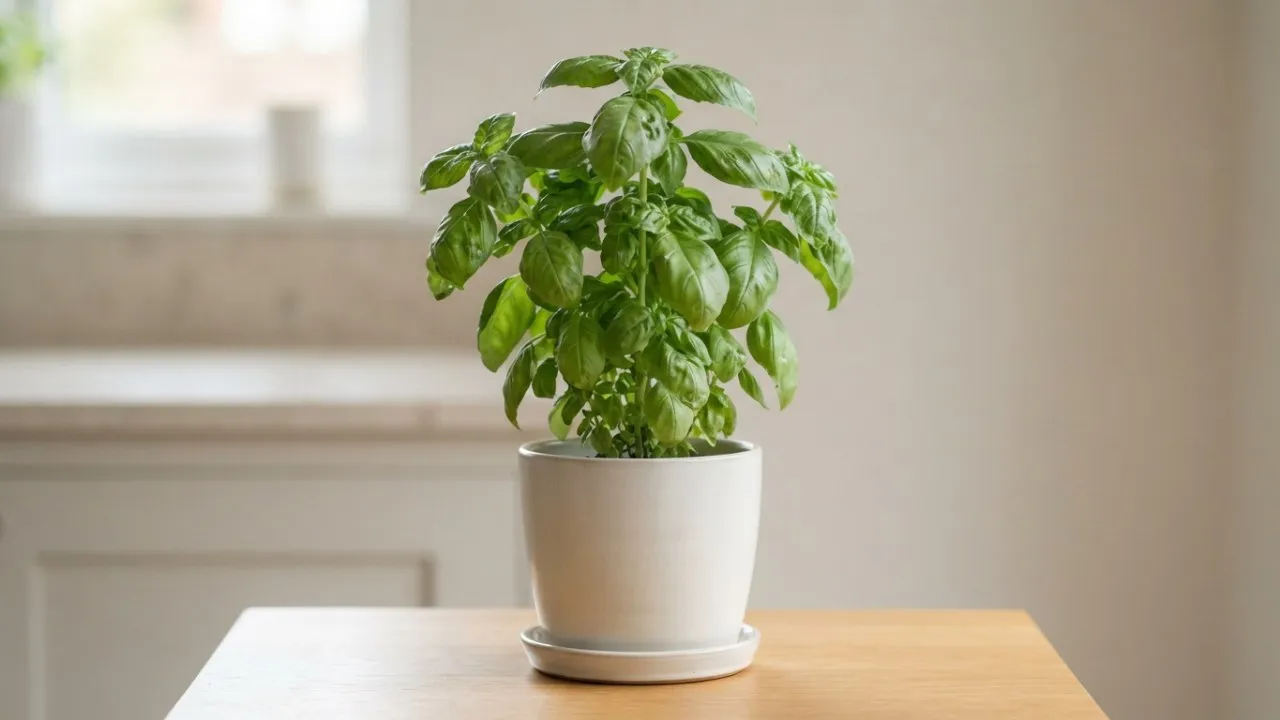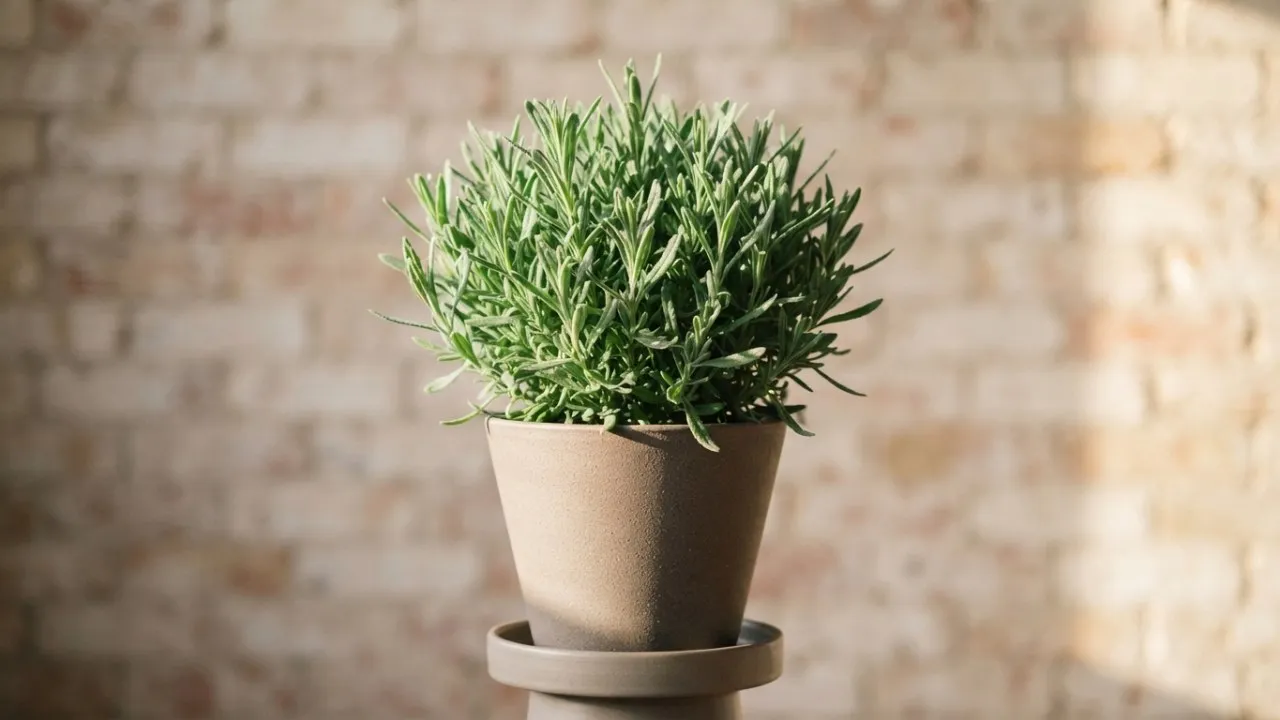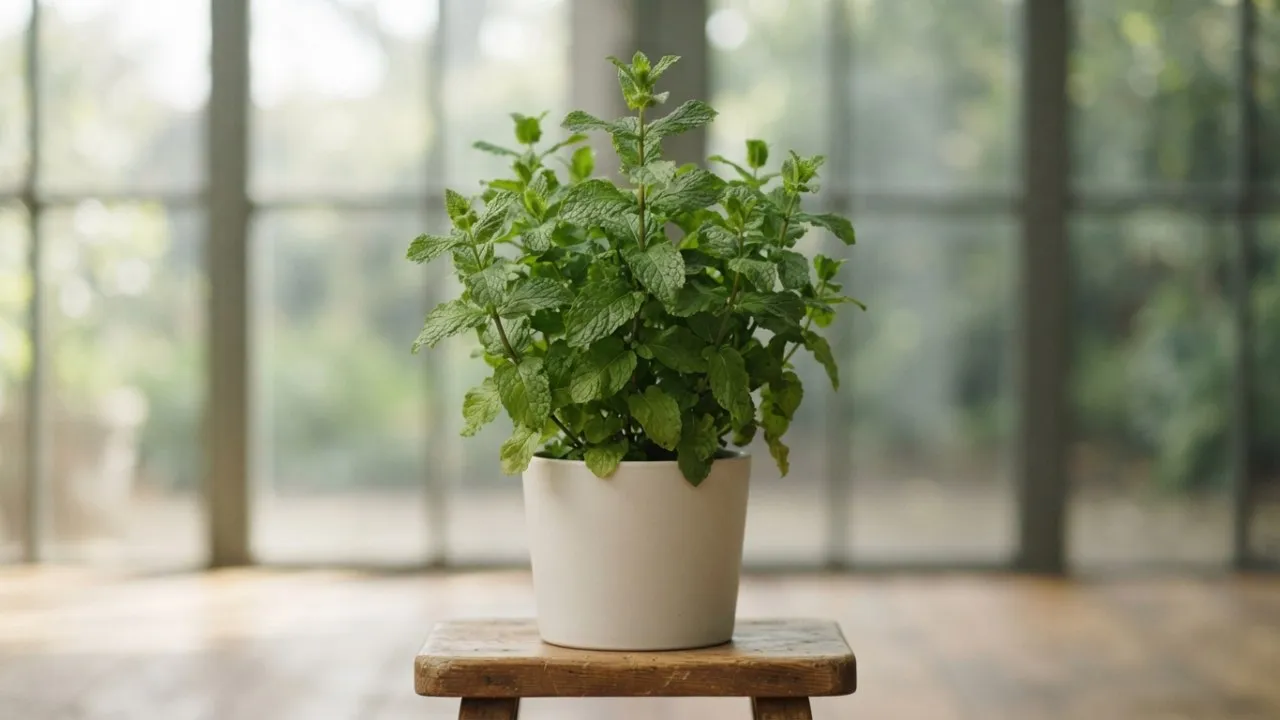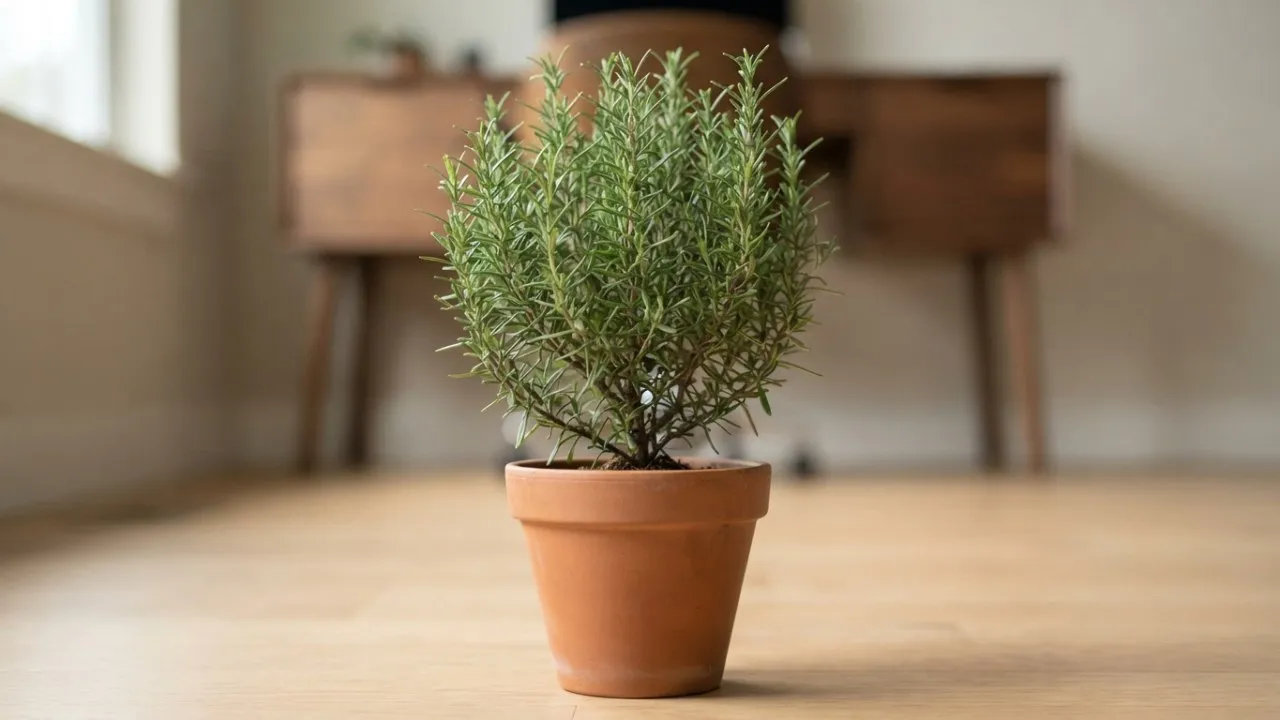
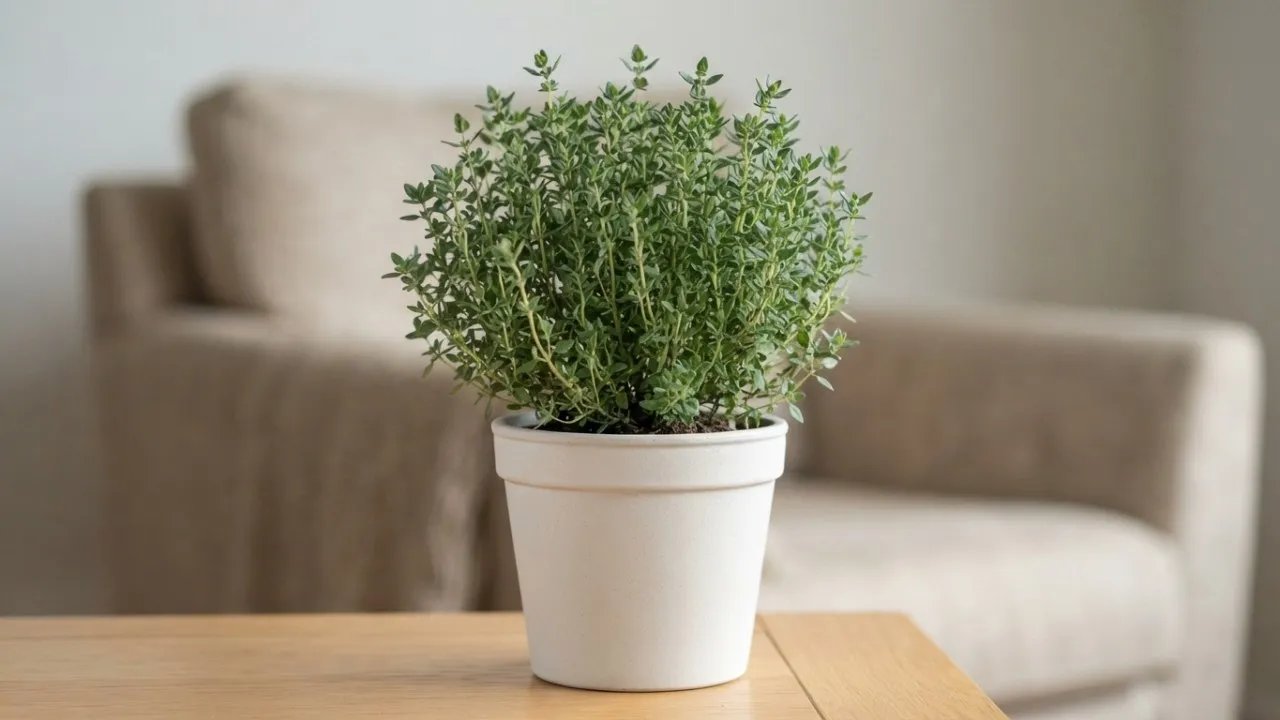
Thyme
Thymus vulgaris
A small Mediterranean aromatic subshrub with tiny evergreen leaves, a cornerstone of Provençal cuisine and herbes de Provence.
The essentials at a glance
-
Watering
Every 7 days
-
Light
Full sun
-
Humidity
30–50 %
-
Temperature
5–30 °C


How to care for your Thyme
Everything you need to keep your Thyme healthy: watering, light, humidity, feeding, repotting and pruning.
Common thyme is a small woody subshrub native to the western Mediterranean basin, where it grows wild on dry, limestone hillsides. Its tiny evergreen leaves, grey-green and highly aromatic, concentrate essential oils with recognized antiseptic properties. In spring, it covers itself with small pink to lilac flowers that are highly attractive to bees. An exceptionally hardy plant, it can withstand cold down to -15°C and only requires well-drained soil and sunshine.

Watering your Thyme
Every 7 days
Water sparingly, allowing the substrate to dry out completely between waterings. Thyme is very drought-tolerant and susceptible to root rot caused by excess water.
How to know it needs water
- Substrate completely dry
- Plant appears slightly wilted
- Pot feels very light

How much light a Thyme needs
Full sun
Full sun, at least 6 hours of direct light per day. Essential for fully developing its aromas.
- Direct sun tolerated
- 6 to 12 h a day
- Orientations that suit it
- South-east, South, South-west, East, West

Humidity and misting
30–50 %
30–50% No misting necessary. Thyme is a garrigue plant that prefers dry air and good ventilation.

Feeding and fertiliser
Every 90 days
Fertilize very little, at most twice a year. Thyme develops a better aroma in poor soil. Excess fertilizer produces soft, weakly fragrant growth.
- Recommended feed
- Very dilute organic fertilizer or light compost. · 5-10-10

Repotting your Thyme
Every 24 months
Use a very well-draining substrate: compost mixed in equal parts with coarse sand or perlite. Prefer a terracotta pot to encourage evaporation.
- When
- Spring (March–April)
- Potting mix
- All-purpose potting mix
- Mix in
- perlite, coarse sand
The tell-tale signs
- Plant becoming bare in the centre
- Roots completely colonising the pot
- Vigour decreasing despite good care

Pruning your Thyme
After flowering in late spring and lightly in autumn. Thyme regenerates better when pruned regularly. Cut back flowering stems by a third without touching the old woody wood. Thyme does not regenerate easily from old stems. Harvest whole sprigs by cutting the young shoots.

Through the year
Watering is not set once and for all: it follows the light and the growth. Allow 13 days between waterings in the depth of winter, against 6 in the growing season.
- 11 J
- 8 F
- 6 M
- 6 A
- 6 M
- 6 J
- 6 J
- 6 A
- 7 S
- 8 O
- 11 N
- 13 D
Active growth · Days between waterings

Good to know
- Ancient Egyptians used thyme in the mummification process due to its powerful antiseptic properties.
- In the Middle Ages, ladies embroidered a sprig of thyme on their knight's scarf because the plant symbolized courage.

Frequently asked questions about the Thyme
How do you care for a Thyme?
Water it every 7 days. Give it full sun. Ideal humidity: 30–50 %. Ideal temperature: 5–30 °C. Water sparingly, allowing the substrate to dry out completely between waterings. Thyme is very drought-tolerant and susceptible to root rot caused by excess water.
How often should you water a Thyme?
Every 7 days Water sparingly, allowing the substrate to dry out completely between waterings. Thyme is very drought-tolerant and susceptible to root rot caused by excess water. How to know it needs water : Substrate completely dry ; Plant appears slightly wilted ; Pot feels very light.
How much light does a Thyme need?
Full sun Full sun, at least 6 hours of direct light per day. Essential for fully developing its aromas. 6 to 12 h a day
Is the Thyme toxic to cats and dogs?
No, the Thyme is not listed as toxic to cats and dogs. That is still no reason to let your pets chew on it.
Why are my Thyme leaves turning yellow?
Yellowing most often comes from too much water: the mix stays wet and the roots suffocate. Check that the pot drains, empty the saucer, and let the mix dry before watering again. Too little light or a cold draught cause the same symptom.
When should you repot a Thyme?
Repot every 24 months, ideally in spring (march–april). Use a very well-draining substrate: compost mixed in equal parts with coarse sand or perlite. Prefer a terracotta pot to encourage evaporation.

At a glance
- Family
- Lamiaceae
- Category
- Herb
- Placement
- Indoor and outdoor
- Mature height
- 30 cm
- Growth
- Moderate
- Temperature
- 5–30 °C
- Pot materials
- terracotta, ceramic, fabric
- Growth
- Reaches maturity in 2 years
These figures are for an average plant. In the app they are recalculated for yours, based on your room, its orientation and the season.
And for your plant, in your home?
In the app this plant becomes yours: a watering schedule tuned to your home, health tracking from photos, and reminders at the right moment.