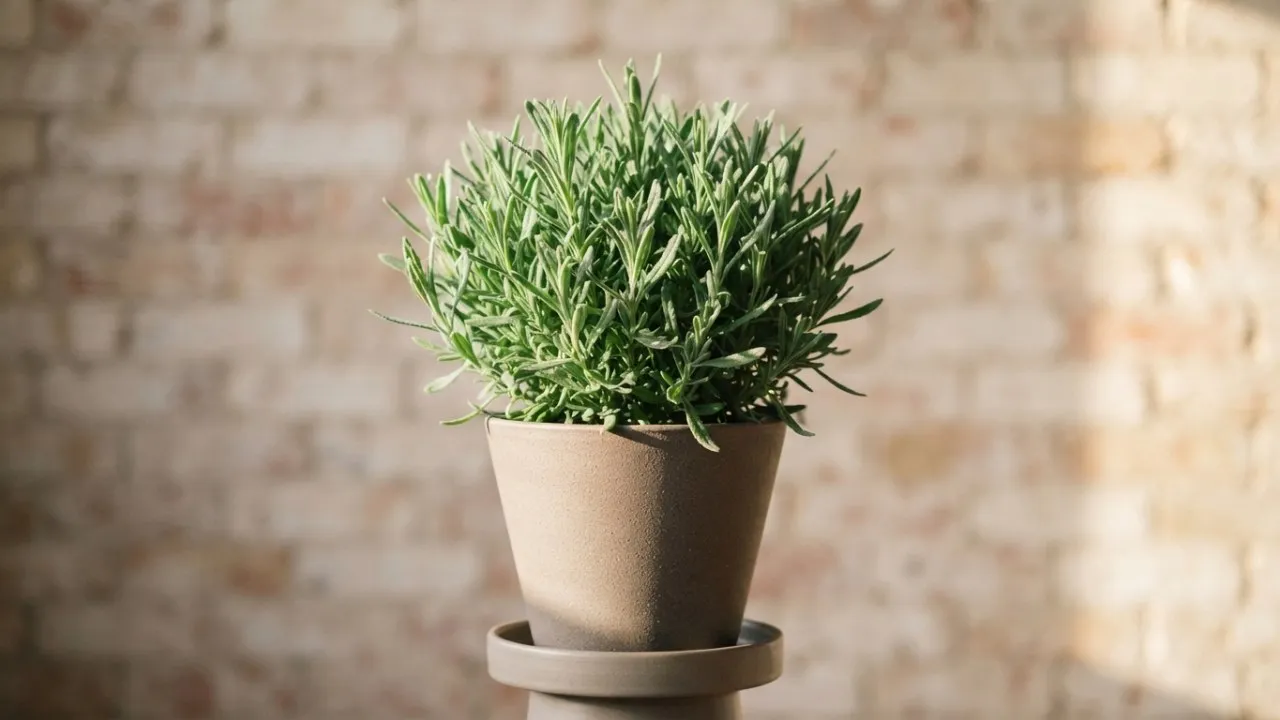
Lavender
Lavandula angustifolia
Lavender is a Mediterranean aromatic plant with fragrant purple flowers.
The essentials at a glance
-
Watering
Every 10 days
-
Light
Full sun
-
Humidity
30–40 %
-
Temperature
5–35 °C


How to care for your Lavender
Everything you need to keep your Lavender healthy: watering, light, humidity, feeding, repotting and pruning.
Lavandula angustifolia, native to Mediterranean regions, is one of the most widely cultivated aromatic plants in the world. Its characteristic fragrance is used in aromatherapy, cosmetics and cooking. It thrives in sun and well-drained soils. Outdoors, it is very resilient and attracts pollinators. In a pot, it can also be grown on a sunny balcony.

Watering your Lavender
Every 10 days
Water sparingly; allow the substrate to dry out between waterings. Lavender is highly susceptible to root rot in waterlogged conditions.
How to know it needs water
- Substrate dry 5–6 cm deep
- Foliage taking on a slightly more silvery hue

How much light a Lavender needs
Full sun
Full sun; requires a minimum of 6 hours of direct sunlight daily.
- Direct sun tolerated
- 6 to 12 h a day
- Orientations that suit it
- South, South-east, South-west, East, West

Humidity and misting
30–40 %
Low (30–40%) Do not mist; lavender dislikes humid, stagnant air and is susceptible to fungal diseases in moist conditions.

Feeding and fertiliser
Every 60 days
Apply sparingly; poor, lean soil actually intensifies the essential oil concentration and aromatic potency.
- Recommended feed
- Low-nitrogen, potassium-rich fertilizer · 5-10-5

Repotting your Lavender
Every 24 months
Use a calcareous, sandy, very well-drained substrate; terracotta pots are preferable.
- When
- Spring
- Potting mix
- Cactus and succulent mix
- Mix in
- perlite, coarse sand, pumice
The tell-tale signs
- Plant becoming pot-bound
- Noticeably reduced vigour in container-grown specimens

Pruning your Lavender
Prune immediately after flowering to maintain a compact, bushy habit. Cut back by one third; never prune into old lignified wood, as lavender does not regenerate from bare wood.

Through the year
Watering is not set once and for all: it follows the light and the growth. Allow 15 days between waterings in the depth of winter, against 8 in the growing season.
- 15 J
- 15 F
- 12 M
- 9 A
- 8 M
- 8 J
- 8 J
- 9 A
- 10 S
- 12 O
- 15 N
- 15 D
Active growth · Days between waterings

Good to know
- Used since antiquity as an antiseptic and calming agent
- Attracts bees and butterflies

Frequently asked questions about the Lavender
How do you care for a Lavender?
Water it every 10 days. Give it full sun. Ideal humidity: 30–40 %. Ideal temperature: 5–35 °C. Water sparingly; allow the substrate to dry out between waterings. Lavender is highly susceptible to root rot in waterlogged conditions.
How often should you water a Lavender?
Every 10 days Water sparingly; allow the substrate to dry out between waterings. Lavender is highly susceptible to root rot in waterlogged conditions. How to know it needs water : Substrate dry 5–6 cm deep ; Foliage taking on a slightly more silvery hue.
How much light does a Lavender need?
Full sun Full sun; requires a minimum of 6 hours of direct sunlight daily. 6 to 12 h a day
Is the Lavender toxic to cats and dogs?
No, the Lavender is not listed as toxic to cats and dogs. That is still no reason to let your pets chew on it.
Why are my Lavender leaves turning yellow?
Yellowing most often comes from too much water: the mix stays wet and the roots suffocate. Check that the pot drains, empty the saucer, and let the mix dry before watering again. Too little light or a cold draught cause the same symptom.
When should you repot a Lavender?
Repot every 24 months, ideally in spring. Use a calcareous, sandy, very well-drained substrate; terracotta pots are preferable.

At a glance
- Family
- Lamiaceae
- Category
- Herb
- Placement
- Indoor and outdoor
- Mature height
- 60 cm
- Growth
- Moderate
- Temperature
- 5–35 °C
- Pot materials
- terracotta, fabric
- Growth
- Reaches maturity in 3 years
These figures are for an average plant. In the app they are recalculated for yours, based on your room, its orientation and the season.
And for your plant, in your home?
In the app this plant becomes yours: a watering schedule tuned to your home, health tracking from photos, and reminders at the right moment.