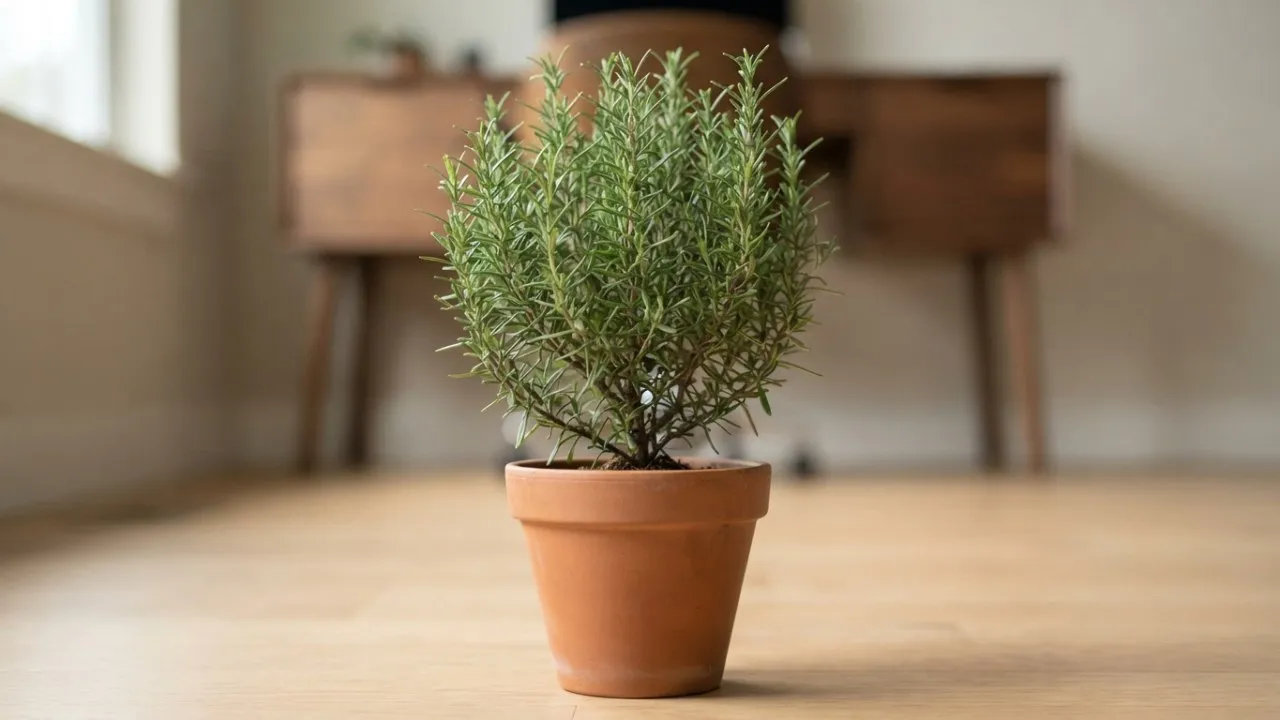
Rosemary
Rosmarinus officinalis
An evergreen Mediterranean aromatic shrub with needle-like leaves, renowned for its camphor-like fragrance and culinary uses.
The essentials at a glance
-
Watering
Every 7 days
-
Light
Full sun
-
Humidity
30–50 %
-
Temperature
5–30 °C


How to care for your Rosemary
Everything you need to keep your Rosemary healthy: watering, light, humidity, feeding, repotting and pruning.
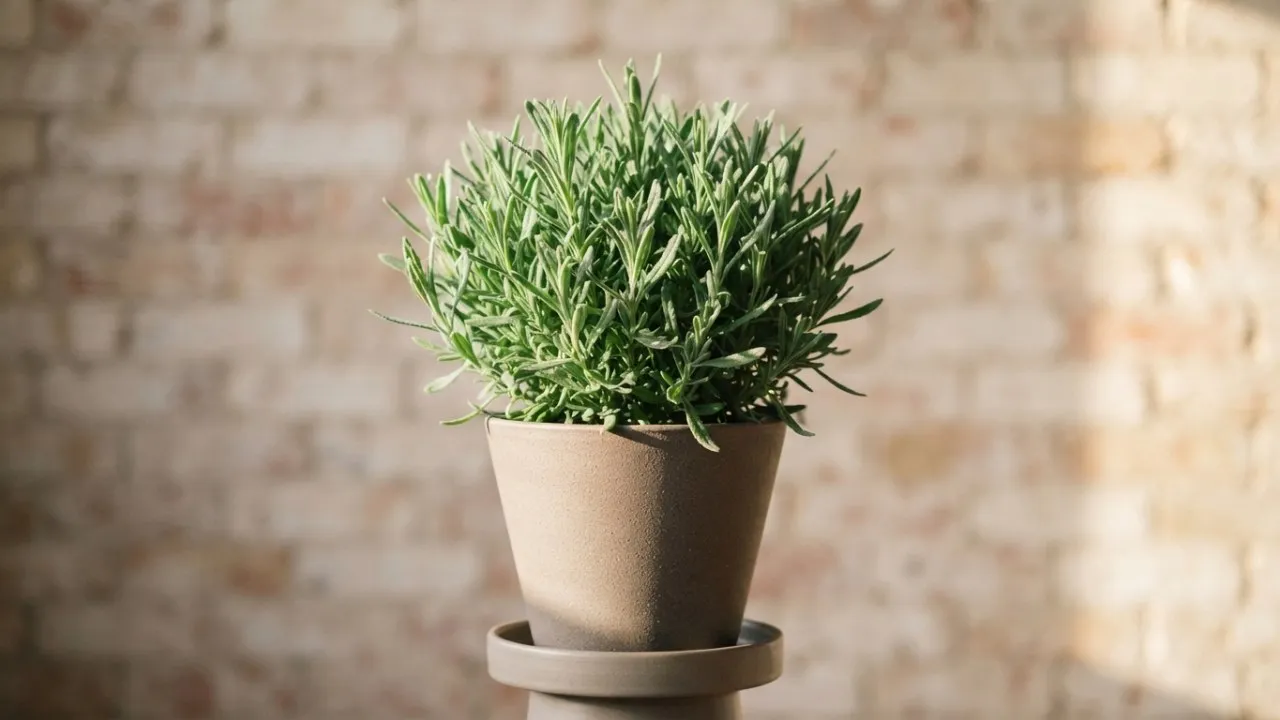
Rosemary is an iconic evergreen subshrub of the Mediterranean region, where it grows wild in scrublands and maquis. Its narrow, leathery leaves, dark green above and whitish beneath, release a characteristic camphor-like, resinous fragrance when crushed. It produces delicate blue-violet flowers in spring that are highly attractive to bees. Extremely resistant to drought and poor soils, it primarily requires excellent drainage and abundant sunlight.

Watering your Rosemary
Every 7 days
Water moderately, allowing the substrate to dry between waterings. Rosemary is a Mediterranean plant that tolerates drought well and is susceptible to overwatering.
How to know it needs water
- Substrate completely dry in the top 2–3 cm
- Leaf tips beginning to brown
- Pot very light to the touch

How much light a Rosemary needs
Full sun
Full sun, at least 6–8 hours of direct light per day. Essential for good growth and intense aroma.
- Direct sun tolerated
- 6 to 10 h a day
- Orientations that suit it
- South, South-east, South-west, East, West

Humidity and misting
30–50 %
30–50% No misting. Rosemary prefers dry air and good air circulation. Excess humidity promotes fungal diseases.

Feeding and fertiliser
Every 60 days
Fertilize sparingly, no more than 2–3 times a year. Rosemary prefers poor soil, which concentrates its essential oils and intensifies its aroma.
- Recommended feed
- Light organic fertilizer, low in nitrogen. · 2-1-2

Repotting your Rosemary
Every 24 months
Use a draining blend: 2/3 compost + 1/3 coarse sand or perlite. Add clay pebbles at the base of the pot. Rosemary detests heavy, moist soils.
- When
- Spring (April–May)
- Potting mix
- All-purpose potting mix
- Mix in
- perlite, coarse sand
The tell-tale signs
- Roots emerging from drainage holes
- Plant becoming unstable in its pot
- Substrate completely colonised by roots

Pruning your Rosemary
After flowering in spring and lightly in summer. Avoid pruning in autumn to avoid weakening the plant before winter. Trim stems by a third after flowering to maintain a compact habit. Cut above a leaf node. Never cut into bare old wood.

Through the year
Watering is not set once and for all: it follows the light and the growth. Allow 11 days between waterings in the depth of winter, against 6 in the growing season.
- 11 J
- 8 F
- 6 M
- 6 A
- 6 M
- 6 J
- 6 J
- 6 A
- 6 S
- 8 O
- 9 N
- 11 D
Active growth · Days between waterings

Good to know
- In ancient Greece, students wore rosemary wreaths during exams because it was believed to stimulate memory.
- Rosemary can live for over 20 years and grow into a full shrub exceeding 2 metres tall in Mediterranean climates.

Frequently asked questions about the Rosemary
How do you care for a Rosemary?
Water it every 7 days. Give it full sun. Ideal humidity: 30–50 %. Ideal temperature: 5–30 °C. Water moderately, allowing the substrate to dry between waterings. Rosemary is a Mediterranean plant that tolerates drought well and is susceptible to overwatering.
How often should you water a Rosemary?
Every 7 days Water moderately, allowing the substrate to dry between waterings. Rosemary is a Mediterranean plant that tolerates drought well and is susceptible to overwatering. How to know it needs water : Substrate completely dry in the top 2–3 cm ; Leaf tips beginning to brown ; Pot very light to the touch.
How much light does a Rosemary need?
Full sun Full sun, at least 6–8 hours of direct light per day. Essential for good growth and intense aroma. 6 to 10 h a day
Is the Rosemary toxic to cats and dogs?
No, the Rosemary is not listed as toxic to cats and dogs. That is still no reason to let your pets chew on it.
Why are my Rosemary leaves turning yellow?
Yellowing most often comes from too much water: the mix stays wet and the roots suffocate. Check that the pot drains, empty the saucer, and let the mix dry before watering again. Too little light or a cold draught cause the same symptom.
When should you repot a Rosemary?
Repot every 24 months, ideally in spring (april–may). Use a draining blend: 2/3 compost + 1/3 coarse sand or perlite. Add clay pebbles at the base of the pot. Rosemary detests heavy, moist soils.

At a glance
- Family
- Lamiaceae
- Category
- Herb
- Placement
- Indoor and outdoor
- Mature height
- 1 m
- Growth
- Moderate
- Temperature
- 5–30 °C
- Pot materials
- terracotta, fabric
- Growth
- Reaches maturity in 3 years
These figures are for an average plant. In the app they are recalculated for yours, based on your room, its orientation and the season.
And for your plant, in your home?
In the app this plant becomes yours: a watering schedule tuned to your home, health tracking from photos, and reminders at the right moment.