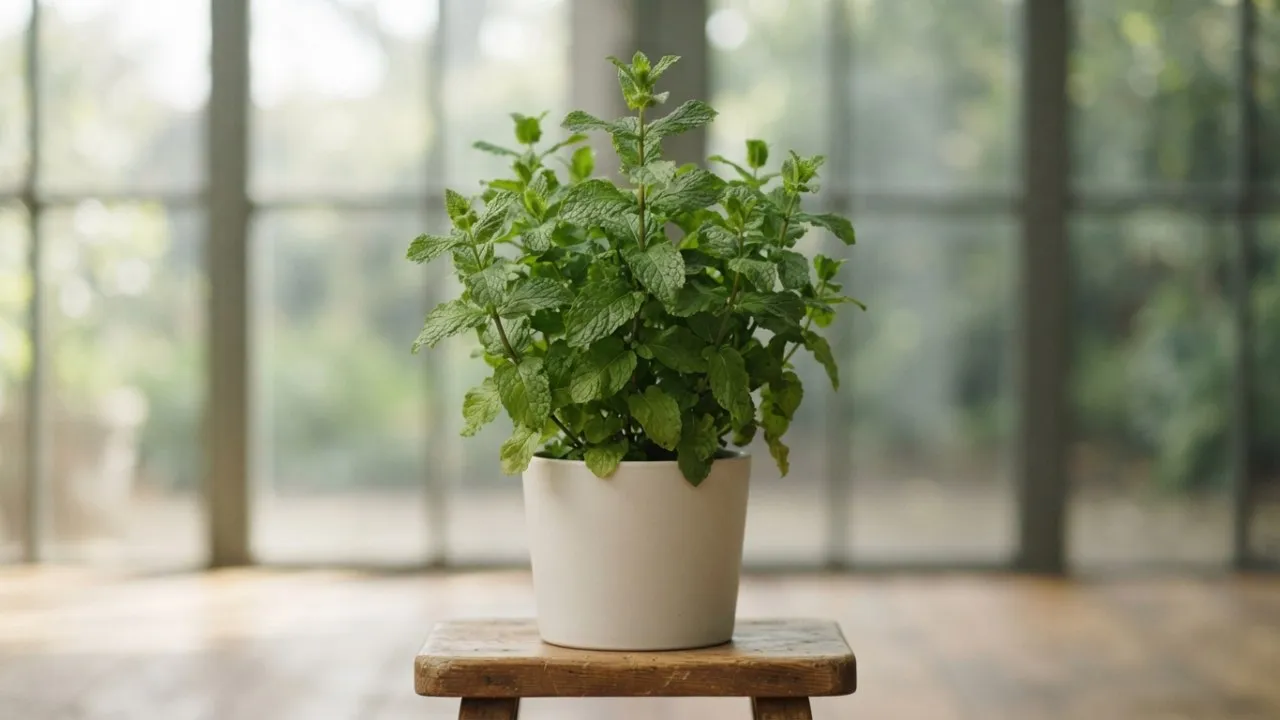
Peppermint
Mentha piperita
A vigorous perennial aromatic herb with a fresh, menthol-like fragrance, extremely easy to grow in containers.
The essentials at a glance
-
Watering
Every 2 days
-
Light
Full sun
-
Humidity
50–70 %
-
Temperature
10–25 °C


How to care for your Peppermint
Everything you need to keep your Peppermint healthy: watering, light, humidity, feeding, repotting and pruning.
Peppermint is a natural hybrid resulting from the cross between Mentha aquatica and Mentha spicata. Recognizable by its reddish square stems and toothed leaves with a powerfully menthol fragrance, it has been used since antiquity in both cooking and herbal medicine. Its legendary invasive nature makes container growing almost mandatory to keep it contained. It grows with remarkable vigor and provides generous harvests from spring through autumn.

Watering your Peppermint
Every 2 days
Water generously and regularly to keep the soil cool and moist. Mint is a thirsty plant, especially in summer. Avoid waterlogging however.
How to know it needs water
- Surface of the substrate dry to the touch
- Leaves beginning to wilt
- Soil pulling away from the pot edges

How much light a Peppermint needs
Full sun
Semi-shade to full sun. Prefers 4–6 hours of light per day. Tolerates partial shade better than most aromatic herbs.
- Direct sun tolerated
- 4 to 6 h a day
- Orientations that suit it
- North, North-east, East, South-east, South, South-west, West, North-west

Humidity and misting
50–70 %
50–70% Mist lightly in dry weather or in heated indoor spaces. Mint appreciates good ambient humidity.

Feeding and fertiliser
Every 30 days
Fertilize once a month from March to September. A moderate application is sufficient — excess fertilizer diminishes the flavour of the leaves.
- Recommended feed
- Organic liquid fertilizer rich in nitrogen. · 5-10-5

Repotting your Peppermint
Every 12 months
Divide the clump and replant in fresh, rich compost. Always grow in containers to curb its vigorous spread. Use a wide, shallow container rather than a deep one.
- When
- Spring (March–April)
- Potting mix
- All-purpose potting mix
- Mix in
- perlite, coco fibre
The tell-tale signs
- Stolons colonising the entire pot
- Growth slowing significantly
- Roots forming a dense tangle at the surface

Pruning your Peppermint
Regularly throughout the growing season. Cut flowering shoots as soon as they appear to stimulate leaf production. Cut stems to 5 cm from the ground at the end of the season to encourage vigorous regrowth in spring. Harvest by cutting whole stems rather than individual leaves.

Through the year
Watering is not set once and for all: it follows the light and the growth. Allow 3 days between waterings in the depth of winter, against 1 in the growing season.
- 3 J
- 2 F
- 2 M
- 2 A
- 2 M
- 1 J
- 1 J
- 2 A
- 2 S
- 2 O
- 3 N
- 3 D
Active growth · Days between waterings

Toxicity
Peppermint essential oil is toxic to cats and dogs. The fresh plant in small quantities is generally safe, but large ingestion can cause digestive issues in animals.

Good to know
- Peppermint is a natural hybrid between watermint and spearmint, first discovered in England in the 17th century.
- Mint is so invasive that when planted in the ground, it can colonize an entire garden in a single season through its underground runners.

Frequently asked questions about the Peppermint
How do you care for a Peppermint?
Water it every 2 days. Give it full sun. Ideal humidity: 50–70 %. Ideal temperature: 10–25 °C. Water generously and regularly to keep the soil cool and moist. Mint is a thirsty plant, especially in summer. Avoid waterlogging however.
How often should you water a Peppermint?
Every 2 days Water generously and regularly to keep the soil cool and moist. Mint is a thirsty plant, especially in summer. Avoid waterlogging however. How to know it needs water : Surface of the substrate dry to the touch ; Leaves beginning to wilt ; Soil pulling away from the pot edges.
How much light does a Peppermint need?
Full sun Semi-shade to full sun. Prefers 4–6 hours of light per day. Tolerates partial shade better than most aromatic herbs. 4 to 6 h a day
Is the Peppermint toxic to cats and dogs?
Yes. Peppermint essential oil is toxic to cats and dogs. The fresh plant in small quantities is generally safe, but large ingestion can cause digestive issues in animals. Keep it out of reach of your pets and call a vet if any is swallowed.
Why are my Peppermint leaves turning yellow?
Yellowing most often comes from too much water: the mix stays wet and the roots suffocate. Check that the pot drains, empty the saucer, and let the mix dry before watering again. Too little light or a cold draught cause the same symptom.
When should you repot a Peppermint?
Repot every 12 months, ideally in spring (march–april). Divide the clump and replant in fresh, rich compost. Always grow in containers to curb its vigorous spread. Use a wide, shallow container rather than a deep one.

At a glance
- Family
- Lamiaceae
- Category
- Herb
- Placement
- Indoor and outdoor
- Mature height
- 90 cm
- Growth
- Fast
- Temperature
- 10–25 °C
- Pot materials
- terracotta, ceramic, plastic
- Growth
- Reaches maturity in 1 years
These figures are for an average plant. In the app they are recalculated for yours, based on your room, its orientation and the season.
And for your plant, in your home?
In the app this plant becomes yours: a watering schedule tuned to your home, health tracking from photos, and reminders at the right moment.