Succulent · Apocynaceae
Stapelia
Stapelia grandiflora
The Stapelia is a fascinating succulent known for its striking, star-shaped flowers.
- Every 10 daysWatering
- Bright indirect lightLight
- 30–50 %Humidity
- 10–30 °CTemperature


How to care for your Stapelia
Everything you need to keep your Stapelia healthy: watering, light, humidity, feeding, repotting and pruning.
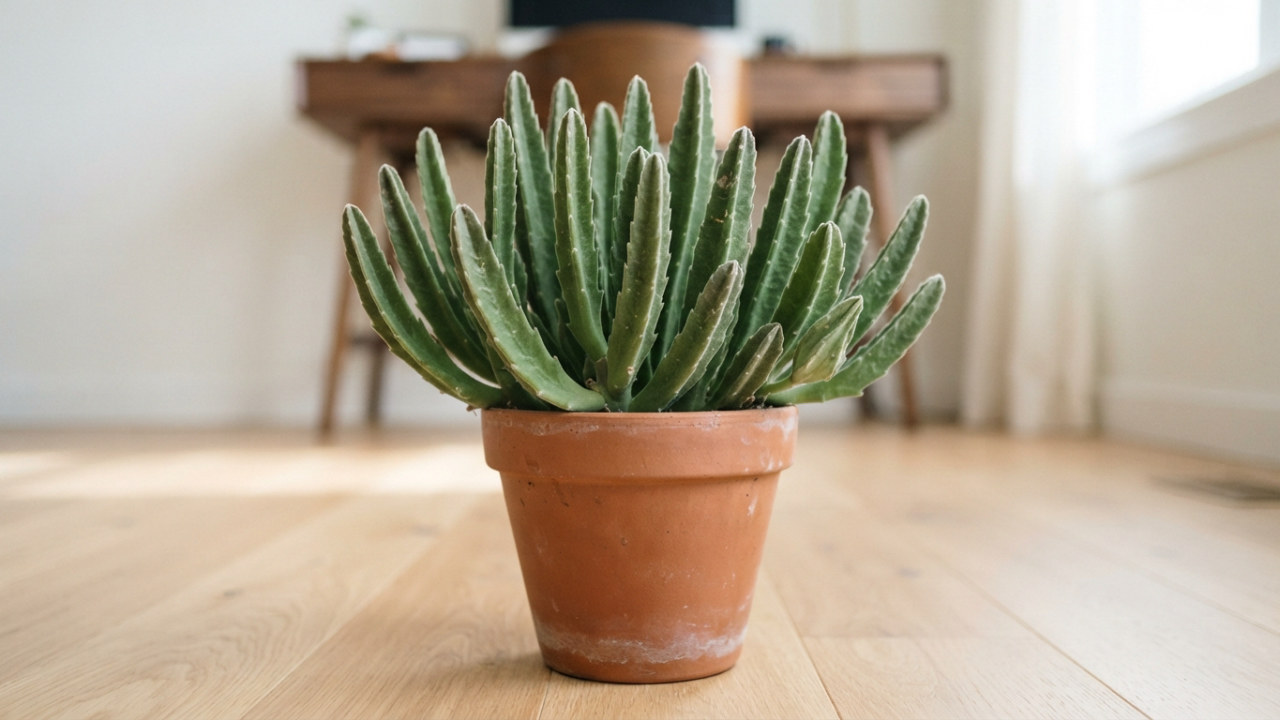
Stapelia grandiflora, native to South Africa, is a popular succulent admired for its large, star-shaped flowers. These unusual blooms, deep red-brown to purple and fringed with hairs, are famous for giving off a smell reminiscent of rotting flesh to attract pollinating flies. Despite the odd fragrance, the plant itself is easy to grow, thriving in bright light and very well-drained soil. It forms clumps of soft, grey-green, four-angled stems and suits a sunny windowsill or a rock garden in a frost-free climate. It is not frost hardy: in a pot, bring it indoors before temperatures approach 10 °C and keep it nearly dry in winter.

How to recognise Stapelia
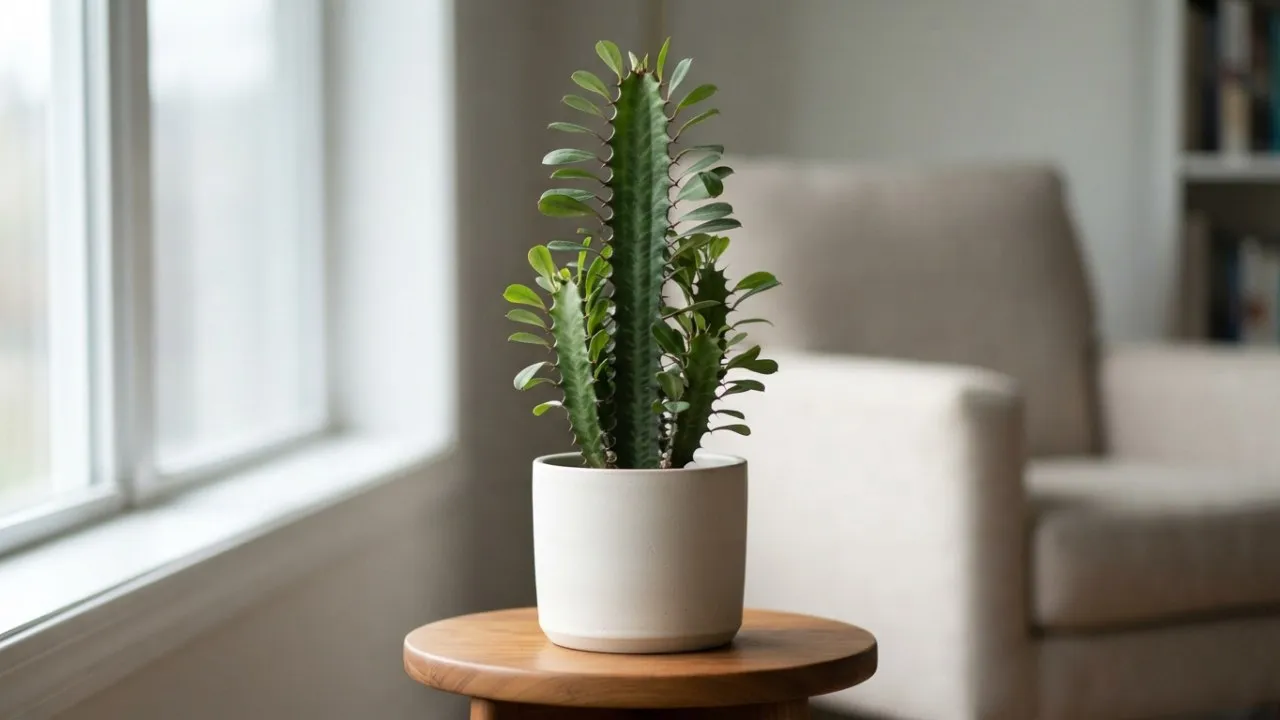
A leafless, clump-forming succulent with soft, grey-green, four-angled stems edged with small tooth-like bumps. The large, hairy, star-shaped flowers are deep red-brown to purple, with long hairs along the fringed edges. Stapelia gigantea has even bigger, paler yellowish flowers with fine reddish cross-lines, while Orbea variegata has smaller, cream-yellow flowers spotted with brown.

Watering your Stapelia
Every 10 days
Water thoroughly until drainage runs clear, then allow the substrate to dry out completely before watering again.
How to know it needs water
- Substrate completely dry
- Stems feel slightly soft or less turgid
- Pot feels light when lifted

How much light a Stapelia needs
Bright indirect light
Bright light with several hours of direct sun (3 to 6 hours). Introduce full sun gradually, as stems can scorch and turn reddish or brown.
- Direct sun tolerated
- 3 to 6 h a day
- Orientations that suit it
- South-east, South, South-west, East, West

Humidity and misting
30–50 %
Low to medium (30 to 50%) Do not mist; high humidity can lead to rot.

Feeding and fertiliser
Every 28 days
Apply about every 4 weeks from April to September; withhold entirely from October to March.
- Recommended feed
- Low-nitrogen succulent fertilizer · 1-2-2

Repotting your Stapelia
Every 24 months
Repot into a container 2 to 3 cm larger, about every 2 years in spring, using a well-draining cactus or succulent mix. Handle the stems carefully to avoid damage.
- When
- Spring
- Potting mix
- Cactus and succulent mix
- Mix in
- perlite, pumice, coarse sand
The tell-tale signs
- Roots emerging from drainage holes
- Plant becoming top-heavy and unstable
- Substrate no longer draining well

Pruning your Stapelia
Remove any rotting, damaged, or leggy stems at any time of year. Cut cleanly at the base of the stem with sterilised scissors or a sharp blade. Allow cuts to callus before replanting.

Through the year
Watering is not set once and for all: it follows the light and the growth. Allow 20 days between waterings in the depth of winter, against 8 in the growing season.
- 18 J
- 15 F
- 12 M
- 10 A
- 8 M
- 8 J
- 8 J
- 8 A
- 10 S
- 12 O
- 15 N
- 20 D
Active growth · Days between waterings

Good to know
- Its large, star-shaped flowers give off a smell of rotting meat to attract the flies that pollinate them
- Despite the smell, the flowers are quite beautiful and can be very large
- It is often called 'Carrion Flower' because of its unusual pollination strategy

Frequently asked questions about the Stapelia
How do you care for a Stapelia?
Water it every 10 days. Give it bright indirect light. Ideal humidity: 30–50 %. Ideal temperature: 10–30 °C. Water thoroughly until drainage runs clear, then allow the substrate to dry out completely before watering again.
How often should you water a Stapelia?
Every 10 days Water thoroughly until drainage runs clear, then allow the substrate to dry out completely before watering again. How to know it needs water : Substrate completely dry ; Stems feel slightly soft or less turgid ; Pot feels light when lifted.
How much light does a Stapelia need?
Bright indirect light Bright light with several hours of direct sun (3 to 6 hours). Introduce full sun gradually, as stems can scorch and turn reddish or brown. 3 to 6 h a day
Is the Stapelia toxic to cats and dogs?
No, the Stapelia is not listed as toxic to cats and dogs. That is still no reason to let your pets chew on it.
Why are my Stapelia leaves turning yellow?
Yellowing most often comes from too much water: the mix stays wet and the roots suffocate. Check that the pot drains, empty the saucer, and let the mix dry before watering again. Too little light or a cold draught cause the same symptom.
When should you repot a Stapelia?
Repot every 24 months, ideally in spring. Repot into a container 2 to 3 cm larger, about every 2 years in spring, using a well-draining cactus or succulent mix. Handle the stems carefully to avoid damage.

At a glance
- Family
- Apocynaceae
- Category
- Succulent
- Placement
- Indoor and outdoor
- Mature height
- 20 cm
- Growth
- Moderate
- Temperature
- 10–30 °C
- Pot materials
- terracotta, ceramic
- Growth
- Reaches maturity in 3 years
These figures are for an average plant. In the app they are recalculated for yours, based on your room, its orientation and the season.
And for your plant, in your home?
In the app this plant becomes yours: a watering schedule tuned to your home, health tracking from photos, and reminders at the right moment.