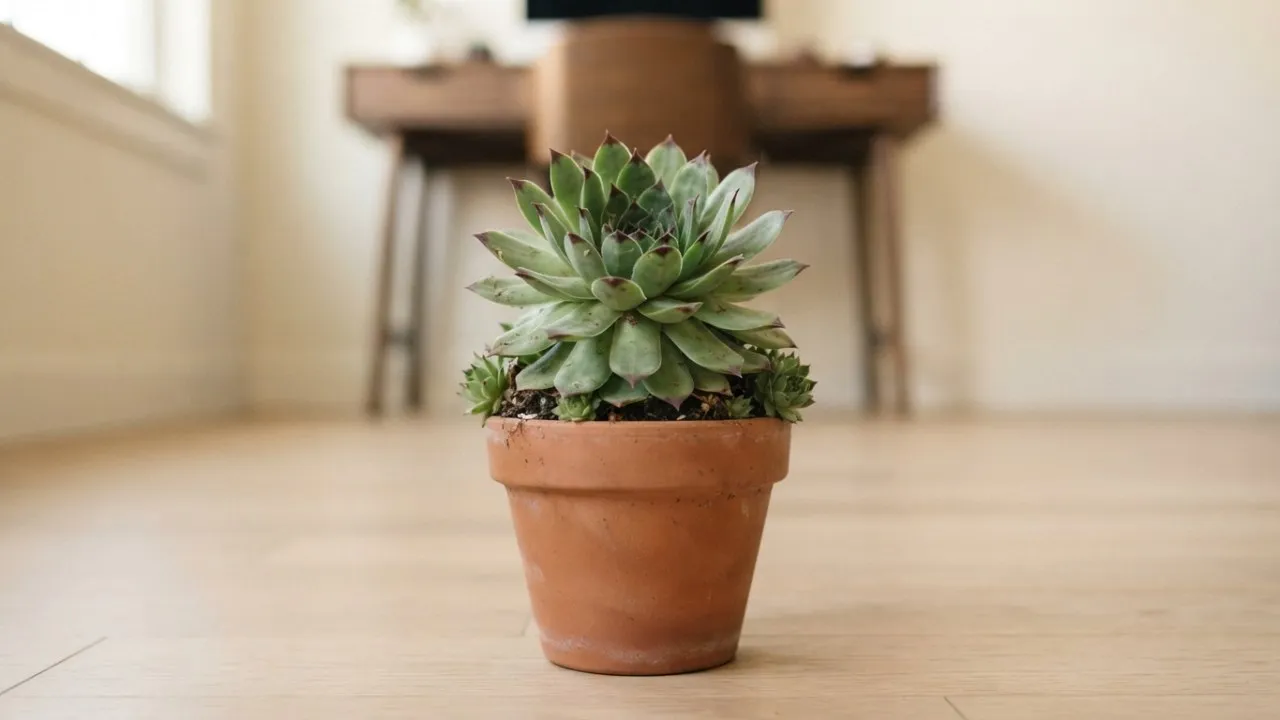
Hens and Chicks
Sempervivum tectorum
A remarkably cold-hardy succulent that forms tight rosettes of fleshy leaves, spreading readily by producing numerous offsets.
The essentials at a glance
-
Watering
Every 21 days
-
Light
Full sun
-
Humidity
20–40 %
-
Temperature
15–25 °C


How to care for your Hens and Chicks
Everything you need to keep your Hens and Chicks healthy: watering, light, humidity, feeding, repotting and pruning.
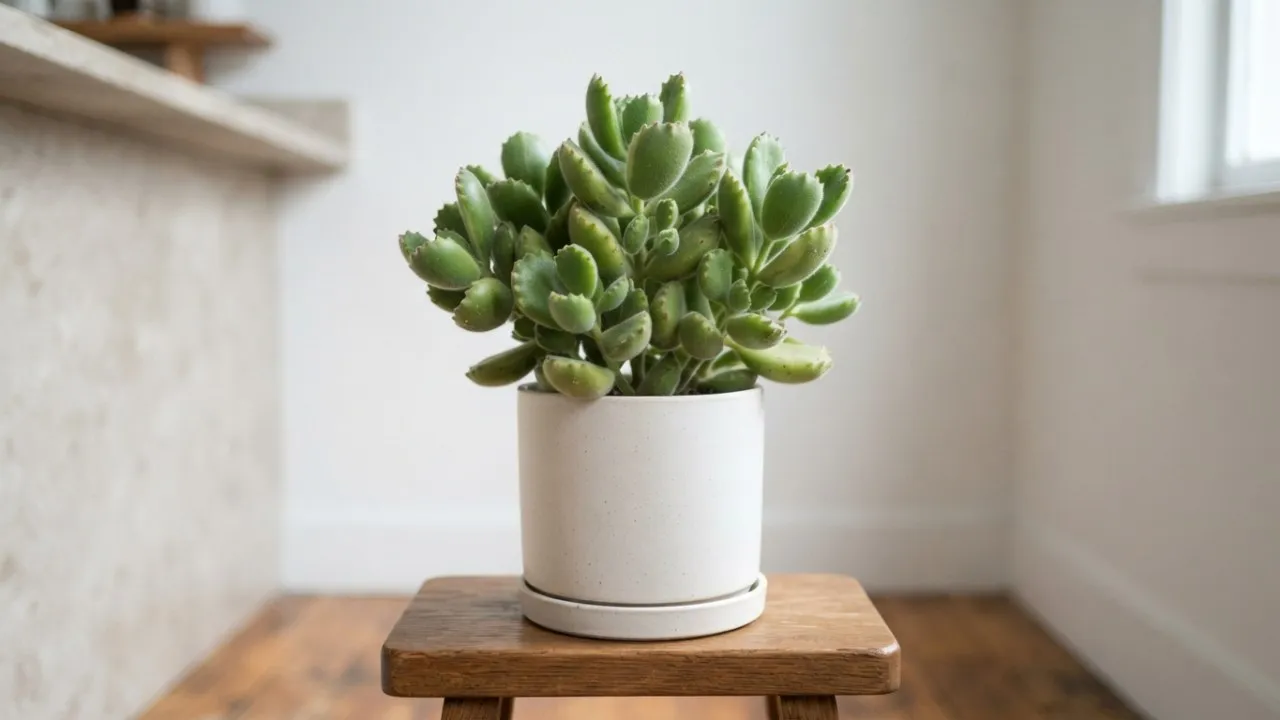
Native to the mountains of Southern and Central Europe, *Sempervivum tectorum* is a robust and highly adaptable perennial succulent, celebrated for its extreme cold hardiness and ease of growth. It forms compact, dense rosettes of fleshy, pointed leaves that can range in color from green to reddish-purple, often with darker tips. The 'hen' (mother rosette) produces numerous 'chicks' (offsets) on stolons, creating dense mats of plants over time. While the individual rosettes are monocarpic, meaning they die after flowering, the plant continuously replaces itself through these offsets. In summer, mature rosettes send up tall stalks bearing star-shaped, pinkish-red flowers. It's an excellent choice for rock gardens, green roofs, or containers in cold climates.

Watering your Hens and Chicks
Every 21 days
Water sparingly, only during prolonged dry spells or extreme heat. These plants are highly drought-tolerant. Ensure excellent drainage.
How to know it needs water
- Soil is completely dry for an extended period
- Leaves may appear slightly less turgid

How much light a Hens and Chicks needs
Full sun
Full sun. Requires at least 6 hours of direct sunlight daily to maintain compact growth and intense coloration.
- Direct sun tolerated
- 6 to 12 h a day
- Orientations that suit it
- South, South-east, South-west, East, West

Humidity and misting
20–40 %
Low; thrives in dry, well-ventilated conditions. Misting is not recommended and can contribute to fungal diseases, especially in cool or humid conditions.

Feeding and fertiliser
Every 90 days
Fertilize very lightly, if at all, in early spring. Over-fertilizing can lead to weak, stretched growth.
- Recommended feed
- Very dilute, balanced all-purpose fertilizer. · 5-10-10

Repotting your Hens and Chicks
Every 36 months
Carefully divide crowded clumps, separating 'chicks' from the 'hen'. Replant into fresh, gritty, well-draining soil. Provide good air circulation.
- When
- Spring
- Potting mix
- Cactus and succulent mix
- Mix in
- perlite, pumice, coarse sand
The tell-tale signs
- Plants have become overly crowded
- Soil is depleted or compacted
- Outgrowing their space in a rock garden or container

Pruning your Hens and Chicks
As needed, typically after flowering. Remove spent flower stalks at their base. The 'hen' rosette that flowered will die back (monocarpic) and should be removed.

Through the year
Watering is not set once and for all: it follows the light and the growth. Allow 53 days between waterings in the depth of winter, against 17 in the growing season.
- 53 J
- 42 F
- 21 M
- 17 A
- 17 M
- 17 J
- 17 J
- 17 A
- 21 S
- 32 O
- 42 N
- 53 D
Active growth · Days between waterings

Good to know
- The common name 'Hens and Chicks' refers to the way the main rosette ('hen') produces numerous small offsets ('chicks') around its base.
- Historically, these plants were grown on rooftops in Europe to ward off lightning strikes and evil spirits, hence 'Houseleek'.

Frequently asked questions about the Hens and Chicks
How do you care for a Hens and Chicks?
Water it every 21 days. Give it full sun. Ideal humidity: 20–40 %. Ideal temperature: 15–25 °C. Water sparingly, only during prolonged dry spells or extreme heat. These plants are highly drought-tolerant. Ensure excellent drainage.
How often should you water a Hens and Chicks?
Every 21 days Water sparingly, only during prolonged dry spells or extreme heat. These plants are highly drought-tolerant. Ensure excellent drainage. How to know it needs water : Soil is completely dry for an extended period ; Leaves may appear slightly less turgid.
How much light does a Hens and Chicks need?
Full sun Full sun. Requires at least 6 hours of direct sunlight daily to maintain compact growth and intense coloration. 6 to 12 h a day
Is the Hens and Chicks toxic to cats and dogs?
No, the Hens and Chicks is not listed as toxic to cats and dogs. That is still no reason to let your pets chew on it.
Why are my Hens and Chicks leaves turning yellow?
Yellowing most often comes from too much water: the mix stays wet and the roots suffocate. Check that the pot drains, empty the saucer, and let the mix dry before watering again. Too little light or a cold draught cause the same symptom.
When should you repot a Hens and Chicks?
Repot every 36 months, ideally in spring. Carefully divide crowded clumps, separating 'chicks' from the 'hen'. Replant into fresh, gritty, well-draining soil. Provide good air circulation.

At a glance
- Family
- Crassulaceae
- Category
- Succulent
- Placement
- Outdoor
- Mature height
- 15 cm
- Growth
- Moderate
- Temperature
- 15–25 °C
- Pot materials
- terracotta, ceramic
- Growth
- Reaches maturity in 2 years
These figures are for an average plant. In the app they are recalculated for yours, based on your room, its orientation and the season.
And for your plant, in your home?
In the app this plant becomes yours: a watering schedule tuned to your home, health tracking from photos, and reminders at the right moment.