Succulent · Crassulaceae
Coral Beads
Sedum stahlii
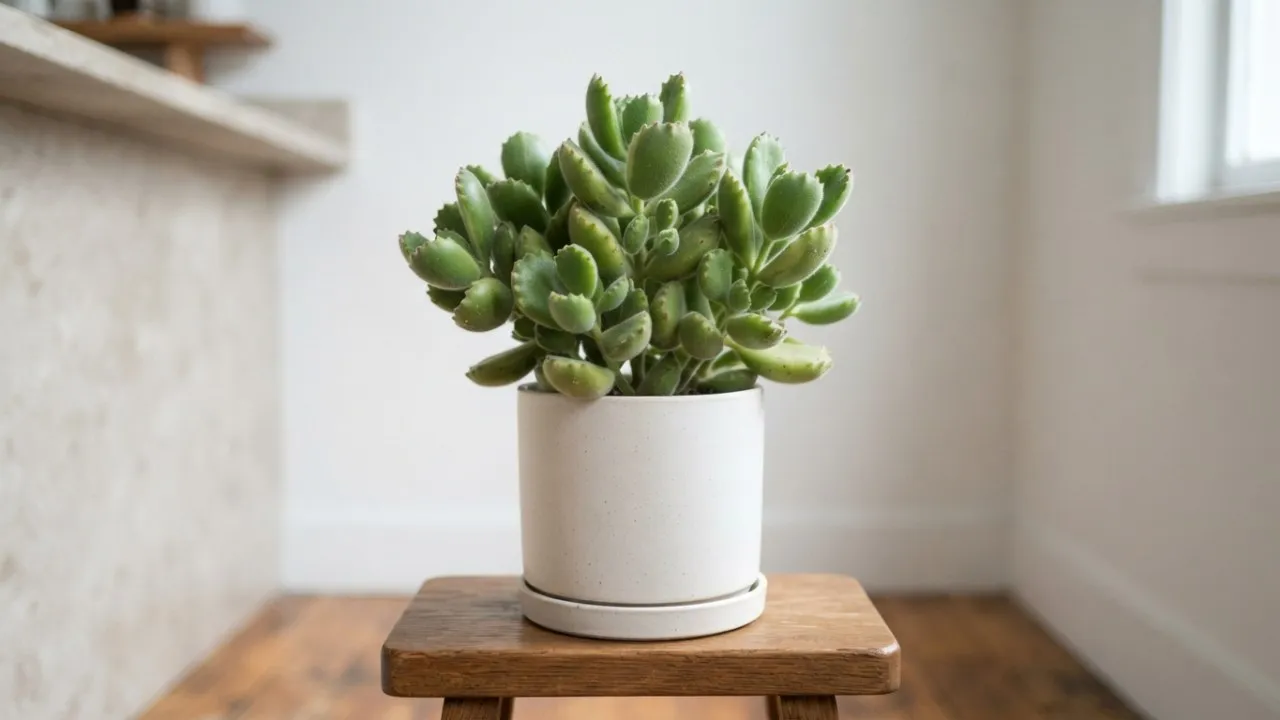
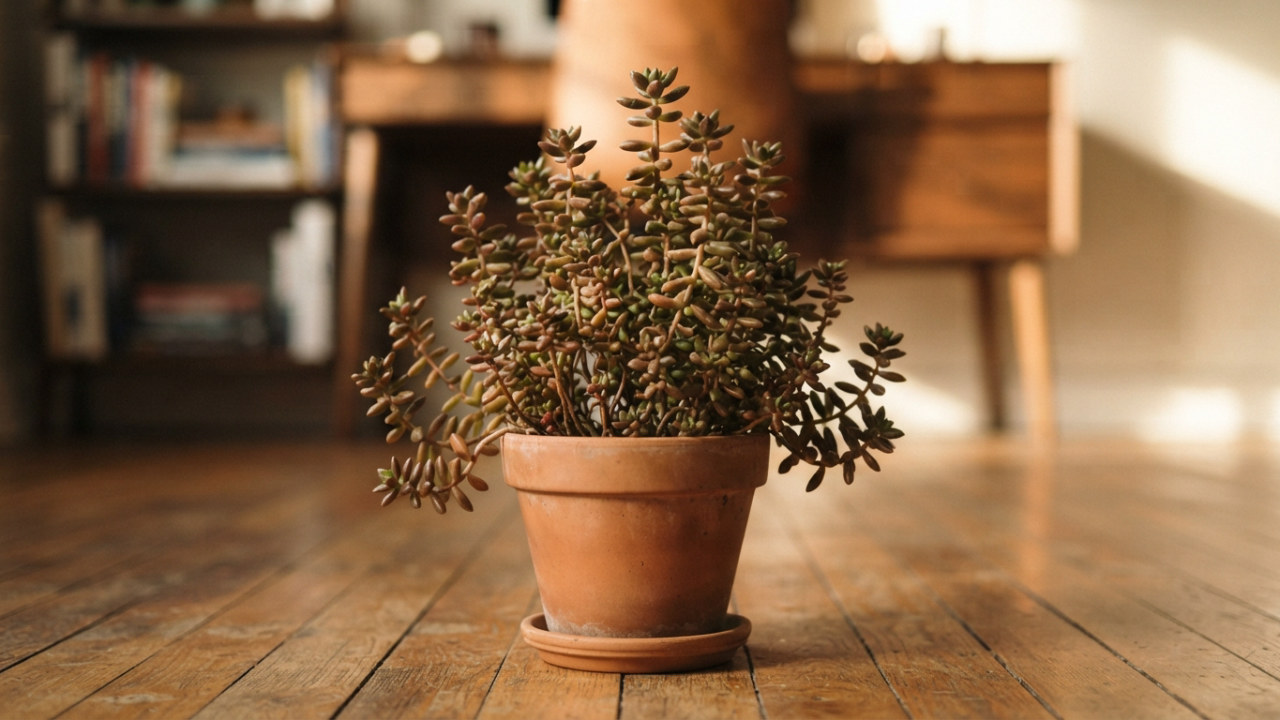
A small Mexican stonecrop whose hairy, russet bead-like leaves trail into a low mat and drop at a touch.
- Every 12 daysWatering
- Full sunLight
- 20–40 %Humidity
- 10–30 °CTemperature


How to care for your Coral Beads
Everything you need to keep your Coral Beads healthy: watering, light, humidity, feeding, repotting and pruning.
Sedum stahlii grows wild on steep, rocky slopes in Oaxaca, Puebla and Veracruz, and was described from a specimen collected in Puebla. Its thick, nearly round leaves sit in opposite pairs along spreading stems and take on deeper red-brown in full sun. Clusters of small yellow stars open in late spring and early summer. It suits a shallow pot or a hanging planter on a bright sill.

How to recognise Coral Beads
Look for opposite, egg-shaped to round, finely hairy leaves in dark red or russet green on thin trailing stems, with yellow flowers. Sedum rubrotinctum has smooth, glossy, spirally arranged leaves; Sedum dasyphyllum has far smaller blue-gray beads; burro's tail has long, pendent, pointed leaves.

Watering your Coral Beads
Every 12 days
Water thoroughly only once the mix has dried out completely, and pour at the soil rather than over the fragile leaves.
How to know it needs water
- The leaves lose their firm, round look and start to wrinkle slightly.
- The mix feels dry throughout when you check with a finger.

How much light a Coral Beads needs
Full sun
Give it full sun or the brightest spot you have, with a few hours of direct sun to keep the red-brown color.
- Direct sun tolerated
- 4 to 8 h a day
- Orientations that suit it
- East, West, South-east, South-west

Humidity and misting
20–40 %
Dry indoor air is fine, and extra humidity is unnecessary. Never mist: the hairy leaves hold water and rot, and the plant takes what it needs through its roots.

Feeding and fertiliser
Every 28 days
Feed lightly once a month during the growing months, and not at all in winter.
- Recommended feed
- A diluted cactus and succulent fertilizer, low in nitrogen. · 2-7-7

Repotting your Coral Beads
Every 36 months
Move it to a wide, shallow pot of gritty cactus mix, handling the stems gently because the leaves fall off easily.
- When
- Repot in spring, when the mat starts growing again.
- Potting mix
- Cactus and succulent mix
- Mix in
- perlite, pumice, coarse sand
The tell-tale signs
- The mat has grown well past the edge of the pot.
- Stems look crowded and the mix drains slowly or has broken down.

Pruning your Coral Beads
Trim in spring or summer, when the plant is actively growing. Pinch back or cut straggling stems with clean scissors, and press the cuttings onto dry mix to root.

Through the year
Watering is not set once and for all: it follows the light and the growth. Allow 19 days between waterings in the depth of winter, against 11 in the growing season.
- 18 J
- 14 F
- 12 M
- 11 A
- 11 M
- 11 J
- 11 J
- 11 A
- 12 S
- 13 O
- 16 N
- 19 D
Active growth · Days between waterings

Good to know
- Its leaves detach at the slightest touch, and each fallen leaf can root where it lands.
- The species was described in 1900 by the botanist Hermann zu Solms-Laubach.

Frequently asked questions about the Coral Beads
How do you care for a Coral Beads?
Water it every 12 days. Give it full sun. Ideal humidity: 20–40 %. Ideal temperature: 10–30 °C. Water thoroughly only once the mix has dried out completely, and pour at the soil rather than over the fragile leaves.
How often should you water a Coral Beads?
Every 12 days Water thoroughly only once the mix has dried out completely, and pour at the soil rather than over the fragile leaves. How to know it needs water : The leaves lose their firm, round look and start to wrinkle slightly. ; The mix feels dry throughout when you check with a finger..
How much light does a Coral Beads need?
Full sun Give it full sun or the brightest spot you have, with a few hours of direct sun to keep the red-brown color. 4 to 8 h a day
Is the Coral Beads toxic to cats and dogs?
No, the Coral Beads is not listed as toxic to cats and dogs. That is still no reason to let your pets chew on it.
Why are my Coral Beads leaves turning yellow?
Yellowing most often comes from too much water: the mix stays wet and the roots suffocate. Check that the pot drains, empty the saucer, and let the mix dry before watering again. Too little light or a cold draught cause the same symptom.
When should you repot a Coral Beads?
Repot every 36 months, ideally in repot in spring, when the mat starts growing again.. Move it to a wide, shallow pot of gritty cactus mix, handling the stems gently because the leaves fall off easily.

At a glance
- Family
- Crassulaceae
- Category
- Succulent
- Placement
- Indoor
- Mature height
- 15 cm
- Growth
- Moderate
- Temperature
- 10–30 °C
- Pot materials
- terracotta, ceramic
- Growth
- Reaches maturity in 3 years
These figures are for an average plant. In the app they are recalculated for yours, based on your room, its orientation and the season.
And for your plant, in your home?
In the app this plant becomes yours: a watering schedule tuned to your home, health tracking from photos, and reminders at the right moment.