Succulent · Crassulaceae
Jelly Beans Sedum
Sedum pachyphyllum
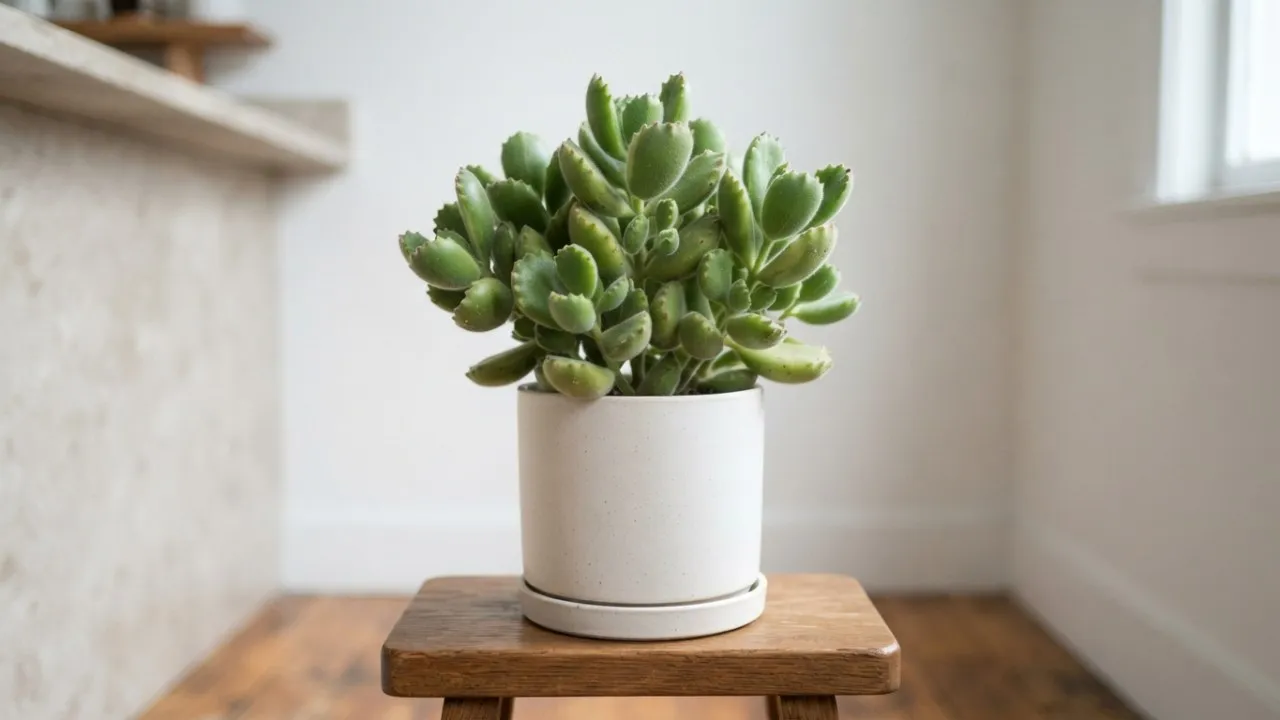
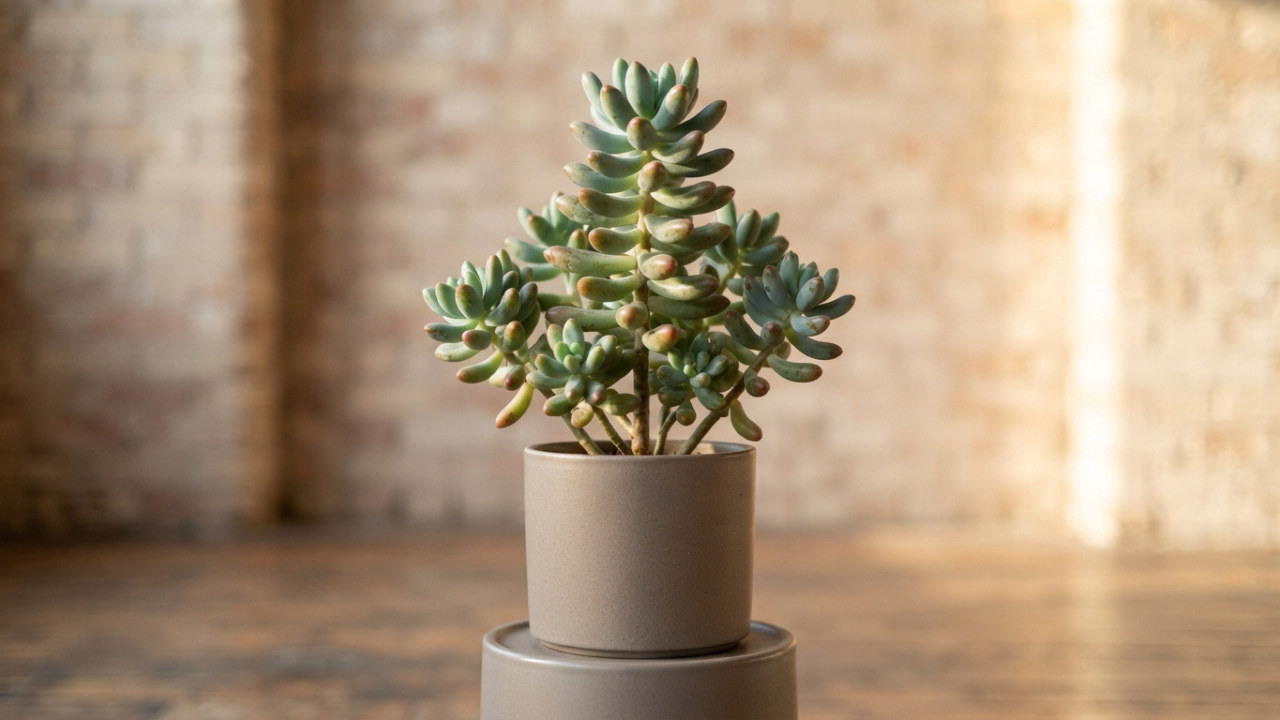
Sedum pachyphyllum, commonly known as Jelly Beans Sedum, is a charming succulent with distinctive, plump, jelly bean-shaped leaves.
- Every 14 daysWatering
- Full sunLight
- 30–50 %Humidity
- 10–27 °CTemperature


How to care for your Jelly Beans Sedum
Everything you need to keep your Jelly Beans Sedum healthy: watering, light, humidity, feeding, repotting and pruning.
Sedum pachyphyllum is a small, easy-to-grow succulent native to Oaxaca, Mexico. Its cylindrical, fleshy leaves, often tipped with red when exposed to strong sunlight, give it its common name. It forms low-growing clumps and can produce small yellow flowers in spring. It is not frost hardy: in cold regions, bring pots indoors to a bright spot before temperatures fall to about 5 °C, and keep the soil dry in winter. Ideal for rock gardens in mild climates, containers, or as a houseplant, it thrives on neglect and requires minimal watering, making it perfect for beginners or those seeking a low-maintenance plant.

How to recognise Jelly Beans Sedum
A small succulent with upright, branching stems that become woody at the base and carry clusters of plump, finger-shaped, blue-green leaves 2 to 3 cm long, with a reddish tip in strong sun. Small yellow star-shaped flowers appear in spring. It is confused with Sedum rubrotinctum (also sold as Jelly Beans), whose leaves are shorter and more bean-shaped, and with Sedum morganianum, which trails in long hanging stems densely covered with overlapping leaves. Upright stems with elongated blue-green leaves and red tips point to S. pachyphyllum.

Watering your Jelly Beans Sedum
Every 14 days
Water thoroughly until drainage runs clear, then allow the substrate to dry out completely before watering again, about every 2 weeks in the growing season. During the rest, water only about every 4 weeks. Avoid overhead watering.
How to know it needs water
- Substrate completely dry
- Leaves may appear slightly less turgid
- Pot feels light

How much light a Jelly Beans Sedum needs
Full sun
Full sun to bright indirect light. Requires several hours of direct sun to maintain compact growth and vibrant colour.
- Direct sun tolerated
- 4 to 8 h a day
- Orientations that suit it
- South-east, South, South-west, East, West

Humidity and misting
30–50 %
Low (30 to 50 %) Do not mist; wet leaves and high humidity can lead to rot.

Feeding and fertiliser
Every 60 days
Feed about every 4 weeks from May to August; stop from September to April.
- Recommended feed
- Low-nitrogen liquid fertilizer formulated for succulents or cacti · 1-2-1

Repotting your Jelly Beans Sedum
Every 24 months
Repot every 2 years in March or April into a container of similar size or slightly larger using a well-draining cactus and succulent mix. Handle carefully to avoid breaking off leaves.
- When
- Spring
- Potting mix
- Cactus and succulent mix
- Mix in
- pumice, coarse sand, perlite
The tell-tale signs
- Roots emerging from drainage holes
- Plant becoming top-heavy
- Substrate no longer draining well

Pruning your Jelly Beans Sedum
Remove dead or leggy stems as needed, typically in spring. Cut cleanly at the base of the stem or just above a leaf node using sterilised scissors or a sharp blade.

Through the year
Watering is not set once and for all: it follows the light and the growth. Allow 28 days between waterings in the depth of winter, against 11 in the growing season.
- 21 J
- 21 F
- 14 M
- 11 A
- 11 M
- 11 J
- 11 J
- 11 A
- 14 S
- 17 O
- 21 N
- 28 D
Active growth · Days between waterings

Good to know
- Its leaves store water to survive dry periods.
- This succulent species is native to Mexico.
- The stems can become woody with age.
- The leaves can turn reddish-bronze in strong sun or cool temperatures.

Frequently asked questions about the Jelly Beans Sedum
How do you care for a Jelly Beans Sedum?
Water it every 14 days. Give it full sun. Ideal humidity: 30–50 %. Ideal temperature: 10–27 °C. Water thoroughly until drainage runs clear, then allow the substrate to dry out completely before watering again, about every 2 weeks in the growing season. During the rest, water only about every 4 weeks. Avoid overhead watering.
How often should you water a Jelly Beans Sedum?
Every 14 days Water thoroughly until drainage runs clear, then allow the substrate to dry out completely before watering again, about every 2 weeks in the growing season. During the rest, water only about every 4 weeks. Avoid overhead watering. How to know it needs water : Substrate completely dry ; Leaves may appear slightly less turgid ; Pot feels light.
How much light does a Jelly Beans Sedum need?
Full sun Full sun to bright indirect light. Requires several hours of direct sun to maintain compact growth and vibrant colour. 4 to 8 h a day
Is the Jelly Beans Sedum toxic to cats and dogs?
No, the Jelly Beans Sedum is not listed as toxic to cats and dogs. That is still no reason to let your pets chew on it.
Why are my Jelly Beans Sedum leaves turning yellow?
Yellowing most often comes from too much water: the mix stays wet and the roots suffocate. Check that the pot drains, empty the saucer, and let the mix dry before watering again. Too little light or a cold draught cause the same symptom.
When should you repot a Jelly Beans Sedum?
Repot every 24 months, ideally in spring. Repot every 2 years in March or April into a container of similar size or slightly larger using a well-draining cactus and succulent mix. Handle carefully to avoid breaking off leaves.

At a glance
- Family
- Crassulaceae
- Category
- Succulent
- Placement
- Indoor and outdoor
- Mature height
- 20 cm
- Growth
- Moderate
- Temperature
- 10–27 °C
- Pot materials
- terracotta, ceramic
- Growth
- Reaches maturity in 3 years
These figures are for an average plant. In the app they are recalculated for yours, based on your room, its orientation and the season.
And for your plant, in your home?
In the app this plant becomes yours: a watering schedule tuned to your home, health tracking from photos, and reminders at the right moment.