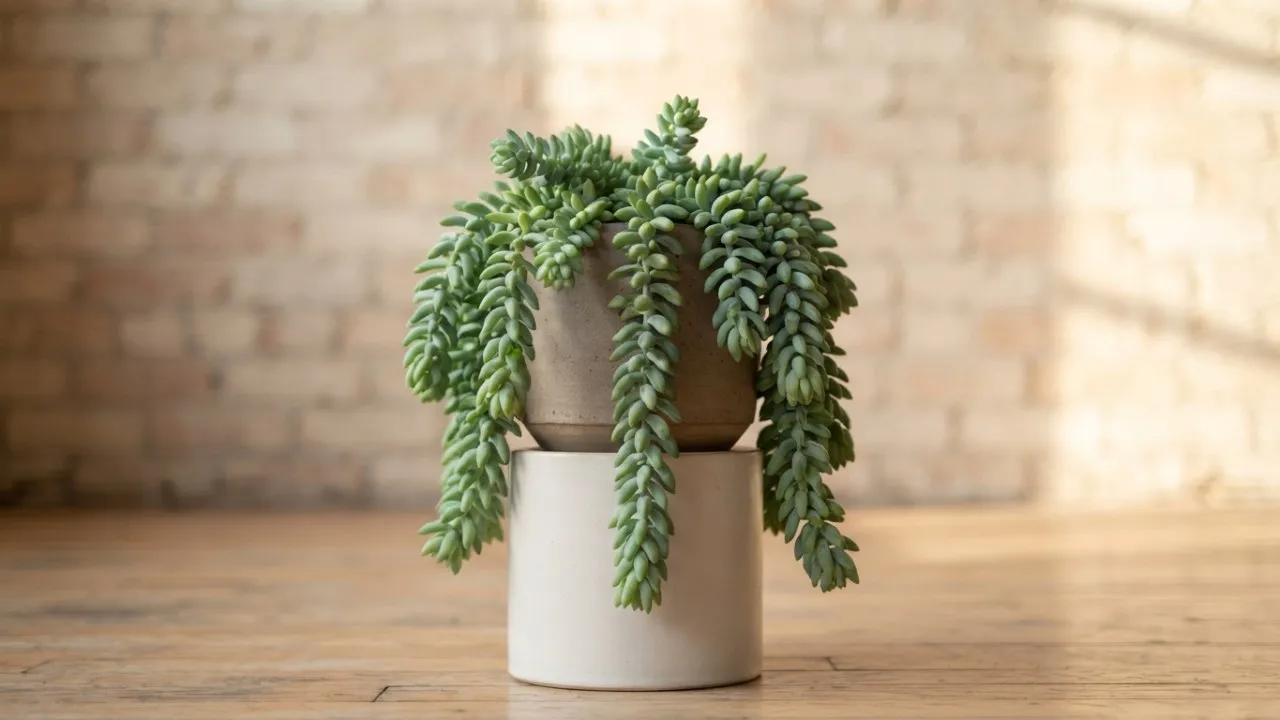
Burro's Tail
Sedum morganianum
A trailing succulent with long stems densely covered in fleshy blue-green teardrop-shaped leaves.
The essentials at a glance
-
Watering
Every 14 days
-
Light
Bright indirect light
-
Humidity
20–40 %
-
Temperature
10–30 °C


How to care for your Burro's Tail
Everything you need to keep your Burro's Tail healthy: watering, light, humidity, feeding, repotting and pruning.
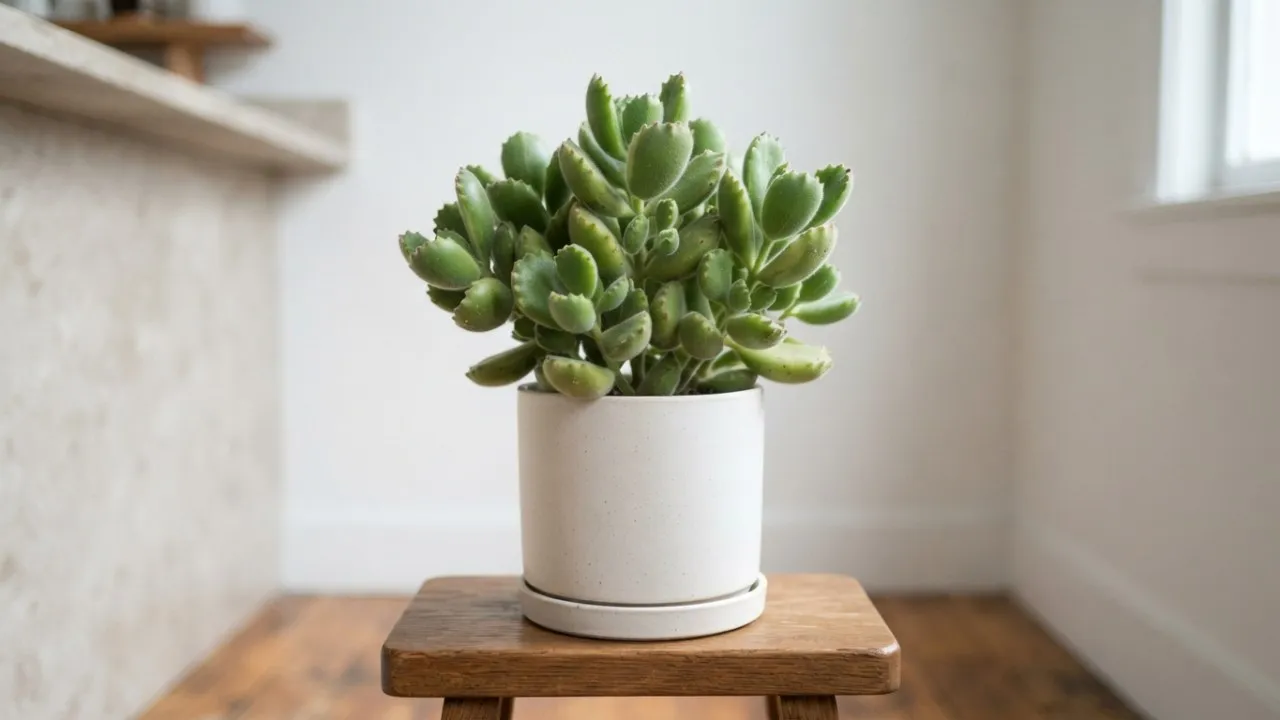
Sedum morganianum is a spectacular trailing succulent native to Mexico and Honduras. Its long hanging stems, which can reach 60 cm or more, are densely covered with plump, fleshy leaves in a lovely pruinose blue-green. When displayed in a hanging planter, it forms sumptuous cascades reminiscent of botanical braids. Its leaves are very fragile and detach at the slightest touch, but each one can give rise to a new plant, making propagation extremely easy.

Watering your Burro's Tail
Every 14 days
Water deeply then allow to dry completely between waterings. Water gently to avoid dislodging the fragile leaves. Reduce significantly in winter.
How to know it needs water
- Substrate completely dry
- Leaves losing their plump appearance and beginning to wrinkle
- Lower leaves detach easily

How much light a Burro's Tail needs
Bright indirect light
Bright indirect light to a few hours of gentle direct sun. Avoid harsh midday sun which can scorch the leaves. East or west-facing exposure is ideal.
- Direct sun tolerated
- 2 to 4 h a day
- Orientations that suit it
- East, West, South-east, South-west

Humidity and misting
20–40 %
Low (20–40%). Tolerates dry air very well. Do not mist. Moisture on the leaves can cause rot and triggers leaf drop.

Feeding and fertiliser
Every 30 days
Fertilize monthly from spring to early autumn. No fertilizer in winter.
- Recommended feed
- Liquid cactus and succulent fertilizer diluted to half strength. · 2-7-7

Repotting your Burro's Tail
Every 36 months
Handle with extreme care — leaves fall at the slightest contact. Prefer a heavy, stable pot (terracotta) as the plant becomes weighty. Very well-draining cactus substrate. Wrap stems in newspaper to protect them during repotting.
- When
- Spring
- Potting mix
- Cactus and succulent mix
- Mix in
- perlite, pumice, coarse sand
The tell-tale signs
- Plant cramped or pot too light
- Substrate very degraded
- Growth significantly slowed

Pruning your Burro's Tail
Rarely needed. Only if stems become too bare at the base. Cut bare stems with clean scissors. Cut tips can be dried for 2–3 days then replanted. Fallen leaves can be laid on moist substrate to produce new plantlets.

Through the year
Watering is not set once and for all: it follows the light and the growth. Allow 22 days between waterings in the depth of winter, against 13 in the growing season.
- 21 J
- 17 F
- 14 M
- 13 A
- 13 M
- 13 J
- 13 J
- 13 A
- 14 S
- 15 O
- 18 N
- 22 D
Active growth · Days between waterings

Good to know
- Every fallen leaf of Sedum morganianum can give rise to a new plant — it is one of the easiest succulents to propagate from leaf cuttings.
- Native to southern Mexico and Honduras, this plant was first described in 1938 by botanist Eric Walther, who named it in honor of Dr. Meredith Morgan.

Frequently asked questions about the Burro's Tail
How do you care for a Burro's Tail?
Water it every 14 days. Give it bright indirect light. Ideal humidity: 20–40 %. Ideal temperature: 10–30 °C. Water deeply then allow to dry completely between waterings. Water gently to avoid dislodging the fragile leaves. Reduce significantly in winter.
How often should you water a Burro's Tail?
Every 14 days Water deeply then allow to dry completely between waterings. Water gently to avoid dislodging the fragile leaves. Reduce significantly in winter. How to know it needs water : Substrate completely dry ; Leaves losing their plump appearance and beginning to wrinkle ; Lower leaves detach easily.
How much light does a Burro's Tail need?
Bright indirect light Bright indirect light to a few hours of gentle direct sun. Avoid harsh midday sun which can scorch the leaves. East or west-facing exposure is ideal. 2 to 4 h a day
Is the Burro's Tail toxic to cats and dogs?
No, the Burro's Tail is not listed as toxic to cats and dogs. That is still no reason to let your pets chew on it.
Why are my Burro's Tail leaves turning yellow?
Yellowing most often comes from too much water: the mix stays wet and the roots suffocate. Check that the pot drains, empty the saucer, and let the mix dry before watering again. Too little light or a cold draught cause the same symptom.
When should you repot a Burro's Tail?
Repot every 36 months, ideally in spring. Handle with extreme care — leaves fall at the slightest contact. Prefer a heavy, stable pot (terracotta) as the plant becomes weighty. Very well-draining cactus substrate. Wrap stems in newspaper to protect them during repotting.

At a glance
- Family
- Crassulaceae
- Category
- Succulent
- Placement
- Indoor
- Mature height
- 30 cm
- Growth
- Moderate
- Temperature
- 10–30 °C
- Pot materials
- terracotta, ceramic
- Growth
- Reaches maturity in 3 years
These figures are for an average plant. In the app they are recalculated for yours, based on your room, its orientation and the season.
And for your plant, in your home?
In the app this plant becomes yours: a watering schedule tuned to your home, health tracking from photos, and reminders at the right moment.