
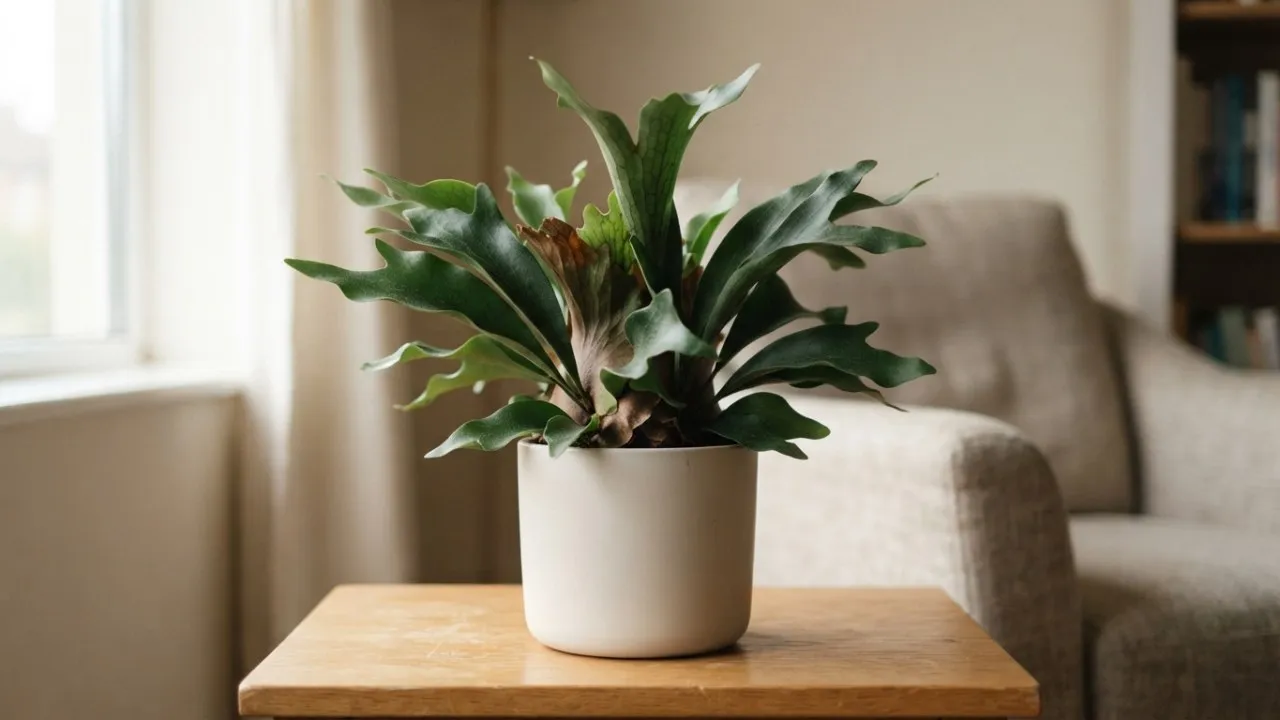
Fern · Polypodiaceae
Staghorn Fern
Platycerium bifurcatum
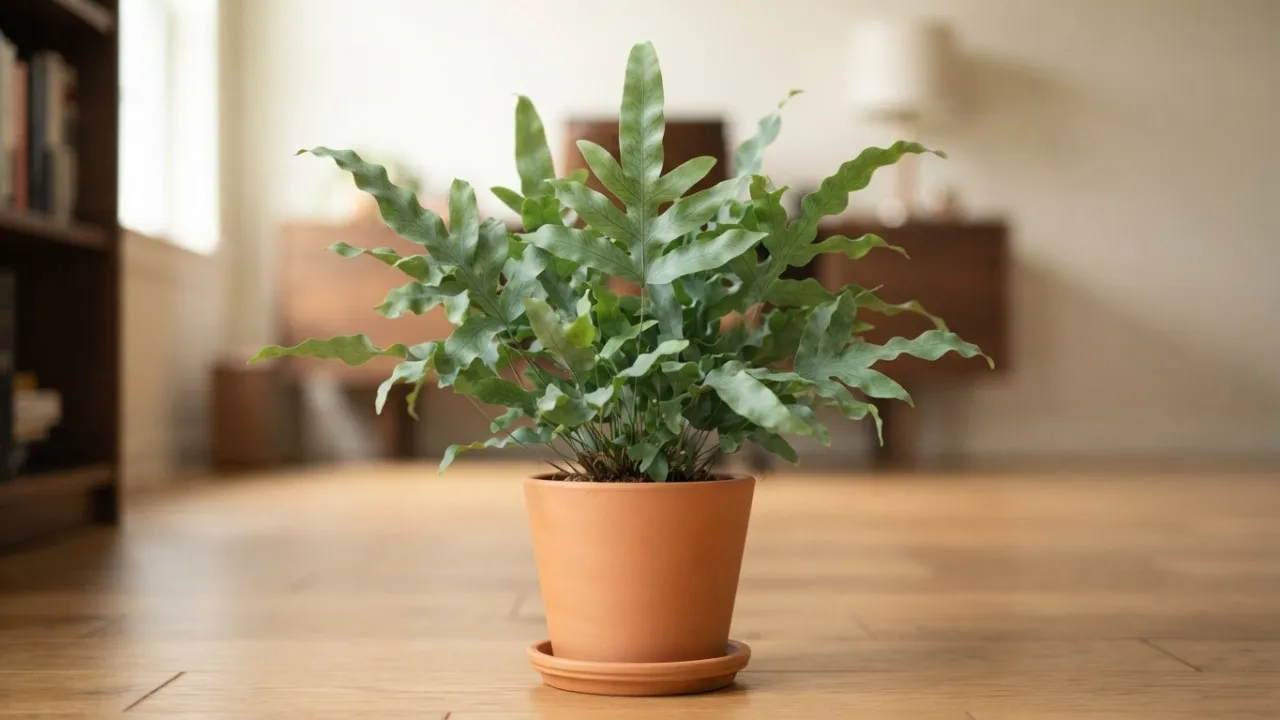
An original epiphytic fern with forked fronds resembling antlers, often mounted on boards as living wall decor.
- Every 7 daysWatering
- Bright indirect lightLight
- 50–70 %Humidity
- 12–28 °CTemperature


How to care for your Staghorn Fern
Everything you need to keep your Staghorn Fern healthy: watering, light, humidity, feeding, repotting and pruning.
Platycerium bifurcatum is a spectacular epiphytic fern native to the forests of eastern Australia and New Guinea. Its unique silhouette is distinguished by two types of fronds: forked fertile fronds shaped like antlers, and round basal fronds forming a protective shield against the mount. Often attached to a board of wood or cork to replicate its epiphytic lifestyle, it makes one of the most original living wall decorations. Less demanding than the maidenhair fern, it adapts well to interiors when provided with good humidity.

How to recognise Staghorn Fern
An epiphytic fern with two kinds of fronds: flat, rounded shield fronds that turn brown and papery against the mount, and green, forked, antler-like fertile fronds that hang or arch outward. Platycerium superbum has much larger, more upright shield fronds and broader fertile fronds, and Platycerium veitchii has narrower, silvery, felted fronds.

Watering your Staghorn Fern
Every 7 days
Board-mounted: soak the moss and roots in water for 10 to 15 minutes, then allow to drain thoroughly. Potted: water when the top half of the substrate is dry. Water less often in winter.
How to know it needs water
- Moss or substrate dry to the touch
- Board-mounted plant very light
- Fertile fronds beginning to soften slightly

How much light a Staghorn Fern needs
Bright indirect light
Bright indirect light. Tolerates partial shade. Avoid intense direct sun which scorches the fronds. An east or west-facing position near a window is ideal.
- Direct sun tolerated
- 0 to 1 h a day
- Orientations that suit it
- East, West, North-east, North-west, North

Humidity and misting
50–70 %
Moderate to high (50 to 70 %). Appreciates ambient humidity but tolerates dry air better than most other ferns. Mist the fronds about every 3 days, especially when board-mounted or in a basket. Avoid excessively wetting the basal fronds, which should stay dry on the surface.

Feeding and fertiliser
Every 28 days
Feed once a month from April to September, at half strength. Do not feed from October to March.
- Recommended feed
- Diluted liquid foliage plant fertilizer, applied during soaking or watering. · 1-1-1

Repotting your Staghorn Fern
Every 36 months
Ideally mounted on a board or in a hanging basket with sphagnum moss and bark. Potted: very airy orchid-type substrate (bark, sphagnum, charcoal). Never remove the brown basal fronds, as they protect the roots.
- When
- Spring
- Potting mix
- Orchid mix
- Mix in
- pine bark, sphagnum moss, coco fibre
The tell-tale signs
- Plant overflowing its mount significantly
- Basal fronds very thick and compacted
- Sphagnum moss completely degraded (board-mounted)

Pruning your Staghorn Fern
Only for completely dried fertile fronds (antler-shaped). Cut dead fertile fronds at the base. Never remove or cut the basal (shield) fronds, even brown ones: they protect the roots and store nutrients.

Through the year
Watering is not set once and for all: it follows the light and the growth. Allow 8 days between waterings in the depth of winter, against 6 in the growing season.
- 8 J
- 8 F
- 6 M
- 6 A
- 6 M
- 6 J
- 6 J
- 6 A
- 6 S
- 7 O
- 8 N
- 8 D
Active growth · Days between waterings

Good to know
- Platycerium has two distinct types of fronds: the fertile antler-shaped fronds that handle photosynthesis and reproduction, and the basal shield fronds that cover and protect the roots by collecting nutritious debris.
- The genus name Platycerium comes from the Greek for "flat horn", and the species name bifurcatum means "forked".

Frequently asked questions about the Staghorn Fern
How do you care for a Staghorn Fern?
Water it every 7 days. Give it bright indirect light. Ideal humidity: 50–70 %. Ideal temperature: 12–28 °C. Board-mounted: soak the moss and roots in water for 10 to 15 minutes, then allow to drain thoroughly. Potted: water when the top half of the substrate is dry. Water less often in winter.
How often should you water a Staghorn Fern?
Every 7 days Board-mounted: soak the moss and roots in water for 10 to 15 minutes, then allow to drain thoroughly. Potted: water when the top half of the substrate is dry. Water less often in winter. How to know it needs water : Moss or substrate dry to the touch ; Board-mounted plant very light ; Fertile fronds beginning to soften slightly.
How much light does a Staghorn Fern need?
Bright indirect light Bright indirect light. Tolerates partial shade. Avoid intense direct sun which scorches the fronds. An east or west-facing position near a window is ideal. 0 to 1 h a day
Is the Staghorn Fern toxic to cats and dogs?
No, the Staghorn Fern is not listed as toxic to cats and dogs. That is still no reason to let your pets chew on it.
Why are my Staghorn Fern leaves turning yellow?
Yellowing most often comes from too much water: the mix stays wet and the roots suffocate. Check that the pot drains, empty the saucer, and let the mix dry before watering again. Too little light or a cold draught cause the same symptom.
When should you repot a Staghorn Fern?
Repot every 36 months, ideally in spring. Ideally mounted on a board or in a hanging basket with sphagnum moss and bark. Potted: very airy orchid-type substrate (bark, sphagnum, charcoal). Never remove the brown basal fronds, as they protect the roots.

At a glance
- Family
- Polypodiaceae
- Category
- Fern
- Placement
- Indoor
- Mature height
- 90 cm
- Growth
- Moderate
- Temperature
- 12–28 °C
- Pot materials
- terracotta, ceramic, plastic, wood
- Growth
- Reaches maturity in 5 years
These figures are for an average plant. In the app they are recalculated for yours, based on your room, its orientation and the season.
And for your plant, in your home?
In the app this plant becomes yours: a watering schedule tuned to your home, health tracking from photos, and reminders at the right moment.
In the same spirit
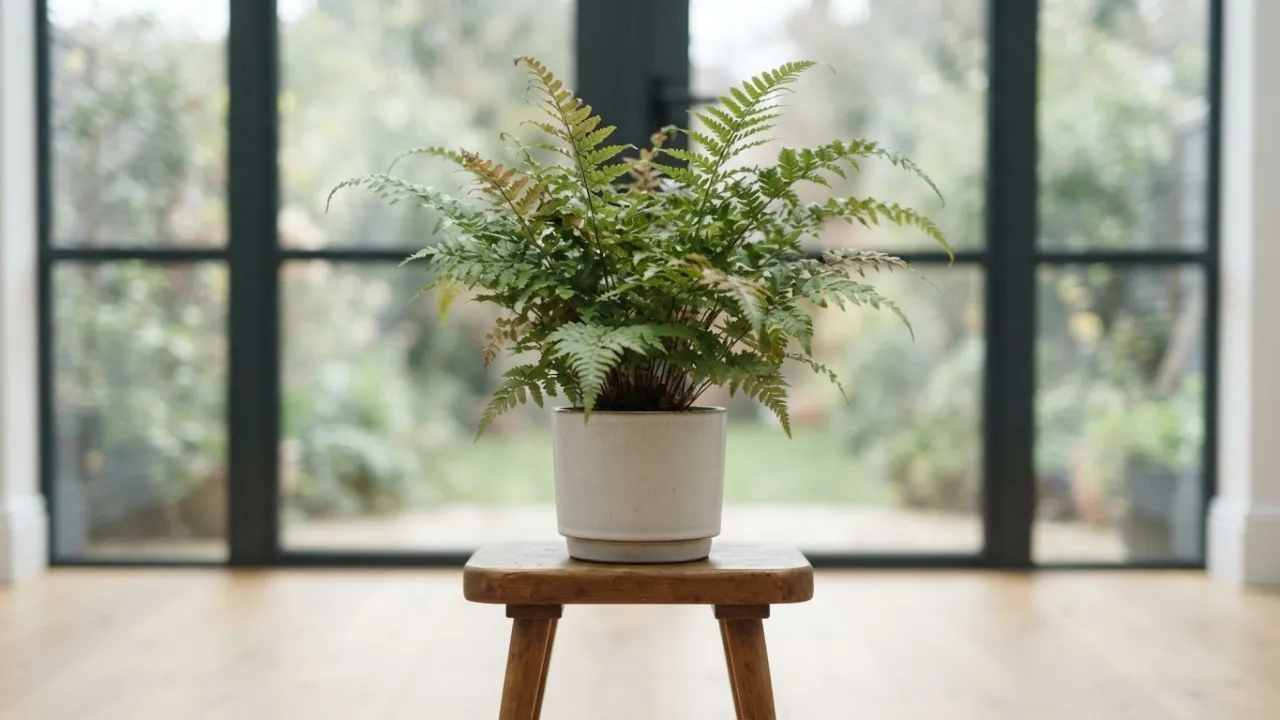 Every 4 days


Autumn Fern
Dryopteris erythrosora

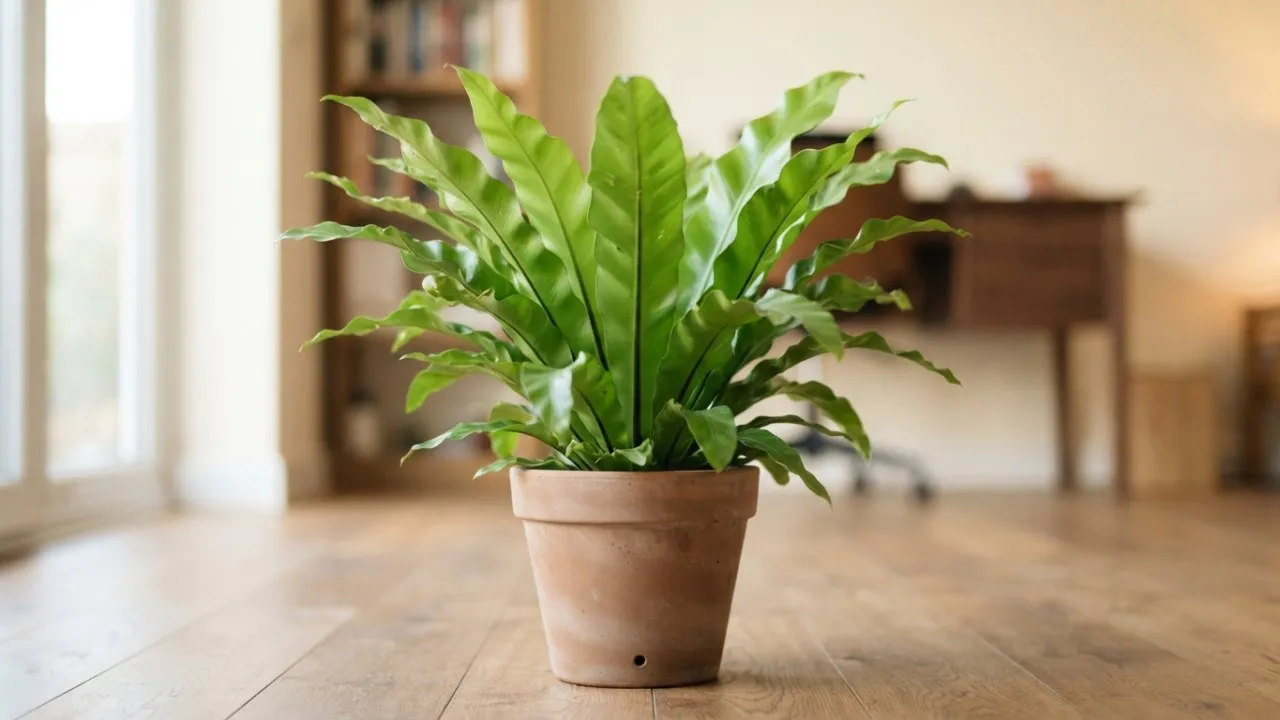 Every 6 days
Bird's Nest Fern
Asplenium antiquum
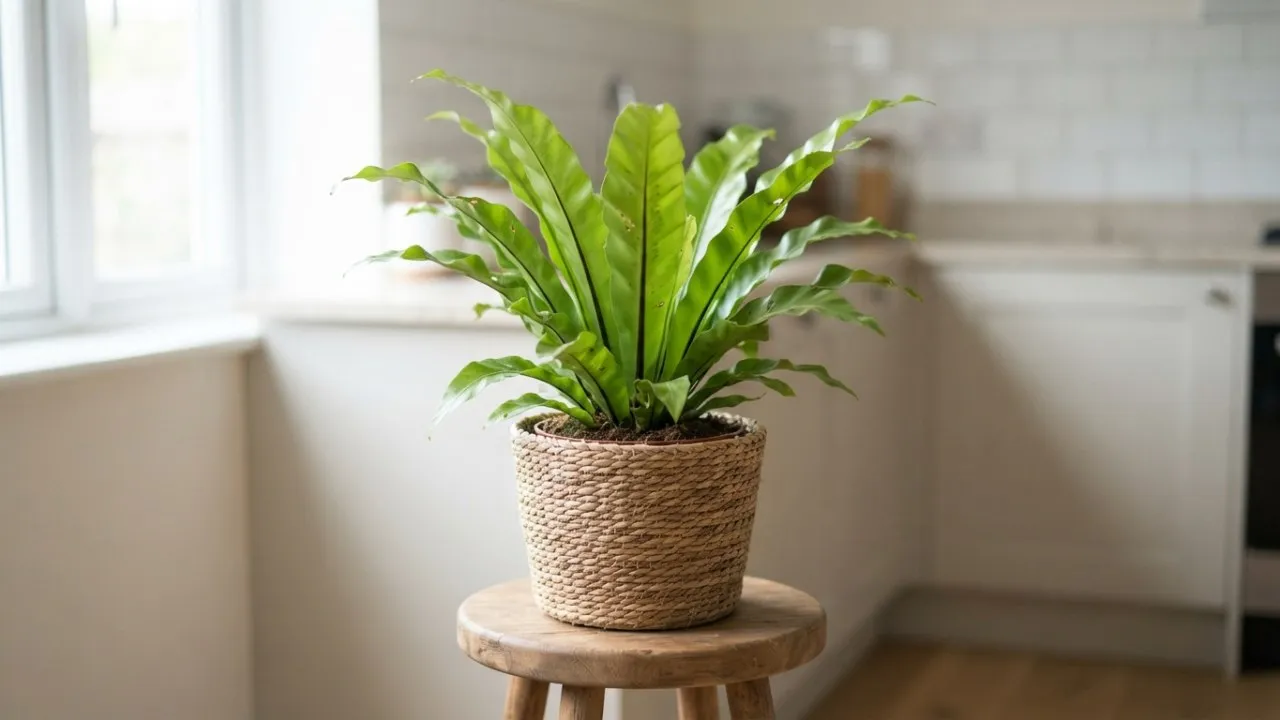 Every 6 days
Bird's Nest Fern
Asplenium nidus
 Every 6 days
Blue Star Fern
Phlebodium aureum
