
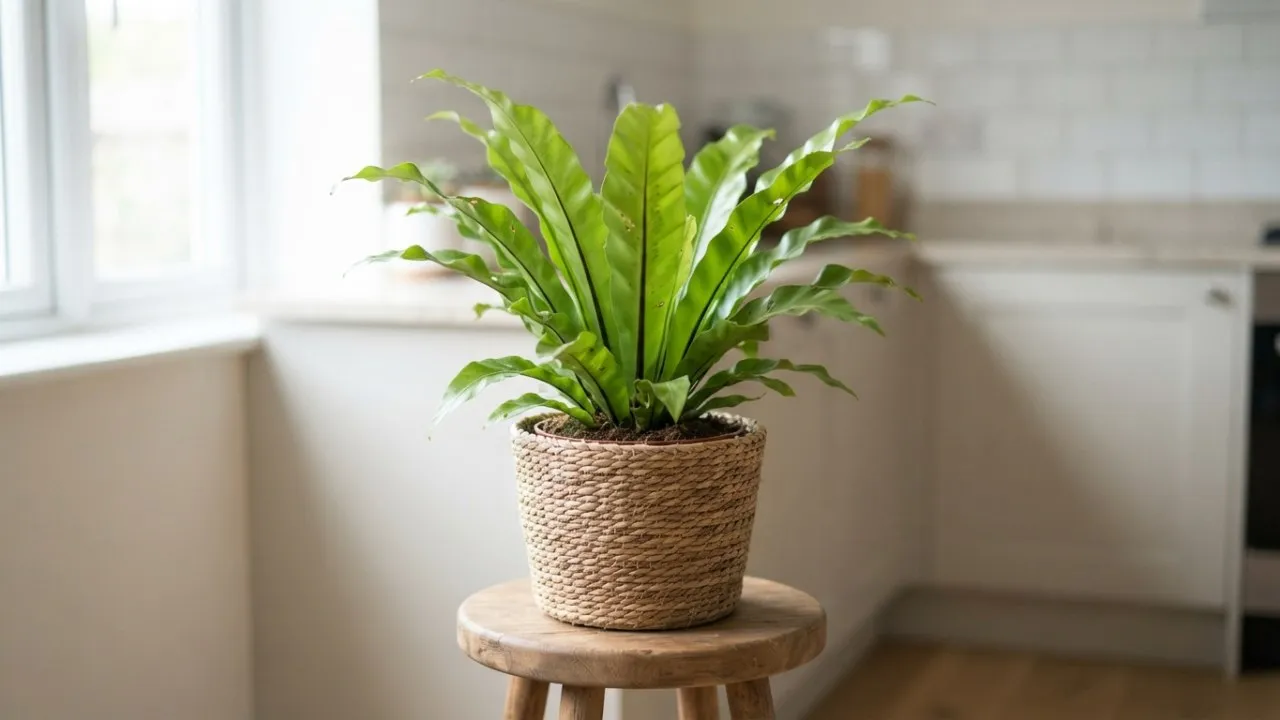
Bird's Nest Fern
Asplenium nidus
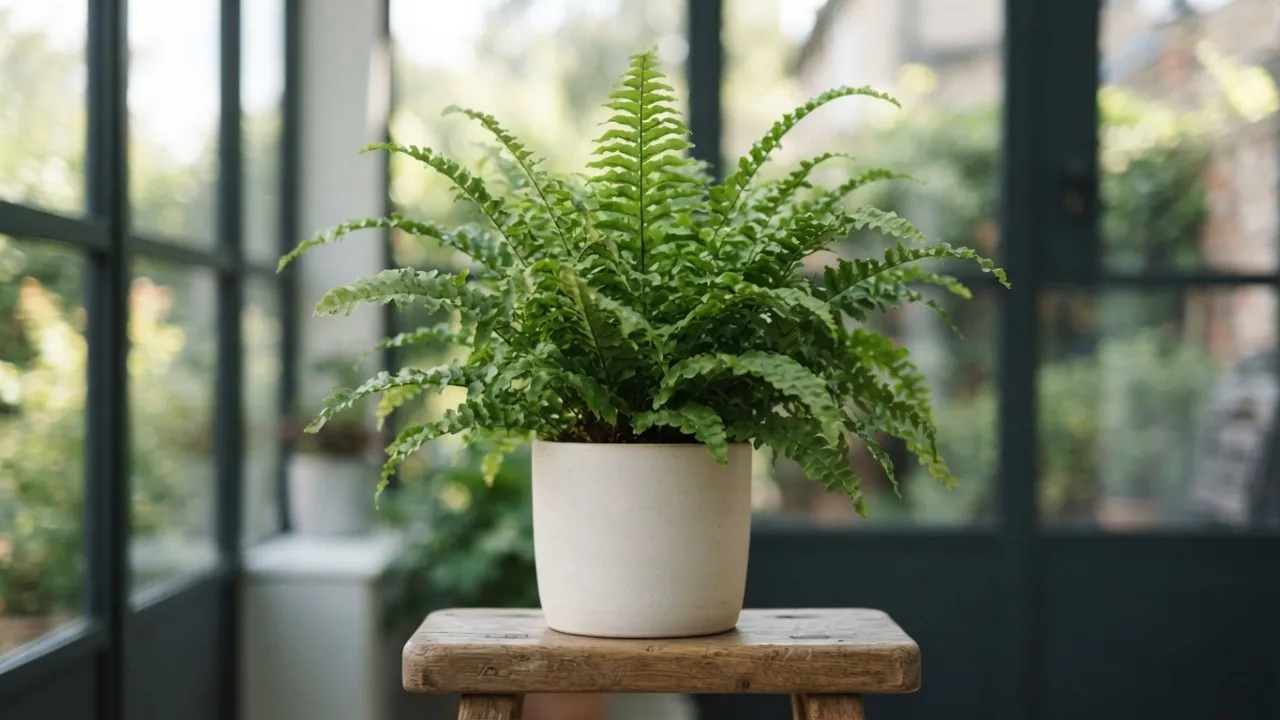
A tropical epiphytic fern forming a rosette of large, undivided, wavy apple-green fronds arranged like a bird's nest.
The essentials at a glance
-
Watering
Every 5 days
-
Light
Medium light
-
Humidity
60–80 %
-
Temperature
15–28 °C


How to care for your Bird's Nest Fern
Everything you need to keep your Bird's Nest Fern healthy: watering, light, humidity, feeding, repotting and pruning.
Asplenium nidus is a spectacular epiphytic fern native to the tropical forests of Asia, Australia, and East Africa. Unlike classic ferns with finely divided foliage, it has large, undivided, glossy, wavy fronds in a luminous apple green, arranged in a rosette reminiscent of a bird's nest. Indoors, it can reach one meter across over time. More resilient than the maidenhair fern, it nevertheless requires good humidity and regular watering to maintain its superb foliage.

Watering your Bird's Nest Fern
Every 5 days
Keep the substrate regularly moist without excess. Water around the plant, NEVER into the central rosette (the nest) as standing water causes rot. Use non-calcareous water at room temperature.
How to know it needs water
- Top of substrate beginning to dry
- Outer fronds losing a little firmness
- Pot noticeably lighter

How much light a Bird's Nest Fern needs
Medium light
Moderate to diffused indirect light. Avoid direct sun which scorches the fronds. Tolerates semi-shaded positions well. Fronds become more undulate with more light.
- Direct sun tolerated
- No direct sun
- Orientations that suit it
- North, North-east, East, North-west

Humidity and misting
60–80 %
High (60–80%). Appreciates humid atmospheres such as bathrooms or kitchens. Mist the fronds regularly with non-calcareous water. Avoid misting directly into the center of the rosette. A nearby humidifier is beneficial.

Feeding and fertiliser
Every 14 days
Fertilize fortnightly from spring to autumn. Dilute more than the recommended dose — ferns are sensitive to excess fertilizer. No fertilization in winter.
- Recommended feed
- Liquid foliage plant fertilizer diluted to half strength. · 2-1-2

Repotting your Bird's Nest Fern
Every 24 months
Use a barely larger pot. Light, humus-rich substrate: potting soil, peat, perlite, and fine bark. Do not bury the central rosette. Keep moist after repotting.
- When
- Spring
- Potting mix
- All-purpose potting mix
- Mix in
- perlite, pine bark, sphagnum moss
The tell-tale signs
- Roots emerging from drainage holes
- Substrate very compacted
- Plant appearing cramped in its pot

Pruning your Bird's Nest Fern
Remove brown or damaged fronds as they appear. Cut dead or damaged fronds at the base with clean secateurs. Never tear out fronds. New fronds emerge coiled from the center of the rosette — do not touch them.

Through the year
Watering is not set once and for all: it follows the light and the growth. Allow 6 days between waterings in the depth of winter, against 4 in the growing season.
- 6 J
- 6 F
- 5 M
- 4 A
- 4 M
- 4 J
- 4 J
- 4 A
- 5 S
- 5 O
- 6 N
- 6 D
Active growth · Days between waterings

Good to know
- In the wild, Asplenium nidus is an epiphytic fern that grows in the forks of tropical trees — its nest-shaped rosette collects rainwater and plant debris that serve as nutrients.
- New fronds emerge from the center of the rosette as coiled crosiers called fiddleheads, a characteristic and ancestral phenomenon of ferns dating back over 300 million years.

Frequently asked questions about the Bird's Nest Fern
How do you care for a Bird's Nest Fern?
Water it every 5 days. Give it medium light. Ideal humidity: 60–80 %. Ideal temperature: 15–28 °C. Keep the substrate regularly moist without excess. Water around the plant, NEVER into the central rosette (the nest) as standing water causes rot. Use non-calcareous water at room temperature.
How often should you water a Bird's Nest Fern?
Every 5 days Keep the substrate regularly moist without excess. Water around the plant, NEVER into the central rosette (the nest) as standing water causes rot. Use non-calcareous water at room temperature. How to know it needs water : Top of substrate beginning to dry ; Outer fronds losing a little firmness ; Pot noticeably lighter.
How much light does a Bird's Nest Fern need?
Medium light Moderate to diffused indirect light. Avoid direct sun which scorches the fronds. Tolerates semi-shaded positions well. Fronds become more undulate with more light. No direct sun
Is the Bird's Nest Fern toxic to cats and dogs?
No, the Bird's Nest Fern is not listed as toxic to cats and dogs. That is still no reason to let your pets chew on it.
Why are my Bird's Nest Fern leaves turning yellow?
Yellowing most often comes from too much water: the mix stays wet and the roots suffocate. Check that the pot drains, empty the saucer, and let the mix dry before watering again. Too little light or a cold draught cause the same symptom.
When should you repot a Bird's Nest Fern?
Repot every 24 months, ideally in spring. Use a barely larger pot. Light, humus-rich substrate: potting soil, peat, perlite, and fine bark. Do not bury the central rosette. Keep moist after repotting.

At a glance
- Family
- Aspleniaceae
- Category
- Fern
- Placement
- Indoor
- Mature height
- 60 cm
- Growth
- Moderate
- Temperature
- 15–28 °C
- Pot materials
- ceramic, plastic
- Growth
- Reaches maturity in 5 years
These figures are for an average plant. In the app they are recalculated for yours, based on your room, its orientation and the season.
And for your plant, in your home?
In the app this plant becomes yours: a watering schedule tuned to your home, health tracking from photos, and reminders at the right moment.
In the same spirit
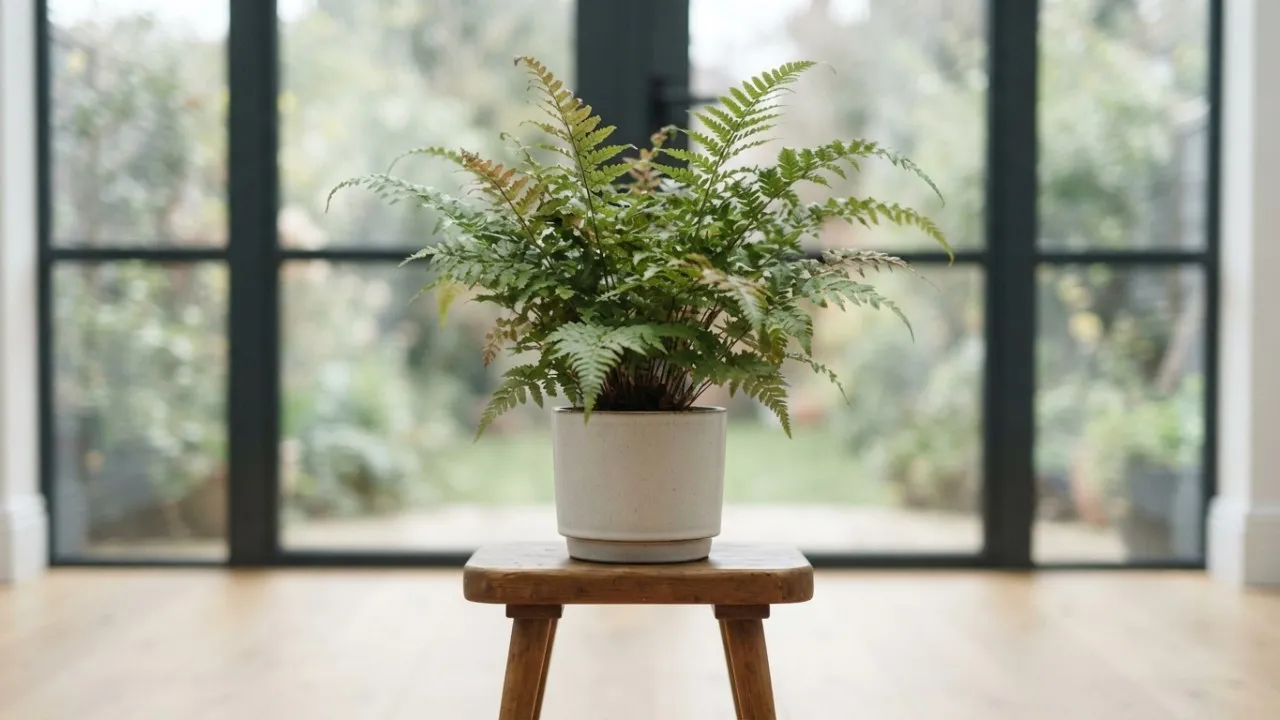 Every 5 days
 Autumn Fern
Dryopteris erythrosora

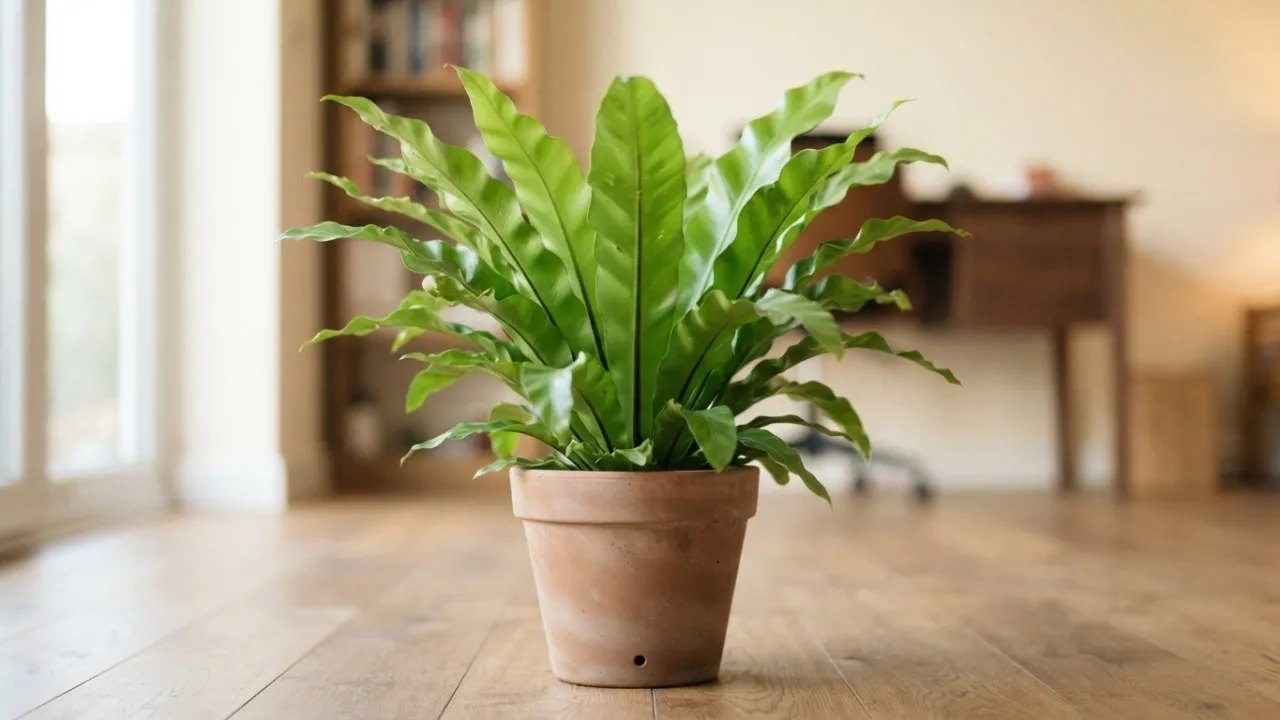 Every 7 days
 Bird's Nest Fern
Asplenium antiquum
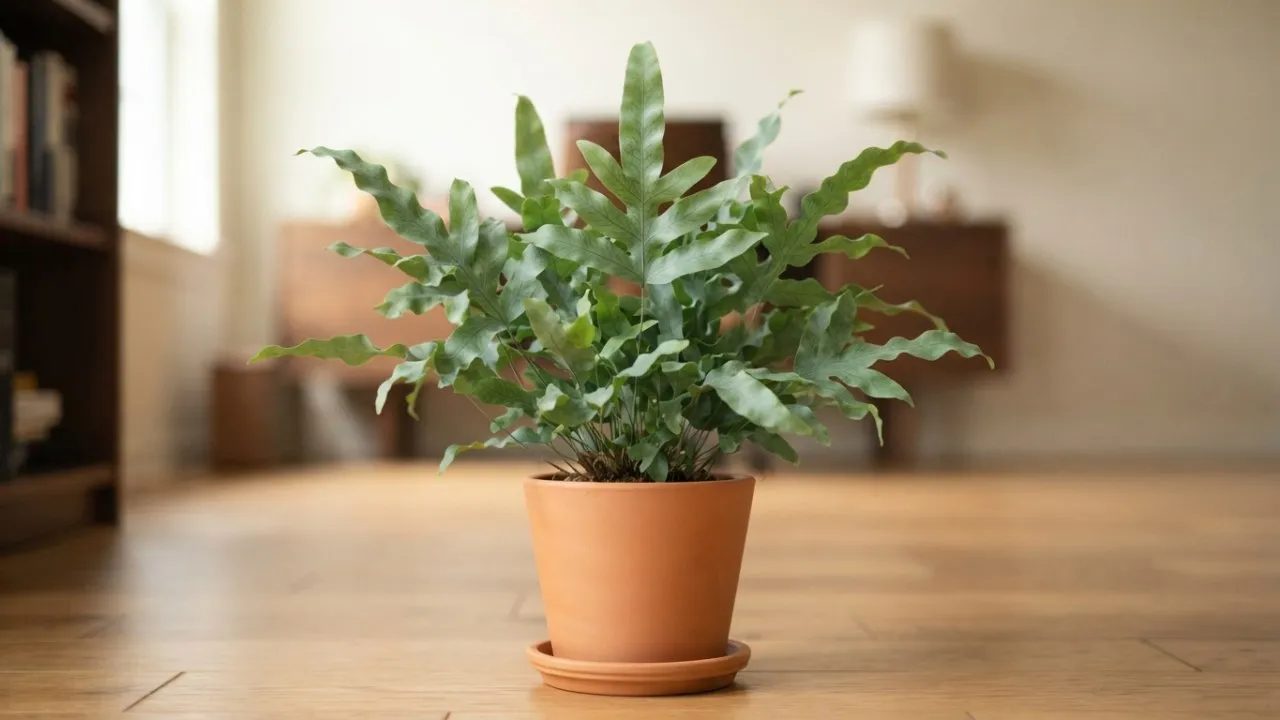 Every 7 days
 Blue Star Fern
Phlebodium aureum
 Every 5 days
 Boston Fern
Nephrolepis exaltata