
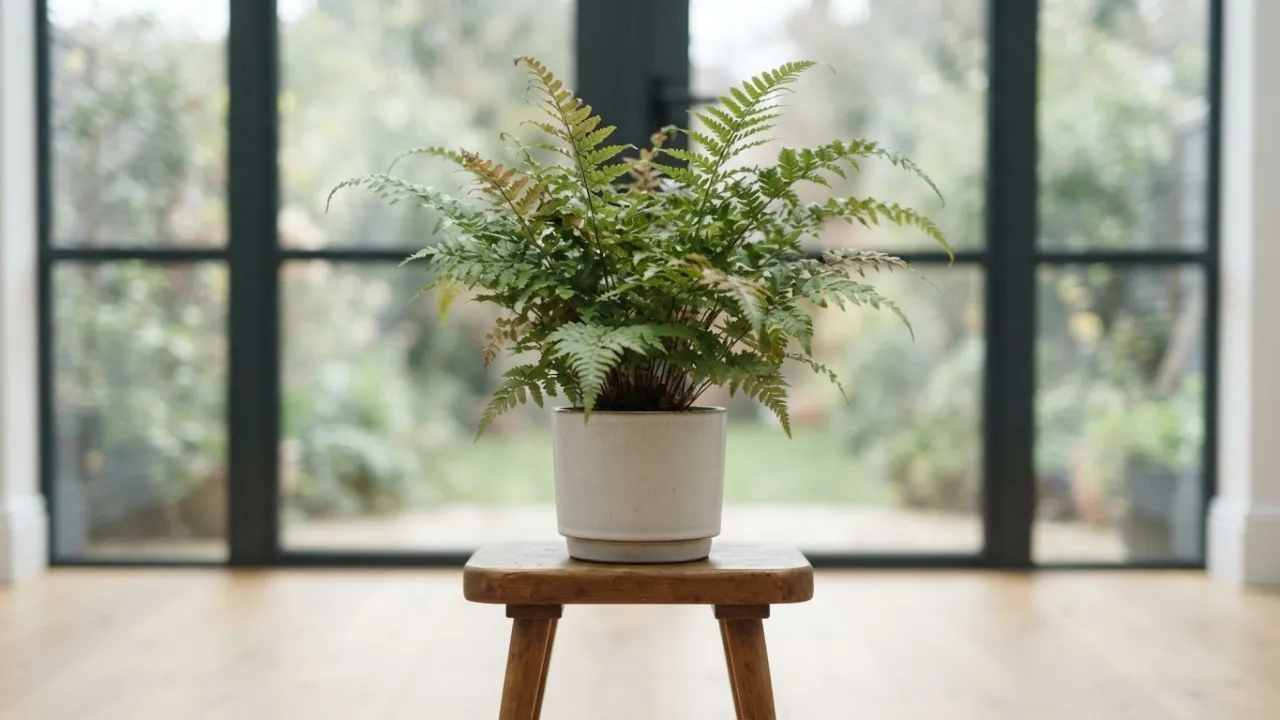
Fern · Dryopteridaceae
Autumn Fern
Dryopteris erythrosora
A captivating semi-evergreen fern known for its new fronds emerging in striking coppery-red hues.
- Every 4 daysWatering
- Medium lightLight
- 50–70 %Humidity
- 5–25 °CTemperature


How to care for your Autumn Fern
Everything you need to keep your Autumn Fern healthy: watering, light, humidity, feeding, repotting and pruning.
The Autumn Fern is celebrated for its dynamic seasonal color, with new fronds emerging in brilliant coppery-red or bronze shades before maturing to a deep, glossy green. It forms a beautiful, arching clump, providing year-round interest in milder climates. This hardy fern thrives in shady, moist, well-draining soil and is excellent for woodland gardens or as a specimen plant indoors. It is frost hardy to about -20 °C in the ground; in a pot outdoors, shelter it against a wall and mulch the pot in winter, since roots in a pot freeze much more easily.

How to recognise Autumn Fern
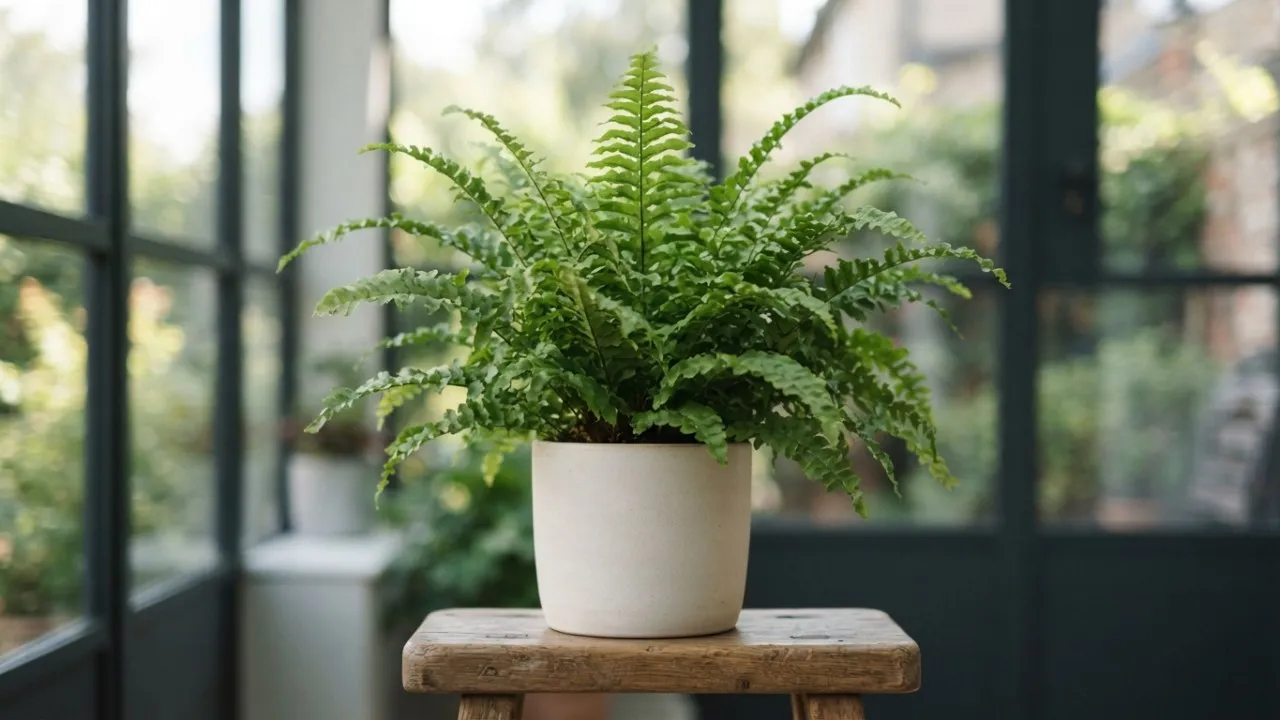
An arching, shuttlecock-shaped clump of twice-divided fronds that unfurl coppery-pink to bronze-red in spring, then turn glossy dark green, with round red-brown spore dots under the leaflets. It can be mistaken for Dryopteris filix-mas, the male fern, whose new fronds are plain green, and for Dryopteris affinis, whose young growth is golden-green rather than copper.

Watering your Autumn Fern
Every 4 days
Keep soil consistently moist, especially when young or during dry spells. Do not let it dry out. Water less often in autumn and winter.
How to know it needs water
- Soil feels slightly dry just below the surface
- Leaves begin to look less vibrant

How much light a Autumn Fern needs
Medium light
Partial shade to full shade. Morning sun is tolerated, but avoid harsh afternoon sun.
- Direct sun tolerated
- 0 to 2 h a day
- Orientations that suit it
- North, North-east, East, North-west

Humidity and misting
50–70 %
Medium to high (50 to 70%). Appreciates consistent moisture in the air. Misting is not needed, outdoors or indoors; keep the air humid by grouping plants or using a tray of damp pebbles instead.

Feeding and fertiliser
Every 42 days
Apply about every 6 weeks from April to July, using a diluted liquid feed. Outdoor plants also appreciate a layer of compost in spring. Do not fertilize in autumn or winter.
- Recommended feed
- Balanced liquid fertilizer for green plants, diluted to half strength; compost for outdoor plants. · 1-1-1

Repotting your Autumn Fern
Every 24 months
Repot into a slightly larger container or divide the rhizome. Use a rich, well-draining, slightly acidic soil.
- When
- Early Spring
- Potting mix
- All-purpose potting mix
- Mix in
- perlite, coco fibre
The tell-tale signs
- Plant becoming root-bound
- Reduced vigor or growth
- Clump becoming too large

Pruning your Autumn Fern
Late winter or early spring. Cut back old or damaged fronds to the ground level before new growth emerges.

Through the year
Watering is not set once and for all: it follows the light and the growth. Allow 6 days between waterings in the depth of winter, against 4 in the growing season.
- 6 J
- 5 F
- 4 M
- 4 A
- 4 M
- 4 J
- 4 J
- 4 A
- 4 S
- 4 O
- 5 N
- 6 D
Active growth · Days between waterings

Good to know
- New fronds emerge in striking coppery-red or bronze hues before maturing to dark green.
- Its species name erythrosora means 'red spore clusters', after the red-brown sori on the underside of the fronds.
- Native to Japan, China and Korea, it is evergreen in milder climates.

Frequently asked questions about the Autumn Fern
How do you care for a Autumn Fern?
Water it every 4 days. Give it medium light. Ideal humidity: 50–70 %. Ideal temperature: 5–25 °C. Keep soil consistently moist, especially when young or during dry spells. Do not let it dry out. Water less often in autumn and winter.
How often should you water a Autumn Fern?
Every 4 days Keep soil consistently moist, especially when young or during dry spells. Do not let it dry out. Water less often in autumn and winter. How to know it needs water : Soil feels slightly dry just below the surface ; Leaves begin to look less vibrant.
How much light does a Autumn Fern need?
Medium light Partial shade to full shade. Morning sun is tolerated, but avoid harsh afternoon sun. 0 to 2 h a day
Is the Autumn Fern toxic to cats and dogs?
No, the Autumn Fern is not listed as toxic to cats and dogs. That is still no reason to let your pets chew on it.
Why are my Autumn Fern leaves turning yellow?
Yellowing most often comes from too much water: the mix stays wet and the roots suffocate. Check that the pot drains, empty the saucer, and let the mix dry before watering again. Too little light or a cold draught cause the same symptom.
When should you repot a Autumn Fern?
Repot every 24 months, ideally in early spring. Repot into a slightly larger container or divide the rhizome. Use a rich, well-draining, slightly acidic soil.

At a glance
- Family
- Dryopteridaceae
- Category
- Fern
- Placement
- Indoor and outdoor
- Mature height
- 60 cm
- Growth
- Moderate
- Temperature
- 5–25 °C
- Pot materials
- ceramic, plastic
- Growth
- Reaches maturity in 3 years
These figures are for an average plant. In the app they are recalculated for yours, based on your room, its orientation and the season.
And for your plant, in your home?
In the app this plant becomes yours: a watering schedule tuned to your home, health tracking from photos, and reminders at the right moment.
In the same spirit
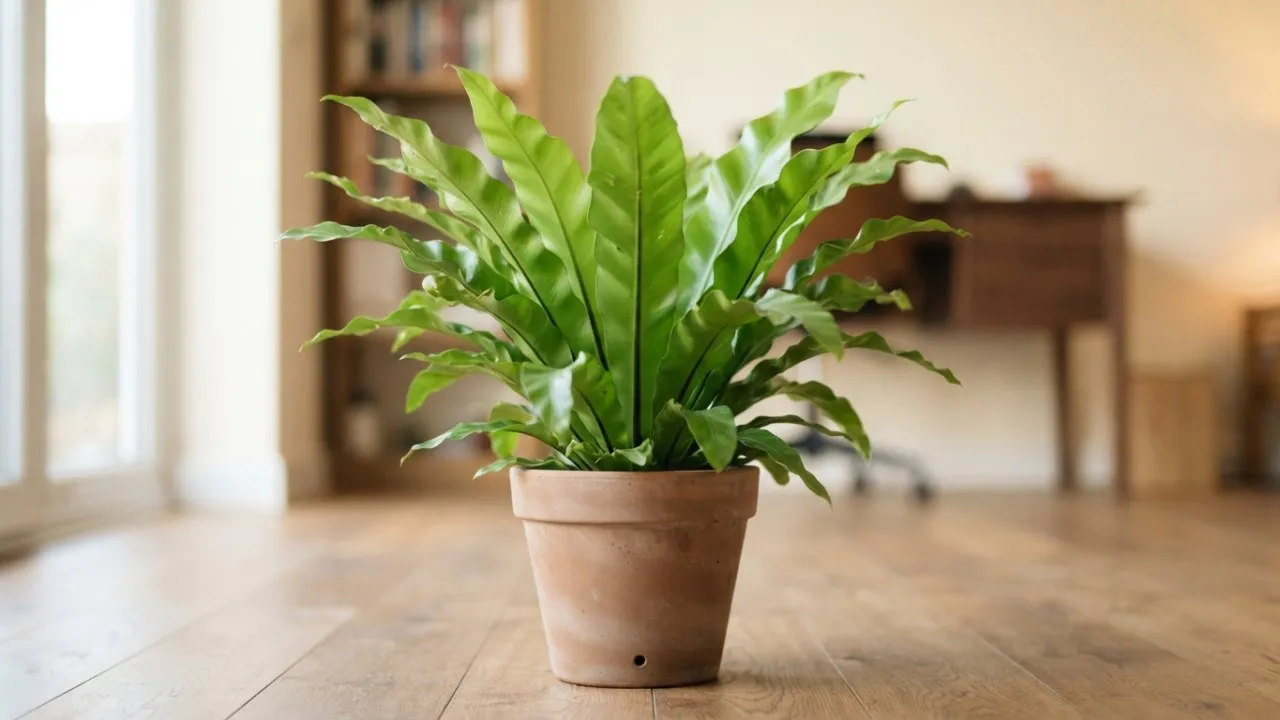 Every 6 days


Bird's Nest Fern
Asplenium antiquum

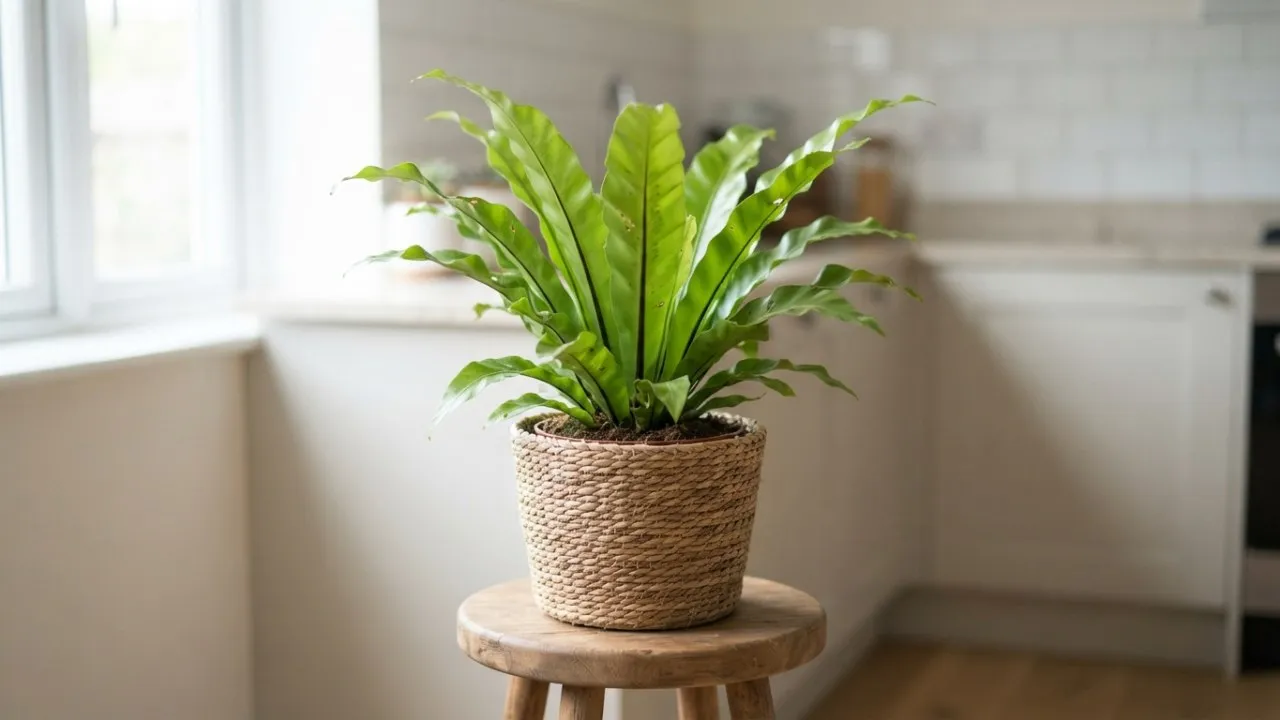 Every 6 days
Bird's Nest Fern
Asplenium nidus
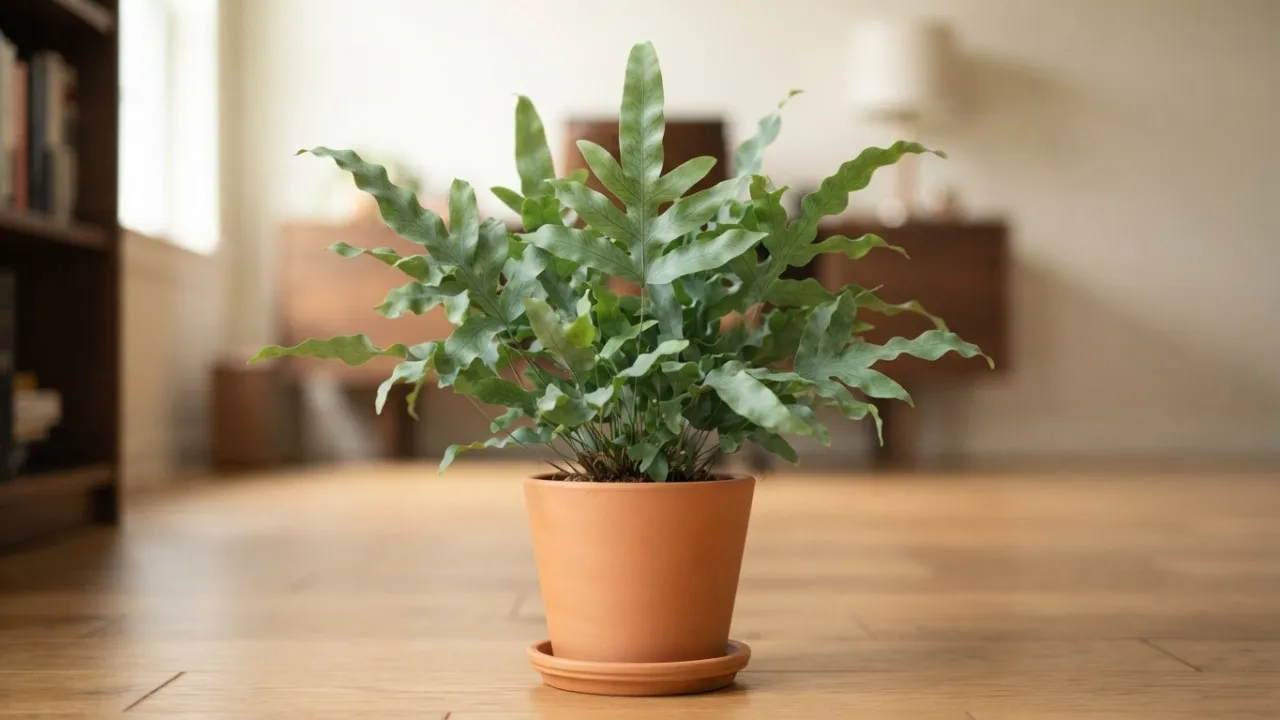 Every 6 days
Blue Star Fern
Phlebodium aureum
 Every 3 days
Boston Fern
Nephrolepis exaltata
