
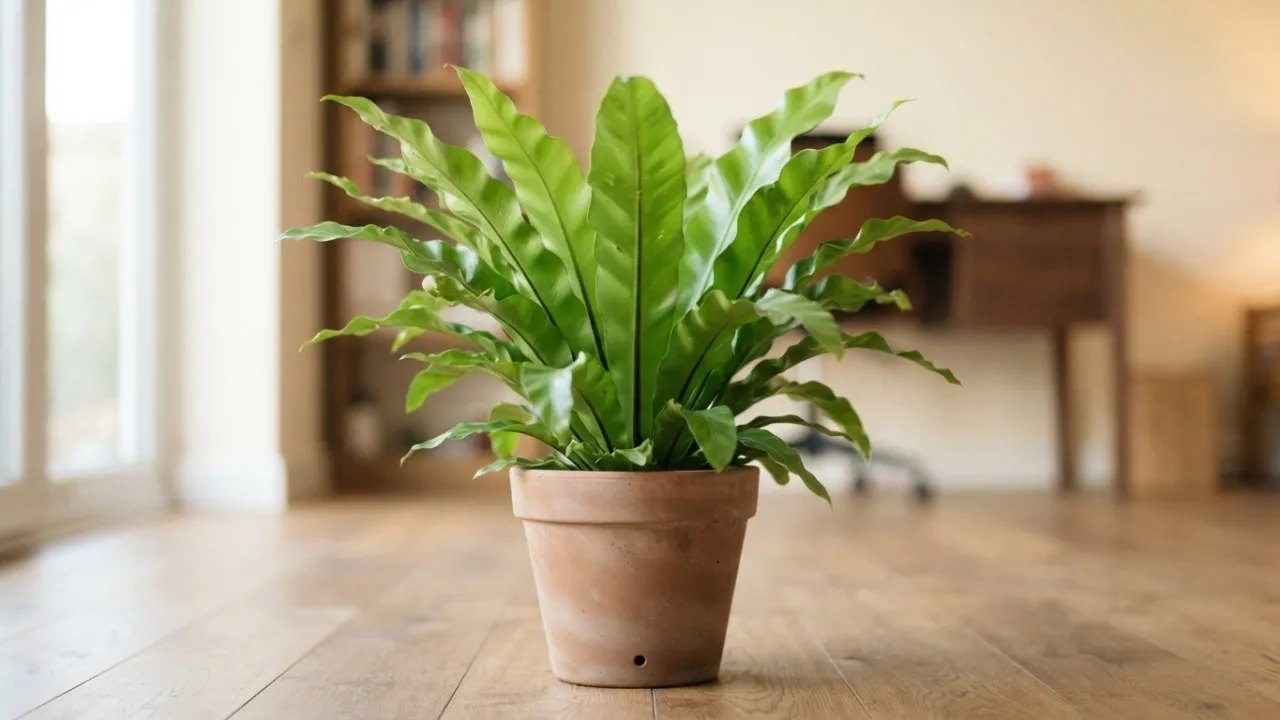
Bird's Nest Fern
Asplenium antiquum
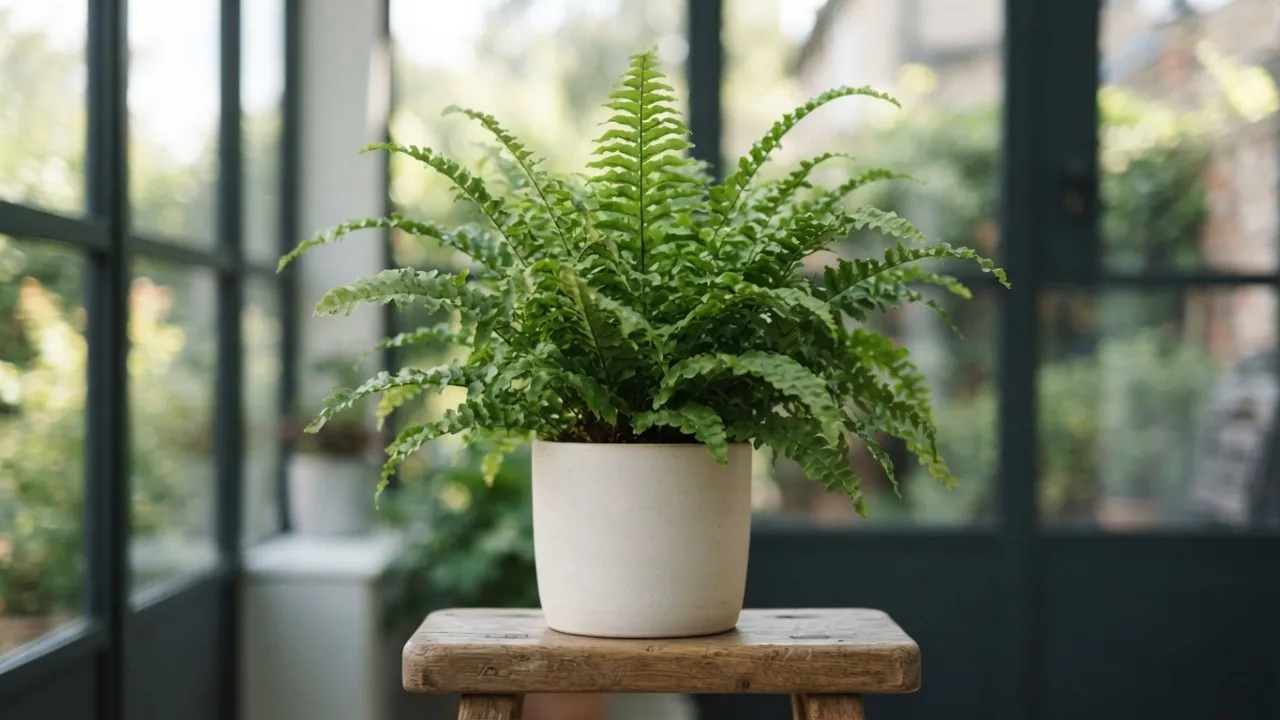
A compact fern forming a lush, upright rosette of shiny, undivided fronds, resembling a nest.
The essentials at a glance
-
Watering
Every 7 days
-
Light
Medium light
-
Humidity
60–80 %
-
Temperature
18–28 °C


How to care for your Bird's Nest Fern
Everything you need to keep your Bird's Nest Fern healthy: watering, light, humidity, feeding, repotting and pruning.
The Bird's Nest Fern (A. antiquum) forms an elegant, upright rosette of broad, apple-green, glossy fronds that unfurl from a central 'nest.' It's an epiphytic fern in its natural habitat, thriving on trees. It prefers consistently moist, well-draining soil and high humidity, along with low to medium indirect light. Avoid getting water in the central crown to prevent rot, as this can lead to bacterial or fungal infections.

Watering your Bird's Nest Fern
Every 7 days
Keep soil evenly moist but not soggy. Water around the base, avoiding the central 'nest' to prevent rot.
How to know it needs water
- Top 1-2 inches of soil dry to touch
- Fronds beginning to lose their luster

How much light a Bird's Nest Fern needs
Medium light
Low to medium indirect light. Direct sun will scorch the fronds.
- Direct sun tolerated
- No direct sun
- Orientations that suit it
- North, North-east, East, North-west

Humidity and misting
60–80 %
High (60-80%). Prevents fronds from turning brown and crispy at the edges. Mist regularly, especially in dry homes, or place on a pebble tray for consistent humidity.

Feeding and fertiliser
Every 60 days
Fertilize every 2 months during spring and summer; avoid over-fertilizing as it can burn roots.
- Recommended feed
- Weak liquid fertilizer (quarter strength). · 1-1-1

Repotting your Bird's Nest Fern
Every 24 months
Repot into a pot slightly larger than the root ball, using a well-draining, airy fern mix. Do not plant too deep.
- When
- Spring
- Potting mix
- All-purpose potting mix
- Mix in
- perlite, pine bark, sphagnum moss
The tell-tale signs
- Roots growing out of drainage holes
- Stunted growth
- Soil compaction

Pruning your Bird's Nest Fern
As needed, to maintain health and appearance. Remove old, yellowed, or damaged fronds at the base using clean, sharp scissors or pruners.

Through the year
Watering is not set once and for all: it follows the light and the growth. Allow 8 days between waterings in the depth of winter, against 6 in the growing season.
- 8 J
- 8 F
- 7 M
- 6 A
- 6 M
- 6 J
- 6 J
- 6 A
- 7 S
- 7 O
- 8 N
- 8 D
Active growth · Days between waterings

Good to know
- Forms a distinctive rosette of broad, undivided fronds that resemble a bird's nest.
- In nature, it grows epiphytically on trees, collecting debris and moisture in its 'nest'.

Frequently asked questions about the Bird's Nest Fern
How do you care for a Bird's Nest Fern?
Water it every 7 days. Give it medium light. Ideal humidity: 60–80 %. Ideal temperature: 18–28 °C. Keep soil evenly moist but not soggy. Water around the base, avoiding the central 'nest' to prevent rot.
How often should you water a Bird's Nest Fern?
Every 7 days Keep soil evenly moist but not soggy. Water around the base, avoiding the central 'nest' to prevent rot. How to know it needs water : Top 1-2 inches of soil dry to touch ; Fronds beginning to lose their luster.
How much light does a Bird's Nest Fern need?
Medium light Low to medium indirect light. Direct sun will scorch the fronds. No direct sun
Is the Bird's Nest Fern toxic to cats and dogs?
No, the Bird's Nest Fern is not listed as toxic to cats and dogs. That is still no reason to let your pets chew on it.
Why are my Bird's Nest Fern leaves turning yellow?
Yellowing most often comes from too much water: the mix stays wet and the roots suffocate. Check that the pot drains, empty the saucer, and let the mix dry before watering again. Too little light or a cold draught cause the same symptom.
When should you repot a Bird's Nest Fern?
Repot every 24 months, ideally in spring. Repot into a pot slightly larger than the root ball, using a well-draining, airy fern mix. Do not plant too deep.

At a glance
- Family
- Aspleniaceae
- Category
- Fern
- Placement
- Indoor
- Mature height
- 60 cm
- Growth
- Moderate
- Temperature
- 18–28 °C
- Pot materials
- ceramic, plastic
- Growth
- Reaches maturity in 5 years
These figures are for an average plant. In the app they are recalculated for yours, based on your room, its orientation and the season.
And for your plant, in your home?
In the app this plant becomes yours: a watering schedule tuned to your home, health tracking from photos, and reminders at the right moment.
In the same spirit
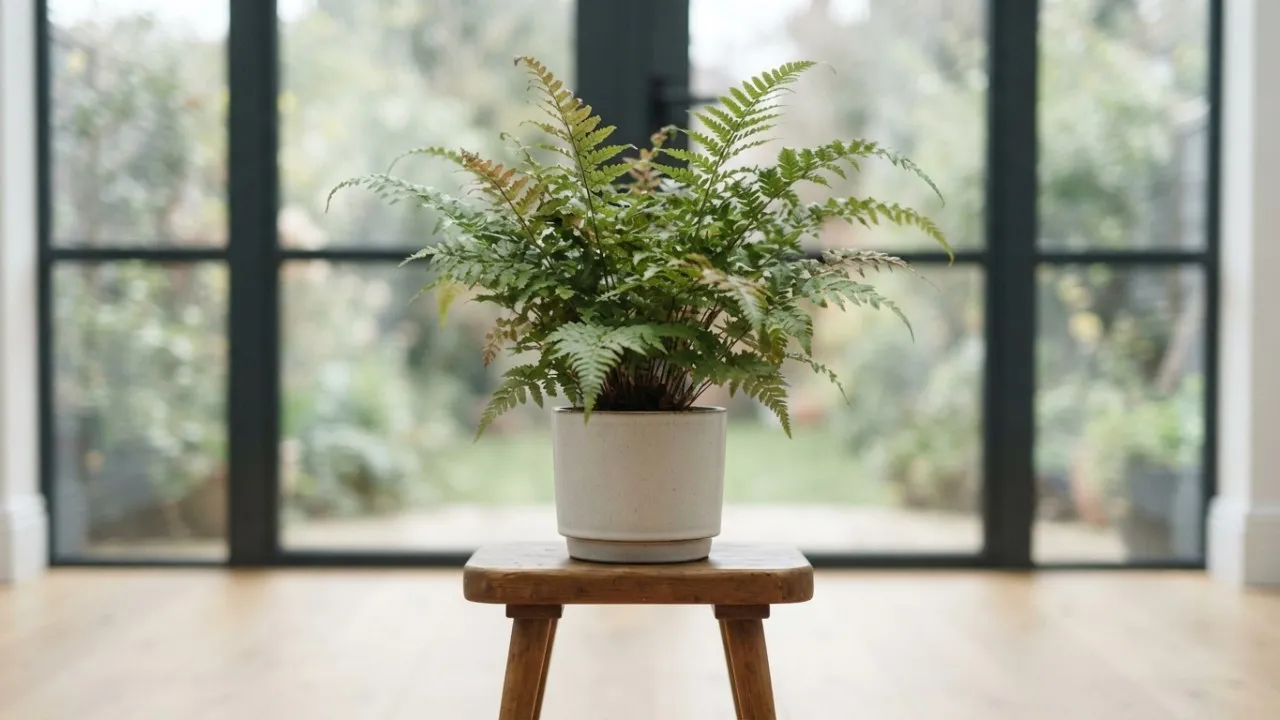 Every 5 days
 Autumn Fern
Dryopteris erythrosora

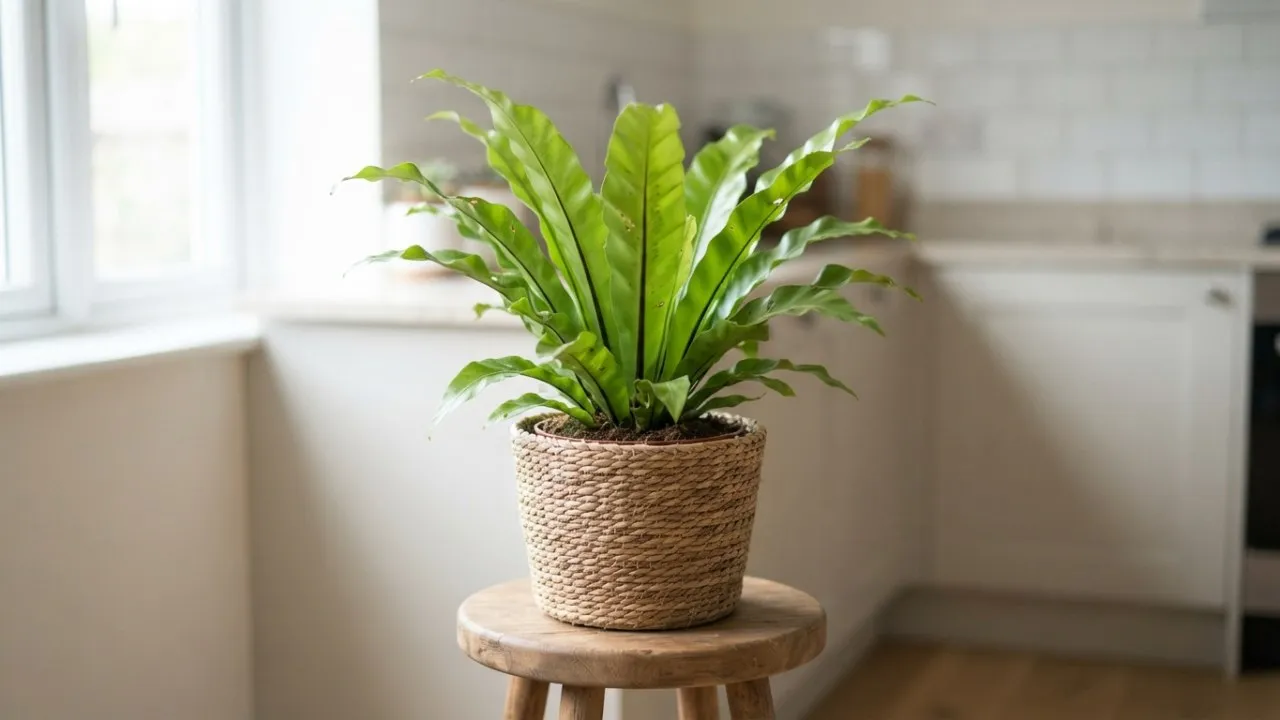 Every 5 days
 Bird's Nest Fern
Asplenium nidus
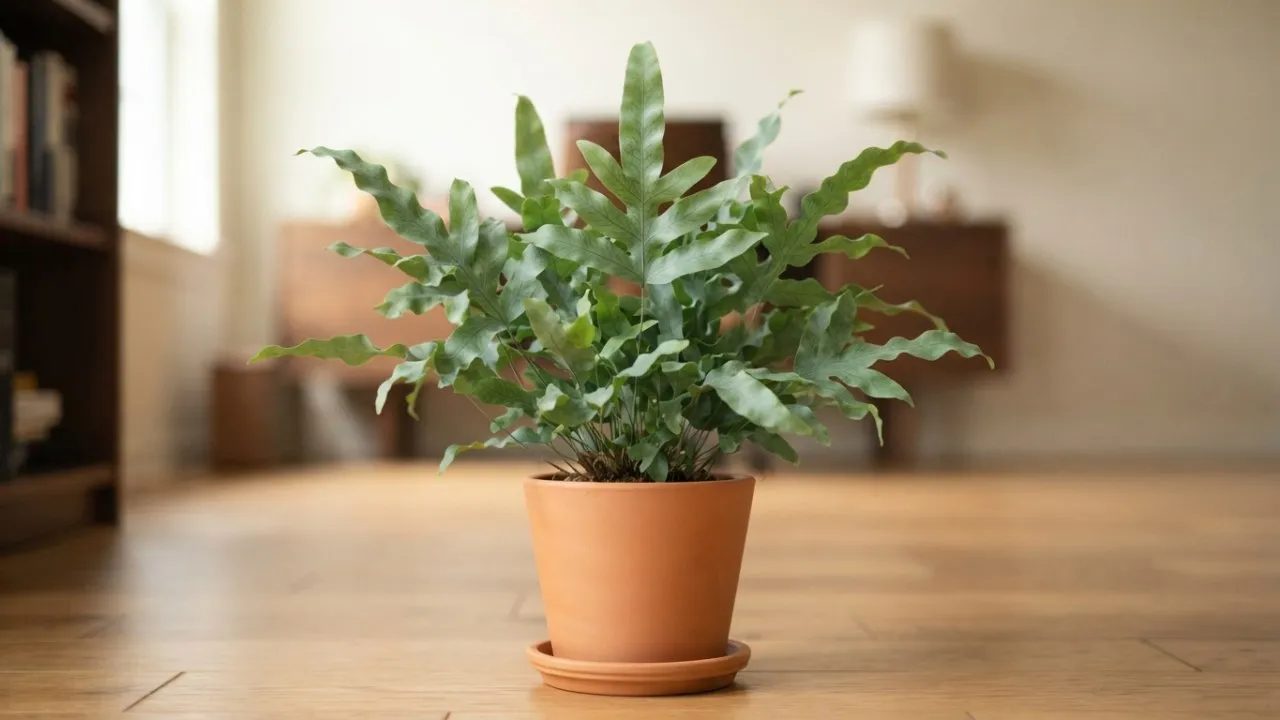 Every 7 days
 Blue Star Fern
Phlebodium aureum
 Every 5 days
 Boston Fern
Nephrolepis exaltata