
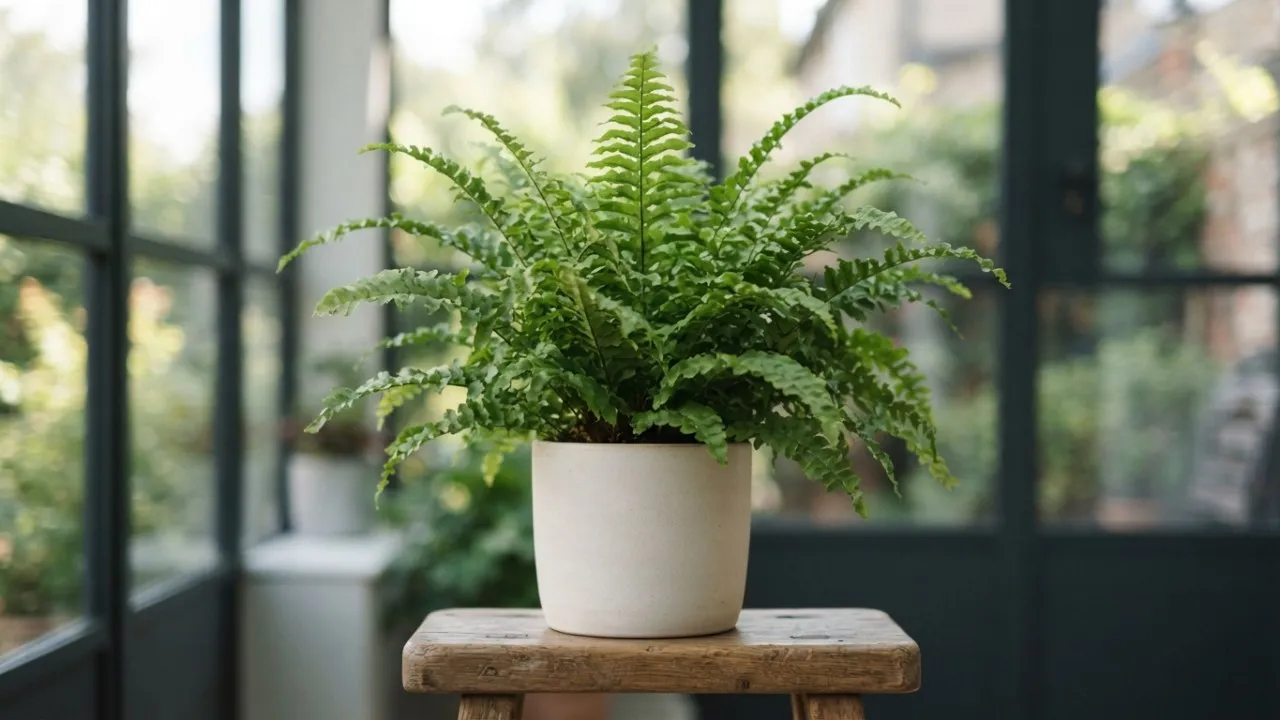
Fern · Nephrolepidaceae
Boston Fern
Nephrolepis exaltata
The Boston fern is a plant with long drooping fronds, perfect in a hanging pot.
- Every 3 daysWatering
- Medium lightLight
- 60–80 %Humidity
- 15–26 °CTemperature


How to care for your Boston Fern
Everything you need to keep your Boston Fern healthy: watering, light, humidity, feeding, repotting and pruning.
Nephrolepis exaltata has been one of the most popular indoor ferns since the 19th century. Its long arching bright green fronds can reach 90 cm long. It is beautiful in a hanging pot where its fronds can cascade freely. It requires high humidity, making it an excellent plant for bathrooms or kitchens.

How to recognise Boston Fern
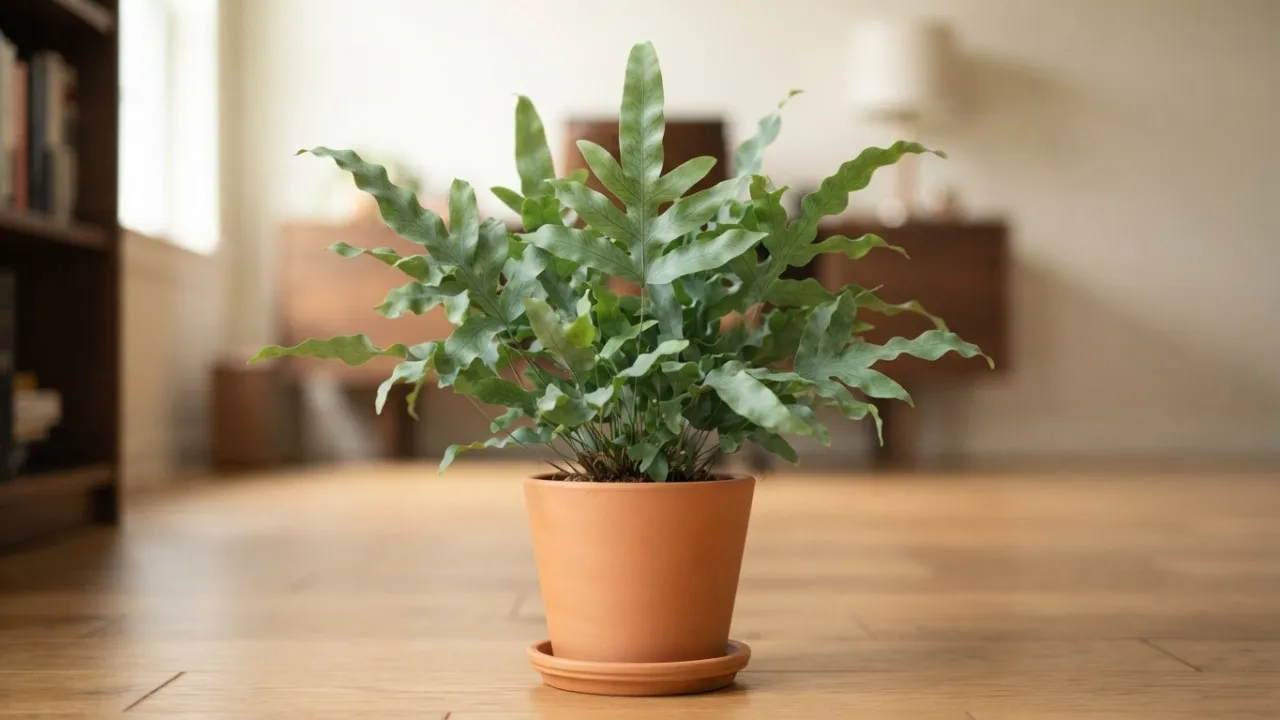
A fern with long, arching, sword-shaped fronds up to 90 cm, made of many narrow, evenly spaced, bright green leaflets on a central stalk, forming a fountain that droops over the pot edge. Nephrolepis cordifolia has stiffer, upright fronds and makes small round tubers on its runners. Cultivars with frilly or curly leaflets are Boston fern forms too.

Watering your Boston Fern
Every 3 days
Keep the substrate consistently and lightly moist; this fern does not tolerate drying out. Water a little less often from November to February.
How to know it needs water
- Surface of substrate dry to the touch
- Fronds appearing slightly less erect

How much light a Boston Fern needs
Medium light
Gentle indirect light; avoid direct sunlight which scorches the delicate fronds.
- Direct sun tolerated
- No direct sun
- Orientations that suit it
- North, North-east, East, North-west

Humidity and misting
60–80 %
High (60 to 80%) Mist about every 3 days or stand on a pebble tray; brown frond tips are the first indicator of insufficient humidity.

Feeding and fertiliser
Every 28 days
Apply about every 4 weeks from April to September, at half strength. Do not feed from October to March.
- Recommended feed
- Balanced liquid fertilizer diluted to half strength · 2-1-2

Repotting your Boston Fern
Every 12 months
Repot every year into a slightly larger pot. Use a rich, humus-rich, moisture-retentive substrate with good drainage.
- When
- Spring
- Potting mix
- All-purpose potting mix
- Mix in
- perlite, coco fibre
The tell-tale signs
- Compacted root ball
- Substrate drying out very rapidly after watering

Pruning your Boston Fern
Remove brown or dead fronds promptly at the base throughout the year. Cut cleanly at the base of the frond (at soil level) with sterilised scissors.

Through the year
Watering is not set once and for all: it follows the light and the growth. Allow 4 days between waterings in the depth of winter, against 2 in the growing season.
- 4 J
- 3 F
- 3 M
- 2 A
- 2 M
- 2 J
- 2 J
- 2 A
- 3 S
- 3 O
- 3 N
- 4 D
Active growth · Days between waterings

Good to know
- Appreciated since the Victorian era as an ornamental plant
- Ferns reproduce by spores, not seeds; the Boston fern spreads mostly by runners (stolons)
- The small brown dots under the leaflets are clusters of spores, not pests

Frequently asked questions about the Boston Fern
How do you care for a Boston Fern?
Water it every 3 days. Give it medium light. Ideal humidity: 60–80 %. Ideal temperature: 15–26 °C. Keep the substrate consistently and lightly moist; this fern does not tolerate drying out. Water a little less often from November to February.
How often should you water a Boston Fern?
Every 3 days Keep the substrate consistently and lightly moist; this fern does not tolerate drying out. Water a little less often from November to February. How to know it needs water : Surface of substrate dry to the touch ; Fronds appearing slightly less erect.
How much light does a Boston Fern need?
Medium light Gentle indirect light; avoid direct sunlight which scorches the delicate fronds. No direct sun
Is the Boston Fern toxic to cats and dogs?
No, the Boston Fern is not listed as toxic to cats and dogs. That is still no reason to let your pets chew on it.
Why are my Boston Fern leaves turning yellow?
Yellowing most often comes from too much water: the mix stays wet and the roots suffocate. Check that the pot drains, empty the saucer, and let the mix dry before watering again. Too little light or a cold draught cause the same symptom.
When should you repot a Boston Fern?
Repot every 12 months, ideally in spring. Repot every year into a slightly larger pot. Use a rich, humus-rich, moisture-retentive substrate with good drainage.

At a glance
- Family
- Nephrolepidaceae
- Category
- Fern
- Placement
- Indoor
- Mature height
- 90 cm
- Growth
- Moderate
- Temperature
- 15–26 °C
- Pot materials
- plastic, ceramic
- Growth
- Reaches maturity in 3 years
These figures are for an average plant. In the app they are recalculated for yours, based on your room, its orientation and the season.
And for your plant, in your home?
In the app this plant becomes yours: a watering schedule tuned to your home, health tracking from photos, and reminders at the right moment.
In the same spirit
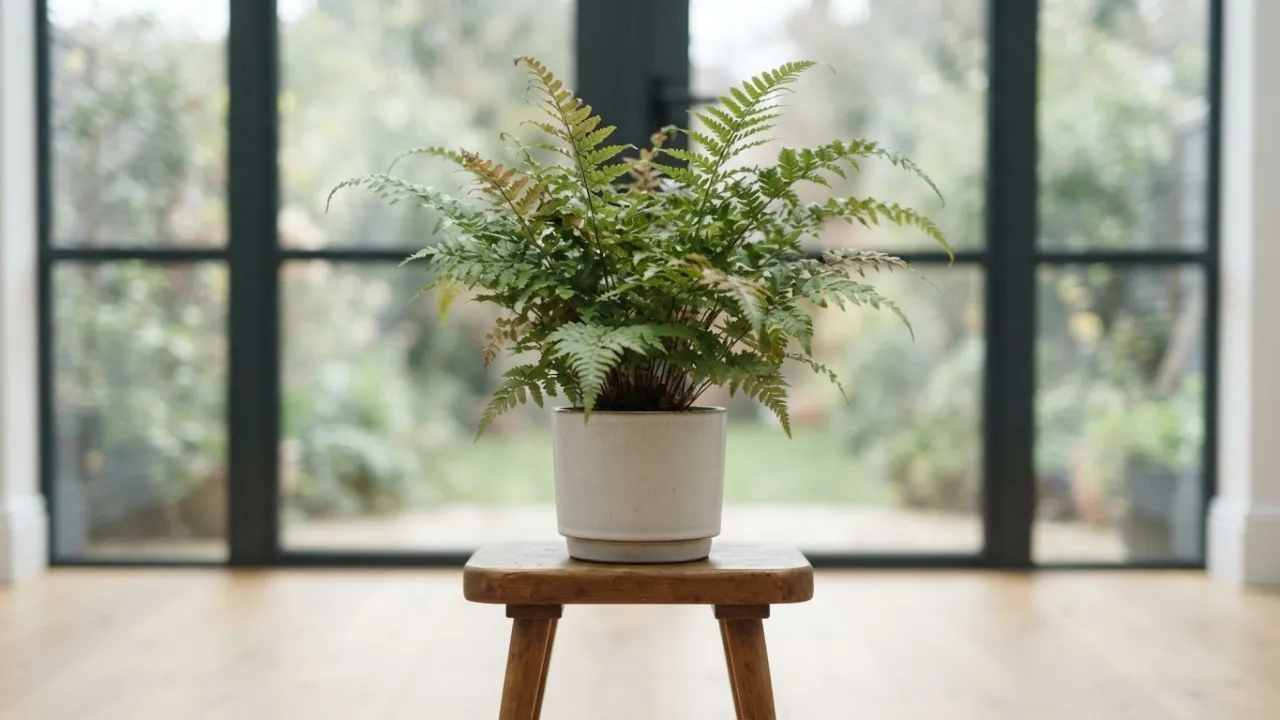 Every 4 days


Autumn Fern
Dryopteris erythrosora

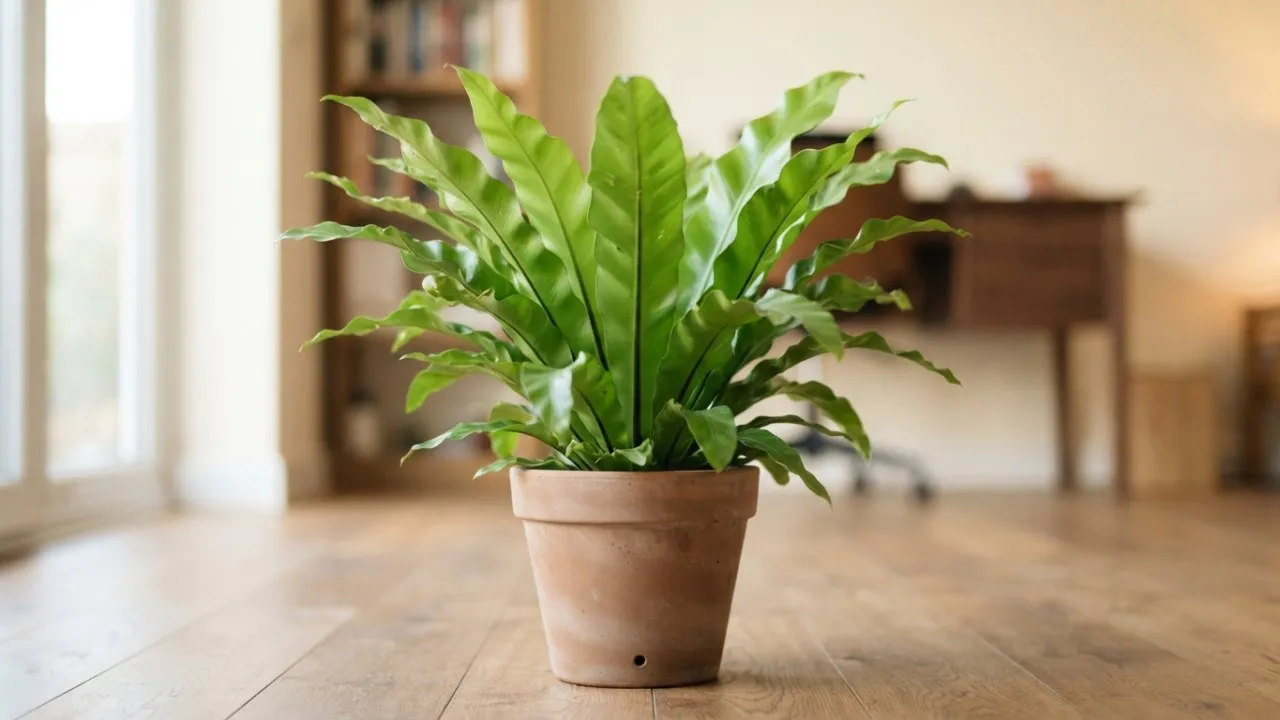 Every 6 days
Bird's Nest Fern
Asplenium antiquum
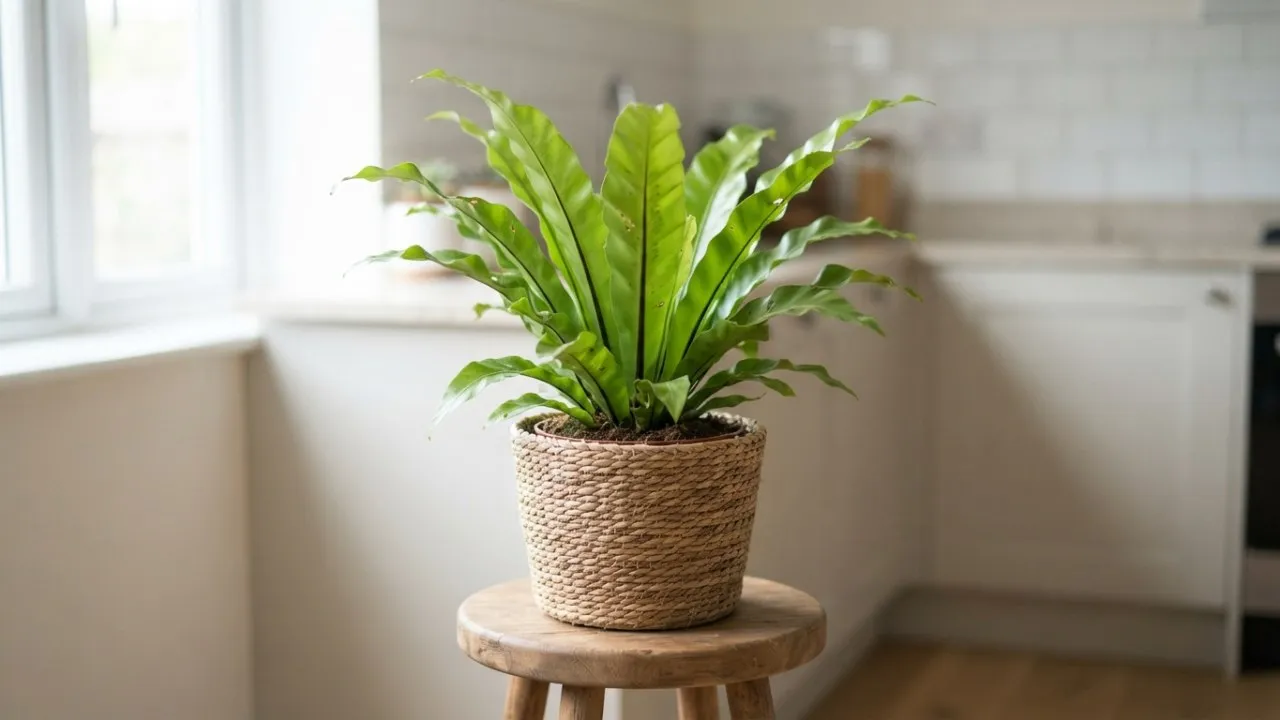 Every 6 days
Bird's Nest Fern
Asplenium nidus
 Every 6 days
Blue Star Fern
Phlebodium aureum
