Succulent · Piperaceae
Happy Bean
Peperomia ferreyrae
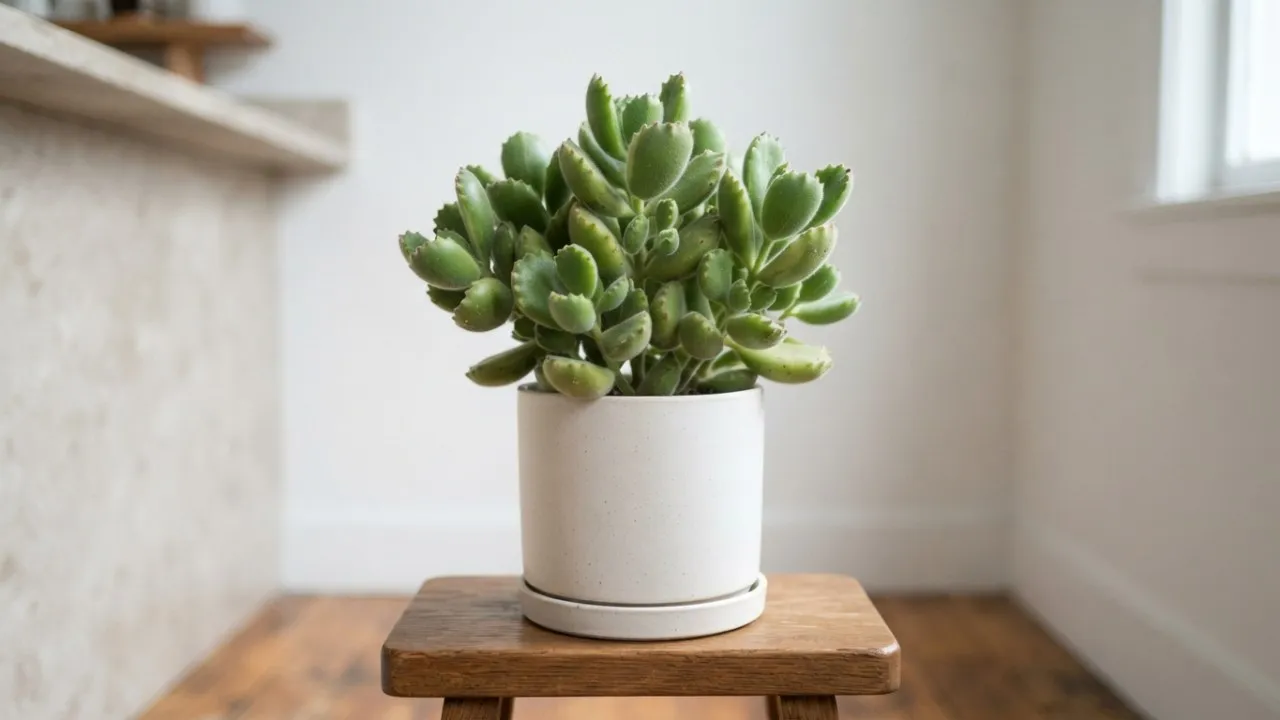
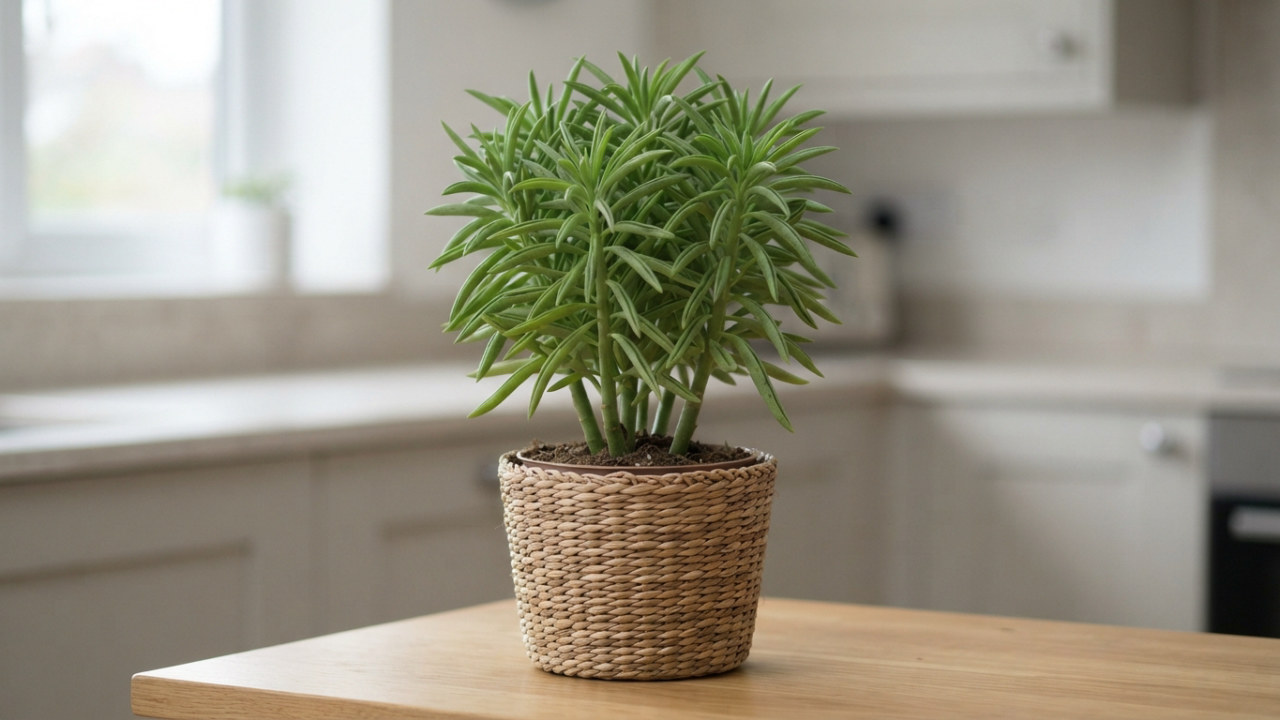
A compact succulent peperomia with plump, bean-pod leaves, each marked by a clear window on top.
- Every 12 daysWatering
- Bright indirect lightLight
- 30–50 %Humidity
- 18–26 °CTemperature


How to care for your Happy Bean
Everything you need to keep your Happy Bean healthy: watering, light, humidity, feeding, repotting and pruning.
Peperomia ferreyrae comes from Peru and was described by the botanist Truman George Yuncker in 1956. Its slender, fleshy leaves are bright green, U-shaped in cross-section and up to about 7 cm long. Each one carries a translucent strip along the upper side that lets light reach the inside. Stems start upright, then arch and spill with age. It grows slowly and tops out near 25 cm indoors, also sold as Pincushion Peperomia.

How to recognise Happy Bean
Slender, bean-pod leaves, bright green and held upright, with a clear strip along the top. Peperomia dolabriformis has broader, purse-like folded leaves, and Haworthia or small Crassula have rosettes or opposite pairs instead.

Watering your Happy Bean
Every 12 days
Soak the mix thoroughly, let the excess drain away, then wait until it is completely dry before watering again.
How to know it needs water
- The mix is dry through the whole pot, not only on top.
- The leaves feel slightly less firm and plump.

How much light a Happy Bean needs
Bright indirect light
Give it bright light with an hour or two of gentle direct sun, and shield it from harsh midday rays that scorch the leaves.
- Direct sun tolerated
- 1 to 3 h a day
- Orientations that suit it
- North, North-east, East, South-east, South, South-west, West, North-west

Humidity and misting
30–50 %
Ordinary indoor air suits it, around 30 to 50 percent humidity, and it never needs extra moisture. Skip misting, because water sitting on the plump leaves and between the stems invites rot.

Feeding and fertiliser
Every 35 days
Feed about every five weeks from April to September, and not at all while growth is slow.
- Recommended feed
- A balanced liquid fertilizer for cacti and succulents, diluted to half strength, suits it. · 2-2-2

Repotting your Happy Bean
Every 36 months
Use a small pot with drainage and a gritty mix, handle the brittle stems gently, and wait a few days before the first watering.
- When
- Repot in spring, when the plant restarts growth.
- Potting mix
- Cactus and succulent mix
- Mix in
- pumice, perlite
The tell-tale signs
- Roots show at the drainage holes.
- The pot tips over under the weight of arching stems.

Pruning your Happy Bean
Trim in spring or summer, whenever stems get leggy or sprawl past the pot. Cut a stem just above a leaf with clean scissors; the cuttings root easily in a dry, gritty mix.

Through the year
Watering is not set once and for all: it follows the light and the growth. Allow 14 days between waterings in the depth of winter, against 10 in the growing season.
- 14 J
- 13 F
- 11 M
- 10 A
- 10 M
- 10 J
- 10 J
- 10 A
- 11 S
- 12 O
- 13 N
- 14 D
Active growth · Days between waterings

Good to know
- The translucent window on each leaf lets light reach the tissue inside, a trait shared by several succulent peperomias.
- Leaves left on a bed of dry mix can root and form new plants.

Frequently asked questions about the Happy Bean
How do you care for a Happy Bean?
Water it every 12 days. Give it bright indirect light. Ideal humidity: 30–50 %. Ideal temperature: 18–26 °C. Soak the mix thoroughly, let the excess drain away, then wait until it is completely dry before watering again.
How often should you water a Happy Bean?
Every 12 days Soak the mix thoroughly, let the excess drain away, then wait until it is completely dry before watering again. How to know it needs water : The mix is dry through the whole pot, not only on top. ; The leaves feel slightly less firm and plump..
How much light does a Happy Bean need?
Bright indirect light Give it bright light with an hour or two of gentle direct sun, and shield it from harsh midday rays that scorch the leaves. 1 to 3 h a day
Is the Happy Bean toxic to cats and dogs?
No, the Happy Bean is not listed as toxic to cats and dogs. That is still no reason to let your pets chew on it.
Why are my Happy Bean leaves turning yellow?
Yellowing most often comes from too much water: the mix stays wet and the roots suffocate. Check that the pot drains, empty the saucer, and let the mix dry before watering again. Too little light or a cold draught cause the same symptom.
When should you repot a Happy Bean?
Repot every 36 months, ideally in repot in spring, when the plant restarts growth.. Use a small pot with drainage and a gritty mix, handle the brittle stems gently, and wait a few days before the first watering.

At a glance
- Family
- Piperaceae
- Category
- Succulent
- Placement
- Indoor
- Mature height
- 25 cm
- Growth
- Slow
- Temperature
- 18–26 °C
- Pot materials
- terracotta, ceramic
- Growth
- Reaches maturity in 3 years
These figures are for an average plant. In the app they are recalculated for yours, based on your room, its orientation and the season.
And for your plant, in your home?
In the app this plant becomes yours: a watering schedule tuned to your home, health tracking from photos, and reminders at the right moment.