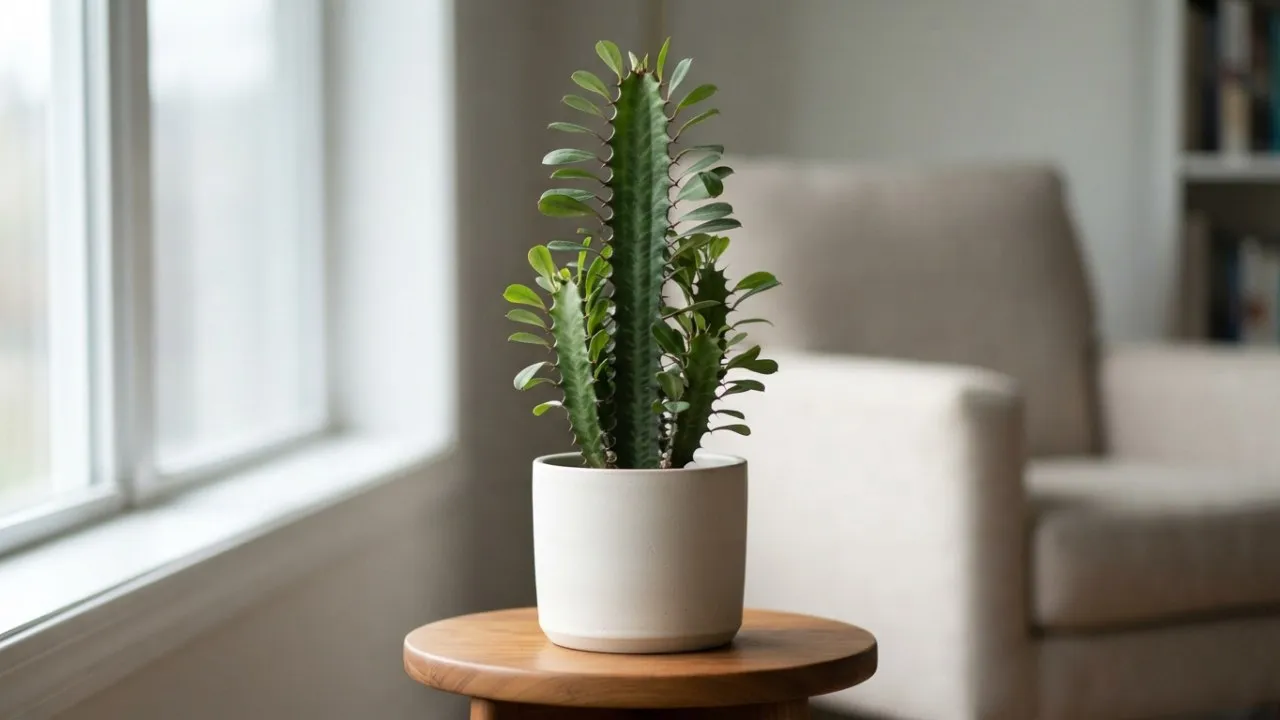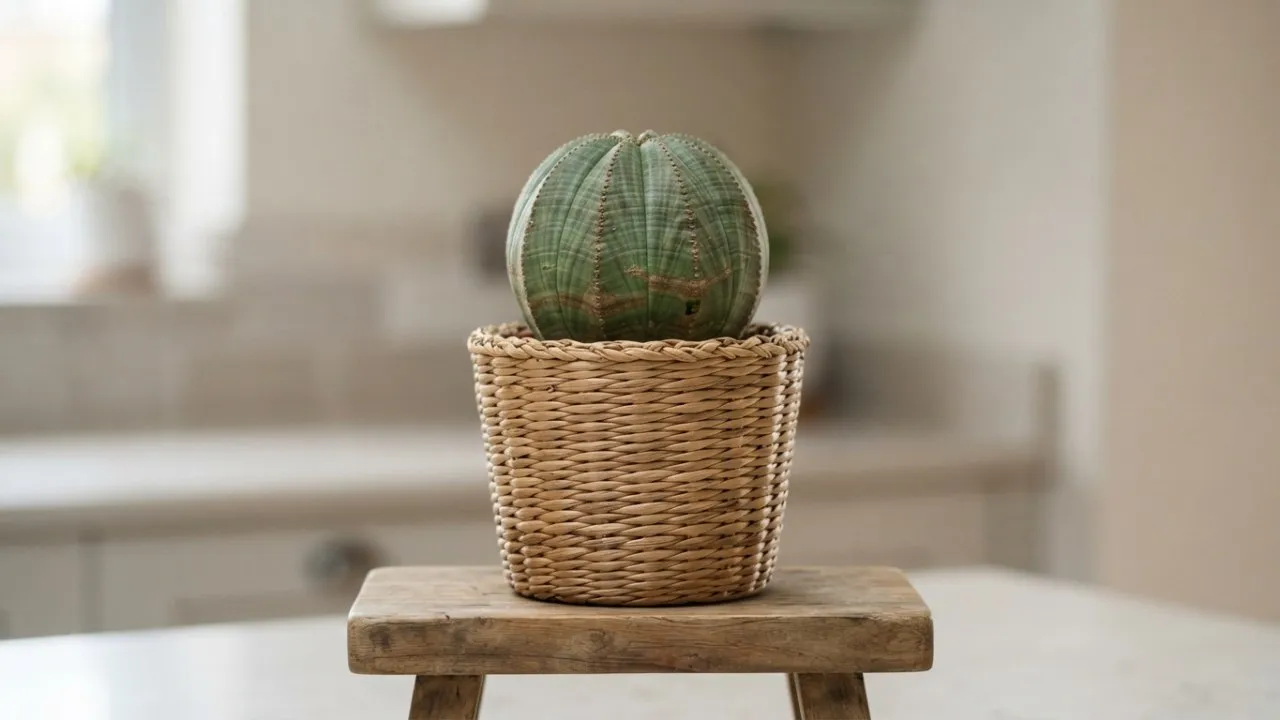
Succulent · Aizoaceae
Lithops
Lithops aucampiae
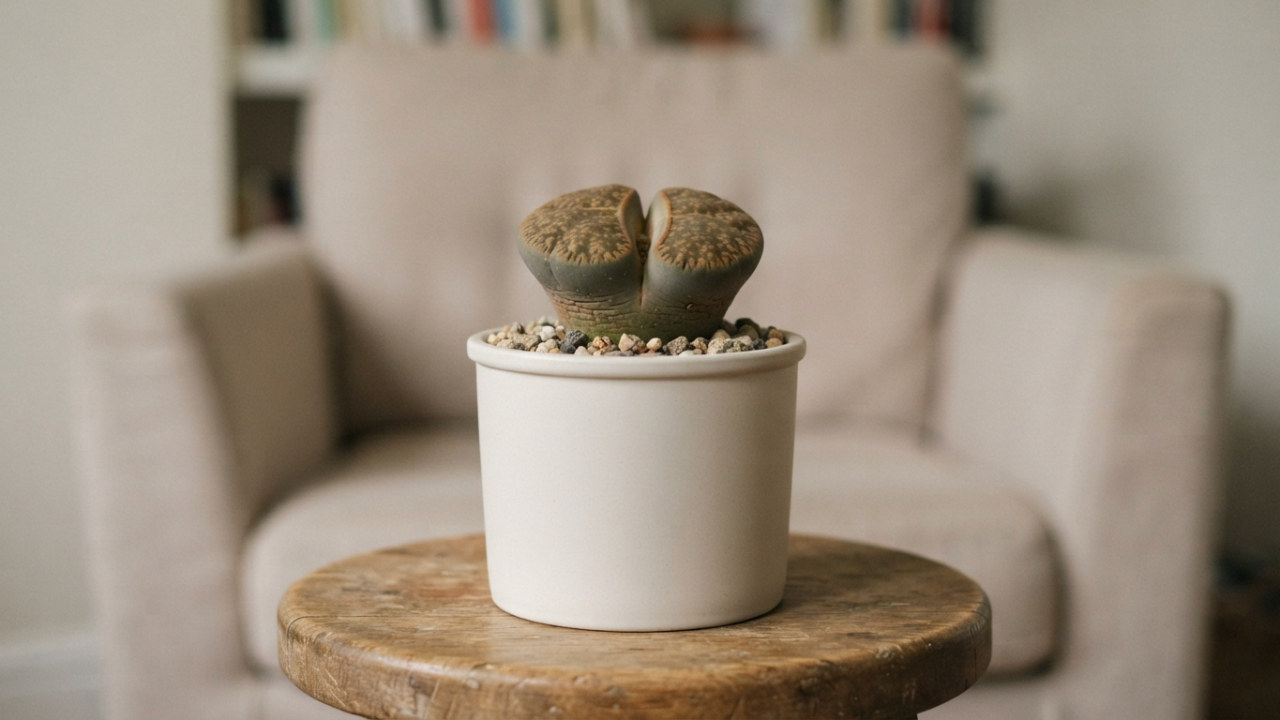
Lithops aucampiae is a 'living stone', a small South African succulent known for its remarkable camouflage.
- Every 28 daysWatering
- Full sunLight
- 20–40 %Humidity
- 18–28 °CTemperature


How to care for your Lithops
Everything you need to keep your Lithops healthy: watering, light, humidity, feeding, repotting and pruning.
Lithops aucampiae, a species of 'living stone' native to South Africa, is a master of disguise, blending seamlessly with its rocky surroundings. These unique succulents consist of two thick, fused leaves that resemble pebbles, with a translucent top surface that allows light to reach the photosynthetic tissue below ground. They are slow-growing and require very specific care, particularly regarding watering, to thrive indoors. With proper light and a dry environment, they can produce small, daisy-like flowers in autumn.

How to recognise Lithops
A living stone made of a single pair of thick, fused leaves only about 2 to 3 cm high, forming an inverted cone split by a central fissure. The flat top is reddish-brown to brown, marked with darker dots and lines, and it bears a yellow daisy-like flower in autumn. Conophytum is told apart by its rounder, often lobed bodies without a flat patterned top, and other Lithops differ by the colour and pattern of the top.

Watering your Lithops
Every 28 days
Water thoroughly only when the plant shows signs of thirst (slight wrinkling) and the substrate is completely dry. Do not water at all during the rest periods (summer and winter).
How to know it needs water
- Substrate completely dry
- Leaves slightly wrinkled
- The old pair of leaves is completely dry and papery (end of the molt)

How much light a Lithops needs
Full sun
Full sun; requires at least 4 to 5 hours of direct sunlight daily.
- Direct sun tolerated
- 4 to 8 h a day
- Orientations that suit it
- South, South-east, South-west, East, West

Humidity and misting
20–40 %
Low (20 to 40 %) Do not mist. Lithops thrive in dry conditions and misting can encourage rot.

Feeding and fertiliser
Lithops do not require fertilization. Over-fertilizing can lead to stretching and rot.
- Recommended feed
- No fertilizer needed · 0-0-0

Repotting your Lithops
Every 36 months
Repot into a container only slightly larger than the plant, using a very well-draining succulent or cactus mix. Handle carefully to avoid damaging the taproot.
- When
- Early autumn, in September or October, when growth starts.
- Potting mix
- Cactus and succulent mix
- Mix in
- pumice, coarse sand, perlite
The tell-tale signs
- Roots emerging from drainage holes
- Plant outgrowing its container
- Substrate no longer draining well

Pruning your Lithops
Remove any dead or shrivelled outer leaves as new ones emerge. Gently pull away dead leaves once they are completely dry and detached from the main plant.

Through the year
Watering is not set once and for all: it follows the light and the growth. Allow 70 days between waterings in the depth of winter, against 22 in the growing season.
- 70 J
- 70 F
- 28 M
- 22 A
- 22 M
- 42 J
- 56 J
- 56 A
- 22 S
- 22 O
- 28 N
- 70 D
Active growth · Days between waterings

Good to know
- Native to the arid regions of Southern Africa, mimicking stones to avoid herbivores.
- Possess two fleshy leaves fused at the base, with a translucent 'window' on top.
- The 'window' on their leaves allows light to penetrate deep into the plant tissue for photosynthesis.

Frequently asked questions about the Lithops
How do you care for a Lithops?
Water it every 28 days. Give it full sun. Ideal humidity: 20–40 %. Ideal temperature: 18–28 °C. Water thoroughly only when the plant shows signs of thirst (slight wrinkling) and the substrate is completely dry. Do not water at all during the rest periods (summer and winter).
How often should you water a Lithops?
Every 28 days Water thoroughly only when the plant shows signs of thirst (slight wrinkling) and the substrate is completely dry. Do not water at all during the rest periods (summer and winter). How to know it needs water : Substrate completely dry ; Leaves slightly wrinkled ; The old pair of leaves is completely dry and papery (end of the molt).
How much light does a Lithops need?
Full sun Full sun; requires at least 4 to 5 hours of direct sunlight daily. 4 to 8 h a day
Is the Lithops toxic to cats and dogs?
No, the Lithops is not listed as toxic to cats and dogs. That is still no reason to let your pets chew on it.
Why are my Lithops leaves turning yellow?
Yellowing most often comes from too much water: the mix stays wet and the roots suffocate. Check that the pot drains, empty the saucer, and let the mix dry before watering again. Too little light or a cold draught cause the same symptom.
When should you repot a Lithops?
Repot every 36 months, ideally in early autumn, in september or october, when growth starts.. Repot into a container only slightly larger than the plant, using a very well-draining succulent or cactus mix. Handle carefully to avoid damaging the taproot.

At a glance
- Family
- Aizoaceae
- Category
- Succulent
- Placement
- Indoor
- Mature height
- 3 cm
- Growth
- Slow
- Temperature
- 18–28 °C
- Pot materials
- terracotta, ceramic
- Growth
- Reaches maturity in 5 years
These figures are for an average plant. In the app they are recalculated for yours, based on your room, its orientation and the season.
And for your plant, in your home?
In the app this plant becomes yours: a watering schedule tuned to your home, health tracking from photos, and reminders at the right moment.