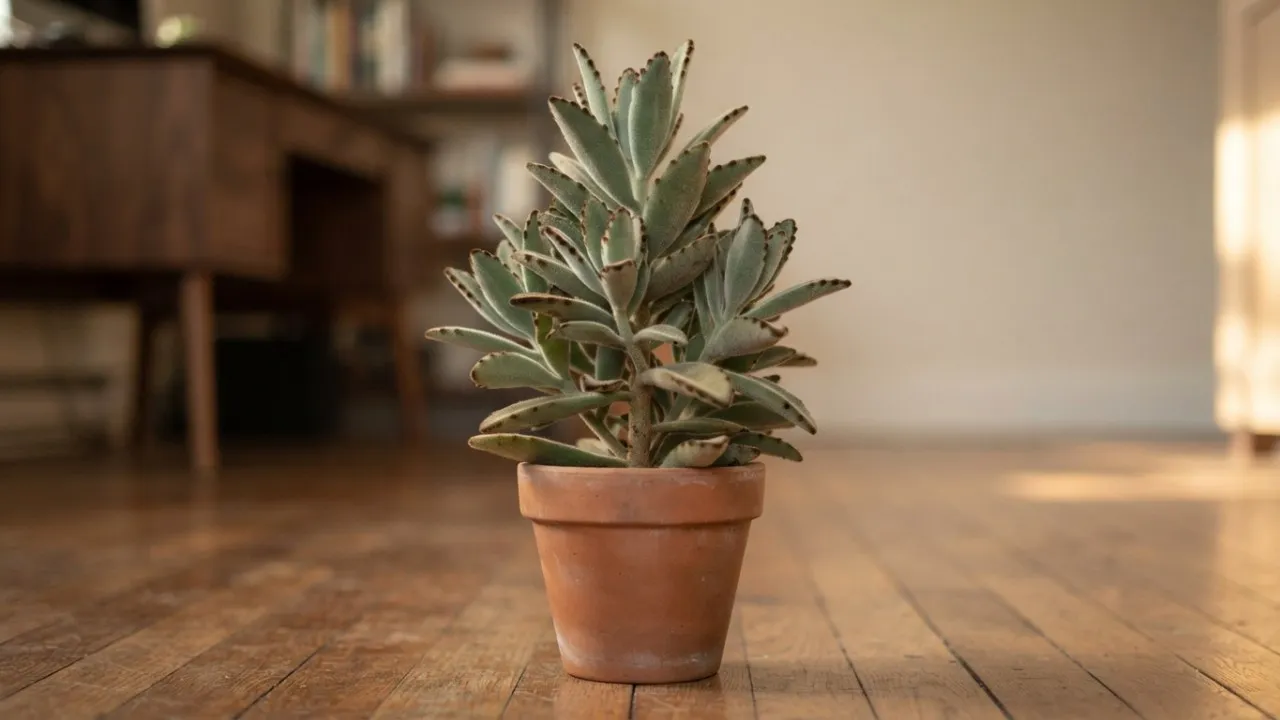
Panda Plant
Kalanchoe tomentosa
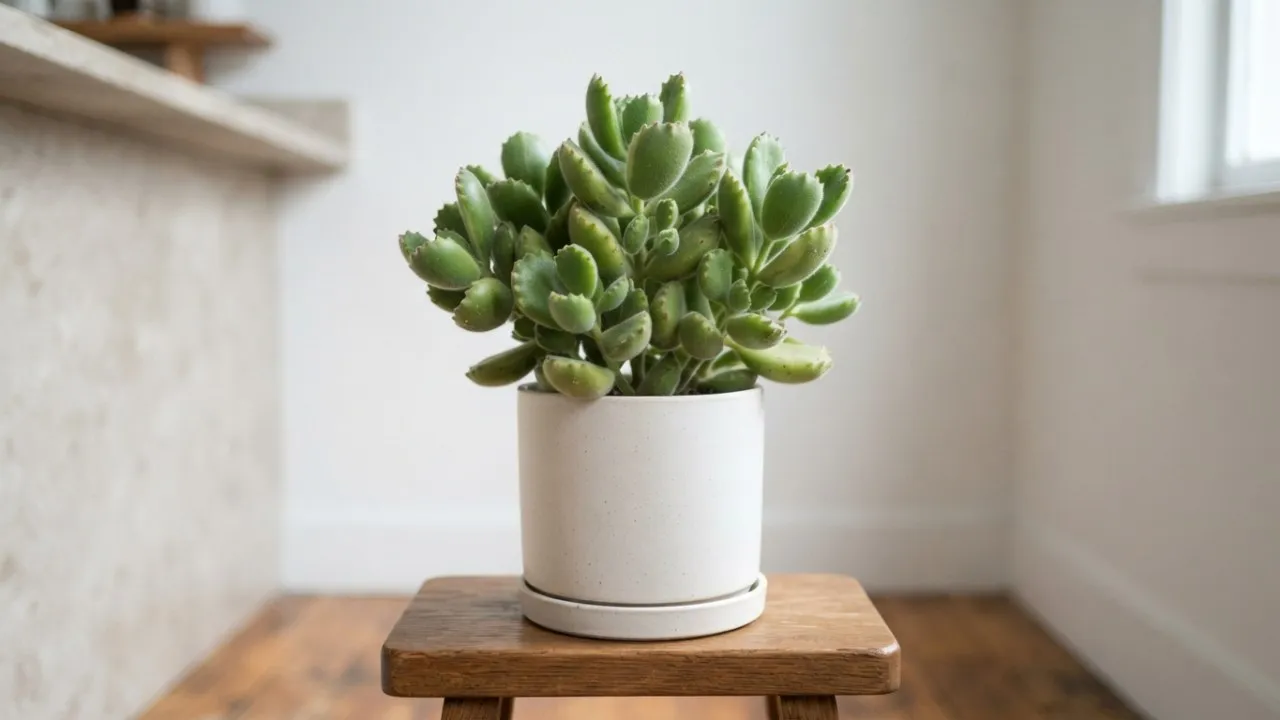
An upright, branching succulent admired for its thick, velvety, silver-green leaves edged with distinctive reddish-brown spots.
The essentials at a glance
-
Watering
Every 14 days
-
Light
Bright indirect light
-
Humidity
30–50 %
-
Temperature
18–27 °C


How to care for your Panda Plant
Everything you need to keep your Panda Plant healthy: watering, light, humidity, feeding, repotting and pruning.
Hailing from Madagascar, *Kalanchoe tomentosa* is a uniquely charming succulent widely cherished as a houseplant for its distinctive texture and appearance. Its thick, ovate leaves are densely covered in soft, silvery-white hairs, giving them a fuzzy, felt-like feel, reminiscent of a panda's fur or a kitten's ear. The edges of the leaves are typically tipped with striking reddish-brown markings, which intensify with good light exposure. This plant grows as a small shrub and, in rare instances, can produce small, bell-shaped, yellowish-green flowers on tall stalks. It is relatively easy to care for, thriving on neglect and bright light.

Watering your Panda Plant
Every 14 days
Water thoroughly until water drains from the bottom. Allow the soil to dry out completely between waterings. Reduce watering in winter.
How to know it needs water
- Soil is completely dry to the touch
- Leaves may appear slightly less firm

How much light a Panda Plant needs
Bright indirect light
Bright, indirect light to full sun. Direct morning sun is beneficial, but protect from harsh afternoon sun to prevent leaf burn.
- Direct sun tolerated
- 2 to 5 h a day
- Orientations that suit it
- North, North-east, East, South-east, South, South-west, West, North-west

Humidity and misting
30–50 %
Low; prefers dry conditions. Misting is not recommended, as it can damage the velvety hairs on the leaves and promote fungal issues.

Feeding and fertiliser
Every 30 days
Fertilize sparingly during the spring and summer growing season. Over-fertilization can lead to weak, leggy growth.
- Recommended feed
- Diluted liquid succulent or cactus fertilizer. · 2-7-7

Repotting your Panda Plant
Every 24 months
Repot into a slightly larger container with fresh, well-draining succulent potting mix. Handle gently to avoid damaging the delicate foliage.
- When
- Spring
- Potting mix
- Cactus and succulent mix
- Mix in
- perlite, pumice, coarse sand
The tell-tale signs
- Plant is root-bound
- Growth has slowed significantly
- Pot becomes unstable due to plant size

Pruning your Panda Plant
As needed, typically in spring or summer. Pinch back leggy stems to encourage bushier growth. Remove any yellowing or dead lower leaves.

Through the year
Watering is not set once and for all: it follows the light and the growth. Allow 25 days between waterings in the depth of winter, against 13 in the growing season.
- 21 J
- 21 F
- 17 M
- 14 A
- 13 M
- 13 J
- 13 J
- 13 A
- 14 S
- 17 O
- 21 N
- 25 D
Active growth · Days between waterings

Toxicity
This plant is toxic to pets, particularly cats and dogs, if ingested. It contains cardiac glycosides that can cause gastrointestinal upset (vomiting, diarrhea), lethargy, and in severe cases, heart problems. It is generally not considered toxic to humans, but caution is advised.

Good to know
- Its common names 'Panda Plant' and 'Pussy Ears' refer to its soft, fuzzy leaves that resemble animal fur.
- The leaf edges often develop reddish-brown spots, giving it a 'chocolate soldier' appearance.

Frequently asked questions about the Panda Plant
How do you care for a Panda Plant?
Water it every 14 days. Give it bright indirect light. Ideal humidity: 30–50 %. Ideal temperature: 18–27 °C. Water thoroughly until water drains from the bottom. Allow the soil to dry out completely between waterings. Reduce watering in winter.
How often should you water a Panda Plant?
Every 14 days Water thoroughly until water drains from the bottom. Allow the soil to dry out completely between waterings. Reduce watering in winter. How to know it needs water : Soil is completely dry to the touch ; Leaves may appear slightly less firm.
How much light does a Panda Plant need?
Bright indirect light Bright, indirect light to full sun. Direct morning sun is beneficial, but protect from harsh afternoon sun to prevent leaf burn. 2 to 5 h a day
Is the Panda Plant toxic to cats and dogs?
Yes. This plant is toxic to pets, particularly cats and dogs, if ingested. It contains cardiac glycosides that can cause gastrointestinal upset (vomiting, diarrhea), lethargy, and in severe cases, heart problems. It is generally not considered toxic to humans, but caution is advised. Keep it out of reach of your pets and call a vet if any is swallowed.
Why are my Panda Plant leaves turning yellow?
Yellowing most often comes from too much water: the mix stays wet and the roots suffocate. Check that the pot drains, empty the saucer, and let the mix dry before watering again. Too little light or a cold draught cause the same symptom.
When should you repot a Panda Plant?
Repot every 24 months, ideally in spring. Repot into a slightly larger container with fresh, well-draining succulent potting mix. Handle gently to avoid damaging the delicate foliage.

At a glance
- Family
- Crassulaceae
- Category
- Succulent
- Placement
- Indoor
- Mature height
- 60 cm
- Growth
- Slow
- Temperature
- 18–27 °C
- Pot materials
- terracotta, ceramic
- Growth
- Reaches maturity in 5 years
These figures are for an average plant. In the app they are recalculated for yours, based on your room, its orientation and the season.
And for your plant, in your home?
In the app this plant becomes yours: a watering schedule tuned to your home, health tracking from photos, and reminders at the right moment.