Succulent · Crassulaceae
Penwiper Plant
Kalanchoe marmorata
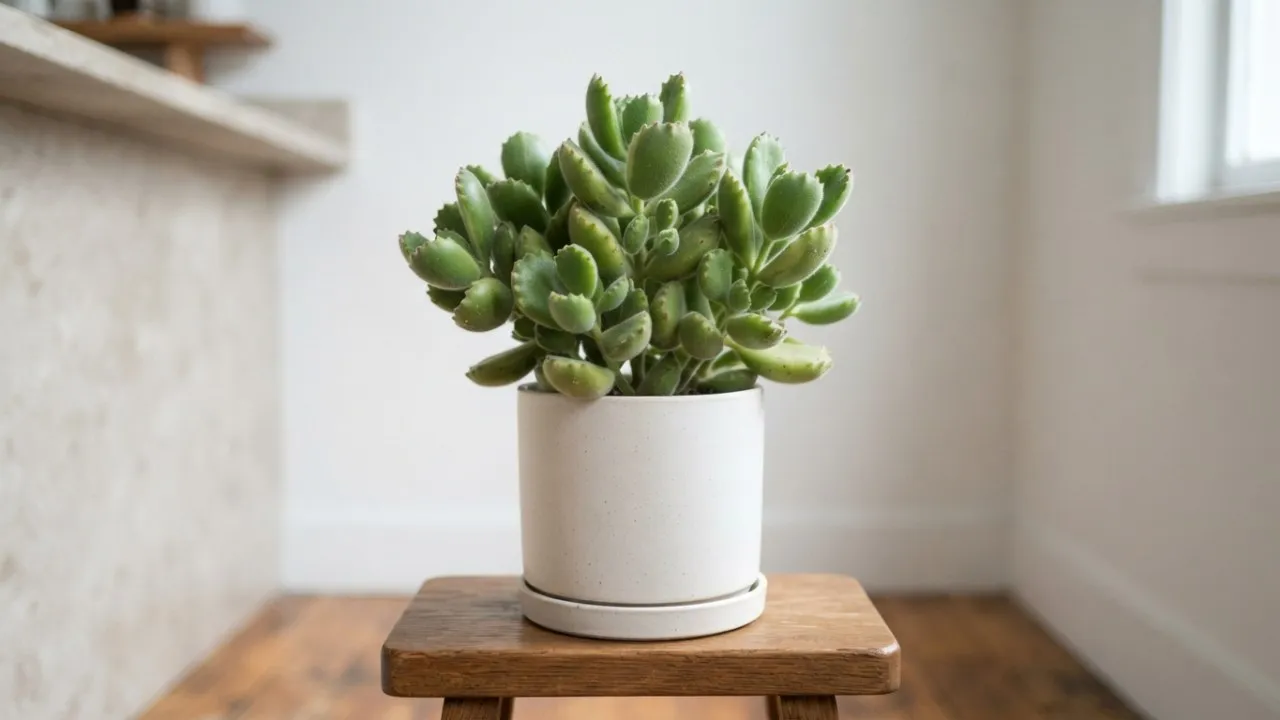
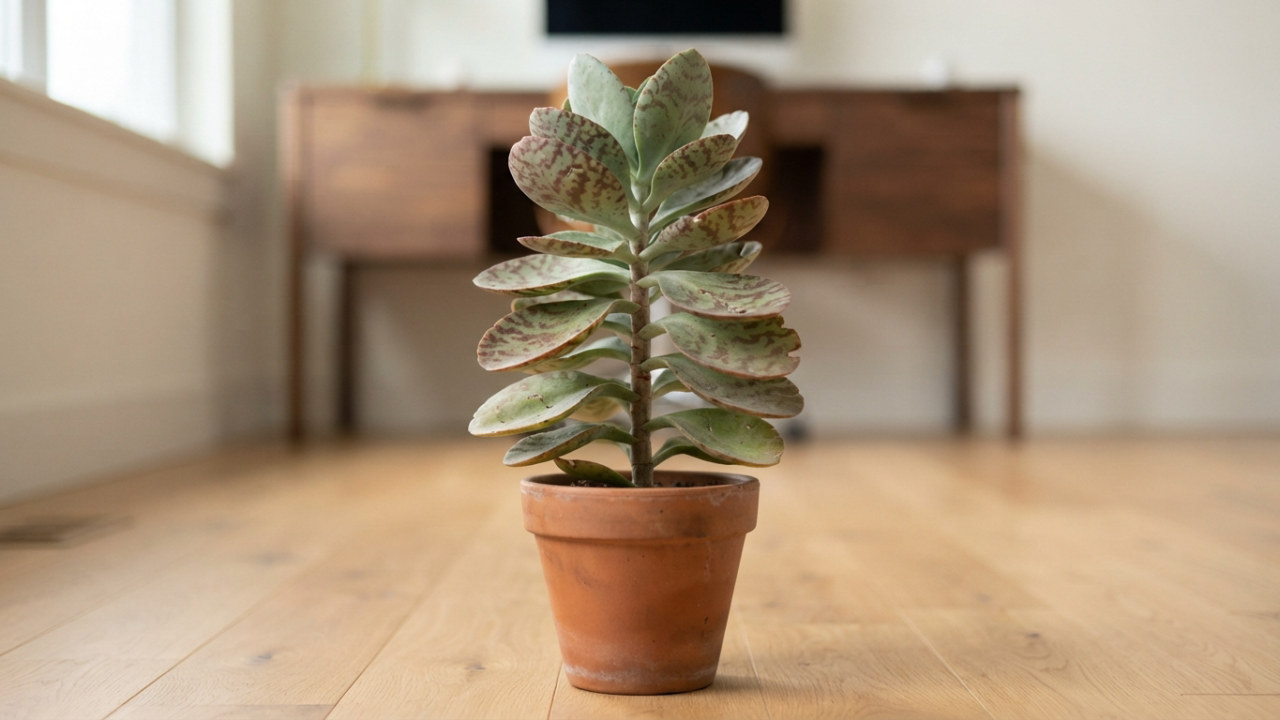
An upright succulent with large, smooth gray-green leaves marbled with purple blotches and white flowers in late winter.
- Every 12 daysWatering
- Bright indirect lightLight
- 30–50 %Humidity
- 18–27 °CTemperature


How to care for your Penwiper Plant
Everything you need to keep your Penwiper Plant healthy: watering, light, humidity, feeding, repotting and pruning.
This succulent shrub grows on rocky slopes in Central and East Africa and was described by the botanist John Gilbert Baker in 1892. Its glaucous, obovate leaves have wavy, scalloped edges and irregular purple to brownish blotches, which give a marbled look. Tall stems carry clusters of large white, four-petaled flowers, sometimes tinged with pink.

How to recognise Penwiper Plant
Large, smooth, glaucous leaves with wavy edges and irregular purple blotches, the only one of the group with that marbling. Not fuzzy like Kalanchoe tomentosa and without the leaf plantlets of Kalanchoe daigremontiana or delagoensis.

Watering your Penwiper Plant
Every 12 days
Water the soil, then let it dry out completely, and keep waterings infrequent.
How to know it needs water
- The large leaves lose their firmness and begin to soften
- The soil is dry all the way through the pot

How much light a Penwiper Plant needs
Bright indirect light
Give it bright light, with some direct sun, but shade it from the harshest afternoon sun.
- Direct sun tolerated
- 2 to 5 h a day
- Orientations that suit it
- North, North-east, East, South-east, South, South-west, West, North-west

Humidity and misting
30–50 %
Dry household air is fine, around 30 to 50 percent humidity. Never mist, water on the leaves can leave marks and encourage rot.

Feeding and fertiliser
Every 28 days
Feed about once a month in the growing season, and not in winter.
- Recommended feed
- A diluted cactus and succulent fertilizer, low in nitrogen. · 2-7-7

Repotting your Penwiper Plant
Every 24 months
Use a gritty, fast-draining mix in a pot with drainage, and wait a few days before watering.
- When
- Repot in spring, when growth restarts.
- Potting mix
- Cactus and succulent mix
- Mix in
- perlite, pumice, coarse sand
The tell-tale signs
- The plant is top-heavy and tips over its pot
- Roots push out of the drainage holes

Pruning your Penwiper Plant
Trim in spring, or after flowering, to keep the shrub tidy. Cut leggy stems with clean shears above a leaf pair, and remove spent flower stalks at the base.

Through the year
Watering is not set once and for all: it follows the light and the growth. Allow 22 days between waterings in the depth of winter, against 11 in the growing season.
- 18 J
- 18 F
- 14 M
- 12 A
- 11 M
- 11 J
- 11 J
- 11 A
- 12 S
- 14 O
- 18 N
- 22 D
Active growth · Days between waterings

Toxicity
All parts contain cardiac glycosides and are toxic to cats, dogs and people if eaten, the flowers most of all, so keep it out of reach.

Good to know
- The purple marbling on the leaves gives the plant its species name, marmorata, meaning marbled.
- Its flowers appear on tall stems in late winter to early spring.

Frequently asked questions about the Penwiper Plant
How do you care for a Penwiper Plant?
Water it every 12 days. Give it bright indirect light. Ideal humidity: 30–50 %. Ideal temperature: 18–27 °C. Water the soil, then let it dry out completely, and keep waterings infrequent.
How often should you water a Penwiper Plant?
Every 12 days Water the soil, then let it dry out completely, and keep waterings infrequent. How to know it needs water : The large leaves lose their firmness and begin to soften ; The soil is dry all the way through the pot.
How much light does a Penwiper Plant need?
Bright indirect light Give it bright light, with some direct sun, but shade it from the harshest afternoon sun. 2 to 5 h a day
Is the Penwiper Plant toxic to cats and dogs?
Yes. All parts contain cardiac glycosides and are toxic to cats, dogs and people if eaten, the flowers most of all, so keep it out of reach. Keep it out of reach of your pets and call a vet if any is swallowed.
Why are my Penwiper Plant leaves turning yellow?
Yellowing most often comes from too much water: the mix stays wet and the roots suffocate. Check that the pot drains, empty the saucer, and let the mix dry before watering again. Too little light or a cold draught cause the same symptom.
When should you repot a Penwiper Plant?
Repot every 24 months, ideally in repot in spring, when growth restarts.. Use a gritty, fast-draining mix in a pot with drainage, and wait a few days before watering.

At a glance
- Family
- Crassulaceae
- Category
- Succulent
- Placement
- Indoor
- Mature height
- 38 cm
- Growth
- Slow
- Temperature
- 18–27 °C
- Pot materials
- terracotta, ceramic
- Growth
- Reaches maturity in 5 years
These figures are for an average plant. In the app they are recalculated for yours, based on your room, its orientation and the season.
And for your plant, in your home?
In the app this plant becomes yours: a watering schedule tuned to your home, health tracking from photos, and reminders at the right moment.