Succulent · Crassulaceae
Chandelier Plant
Kalanchoe delagoensis
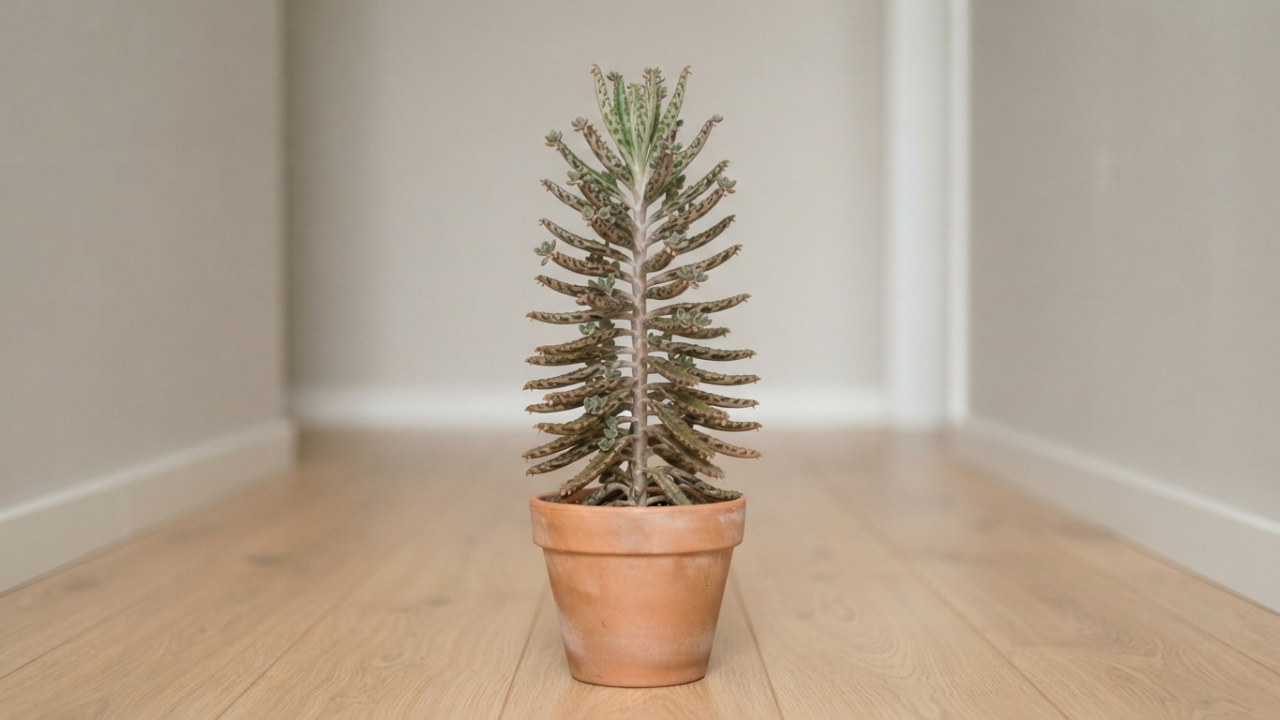
An upright, usually unbranched succulent with narrow, grooved, spotted leaves that bear plantlets at their tips.
- Every 12 daysWatering
- Bright indirect lightLight
- 30–50 %Humidity
- 18–27 °CTemperature


How to care for your Chandelier Plant
Everything you need to keep your Chandelier Plant healthy: watering, light, humidity, feeding, repotting and pruning.
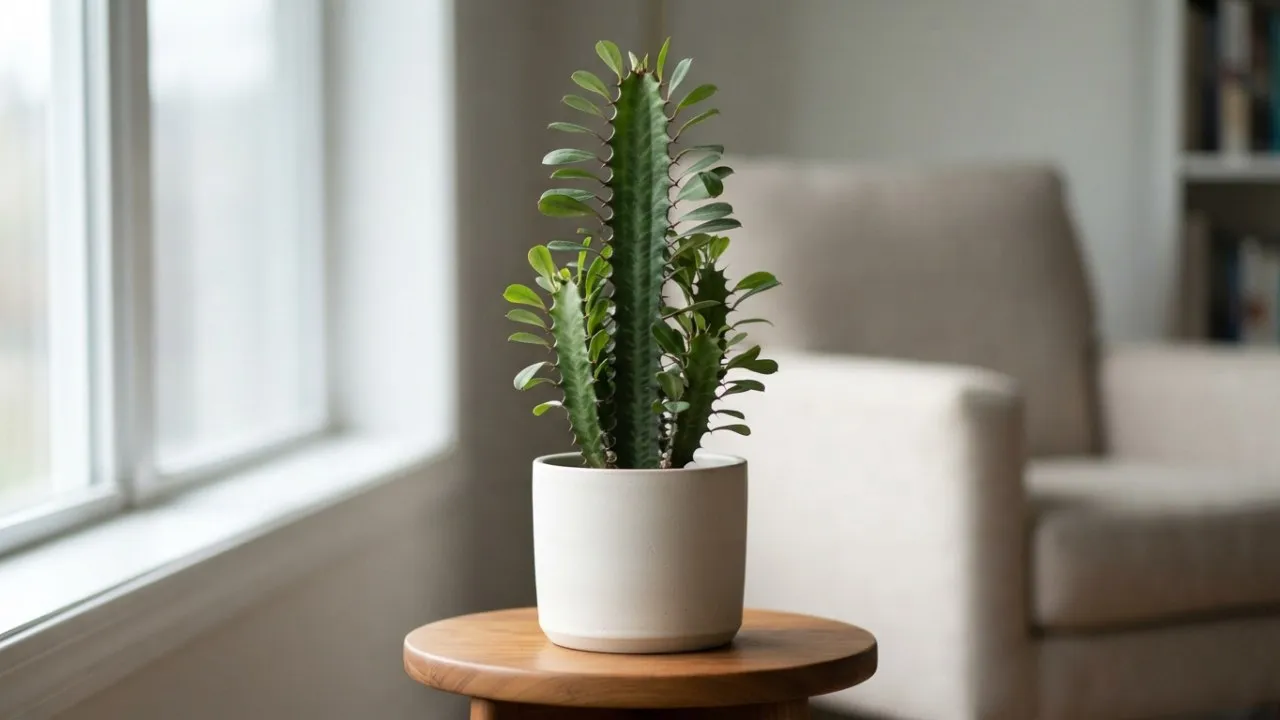
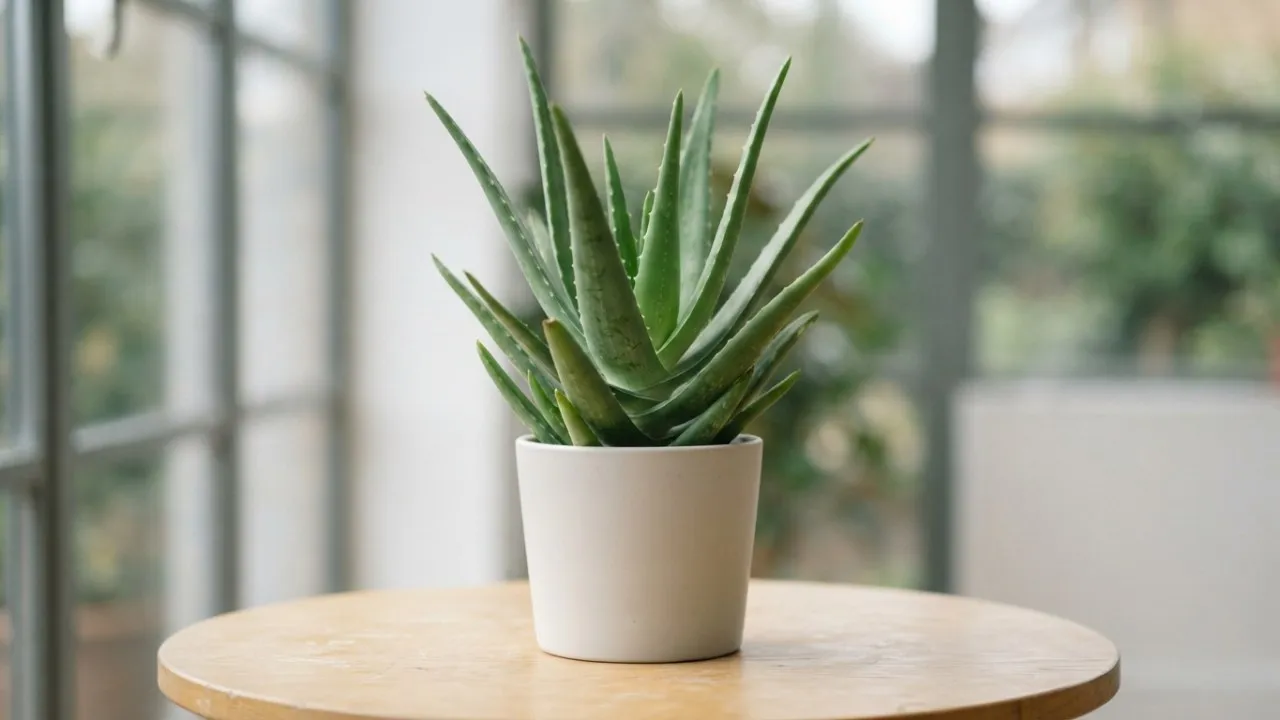
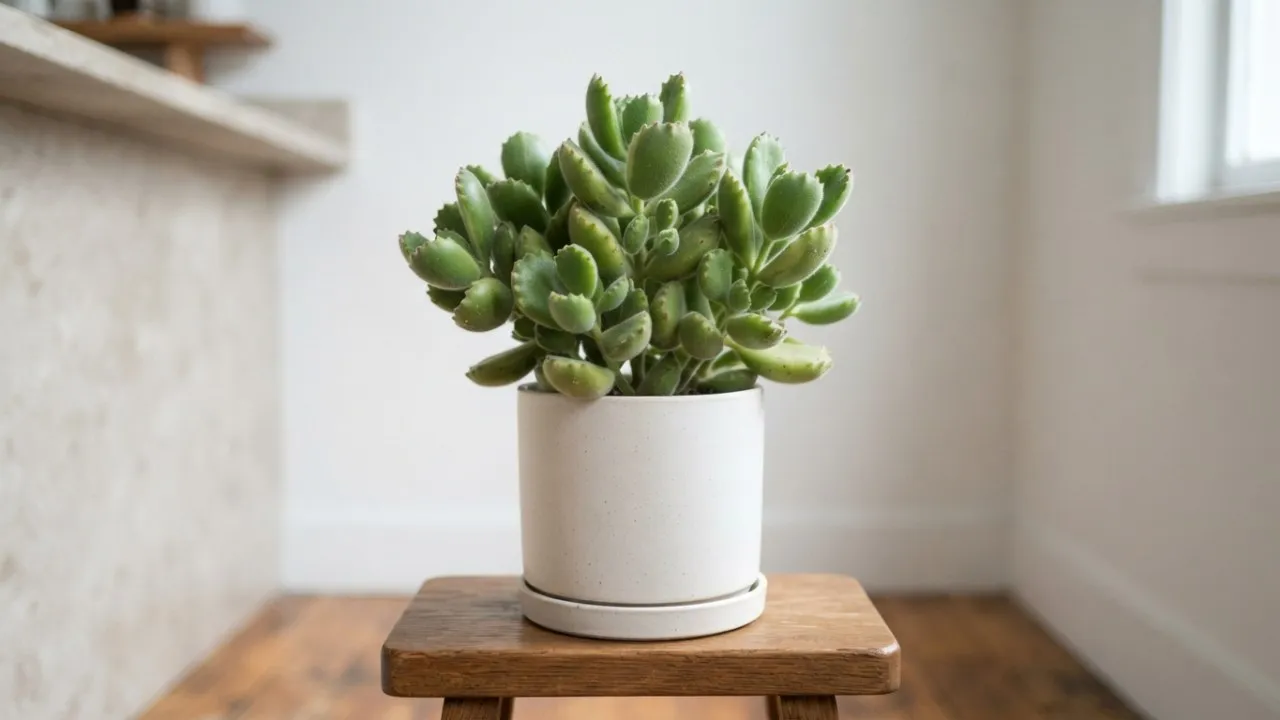
Native to central and southern Madagascar, this fast-growing succulent rises on a single stem with narrow, tube-like, grooved leaves in reddish-green to gray-green, spotted reddish-brown. Small plantlets form on the three to nine teeth at each leaf tip and drop to root wherever they land. Dangling reddish-orange bells can appear indoors in winter or early spring.

How to recognise Chandelier Plant
Narrow, grooved, almost cylindrical leaves spotted dark, with plantlets only at the tips. Kalanchoe daigremontiana has broad, boat-shaped leaves with plantlets along the whole edge, and Kalanchoe thyrsiflora has flat paddles.

Watering your Chandelier Plant
Every 12 days
Water only once the soil has dried out completely, and water less often when growth slows.
How to know it needs water
- The narrow leaves lose their plump look and feel soft
- The soil is dry through the whole pot

How much light a Chandelier Plant needs
Bright indirect light
Bright light up to full sun suits it, but shield it from hot afternoon sun.
- Direct sun tolerated
- 2 to 5 h a day
- Orientations that suit it
- North, North-east, East, South-east, South, South-west, West, North-west

Humidity and misting
30–50 %
Dry household air is fine, around 30 to 50 percent humidity. Never mist, it needs dry leaves and dry air.

Feeding and fertiliser
Every 28 days
Feed about once a month in the growing season, and not in winter.
- Recommended feed
- A diluted cactus and succulent fertilizer, low in nitrogen. · 2-7-7

Repotting your Chandelier Plant
Every 24 months
Use a gritty, fast-draining mix in a heavy pot that will not tip over with the tall stem, and wait a few days before watering.
- When
- Repot in spring, when growth restarts.
- Potting mix
- Cactus and succulent mix
- Mix in
- perlite, pumice, coarse sand
The tell-tale signs
- The tall stem tips the pot over
- Roots come out of the drainage holes or crowd the surface

Pruning your Chandelier Plant
Shorten the stem in spring if it grows too tall, and pick off fallen plantlets whenever you see them. Cut the stem with a clean blade, root the top in a dry, gritty mix, and sweep up the plantlets that drop, since they root easily.

Through the year
Watering is not set once and for all: it follows the light and the growth. Allow 22 days between waterings in the depth of winter, against 11 in the growing season.
- 18 J
- 18 F
- 14 M
- 12 A
- 11 M
- 11 J
- 11 J
- 11 A
- 12 S
- 14 O
- 18 N
- 22 D
Active growth · Days between waterings

Toxicity
All parts contain cardiac glycosides and are very toxic to cats, dogs and people if eaten, and handling the plant may irritate the skin, so keep it out of reach.

Good to know
- Plantlets form at the leaf tips and fall to root where they land, which is why it spreads so easily.
- It is also sold as Kalanchoe tubiflora or Bryophyllum delagoense, names for the same plant.

Frequently asked questions about the Chandelier Plant
How do you care for a Chandelier Plant?
Water it every 12 days. Give it bright indirect light. Ideal humidity: 30–50 %. Ideal temperature: 18–27 °C. Water only once the soil has dried out completely, and water less often when growth slows.
How often should you water a Chandelier Plant?
Every 12 days Water only once the soil has dried out completely, and water less often when growth slows. How to know it needs water : The narrow leaves lose their plump look and feel soft ; The soil is dry through the whole pot.
How much light does a Chandelier Plant need?
Bright indirect light Bright light up to full sun suits it, but shield it from hot afternoon sun. 2 to 5 h a day
Is the Chandelier Plant toxic to cats and dogs?
Yes. All parts contain cardiac glycosides and are very toxic to cats, dogs and people if eaten, and handling the plant may irritate the skin, so keep it out of reach. Keep it out of reach of your pets and call a vet if any is swallowed.
Why are my Chandelier Plant leaves turning yellow?
Yellowing most often comes from too much water: the mix stays wet and the roots suffocate. Check that the pot drains, empty the saucer, and let the mix dry before watering again. Too little light or a cold draught cause the same symptom.
When should you repot a Chandelier Plant?
Repot every 24 months, ideally in repot in spring, when growth restarts.. Use a gritty, fast-draining mix in a heavy pot that will not tip over with the tall stem, and wait a few days before watering.

At a glance
- Family
- Crassulaceae
- Category
- Succulent
- Placement
- Indoor
- Mature height
- 75 cm
- Growth
- Fast
- Temperature
- 18–27 °C
- Pot materials
- terracotta, ceramic
- Growth
- Reaches maturity in 3 years
These figures are for an average plant. In the app they are recalculated for yours, based on your room, its orientation and the season.
And for your plant, in your home?
In the app this plant becomes yours: a watering schedule tuned to your home, health tracking from photos, and reminders at the right moment.