Succulent · Crassulaceae
Mother of Thousands
Kalanchoe daigremontiana
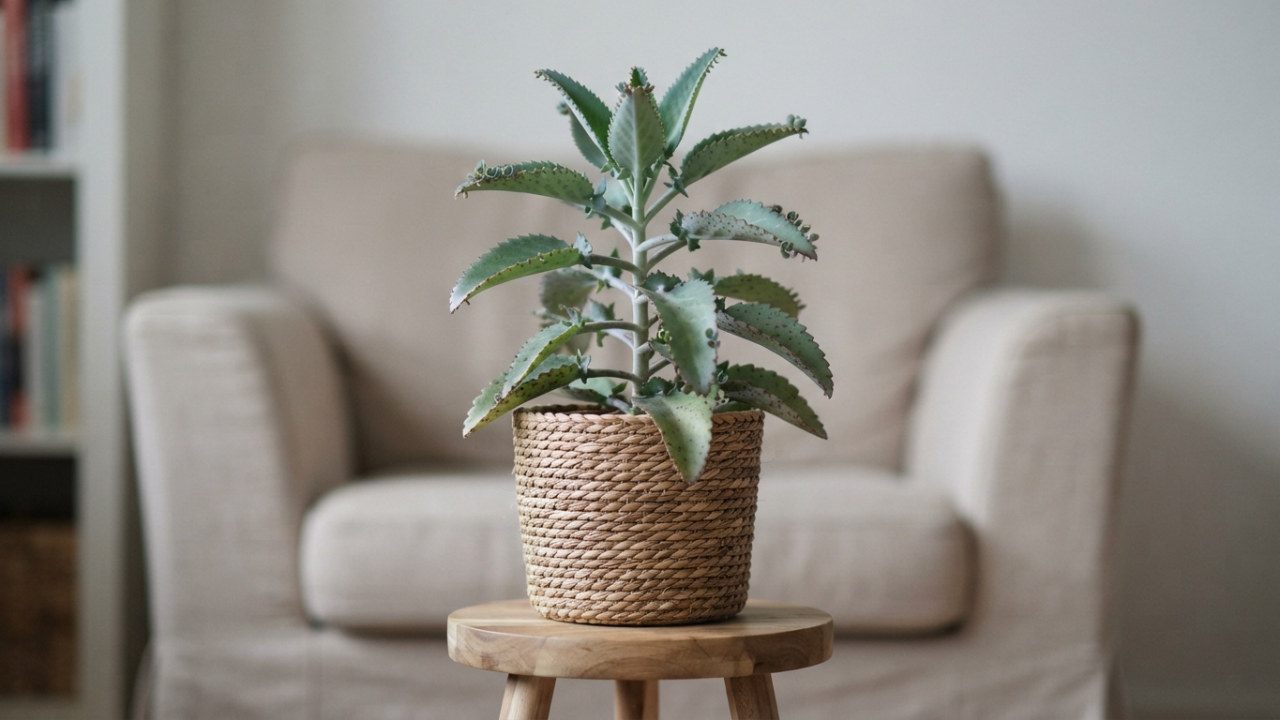
Kalanchoe daigremontiana, commonly known as Mother of Thousands, is a unique succulent famous for its prolific production of plantlets along its leaf edges.
- Every 12 daysWatering
- Full sunLight
- 30–50 %Humidity
- 15–27 °CTemperature


How to care for your Mother of Thousands
Everything you need to keep your Mother of Thousands healthy: watering, light, humidity, feeding, repotting and pruning.
Kalanchoe daigremontiana is a distinctive succulent native to Madagascar, known for its striking appearance and unusual reproductive strategy. Its thick, fleshy, grey-green leaves are often mottled with purple or brown, and along their margins they produce numerous tiny plantlets that readily drop and root, giving rise to its common name 'Mother of Thousands'. This plant thrives in bright, direct light and dry conditions, making it an easy-care houseplant for sunny windowsills. While fascinating, handle it with care: all parts are highly toxic if ingested, and fallen plantlets root almost anywhere. It is not frost hardy, so a plant kept outside in a pot must come indoors before temperatures fall below about 10 °C.

How to recognise Mother of Thousands
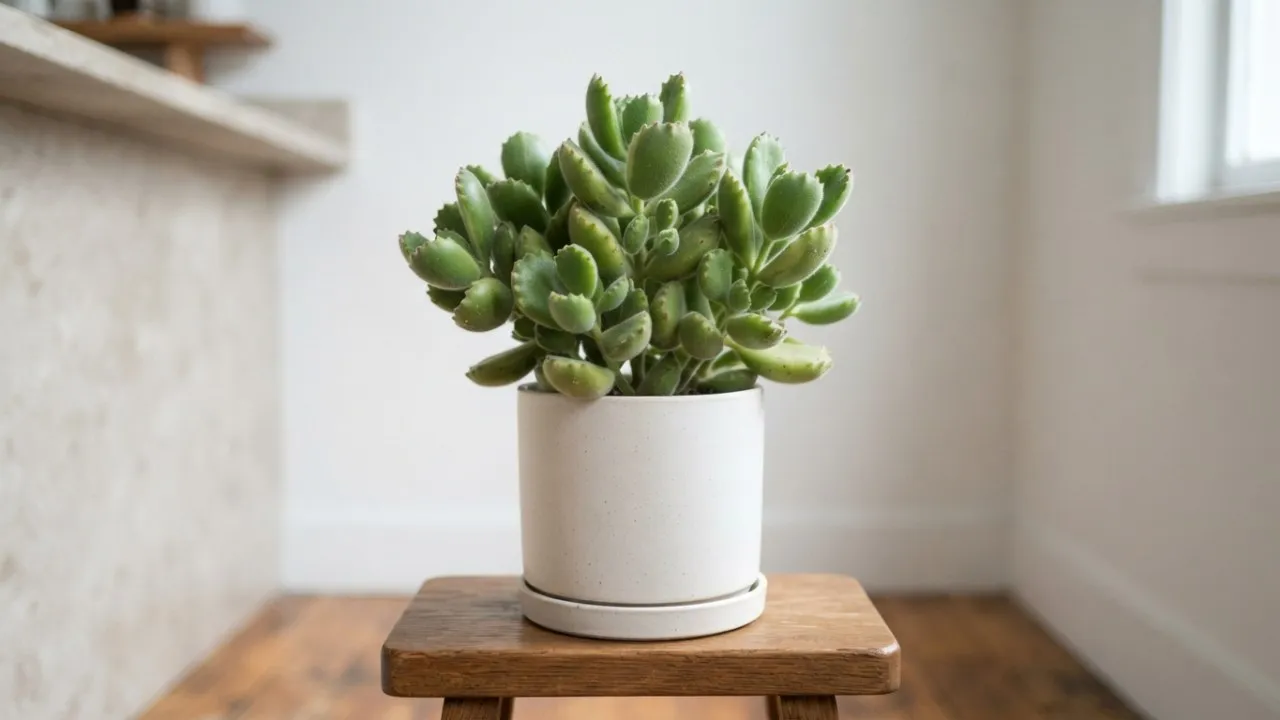
Thick, grey-green, lance-shaped leaves, often marbled with purple-brown and with saw-toothed margins that carry rows of tiny plantlets, on a tall, upright, usually unbranched stem. It can be confused with Kalanchoe delagoensis (chandelier plant), whose leaves are narrow and cylindrical with plantlets only at the tips, and with the hybrid Kalanchoe x houghtonii, whose plantlets sit mostly at the leaf tips. Plantlets all along the leaf edges point to daigremontiana.

Watering your Mother of Thousands
Every 12 days
Water thoroughly until drainage runs clear, then let the substrate dry out completely before watering again: about every 12 days in the growing season and every 3 to 4 weeks at rest.
How to know it needs water
- Soil completely dry
- Leaves feel slightly less turgid
- Pot feels lighter than usual

How much light a Mother of Thousands needs
Full sun
Bright direct light for several hours daily; tolerates some afternoon sun.
- Direct sun tolerated
- 4 to 8 h a day
- Orientations that suit it
- South-east, South, South-west, East, West

Humidity and misting
30–50 %
Low to medium (30 to 50 %) Do not mist; this plant prefers dry conditions and is susceptible to rot with excess humidity on foliage.

Feeding and fertiliser
Every 28 days
Apply about once a month (every 4 weeks) from April to September, at half strength. Do not feed during the rest of the year.
- Recommended feed
- Low-nitrogen succulent fertilizer · 5-10-5

Repotting your Mother of Thousands
Every 24 months
Repot every two years into a container 2 to 3 cm larger, using a fast-draining cactus or succulent mix.
- When
- Spring
- Potting mix
- Cactus and succulent mix
- Mix in
- perlite, coarse sand, pumice
The tell-tale signs
- Roots emerging from drainage holes
- Plant becoming top-heavy
- Substrate compact and no longer draining well

Pruning your Mother of Thousands
Remove yellowing, damaged, or leggy stems at any time of year. Trim fallen plantlets as needed. Use clean, sharp scissors or a knife to cut stems. Allow cuttings to callus before propagating.

Through the year
Watering is not set once and for all: it follows the light and the growth. Allow 22 days between waterings in the depth of winter, against 10 in the growing season.
- 18 J
- 14 F
- 12 M
- 10 A
- 10 M
- 10 J
- 10 J
- 10 A
- 12 S
- 14 O
- 18 N
- 22 D
Active growth · Days between waterings

Toxicity
Highly toxic to cats, dogs and humans if ingested. It contains bufadienolides (cardiac glycosides) that can cause vomiting, an irregular heartbeat and neurological signs. Keep it out of reach and wash your hands after handling.

Good to know
- It produces hundreds of tiny plantlets along its leaf margins, giving it the name 'Mother of Thousands'.
- This succulent stores water in its thick, fleshy leaves, allowing it to withstand drought.
- Native to Madagascar, it thrives in dry, arid conditions and can become invasive in warm climates.

Frequently asked questions about the Mother of Thousands
How do you care for a Mother of Thousands?
Water it every 12 days. Give it full sun. Ideal humidity: 30–50 %. Ideal temperature: 15–27 °C. Water thoroughly until drainage runs clear, then let the substrate dry out completely before watering again: about every 12 days in the growing season and every 3 to 4 weeks at rest.
How often should you water a Mother of Thousands?
Every 12 days Water thoroughly until drainage runs clear, then let the substrate dry out completely before watering again: about every 12 days in the growing season and every 3 to 4 weeks at rest. How to know it needs water : Soil completely dry ; Leaves feel slightly less turgid ; Pot feels lighter than usual.
How much light does a Mother of Thousands need?
Full sun Bright direct light for several hours daily; tolerates some afternoon sun. 4 to 8 h a day
Is the Mother of Thousands toxic to cats and dogs?
Yes. Highly toxic to cats, dogs and humans if ingested. It contains bufadienolides (cardiac glycosides) that can cause vomiting, an irregular heartbeat and neurological signs. Keep it out of reach and wash your hands after handling. Keep it out of reach of your pets and call a vet if any is swallowed.
Why are my Mother of Thousands leaves turning yellow?
Yellowing most often comes from too much water: the mix stays wet and the roots suffocate. Check that the pot drains, empty the saucer, and let the mix dry before watering again. Too little light or a cold draught cause the same symptom.
When should you repot a Mother of Thousands?
Repot every 24 months, ideally in spring. Repot every two years into a container 2 to 3 cm larger, using a fast-draining cactus or succulent mix.

At a glance
- Family
- Crassulaceae
- Category
- Succulent
- Placement
- Indoor and outdoor
- Mature height
- 60 cm
- Growth
- Fast
- Temperature
- 15–27 °C
- Pot materials
- terracotta, ceramic
- Growth
- Reaches maturity in 2 years
These figures are for an average plant. In the app they are recalculated for yours, based on your room, its orientation and the season.
And for your plant, in your home?
In the app this plant becomes yours: a watering schedule tuned to your home, health tracking from photos, and reminders at the right moment.