
Variety Climber · Araliaceae
English Ivy 'Eva'
Hedera helix 'Eva' · A variety of English Ivy
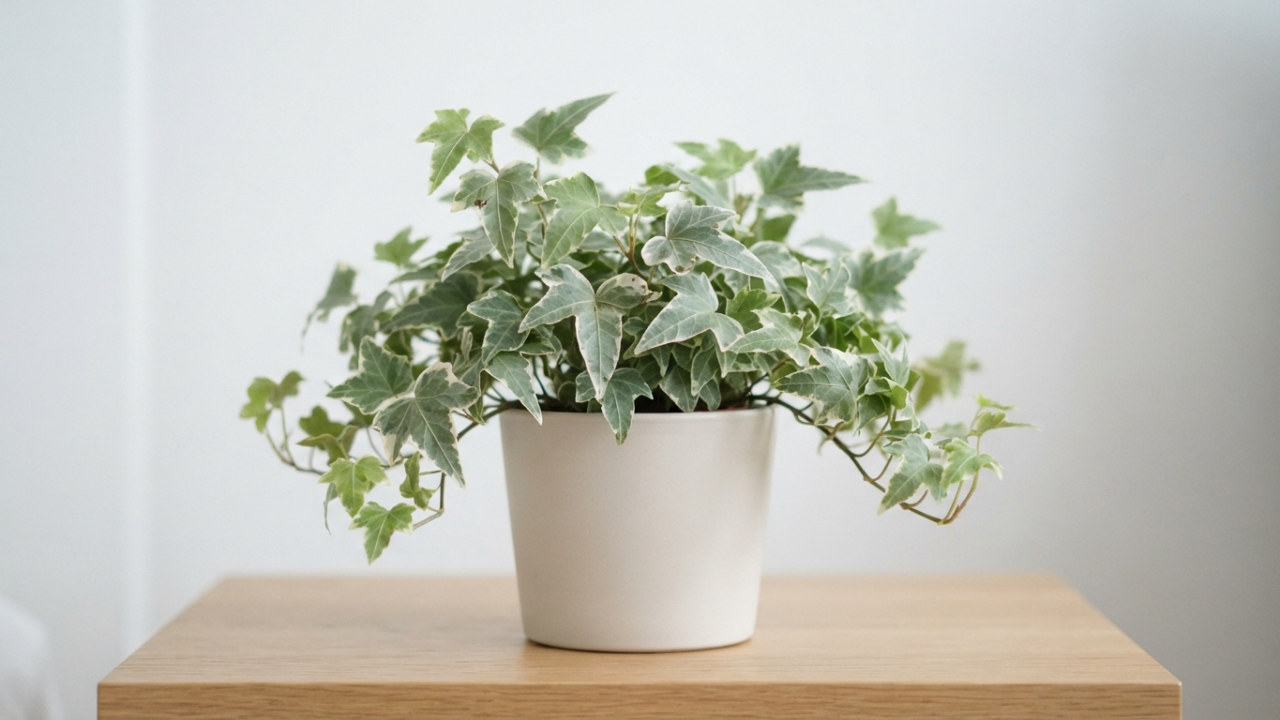
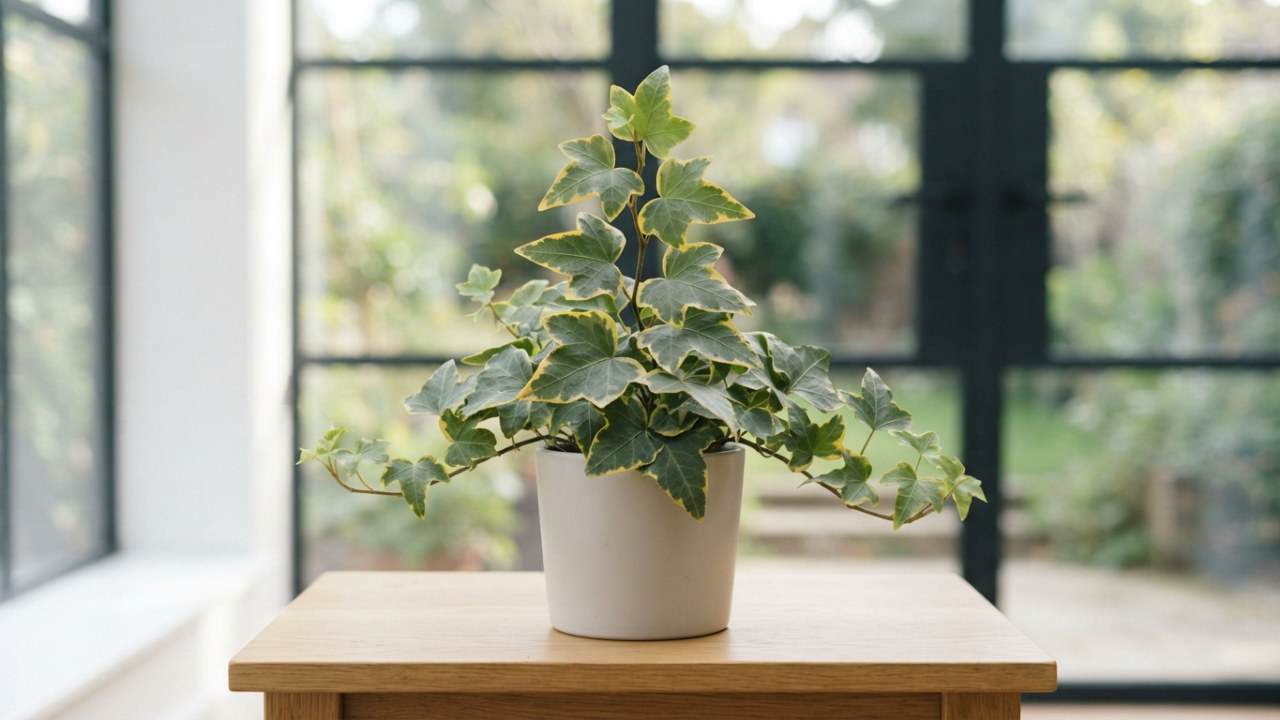
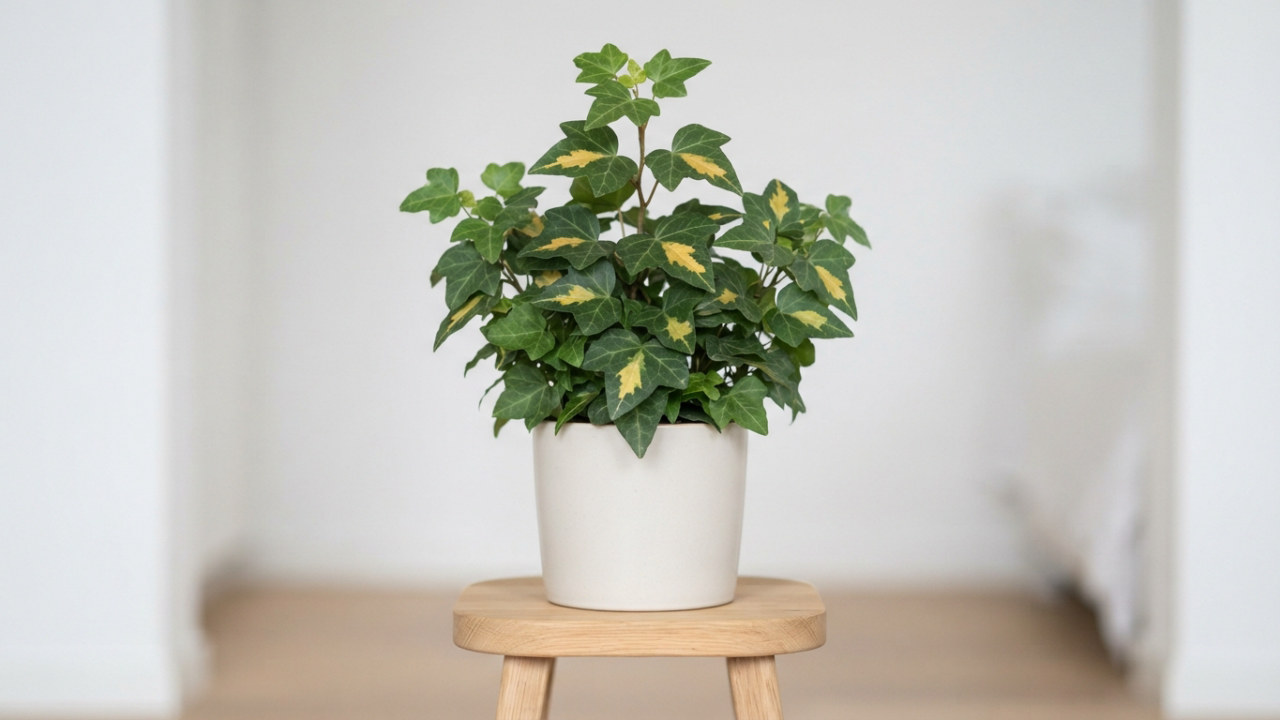
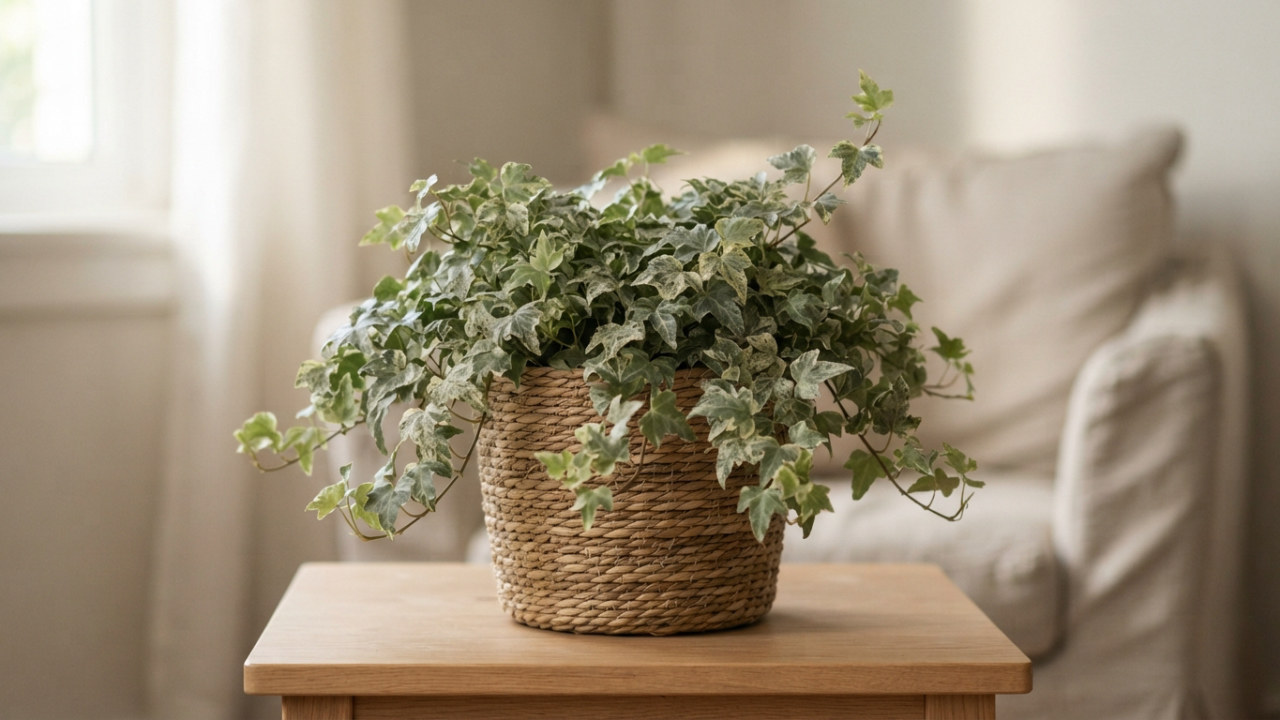
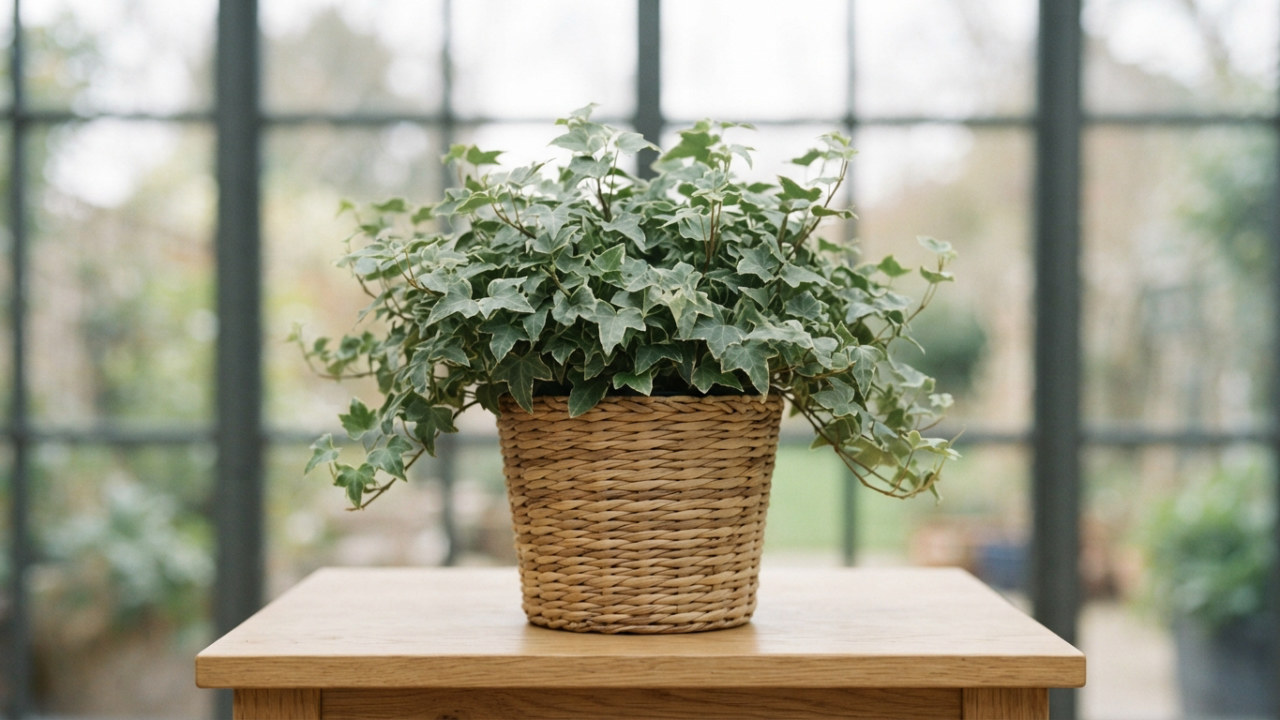
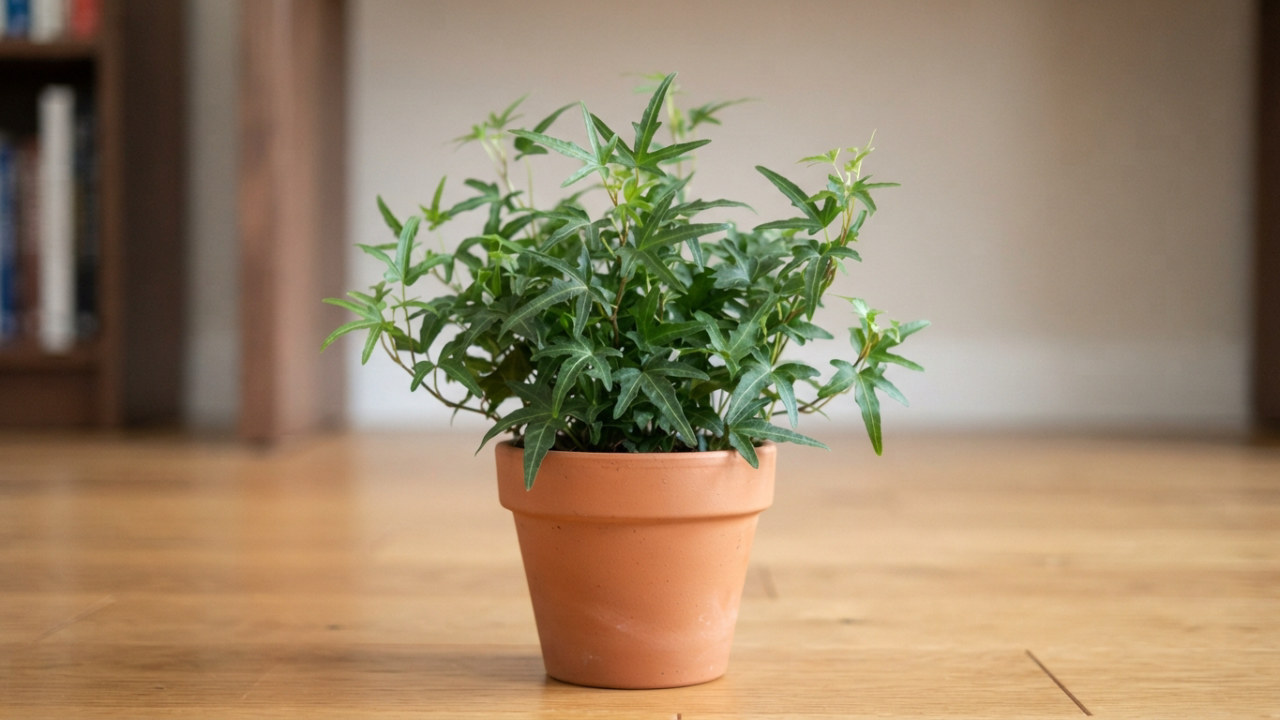
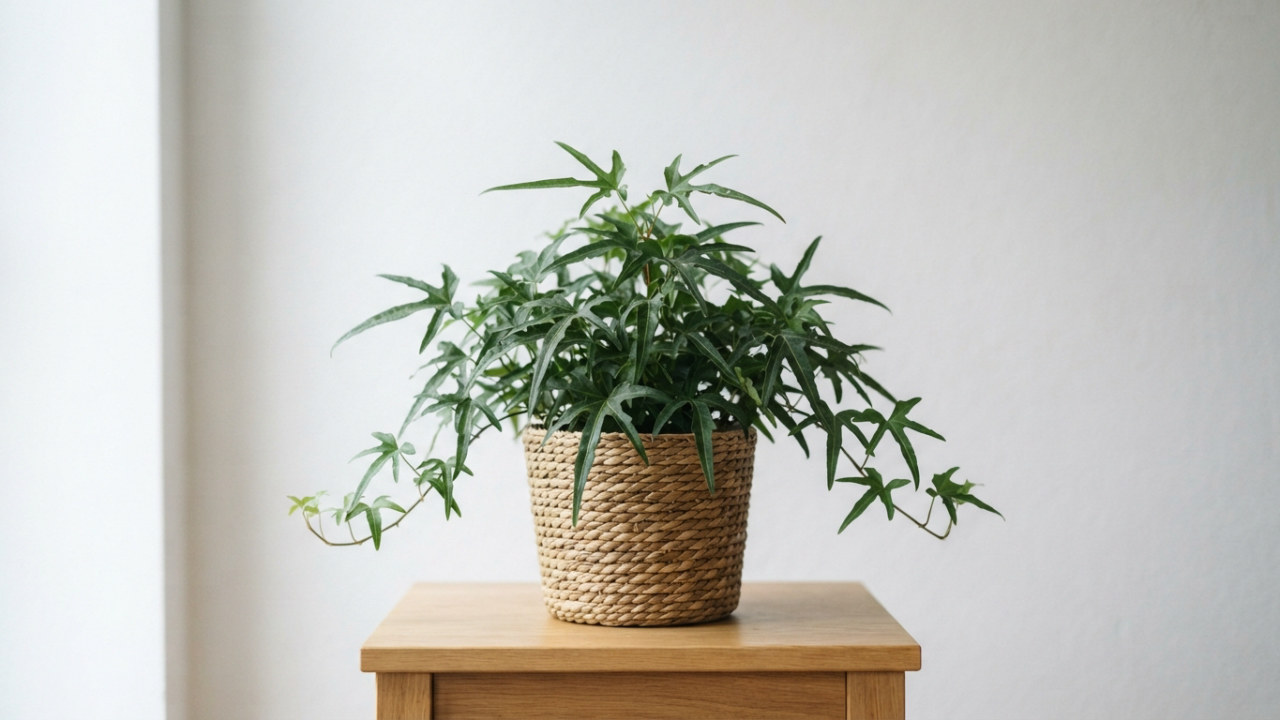
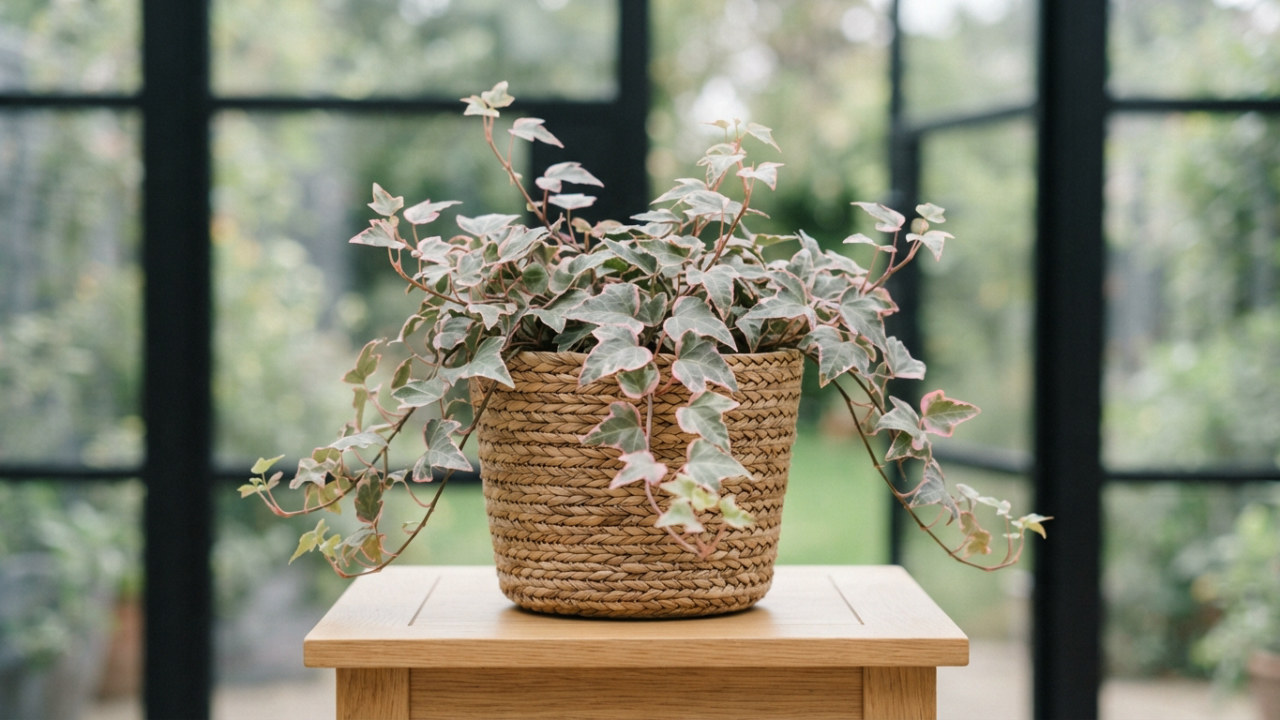
A dense English ivy with small bird's-foot leaves, gray-green in the center with an irregular creamy-white edge.
- Every 6 daysWatering
- Medium lightLight
- 50–60 %Humidity
- 5–24 °CTemperature


Other varieties 12
How to care for your English Ivy 'Eva'
Everything you need to keep your English Ivy 'Eva' healthy: watering, light, humidity, feeding, repotting and pruning.
'Eva' was found in the early 1960s by Tage Melin in Hjallese, Denmark, probably as a sport of 'Harald', and the American Ivy Society named it Ivy of the Year in 2009. Each leaf has three forward-pointing lobes, the middle one up to twice as long as the side ones, giving a bird's-foot outline. It branches freely and grows fast, reaching about one to one and a half meters indoors.

How to recognise English Ivy 'Eva'
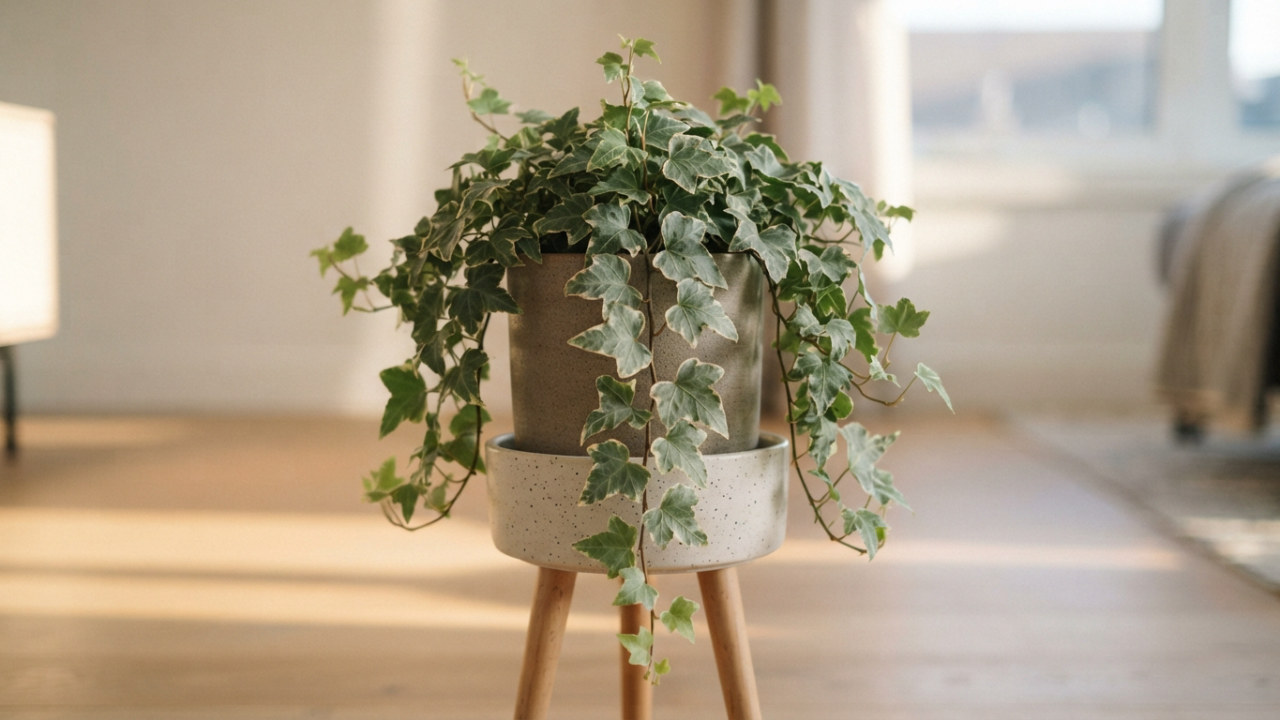
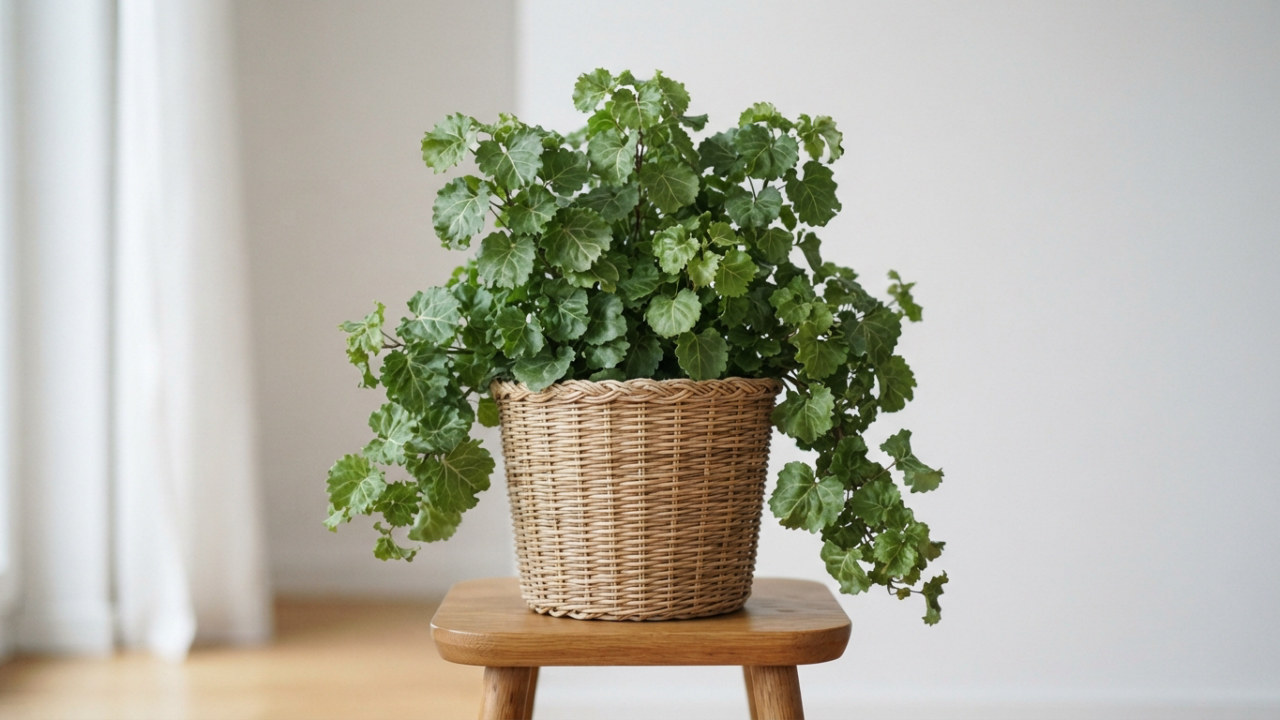
Three-lobed bird's-foot leaves with a long central lobe, green-gray in the middle and edged in creamy white. 'Glacier' is broader and mottled with silver, while 'Little Diamond' leaves are small and diamond-shaped.

Watering your English Ivy 'Eva'
Every 6 days
Water when the top two or three centimeters of mix are dry, then let the excess run out.
How to know it needs water
- The top two or three centimeters of mix are dry
- Leaves look limp and the pot feels light

How much light a English Ivy 'Eva' needs
Medium light
Good bright indirect light is needed for crisp cream edges; in low light the variegation fades.
- Direct sun tolerated
- 0 to 2 h a day
- Orientations that suit it
- North, North-east, East, North-west, West

Humidity and misting
50–60 %
Average humidity of 50 to 60 percent is enough. Mist every few days in heated, dry rooms to deter spider mites.

Feeding and fertiliser
Every 28 days
Feed about monthly from April to September, and none in winter.
- Recommended feed
- A balanced liquid fertilizer for green plants, diluted to half strength. · 2-1-2

Repotting your English Ivy 'Eva'
Every 24 months
Repot into a pot one size larger with fresh free-draining mix, loosening the roots a little.
- When
- Spring.
- Potting mix
- All-purpose potting mix
- Mix in
- perlite, coco fibre
The tell-tale signs
- Roots circle the pot or push out of the holes
- Growth slows although the plant gets light and feed

Pruning your English Ivy 'Eva'
Spring or early summer. Pinch or cut stems above a node to build a denser plant, and take out shoots that turn plain green.

Through the year
Watering is not set once and for all: it follows the light and the growth. Allow 10 days between waterings in the depth of winter, against 5 in the growing season.
- 9 J
- 7 F
- 6 M
- 5 A
- 5 M
- 5 J
- 5 J
- 5 A
- 6 S
- 7 O
- 8 N
- 10 D
Active growth · Days between waterings

Toxicity
Saponins in the foliage and berries irritate the stomach of cats, dogs and people if eaten, and the sap can irritate skin.

Good to know
- It was named Ivy of the Year in 2009 by the American Ivy Society.
- The long central lobe gives each leaf the look of a bird's foot.

Frequently asked questions about the English Ivy 'Eva'
How do you care for a English Ivy 'Eva'?
Water it every 6 days. Give it medium light. Ideal humidity: 50–60 %. Ideal temperature: 5–24 °C. Water when the top two or three centimeters of mix are dry, then let the excess run out.
How often should you water a English Ivy 'Eva'?
Every 6 days Water when the top two or three centimeters of mix are dry, then let the excess run out. How to know it needs water : The top two or three centimeters of mix are dry ; Leaves look limp and the pot feels light.
How much light does a English Ivy 'Eva' need?
Medium light Good bright indirect light is needed for crisp cream edges; in low light the variegation fades. 0 to 2 h a day
Is the English Ivy 'Eva' toxic to cats and dogs?
Yes. Saponins in the foliage and berries irritate the stomach of cats, dogs and people if eaten, and the sap can irritate skin. Keep it out of reach of your pets and call a vet if any is swallowed.
Why are my English Ivy 'Eva' leaves turning yellow?
Yellowing most often comes from too much water: the mix stays wet and the roots suffocate. Check that the pot drains, empty the saucer, and let the mix dry before watering again. Too little light or a cold draught cause the same symptom.
When should you repot a English Ivy 'Eva'?
Repot every 24 months, ideally in spring.. Repot into a pot one size larger with fresh free-draining mix, loosening the roots a little.

At a glance
- Family
- Araliaceae
- Category
- Climber
- Placement
- Indoor and outdoor
- Mature height
- 3 m
- Growth
- Moderate
- Temperature
- 5–24 °C
- Pot materials
- terracotta, ceramic, plastic
- Growth
- Reaches maturity in 5 years
These figures are for an average plant. In the app they are recalculated for yours, based on your room, its orientation and the season.
And for your plant, in your home?
In the app this plant becomes yours: a watering schedule tuned to your home, health tracking from photos, and reminders at the right moment.
In the same spirit
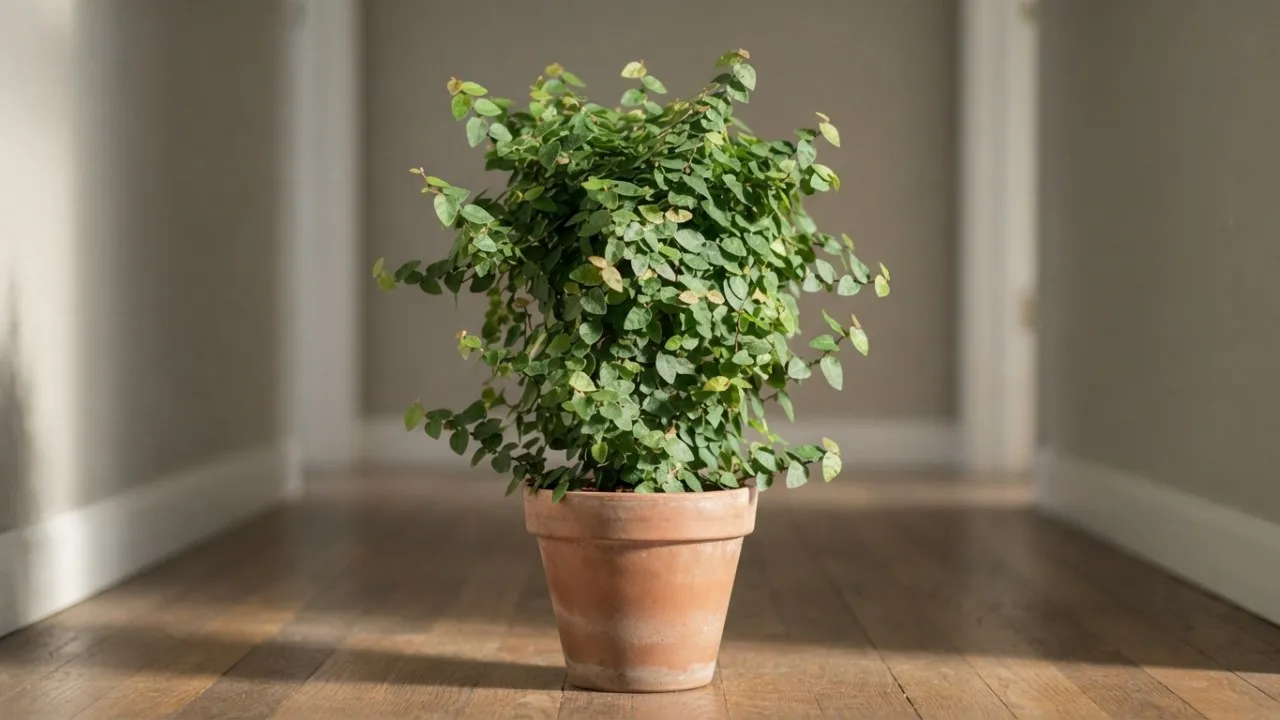 Every 4 days


Creeping Fig
Ficus pumila

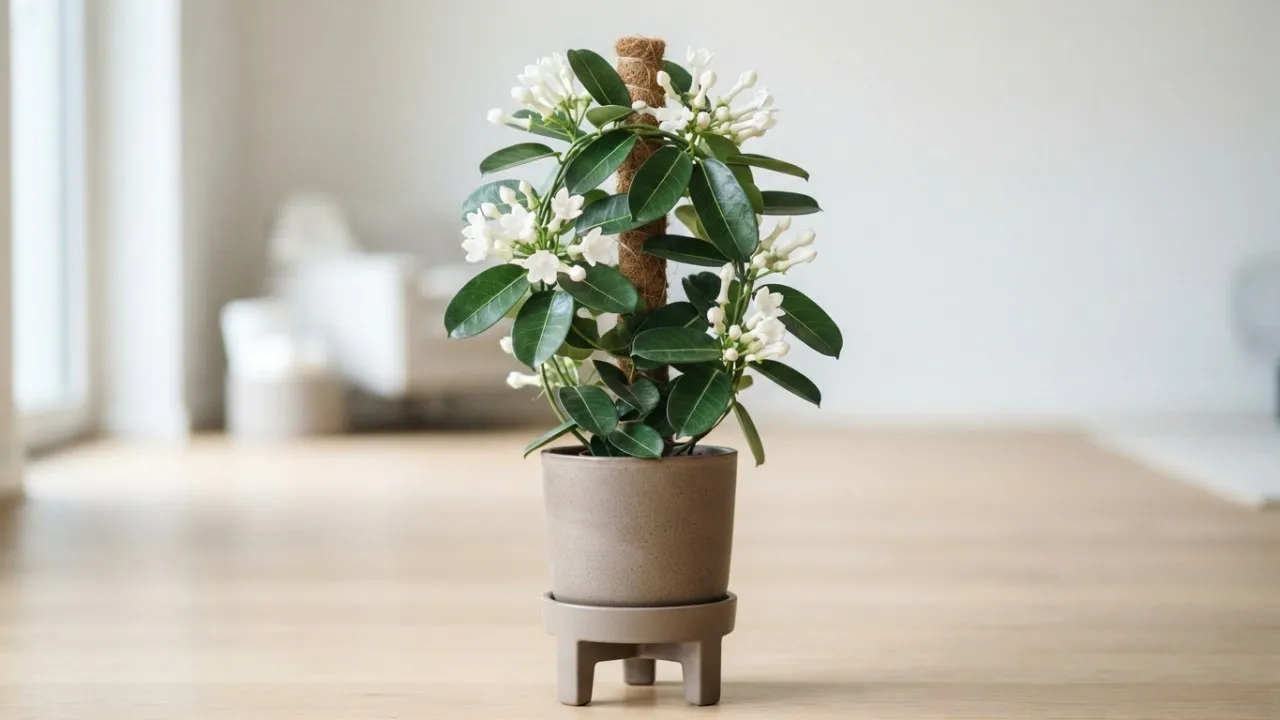 Every 5 days
Madagascar Jasmine
Stephanotis floribunda
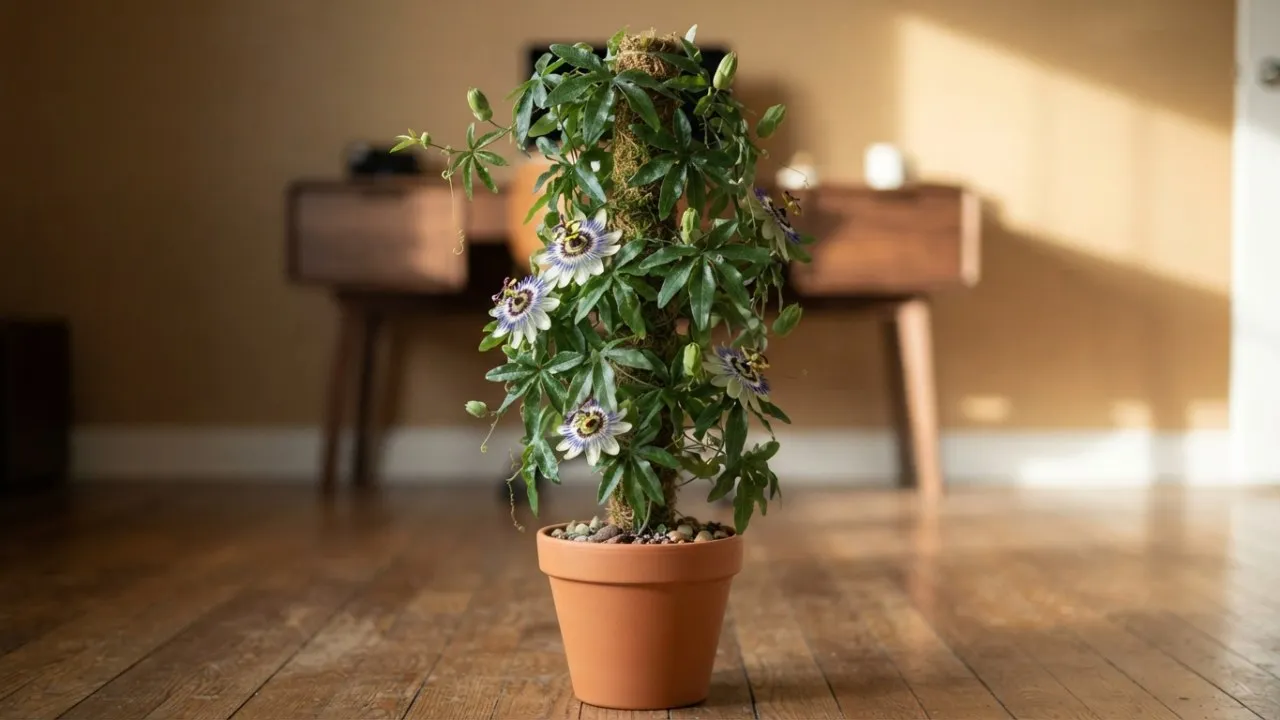 Every 4 days
Passion Flower
Passiflora caerulea
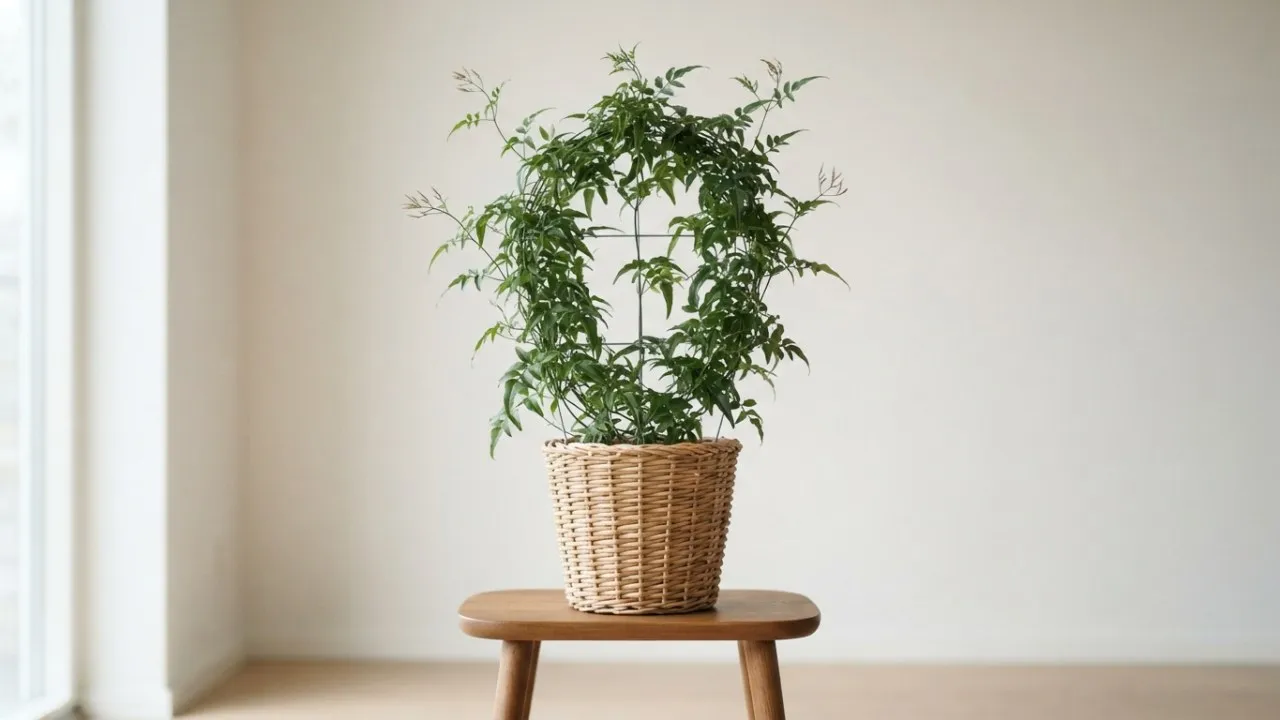 Every 5 days
Pink Jasmine
Jasminum polyanthum
