
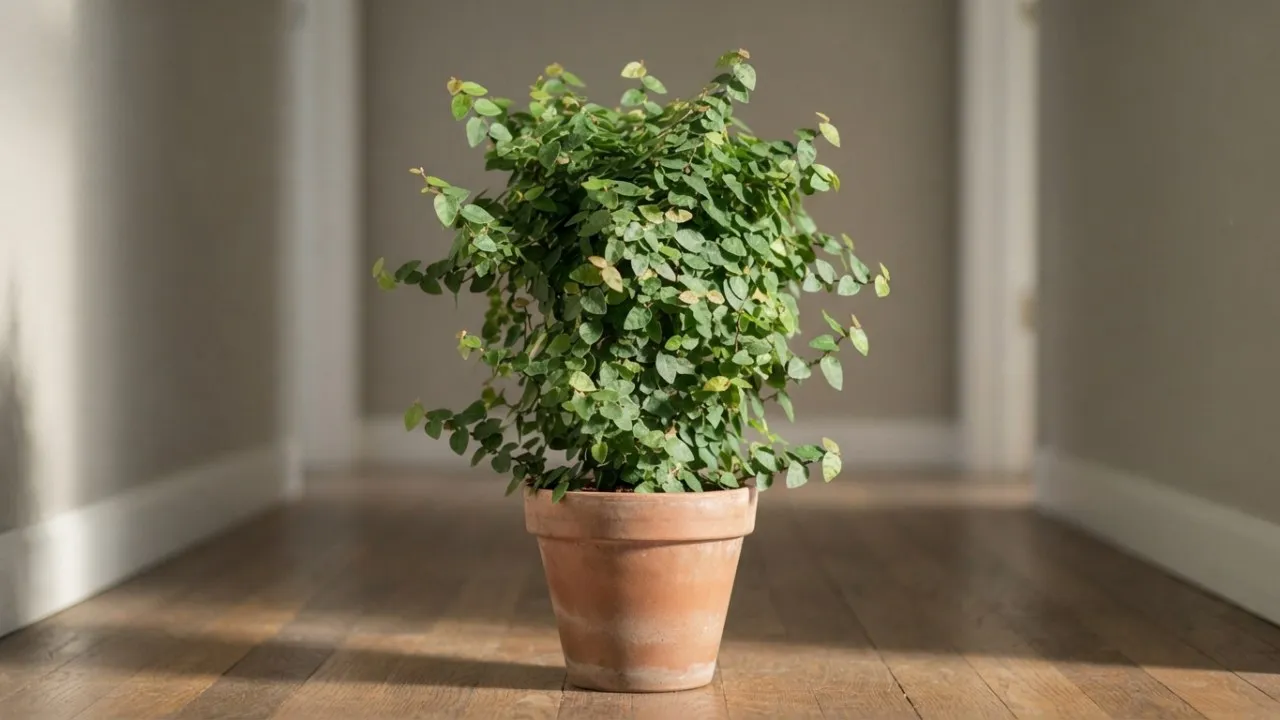
Creeping Fig
Ficus pumila
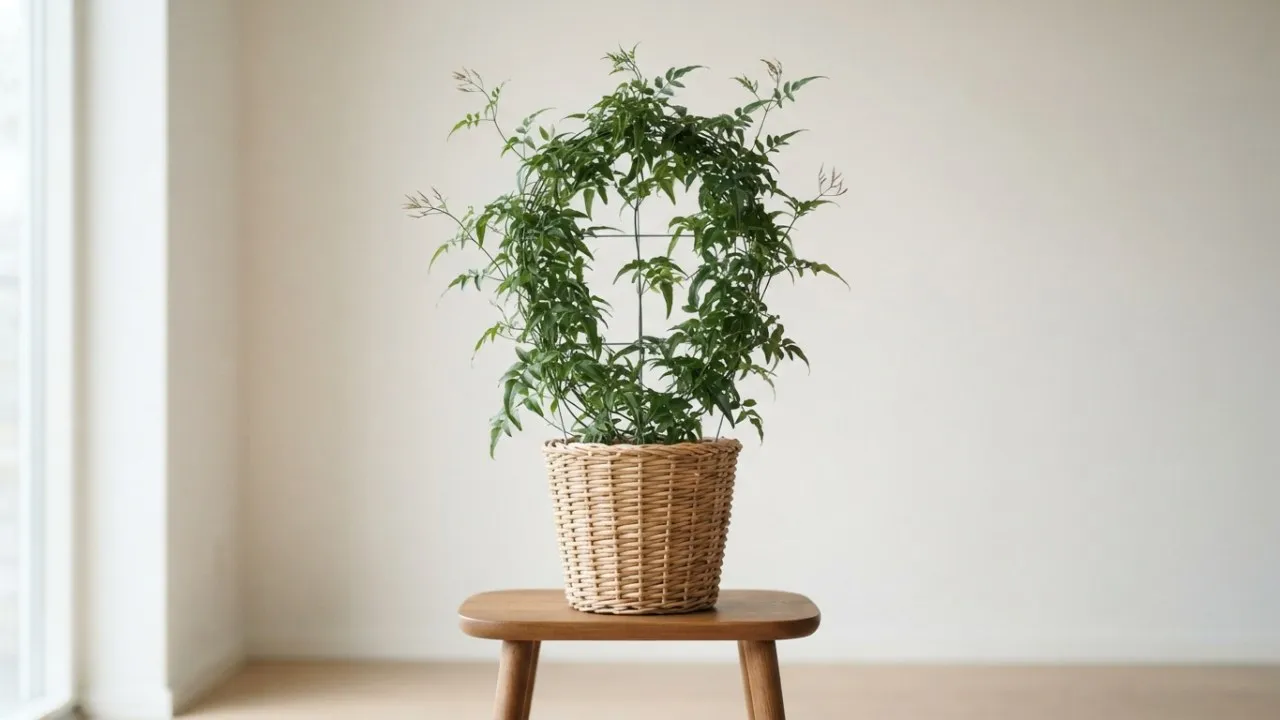
Creeping Fig is a small vine with fine, delicate foliage that charmingly carpets walls, supports, and terrariums with its green mantle.
The essentials at a glance
-
Watering
Every 4 days
-
Light
Bright indirect light
-
Humidity
50–70 %
-
Temperature
10–28 °C


How to care for your Creeping Fig
Everything you need to keep your Creeping Fig healthy: watering, light, humidity, feeding, repotting and pruning.
Ficus pumila originates from East Asia, from China to Japan and Vietnam. It is a small creeping and climbing vine whose tiny heart-shaped leaves create a plant carpet of great finesse. Its adventitious roots allow it to cling to any vertical support, including glass and smooth surfaces. It is an ideal plant for terrariums, miniature living walls, or as ground cover in large planters. Its main requirement is constant moisture, both in the substrate and ambient air.

Watering your Creeping Fig
Every 4 days
Keep the substrate consistently slightly moist. Creeping Fig does not tolerate complete drying out, which causes irreversible leaf browning.
How to know it needs water
- Surface of the compost beginning to dry
- Small leaves becoming crispy at the edges
- Growth of new stems slowing

How much light a Creeping Fig needs
Bright indirect light
Bright indirect to semi-shade. Tolerates low light conditions better than most Ficus. Avoid harsh direct sun.
- Direct sun tolerated
- 0 to 2 h a day
- Orientations that suit it
- North, North-east, East, South-east, South, South-west, West, North-west

Humidity and misting
50–70 %
50–70% Mist regularly as Creeping Fig loves humidity. Overly dry air causes browning and leaf drop. Ideal in a terrarium.

Feeding and fertiliser
Every 21 days
Fertilize moderately from spring to autumn. Creeping Fig has low nutrient requirements. Excess fertilizer can scorch its fine roots.
- Recommended feed
- Dilute liquid fertilizer for foliage plants (NPK 20-10-10), nitrogen-rich for dense foliage. · 3-1-2

Repotting your Creeping Fig
Every 24 months
Use light universal compost enriched with perlite. A shallow, wide pot as the plant spreads more than it grows in depth. Can also be grown on a moss support.
- When
- Spring
- Potting mix
- All-purpose potting mix
- Mix in
- perlite, coco fibre
The tell-tale signs
- Roots emerging from the bottom of the pot
- Substrate drying very quickly
- Plant covering the entire pot and spilling over widely

Pruning your Creeping Fig
In spring and throughout the growing season as needed. Prune regularly to contain expansion and maintain a compact shape. Creeping Fig is vigorous and quickly colonises any available support. Cuttings root very easily.

Through the year
Watering is not set once and for all: it follows the light and the growth. Allow 5 days between waterings in the depth of winter, against 3 in the growing season.
- 5 J
- 5 F
- 4 M
- 4 A
- 3 M
- 3 J
- 3 J
- 4 A
- 4 S
- 4 O
- 5 N
- 5 D
Active growth · Days between waterings

Toxicity
The milky latex is irritating to dogs and cats. Can cause vomiting and oral irritation. Possible skin irritation on contact.

Good to know
- Creeping Fig can cling to smooth walls using adventitious roots that secrete a natural cement, like ivy but in a tropical version.
- With age, the plant develops large leathery leaves very different from its small juvenile leaves, a phenomenon called heterophylly.

Frequently asked questions about the Creeping Fig
How do you care for a Creeping Fig?
Water it every 4 days. Give it bright indirect light. Ideal humidity: 50–70 %. Ideal temperature: 10–28 °C. Keep the substrate consistently slightly moist. Creeping Fig does not tolerate complete drying out, which causes irreversible leaf browning.
How often should you water a Creeping Fig?
Every 4 days Keep the substrate consistently slightly moist. Creeping Fig does not tolerate complete drying out, which causes irreversible leaf browning. How to know it needs water : Surface of the compost beginning to dry ; Small leaves becoming crispy at the edges ; Growth of new stems slowing.
How much light does a Creeping Fig need?
Bright indirect light Bright indirect to semi-shade. Tolerates low light conditions better than most Ficus. Avoid harsh direct sun. 0 to 2 h a day
Is the Creeping Fig toxic to cats and dogs?
Yes. The milky latex is irritating to dogs and cats. Can cause vomiting and oral irritation. Possible skin irritation on contact. Keep it out of reach of your pets and call a vet if any is swallowed.
Why are my Creeping Fig leaves turning yellow?
Yellowing most often comes from too much water: the mix stays wet and the roots suffocate. Check that the pot drains, empty the saucer, and let the mix dry before watering again. Too little light or a cold draught cause the same symptom.
When should you repot a Creeping Fig?
Repot every 24 months, ideally in spring. Use light universal compost enriched with perlite. A shallow, wide pot as the plant spreads more than it grows in depth. Can also be grown on a moss support.

At a glance
- Family
- Moraceae
- Category
- Climber
- Placement
- Indoor and outdoor
- Mature height
- 3 m
- Growth
- Fast
- Temperature
- 10–28 °C
- Pot materials
- terracotta, ceramic, plastic
- Growth
- Reaches maturity in 3 years
These figures are for an average plant. In the app they are recalculated for yours, based on your room, its orientation and the season.
And for your plant, in your home?
In the app this plant becomes yours: a watering schedule tuned to your home, health tracking from photos, and reminders at the right moment.
In the same spirit
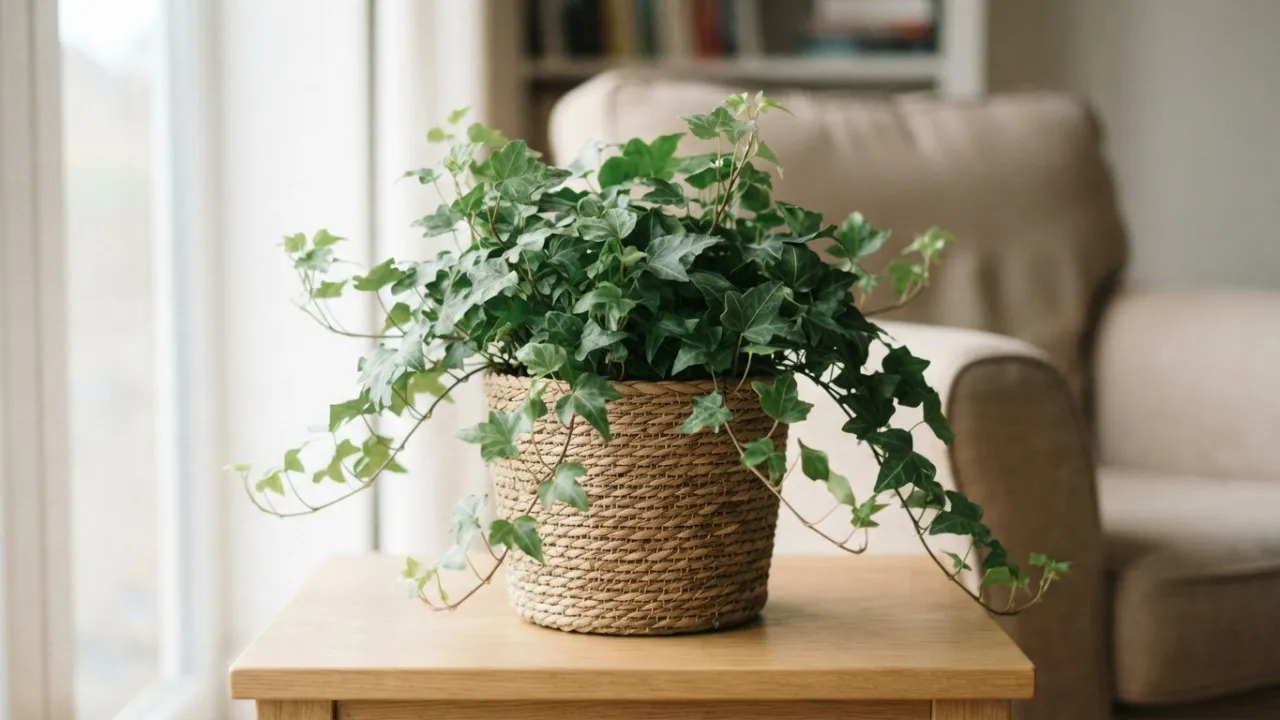 Every 7 days
 English Ivy
Hedera helix

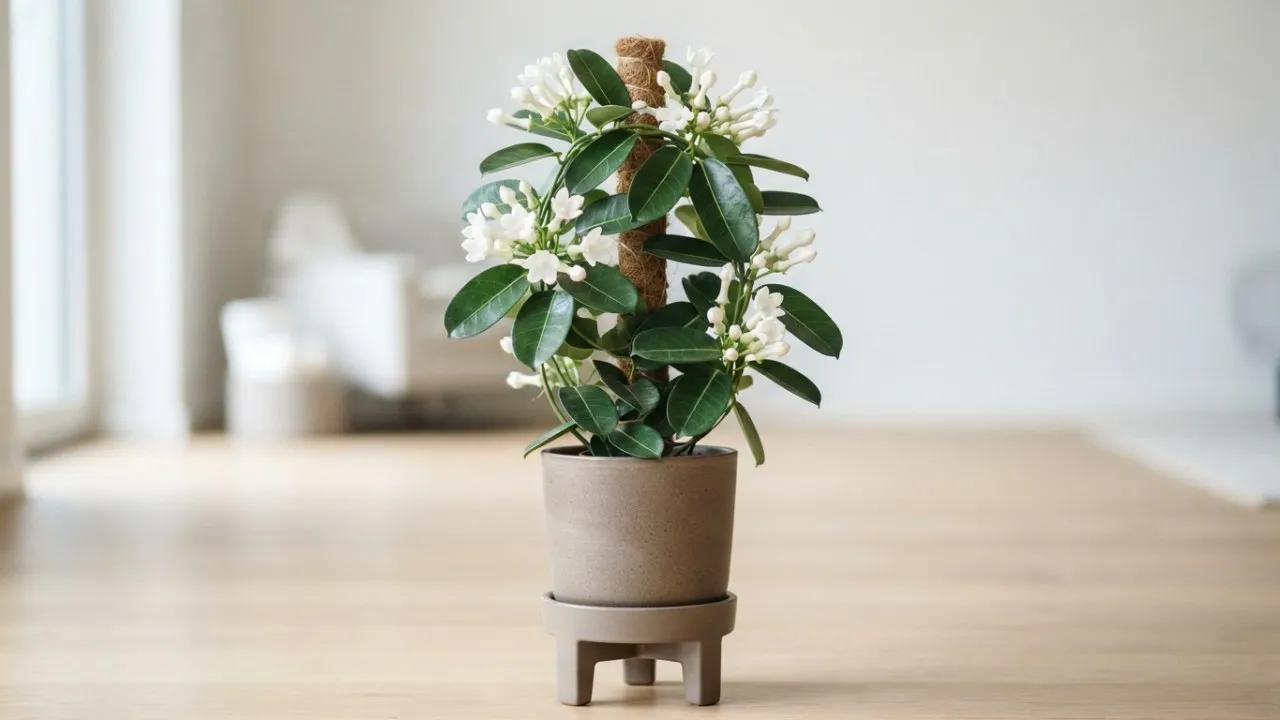 Every 5 days
 Madagascar Jasmine
Stephanotis floribunda
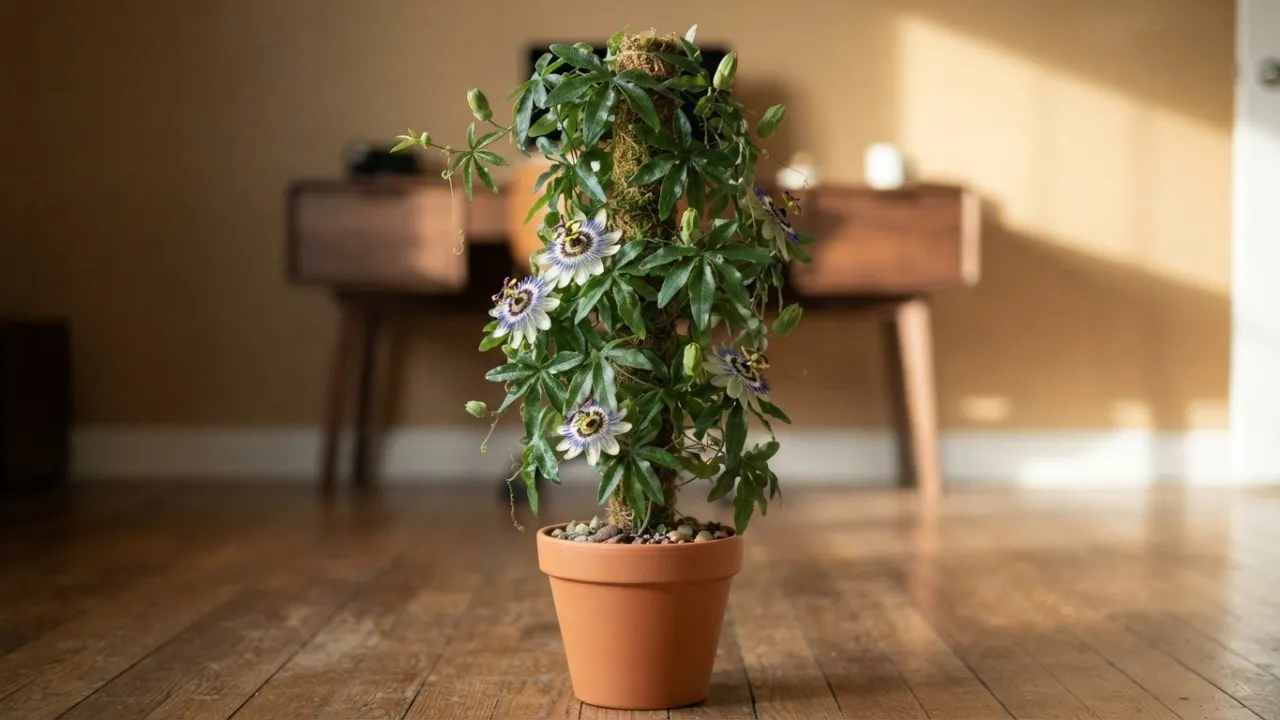 Every 4 days
 Passion Flower
Passiflora caerulea
 Every 5 days
 Pink Jasmine
Jasminum polyanthum