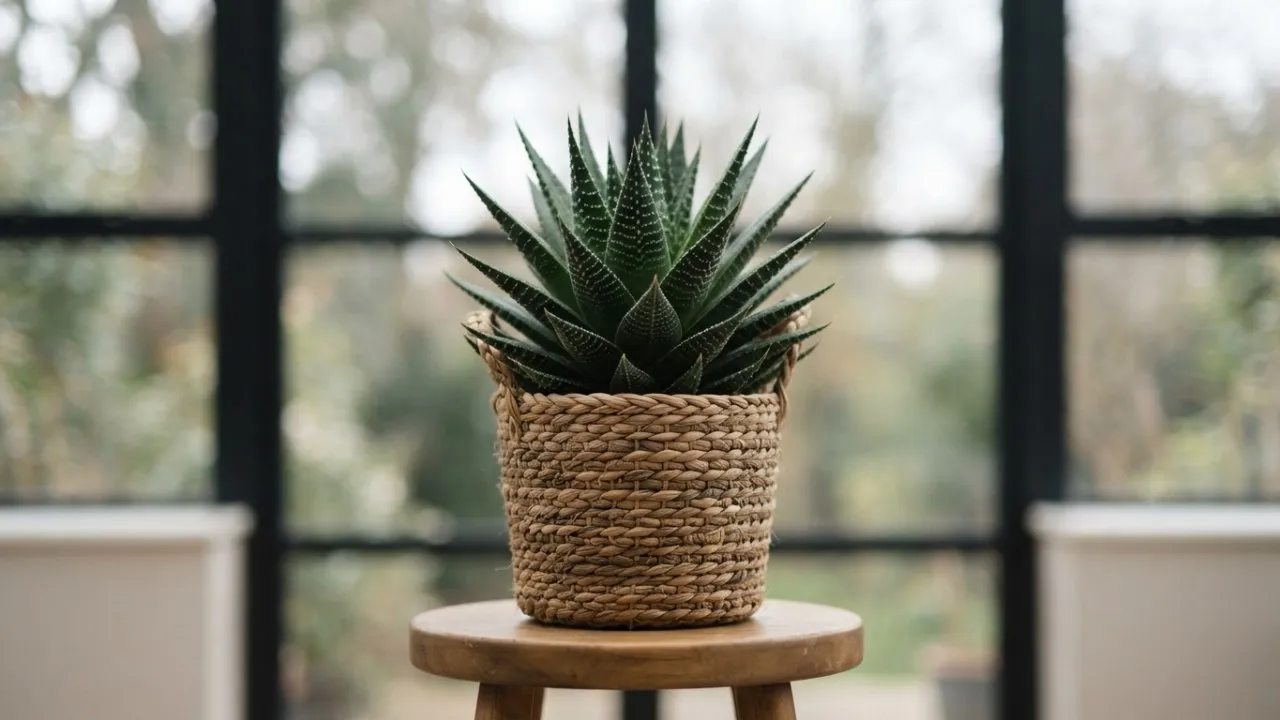
Zebra Haworthia
Haworthia fasciata
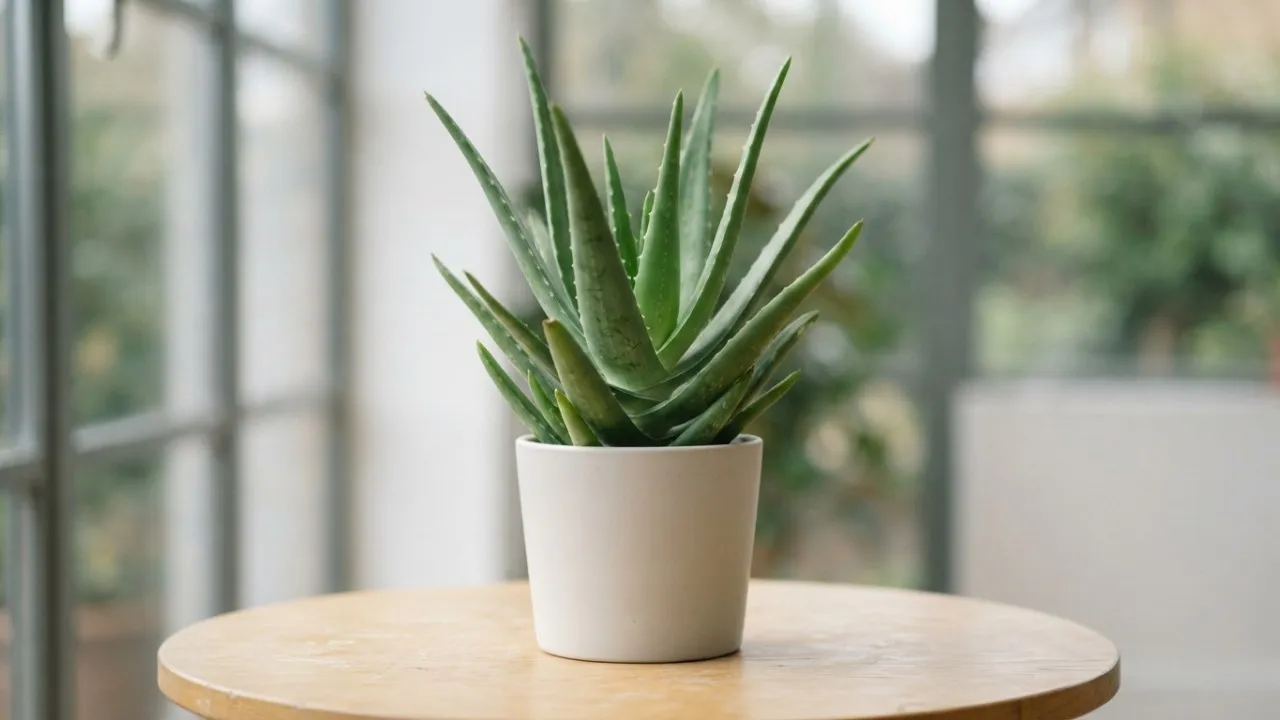
A small South African succulent with dark green triangular leaves adorned with horizontal white bands resembling a zebra pattern.
The essentials at a glance
-
Watering
Every 14 days
-
Light
Bright indirect light
-
Humidity
30–50 %
-
Temperature
10–28 °C


How to care for your Zebra Haworthia
Everything you need to keep your Zebra Haworthia healthy: watering, light, humidity, feeding, repotting and pruning.
Haworthia fasciata is a compact succulent native to the Cape Province of South Africa. Its pointed dark green leaves are adorned with rows of pearly white tubercles on their outer surface, creating a highly decorative zebra pattern. Unlike many succulents, it tolerates partial shade well, making it an ideal houseplant. It grows slowly and stays small, rarely exceeding 15 cm, and readily produces offsets forming attractive clusters.

Watering your Zebra Haworthia
Every 14 days
Preferably water from below by allowing the pot to soak for 15–20 minutes. Allow the substrate to dry out completely between waterings. Reduce significantly in winter.
How to know it needs water
- Substrate completely dry throughout
- Leaves feel slightly less firm to the touch
- Pot feels light

How much light a Zebra Haworthia needs
Bright indirect light
Bright indirect to partial shade. Tolerates low light better than most succulents. Avoid intense direct sun which scorches the leaves.
- Direct sun tolerated
- 0 to 2 h a day
- Orientations that suit it
- North, North-east, East, South-east, West, North-west

Humidity and misting
30–50 %
Low to moderate (30–50%). Tolerates dry indoor air well. Do not mist. Haworthia needs no supplemental moisture and water on the leaves can cause rot.

Feeding and fertiliser
Every 30 days
Fertilize very sparingly once a month from March to September. Do not fertilize from November to February.
- Recommended feed
- Liquid cactus and succulent fertilizer diluted to a quarter of the recommended dose. · 1-2-2

Repotting your Zebra Haworthia
Every 24 months
Use a slightly larger pot with a drainage hole. Very well-draining substrate: cactus mix or potting soil with perlite and pumice. Separate offsets if desired. Wait one week before watering.
- When
- Spring
- Potting mix
- Cactus and succulent mix
- Mix in
- perlite, pumice, coarse sand
The tell-tale signs
- Plant producing many offsets that fill the pot
- Roots emerging from drainage holes
- Growth slowing despite good conditions

Pruning your Zebra Haworthia
Rarely needed. Remove dried or dead leaves at the base. Gently pull dead leaves from the base or cut them with a clean tool. Flower stalks can be cut after blooming.

Through the year
Watering is not set once and for all: it follows the light and the growth. Allow 25 days between waterings in the depth of winter, against 11 in the growing season.
- 21 J
- 21 F
- 14 M
- 13 A
- 11 M
- 11 J
- 11 J
- 13 A
- 14 S
- 17 O
- 21 N
- 25 D
Active growth · Days between waterings

Good to know
- The characteristic white bands of Haworthia fasciata are actually calcareous tubercles called pearls that help the plant reflect intense light in its native South African habitat.
- Haworthia is a CAM plant: it opens its stomata at night to absorb CO₂ while minimizing water loss, making it an excellent bedroom plant.

Frequently asked questions about the Zebra Haworthia
How do you care for a Zebra Haworthia?
Water it every 14 days. Give it bright indirect light. Ideal humidity: 30–50 %. Ideal temperature: 10–28 °C. Preferably water from below by allowing the pot to soak for 15–20 minutes. Allow the substrate to dry out completely between waterings. Reduce significantly in winter.
How often should you water a Zebra Haworthia?
Every 14 days Preferably water from below by allowing the pot to soak for 15–20 minutes. Allow the substrate to dry out completely between waterings. Reduce significantly in winter. How to know it needs water : Substrate completely dry throughout ; Leaves feel slightly less firm to the touch ; Pot feels light.
How much light does a Zebra Haworthia need?
Bright indirect light Bright indirect to partial shade. Tolerates low light better than most succulents. Avoid intense direct sun which scorches the leaves. 0 to 2 h a day
Is the Zebra Haworthia toxic to cats and dogs?
No, the Zebra Haworthia is not listed as toxic to cats and dogs. That is still no reason to let your pets chew on it.
Why are my Zebra Haworthia leaves turning yellow?
Yellowing most often comes from too much water: the mix stays wet and the roots suffocate. Check that the pot drains, empty the saucer, and let the mix dry before watering again. Too little light or a cold draught cause the same symptom.
When should you repot a Zebra Haworthia?
Repot every 24 months, ideally in spring. Use a slightly larger pot with a drainage hole. Very well-draining substrate: cactus mix or potting soil with perlite and pumice. Separate offsets if desired. Wait one week before watering.

At a glance
- Family
- Asphodelaceae
- Category
- Succulent
- Placement
- Indoor
- Mature height
- 15 cm
- Growth
- Slow
- Temperature
- 10–28 °C
- Pot materials
- terracotta, ceramic, plastic
- Growth
- Reaches maturity in 5 years
These figures are for an average plant. In the app they are recalculated for yours, based on your room, its orientation and the season.
And for your plant, in your home?
In the app this plant becomes yours: a watering schedule tuned to your home, health tracking from photos, and reminders at the right moment.