Variety Succulent · Asphodelaceae
Haworthia attenuata 'Variegata'
Haworthia attenuata f. variegata · A variety of Haworthia
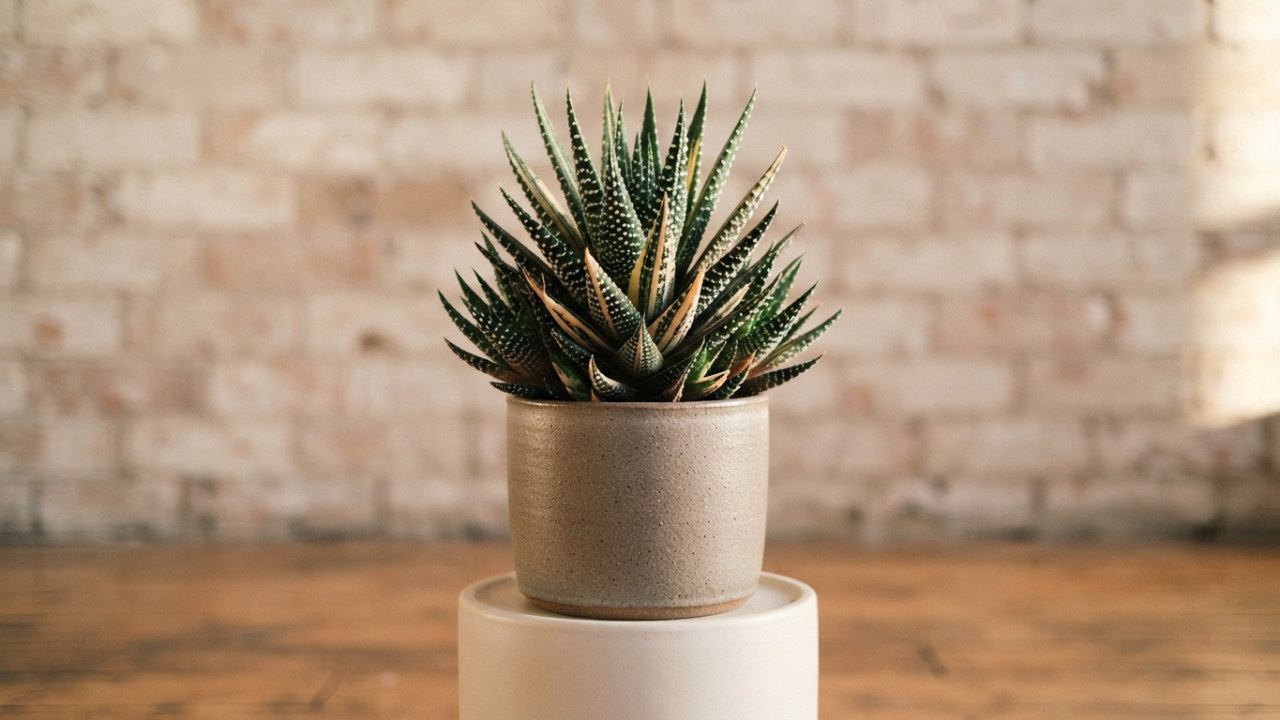
A variegated form of Haworthia attenuata with white-studded dark green leaves streaked in cream, yellow or pink.
- Every 12 daysWatering
- Bright indirect lightLight
- 30–50 %Humidity
- 10–28 °CTemperature


Other varieties 1
How to care for your Haworthia attenuata 'Variegata'
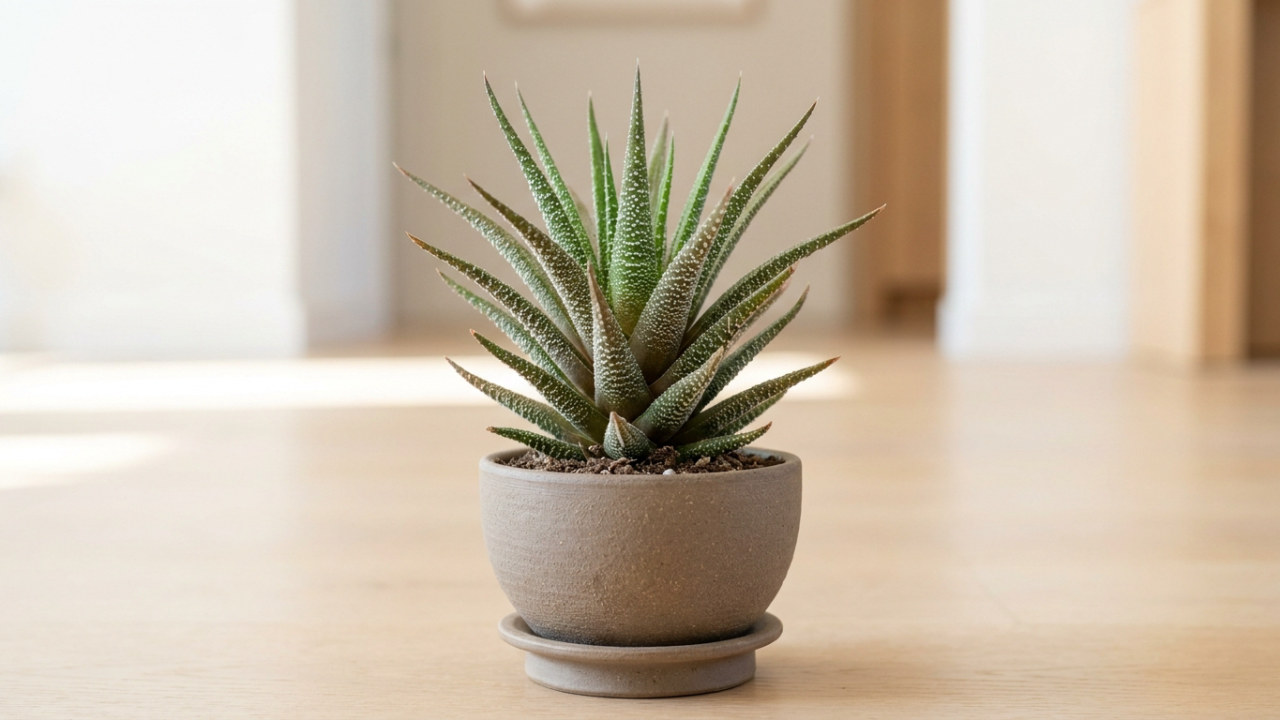
Everything you need to keep your Haworthia attenuata 'Variegata' healthy: watering, light, humidity, feeding, repotting and pruning.
This variegated form of Haworthia attenuata keeps the white-studded, tapering leaves of the species but adds irregular streaks and marbling in cream, yellow or sometimes pink. Its stemless rosettes stay around 15 cm tall and wide and slowly build a clump through offsets, which are also how the pattern is carried on. It is a nursery selection. The pale tissue holds little chlorophyll, so it grows more slowly than the green plant and scorches more easily in strong sun.

How to recognise Haworthia attenuata 'Variegata'
Dark green, tapering leaves with white tubercles on both faces, overlaid with irregular cream, yellow or sometimes pink streaks that run along the leaf. The plain green Haworthia attenuata and its var. radula lack the streaks, and the look-alike Haworthia fasciata, also sold variegated, keeps the inner (upper) face smooth, whereas every Haworthia attenuata form carries white tubercles on both faces.

Watering your Haworthia attenuata 'Variegata'
Every 12 days
Water sparingly: soak the mix, let the excess drain, and wait until it is completely dry before watering again, with only a little from November to February.
How to know it needs water
- A wooden skewer pushed to the bottom of the pot comes out dry
- The leaves feel slightly softer and less plump when pinched

How much light a Haworthia attenuata 'Variegata' needs
Bright indirect light
Bright indirect light, with no more than an hour of soft morning sun; the pale, variegated tissue scorches easily in stronger sun, but it needs a bright spot to keep its colors vivid.
- Direct sun tolerated
- 0 to 1 h a day
- Orientations that suit it
- North, North-east, East, North-west

Humidity and misting
30–50 %
Ordinary room air is enough, at roughly 30 to 50% humidity. Do not mist: water lodged in the rosette can rot it, and the plant needs no added humidity.

Feeding and fertiliser
Every 28 days
Feed about once a month from April to September and not at other times, since this slow plant needs little.
- Recommended feed
- A low-nitrogen liquid fertilizer for cacti and succulents, diluted to half strength. · 1-2-1

Repotting your Haworthia attenuata 'Variegata'
Every 36 months
Move it to a pot only slightly wider, in a gritty cactus mix, and separate rooted offsets to make new plants.
- When
- Spring, between March and May.
- Potting mix
- Cactus and succulent mix
- Mix in
- perlite, pumice, coarse sand
The tell-tale signs
- Offsets fill the pot and press against its rim
- Roots appear at the drainage holes

Pruning your Haworthia attenuata 'Variegata'
Only to clear an outer leaf that has dried up, or the flower stalk once it has faded. Pull the dry leaf away at its base, or cut the faded stalk at its base with clean scissors.

Through the year
Watering is not set once and for all: it follows the light and the growth. Allow 24 days between waterings in the depth of winter, against 10 in the growing season.
- 22 J
- 18 F
- 12 M
- 10 A
- 10 M
- 10 J
- 10 J
- 10 A
- 12 S
- 14 O
- 18 N
- 24 D
Active growth · Days between waterings

Good to know
- The cream and yellow areas hold little or no chlorophyll, which is why variegated plants grow more slowly and burn faster than green ones.
- Botanists have moved Haworthia attenuata from the genus Haworthia to Haworthiopsis, so shops may label this plant Haworthiopsis attenuata 'Variegata'.

Frequently asked questions about the Haworthia attenuata 'Variegata'
How do you care for a Haworthia attenuata 'Variegata'?
Water it every 12 days. Give it bright indirect light. Ideal humidity: 30–50 %. Ideal temperature: 10–28 °C. Water sparingly: soak the mix, let the excess drain, and wait until it is completely dry before watering again, with only a little from November to February.
How often should you water a Haworthia attenuata 'Variegata'?
Every 12 days Water sparingly: soak the mix, let the excess drain, and wait until it is completely dry before watering again, with only a little from November to February. How to know it needs water : A wooden skewer pushed to the bottom of the pot comes out dry ; The leaves feel slightly softer and less plump when pinched.
How much light does a Haworthia attenuata 'Variegata' need?
Bright indirect light Bright indirect light, with no more than an hour of soft morning sun; the pale, variegated tissue scorches easily in stronger sun, but it needs a bright spot to keep its colors vivid. 0 to 1 h a day
Is the Haworthia attenuata 'Variegata' toxic to cats and dogs?
No, the Haworthia attenuata 'Variegata' is not listed as toxic to cats and dogs. That is still no reason to let your pets chew on it.
Why are my Haworthia attenuata 'Variegata' leaves turning yellow?
Yellowing most often comes from too much water: the mix stays wet and the roots suffocate. Check that the pot drains, empty the saucer, and let the mix dry before watering again. Too little light or a cold draught cause the same symptom.
When should you repot a Haworthia attenuata 'Variegata'?
Repot every 36 months, ideally in spring, between march and may.. Move it to a pot only slightly wider, in a gritty cactus mix, and separate rooted offsets to make new plants.

At a glance
- Family
- Asphodelaceae
- Category
- Succulent
- Placement
- Indoor
- Mature height
- 15 cm
- Growth
- Slow
- Temperature
- 10–28 °C
- Pot materials
- terracotta, ceramic
- Growth
- Reaches maturity in 6 years
These figures are for an average plant. In the app they are recalculated for yours, based on your room, its orientation and the season.
And for your plant, in your home?
In the app this plant becomes yours: a watering schedule tuned to your home, health tracking from photos, and reminders at the right moment.