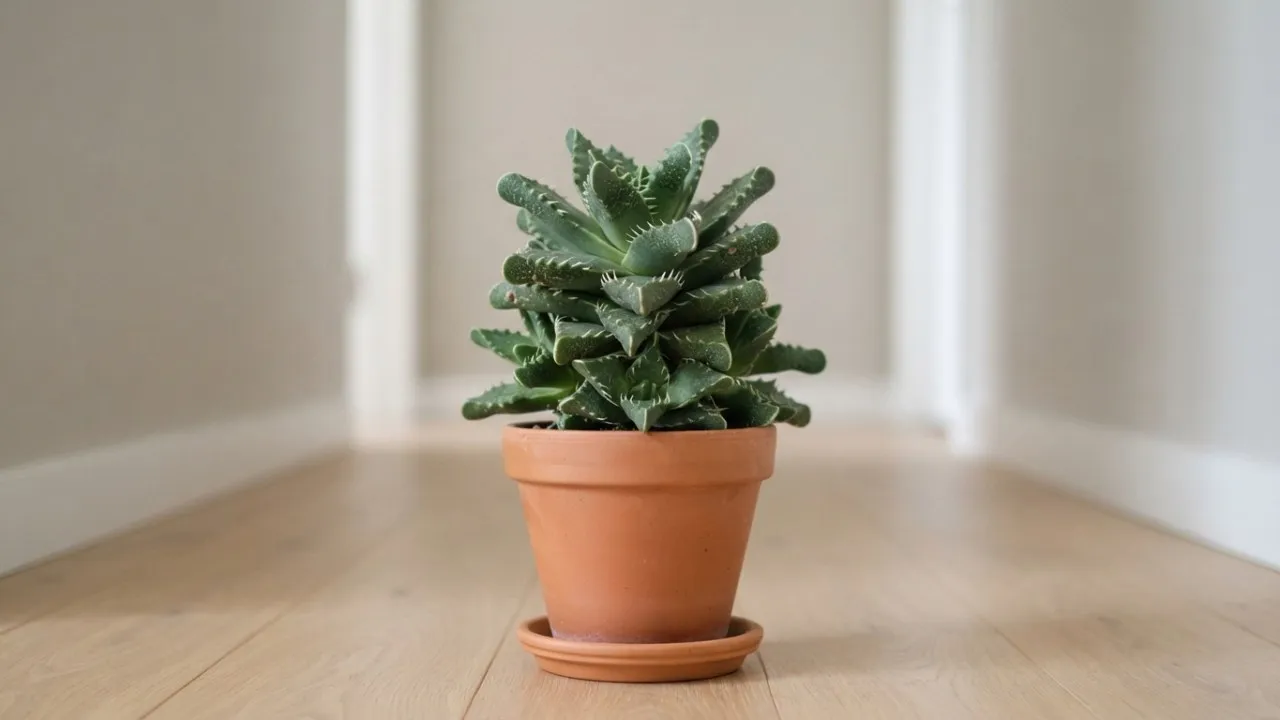
Tiger Jaws
Faucaria tigrina
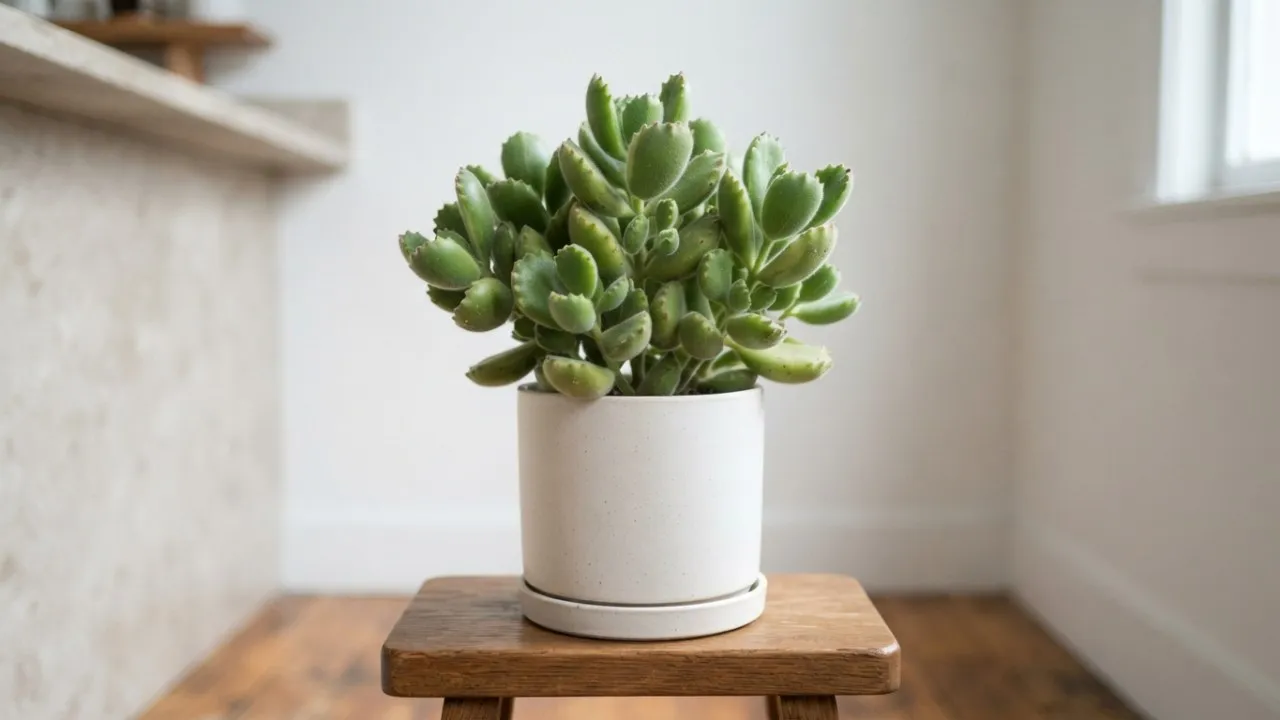
A unique succulent with fleshy, triangular leaves adorned with soft, tooth-like bristles along the margins.
The essentials at a glance
-
Watering
Every 14 days
-
Light
Full sun
-
Humidity
30–50 %
-
Temperature
7–27 °C


How to care for your Tiger Jaws
Everything you need to keep your Tiger Jaws healthy: watering, light, humidity, feeding, repotting and pruning.
Faucaria tigrina, commonly known as Tiger Jaws, is a truly captivating succulent from South Africa. It forms dense clumps of triangular, opposite leaves, each featuring distinctive soft, white 'teeth' along its margins, giving the plant the appearance of a tiger's open jaws. The leaves are typically dark green with reddish-purple spots. In late autumn and winter, it produces large, glossy, bright yellow, daisy-like flowers, adding a burst of color when many other plants are dormant. It's a striking and relatively easy-to-grow plant.

Watering your Tiger Jaws
Every 14 days
Water thoroughly when the soil is completely dry.
How to know it needs water
- Leaves feel softer and less firm
- Gap between leaf pairs becomes narrower

How much light a Tiger Jaws needs
Full sun
Full sun to bright indirect light.
- Direct sun tolerated
- 5 to 10 h a day
- Orientations that suit it
- South, South-east, South-west, East, West

Humidity and misting
30–50 %
Low (30-50%) Misting can lead to rot; keep foliage dry.

Feeding and fertiliser
Every 90 days
Fertilize sparingly during the growing season (fall/winter bloomers, so active in cooler months).
- Recommended feed
- Weak liquid succulent fertilizer. · 2-7-7

Repotting your Tiger Jaws
Every 24 months
Gently remove, prune roots, repot in very gritty, fast-draining mix.
- When
- Spring
- Potting mix
- Cactus and succulent mix
- Mix in
- pumice, coarse sand
The tell-tale signs
- Root-bound
- Plant outgrowing its pot
- Stunted growth

Pruning your Tiger Jaws
Rarely needed; remove dead leaves or spent flowers. Pull off dead leaves; snip spent flower stalks.

Through the year
Watering is not set once and for all: it follows the light and the growth. Allow 25 days between waterings in the depth of winter, against 8 in the growing season.
- 25 J
- 21 F
- 17 M
- 11 A
- 8 M
- 8 J
- 8 J
- 8 A
- 14 S
- 17 O
- 21 N
- 25 D
Active growth · Days between waterings

Good to know
- Its toothed leaves resemble a tiger's jaws ready to snap shut.
- Produces bright yellow, daisy-like flowers in autumn/winter.

Frequently asked questions about the Tiger Jaws
How do you care for a Tiger Jaws?
Water it every 14 days. Give it full sun. Ideal humidity: 30–50 %. Ideal temperature: 7–27 °C. Water thoroughly when the soil is completely dry.
How often should you water a Tiger Jaws?
Every 14 days Water thoroughly when the soil is completely dry. How to know it needs water : Leaves feel softer and less firm ; Gap between leaf pairs becomes narrower.
How much light does a Tiger Jaws need?
Full sun Full sun to bright indirect light. 5 to 10 h a day
Is the Tiger Jaws toxic to cats and dogs?
No, the Tiger Jaws is not listed as toxic to cats and dogs. That is still no reason to let your pets chew on it.
Why are my Tiger Jaws leaves turning yellow?
Yellowing most often comes from too much water: the mix stays wet and the roots suffocate. Check that the pot drains, empty the saucer, and let the mix dry before watering again. Too little light or a cold draught cause the same symptom.
When should you repot a Tiger Jaws?
Repot every 24 months, ideally in spring. Gently remove, prune roots, repot in very gritty, fast-draining mix.

At a glance
- Family
- Aizoaceae
- Category
- Succulent
- Placement
- Indoor and outdoor
- Mature height
- 10 cm
- Growth
- Slow
- Temperature
- 7–27 °C
- Pot materials
- terracotta, ceramic
- Growth
- Reaches maturity in 5 years
These figures are for an average plant. In the app they are recalculated for yours, based on your room, its orientation and the season.
And for your plant, in your home?
In the app this plant becomes yours: a watering schedule tuned to your home, health tracking from photos, and reminders at the right moment.