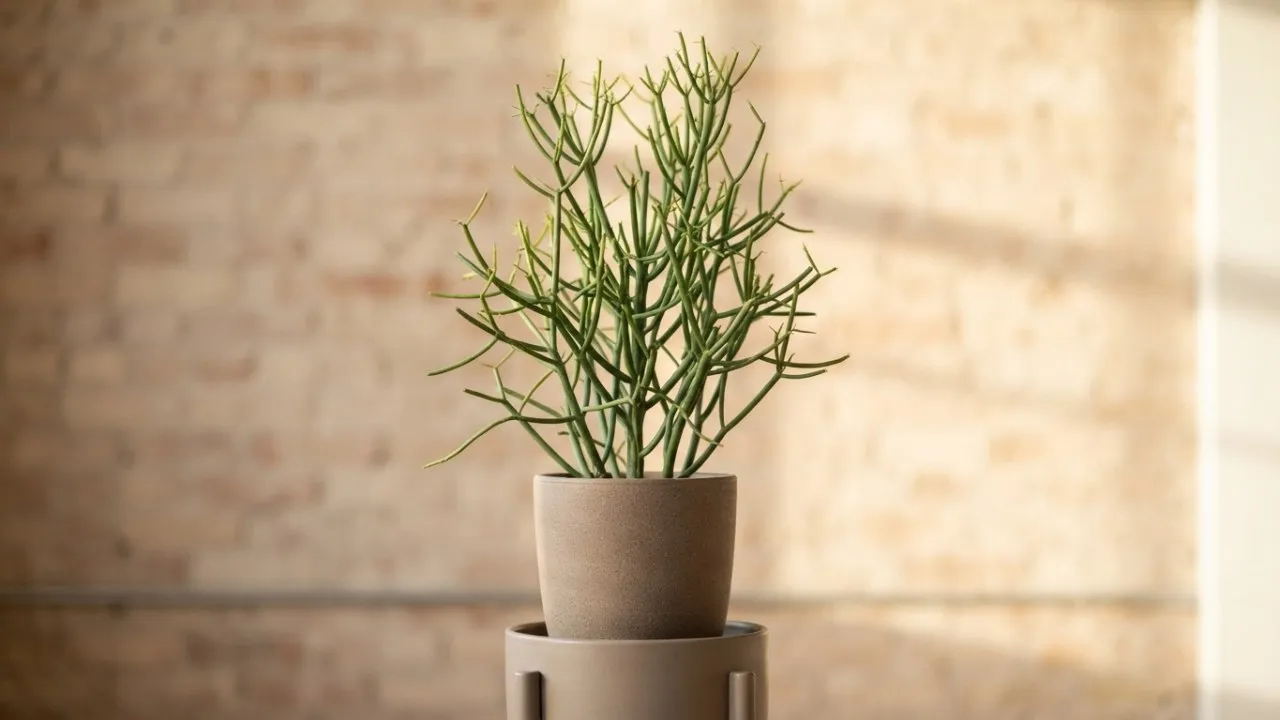
Pencil Cactus
Euphorbia tirucalli
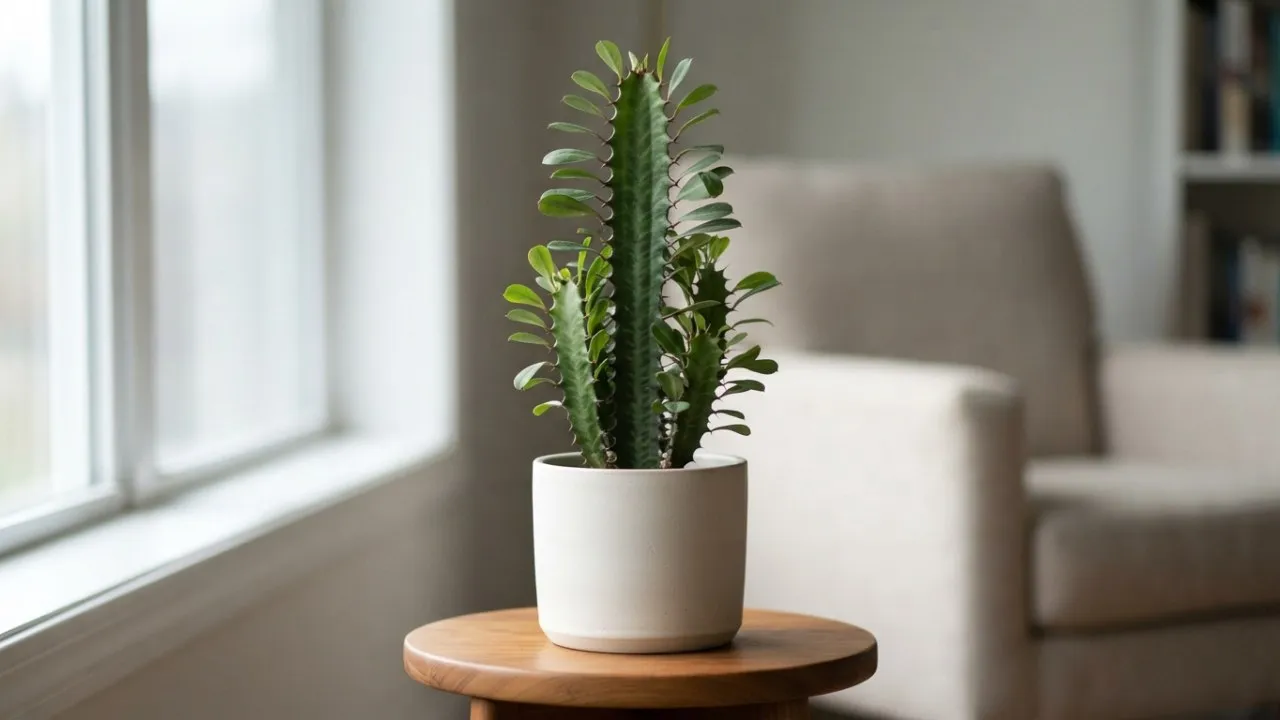
A unique succulent shrub composed of numerous slender, cylindrical, pencil-like stems that are largely leafless.
The essentials at a glance
-
Watering
Every 14 days
-
Light
Full sun
-
Humidity
20–40 %
-
Temperature
21–35 °C


How to care for your Pencil Cactus
Everything you need to keep your Pencil Cactus healthy: watering, light, humidity, feeding, repotting and pruning.
Widely distributed across Africa, particularly dry tropical and subtropical regions, as well as parts of India and Southeast Asia, *Euphorbia tirucalli* is a striking and architectural succulent. It grows as a densely branched shrub or small tree, characterized by its distinctive, succulent, pencil-thick, cylindrical stems that are largely leafless, especially in mature plants. The stems are typically green, but cultivars like 'Fire Sticks' develop vibrant red or orange hues in strong sunlight. Its most notable feature, however, is the milky white latex sap that oozes when stems are broken; this sap is highly caustic and toxic, requiring careful handling. Despite its toxicity, it's a popular landscape plant in warm climates and a sculptural indoor specimen.

Watering your Pencil Cactus
Every 14 days
Water thoroughly when the soil is completely dry. Extremely drought tolerant. Reduce watering significantly in winter.
How to know it needs water
- Soil is completely dry to the touch throughout the pot
- Stems may appear slightly shriveled

How much light a Pencil Cactus needs
Full sun
Full sun. Requires at least 6 hours of direct sunlight daily for best growth and coloration (especially for 'Fire Sticks' varieties).
- Direct sun tolerated
- 6 to 12 h a day
- Orientations that suit it
- South, South-east, South-west, East, West

Humidity and misting
20–40 %
Low; thrives in dry, arid to semi-arid conditions. Misting is not recommended and can promote fungal diseases.

Feeding and fertiliser
Every 60 days
Fertilize sparingly during spring and summer. Over-fertilizing can lead to weak, leggy growth. Not strictly necessary for healthy growth.
- Recommended feed
- Balanced liquid succulent or cactus fertilizer, diluted to half strength. · 5-10-10

Repotting your Pencil Cactus
Every 24 months
Repot into a slightly larger container with fresh, well-draining succulent potting mix. Wear heavy-duty gloves and eye protection when handling to avoid contact with the sap.
- When
- Spring
- Potting mix
- Cactus and succulent mix
- Mix in
- perlite, pumice, coarse sand
The tell-tale signs
- Plant is root-bound
- Growth has slowed significantly
- Pot becomes unstable due to plant size

Pruning your Pencil Cactus
As needed, typically in spring or summer. Prune to shape, control size, or remove damaged branches. Always wear gloves and eye protection to protect from the highly irritating sap. Cuttings can be rooted after allowing the cut end to callus.

Through the year
Watering is not set once and for all: it follows the light and the growth. Allow 25 days between waterings in the depth of winter, against 11 in the growing season.
- 21 J
- 21 F
- 14 M
- 11 A
- 11 M
- 11 J
- 11 J
- 11 A
- 14 S
- 17 O
- 21 N
- 25 D
Active growth · Days between waterings

Toxicity
All parts of the plant contain a caustic, milky white latex sap that is highly irritating and toxic. Contact with skin can cause severe rash, blistering, and dermatitis. If it gets in the eyes, it can cause extreme pain and temporary blindness. Ingestion can lead to severe gastrointestinal distress, mouth and throat irritation, and other systemic effects. Handle with gloves and eye protection.

Good to know
- Despite its common name, it is a succulent Euphorbia, not a true cactus. It produces a milky white latex sap when cut.
- In its native habitats, it can grow into a large, tree-like shrub, reaching heights of several meters.
- It is being researched as a potential source for biofuel.

Frequently asked questions about the Pencil Cactus
How do you care for a Pencil Cactus?
Water it every 14 days. Give it full sun. Ideal humidity: 20–40 %. Ideal temperature: 21–35 °C. Water thoroughly when the soil is completely dry. Extremely drought tolerant. Reduce watering significantly in winter.
How often should you water a Pencil Cactus?
Every 14 days Water thoroughly when the soil is completely dry. Extremely drought tolerant. Reduce watering significantly in winter. How to know it needs water : Soil is completely dry to the touch throughout the pot ; Stems may appear slightly shriveled.
How much light does a Pencil Cactus need?
Full sun Full sun. Requires at least 6 hours of direct sunlight daily for best growth and coloration (especially for 'Fire Sticks' varieties). 6 to 12 h a day
Is the Pencil Cactus toxic to cats and dogs?
Yes. All parts of the plant contain a caustic, milky white latex sap that is highly irritating and toxic. Contact with skin can cause severe rash, blistering, and dermatitis. If it gets in the eyes, it can cause extreme pain and temporary blindness. Ingestion can lead to severe gastrointestinal distress, mouth and throat irritation, and other systemic effects. Handle with gloves and eye protection. Keep it out of reach of your pets and call a vet if any is swallowed.
Why are my Pencil Cactus leaves turning yellow?
Yellowing most often comes from too much water: the mix stays wet and the roots suffocate. Check that the pot drains, empty the saucer, and let the mix dry before watering again. Too little light or a cold draught cause the same symptom.
When should you repot a Pencil Cactus?
Repot every 24 months, ideally in spring. Repot into a slightly larger container with fresh, well-draining succulent potting mix. Wear heavy-duty gloves and eye protection when handling to avoid contact with the sap.

At a glance
- Family
- Euphorbiaceae
- Category
- Succulent
- Placement
- Indoor and outdoor
- Mature height
- 2 m
- Growth
- Moderate
- Temperature
- 21–35 °C
- Pot materials
- terracotta, ceramic
- Growth
- Reaches maturity in 10 years
These figures are for an average plant. In the app they are recalculated for yours, based on your room, its orientation and the season.
And for your plant, in your home?
In the app this plant becomes yours: a watering schedule tuned to your home, health tracking from photos, and reminders at the right moment.