Succulent · Euphorbiaceae
Coral Cactus
Euphorbia lactea
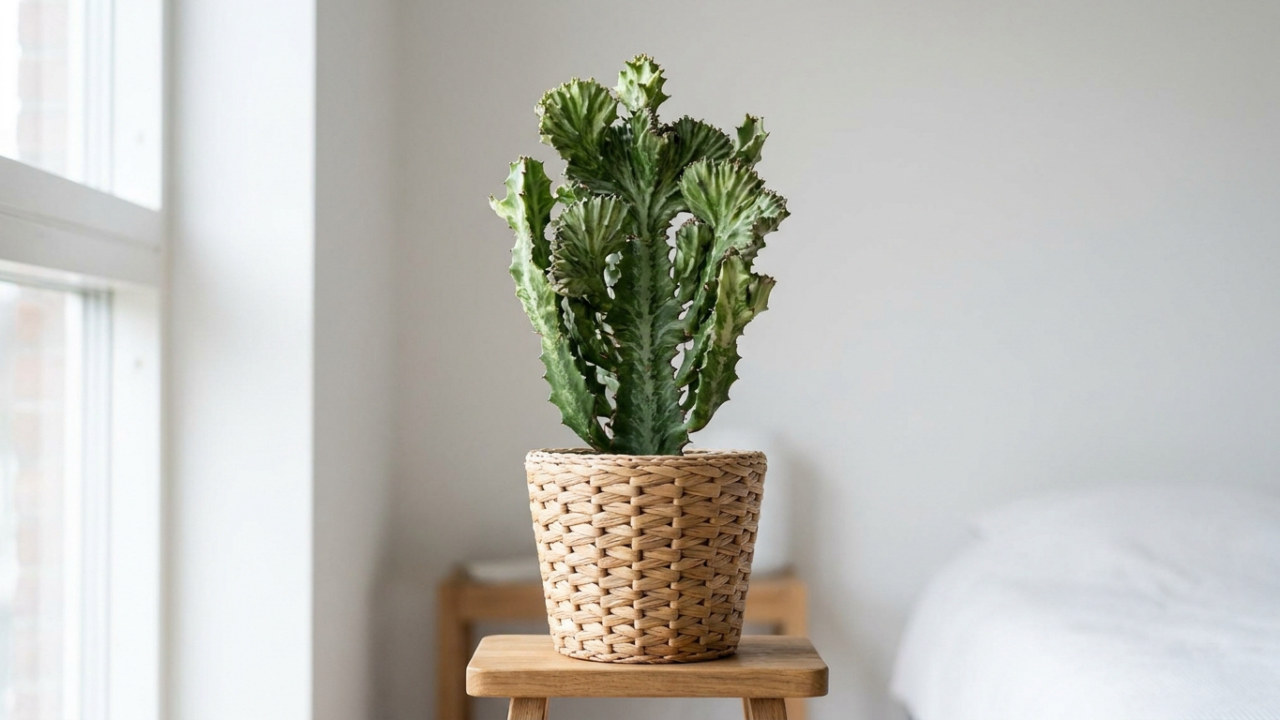
The Coral Cactus is a striking succulent known for its unique, fan-shaped crests that resemble coral formations.
- Every 10 daysWatering
- Bright indirect lightLight
- 30–50 %Humidity
- 18–30 °CTemperature


How to care for your Coral Cactus
Everything you need to keep your Coral Cactus healthy: watering, light, humidity, feeding, repotting and pruning.
Euphorbia lactea 'Cristata', commonly known as Coral Cactus, is a fascinating succulent often seen as a grafted plant. The 'coral' part is a crested form of Euphorbia lactea, characterized by its wavy, undulating stems, typically grafted onto a sturdy rootstock like Euphorbia neriifolia. Native to tropical Asia, this plant thrives in bright light and dry conditions, making it an excellent choice for sunny windowsills. Its architectural form and low-maintenance needs make it a popular choice for succulent enthusiasts, though care must be taken due to its toxic sap.

How to recognise Coral Cactus
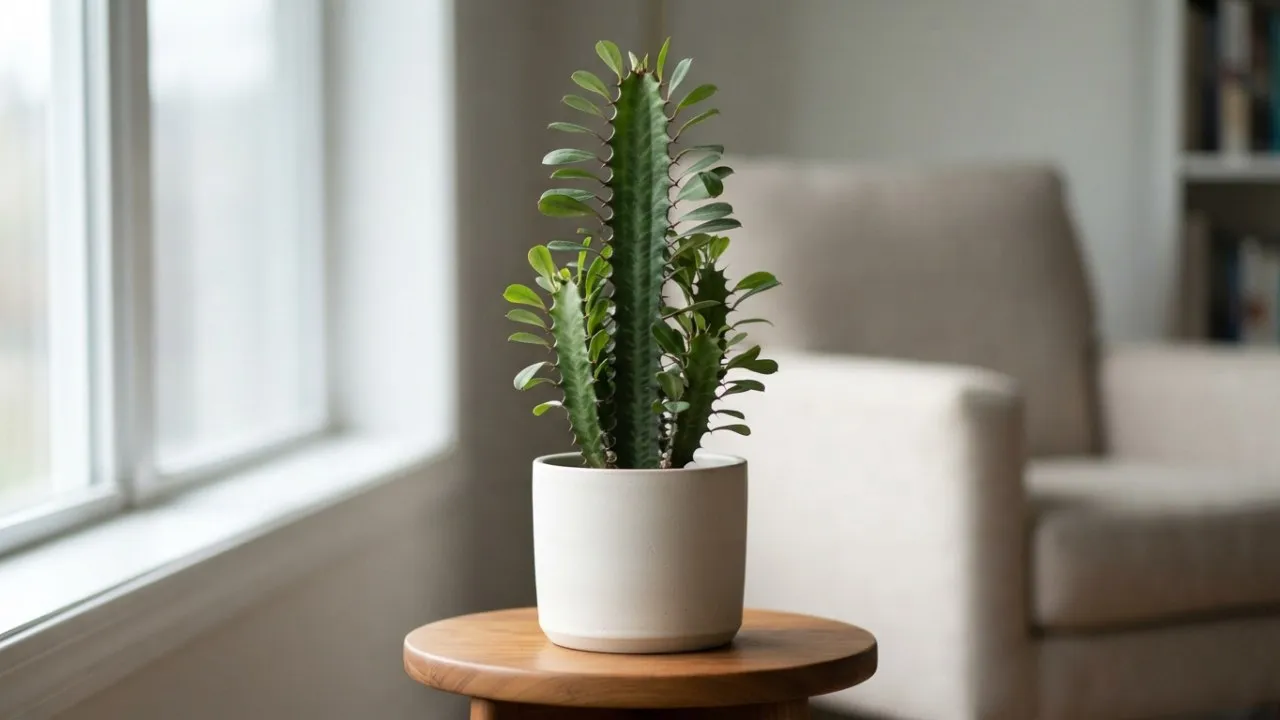
A wavy, ruffled, fan-shaped crest in grey-green, often pale or pinkish at the edge, set on a taller green ribbed column. It is not a true cactus: it has no areoles and gives off milky latex when cut. Look-alikes are crested true cacti, which have clusters of spines on each areole, and Euphorbia lactea 'White Ghost', which is not crested but grows as a pale upright column.

Watering your Coral Cactus
Every 10 days
Water thoroughly until drainage runs clear, then allow the substrate to dry out completely before watering again. Water much less often at rest. Overwatering is a common cause of rot.
How to know it needs water
- Substrate completely dry
- Pot feels light when lifted
- Stems may feel slightly less firm

How much light a Coral Cactus needs
Bright indirect light
Bright indirect light to full sun. Tolerates some direct sun, especially morning sun, but protect from intense afternoon sun in hot climates.
- Direct sun tolerated
- 2 to 6 h a day
- Orientations that suit it
- East, South-east, South, South-west, West

Humidity and misting
30–50 %
Low (30 to 50%) Do not mist; high humidity can lead to fungal issues. Prefers dry air.

Feeding and fertiliser
Every 28 days
Apply about once a month from April to September; withhold entirely in autumn and winter.
- Recommended feed
- Low-nitrogen liquid fertilizer formulated for cacti and succulents · 1-2-2

Repotting your Coral Cactus
Every 24 months
Repot into a container 2 to 3 cm larger using a well-draining cactus and succulent mix. Handle with gloves to avoid contact with sap.
- When
- Spring
- Potting mix
- Cactus and succulent mix
- Mix in
- perlite, pumice, coarse sand
The tell-tale signs
- Roots emerging from drainage holes
- Growth has slowed significantly
- Substrate no longer draining well

Pruning your Coral Cactus
As needed to remove dead, damaged, or unwanted growth, typically in spring or early summer. Use sterile, sharp shears or a knife. Wear gloves and eye protection to avoid contact with the irritating sap. Allow cuts to callus before watering.

Through the year
Watering is not set once and for all: it follows the light and the growth. Allow 20 days between waterings in the depth of winter, against 8 in the growing season.
- 15 J
- 15 F
- 10 M
- 8 A
- 8 M
- 8 J
- 8 J
- 8 A
- 10 S
- 12 O
- 15 N
- 20 D
Active growth · Days between waterings

Toxicity
All parts of the plant contain a milky white sap (latex) that is toxic if ingested and can cause severe skin irritation, eye damage, or allergic reactions upon contact. Wear gloves and eye protection when handling, and keep away from children and pets.

Good to know
- The 'Coral Cactus' is actually two plants grafted together: a crested form of Euphorbia lactea (the 'coral' top) onto a Euphorbia neriifolia or similar rootstock.
- The crested form, 'Cristata', is a mutation where the stem grows in a flattened, wavy, fan-like shape.
- Like many Euphorbias, it produces a milky white latex when cut, which is a defense mechanism against herbivores.

Frequently asked questions about the Coral Cactus
How do you care for a Coral Cactus?
Water it every 10 days. Give it bright indirect light. Ideal humidity: 30–50 %. Ideal temperature: 18–30 °C. Water thoroughly until drainage runs clear, then allow the substrate to dry out completely before watering again. Water much less often at rest. Overwatering is a common cause of rot.
How often should you water a Coral Cactus?
Every 10 days Water thoroughly until drainage runs clear, then allow the substrate to dry out completely before watering again. Water much less often at rest. Overwatering is a common cause of rot. How to know it needs water : Substrate completely dry ; Pot feels light when lifted ; Stems may feel slightly less firm.
How much light does a Coral Cactus need?
Bright indirect light Bright indirect light to full sun. Tolerates some direct sun, especially morning sun, but protect from intense afternoon sun in hot climates. 2 to 6 h a day
Is the Coral Cactus toxic to cats and dogs?
Yes. All parts of the plant contain a milky white sap (latex) that is toxic if ingested and can cause severe skin irritation, eye damage, or allergic reactions upon contact. Wear gloves and eye protection when handling, and keep away from children and pets. Keep it out of reach of your pets and call a vet if any is swallowed.
Why are my Coral Cactus leaves turning yellow?
Yellowing most often comes from too much water: the mix stays wet and the roots suffocate. Check that the pot drains, empty the saucer, and let the mix dry before watering again. Too little light or a cold draught cause the same symptom.
When should you repot a Coral Cactus?
Repot every 24 months, ideally in spring. Repot into a container 2 to 3 cm larger using a well-draining cactus and succulent mix. Handle with gloves to avoid contact with sap.

At a glance
- Family
- Euphorbiaceae
- Category
- Succulent
- Placement
- Indoor
- Mature height
- 60 cm
- Growth
- Moderate
- Temperature
- 18–30 °C
- Pot materials
- terracotta, ceramic
- Growth
- Reaches maturity in 5 years
These figures are for an average plant. In the app they are recalculated for yours, based on your room, its orientation and the season.
And for your plant, in your home?
In the app this plant becomes yours: a watering schedule tuned to your home, health tracking from photos, and reminders at the right moment.