Succulent · Crassulaceae
Blue Echeveria
Echeveria secunda
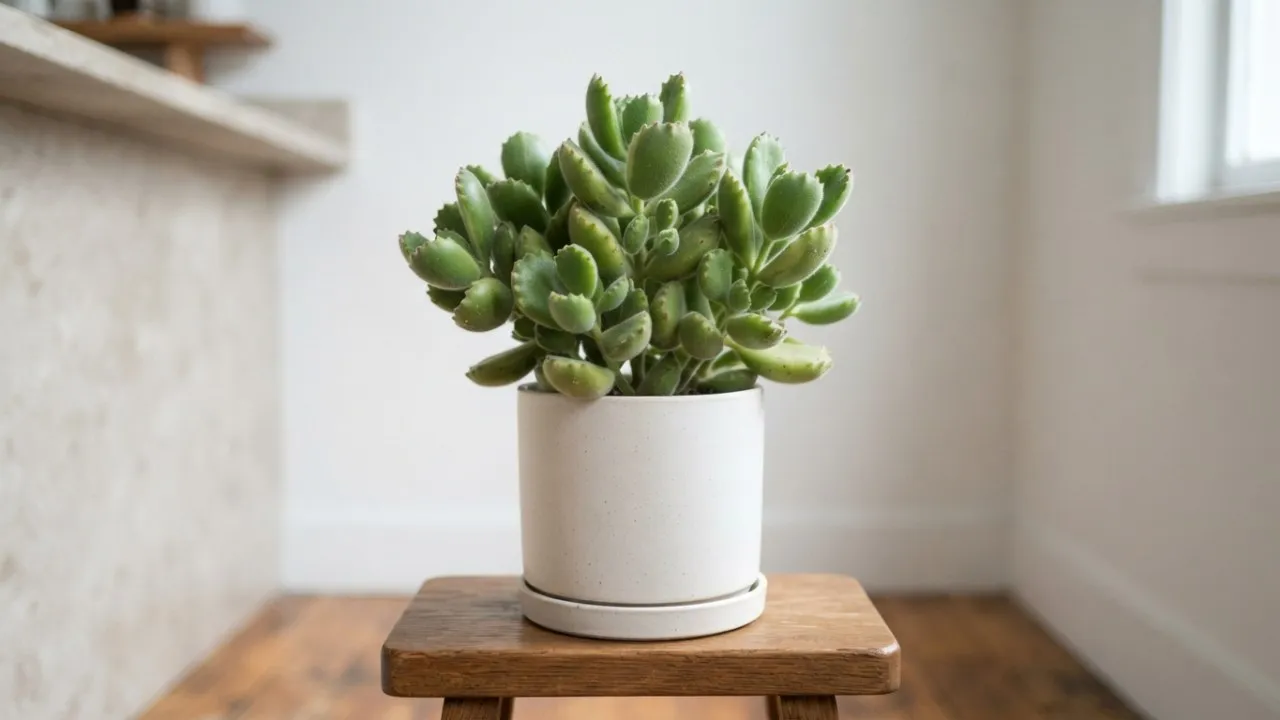
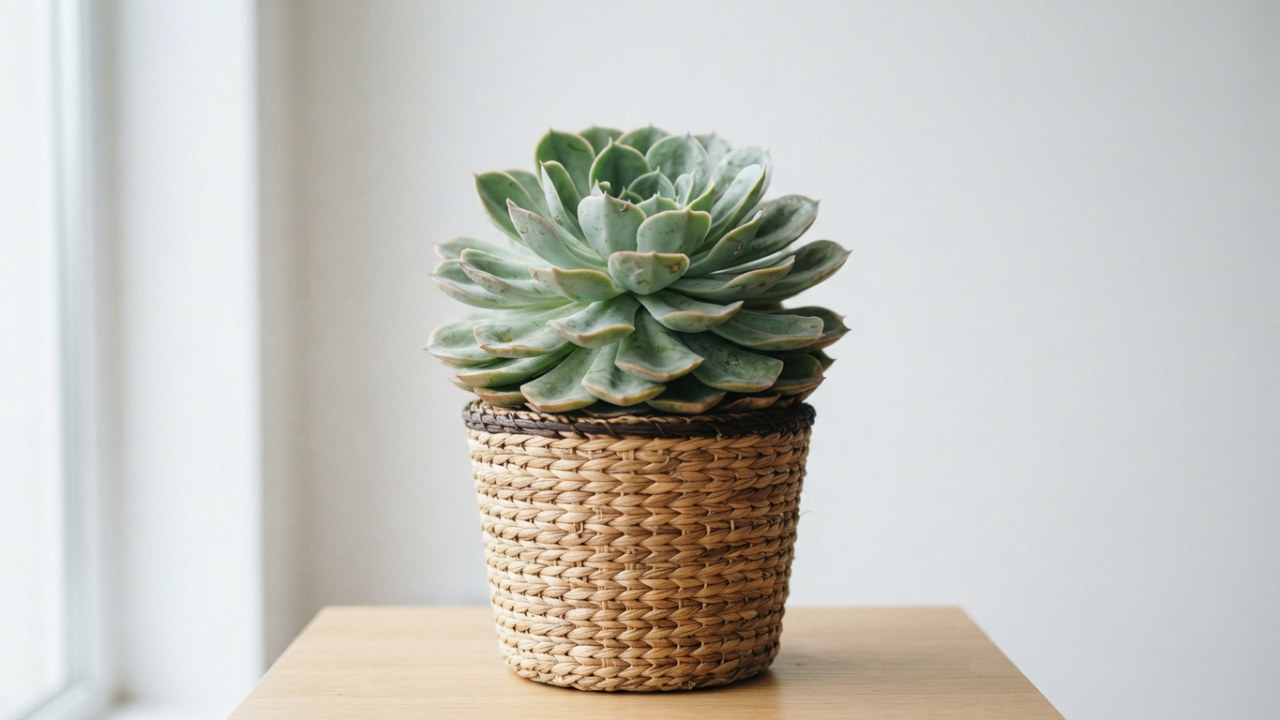
A tight rosette of blue-green, spoon-shaped leaves with pink tips that offsets freely into a low, dense mound.
- Every 12 daysWatering
- Full sunLight
- 20–40 %Humidity
- 10–30 °CTemperature


How to care for your Blue Echeveria
Everything you need to keep your Blue Echeveria healthy: watering, light, humidity, feeding, repotting and pruning.
Echeveria secunda grows wild in the semi-desert uplands of central and southern Mexico, often on lava flows at high elevation. Its fleshy, spoon-shaped leaves, a pale waxy blue-green, form a tight rosette up to 15 cm across, with tips and edges that turn pink in cool, bright weather. The many offsets build a low mound about 15 cm high, which is why it is also called hen and chicks. In late spring and summer, arching stalks carry orange-red bells tipped with yellow.

How to recognise Blue Echeveria
A tight rosette, up to about 15 cm across, of fleshy blue-green leaves whose tips and edges turn pink in cool weather, multiplying into low clumps. Echeveria elegans, its closest look-alike, is paler and bluish white, with translucent edges and hardly any pink at the tips; Echeveria colorata forms a much larger solitary rosette of longer leaves, Echeveria lilacina is solitary and silvery lilac, and Echeveria derenbergii has smaller, rounder rosettes with red margins and tips.

Watering your Blue Echeveria
Every 12 days
Water the soil rather than the rosettes, and only when the mix has dried through: about every 12 days from March to October and about every four weeks in winter, when growth slows.
How to know it needs water
- The pot has become noticeably lighter and the mix is dry to the bottom
- The lower leaves of several rosettes look a little wrinkled

How much light a Blue Echeveria needs
Full sun
Give it a sunny spot, with four to eight hours of direct sun a day, which keeps the rosettes tight and deepens the pink tips; a very bright window is the next best choice.
- Direct sun tolerated
- 4 to 8 h a day
- Orientations that suit it
- South, South-east, South-west, East, West, North-east, North-west

Humidity and misting
20–40 %
Aim for dry air, 20 to 40% humidity, since dense, tightly packed rosettes stay damp for a long time when the air is humid. Never mist: water sitting between the tightly packed leaves cannot dry quickly and leads to rot.

Feeding and fertiliser
Every 28 days
Roughly one feeding a month between April and September is plenty, and none from October to March.
- Recommended feed
- A low-nitrogen cactus and succulent fertilizer diluted to half strength, because too much feeding makes the clump leggy and soft. · 2-7-7

Repotting your Blue Echeveria
Every 24 months
Choose a wide, shallow terracotta pot, since the clump spreads sideways, fill it with gritty cactus mix, divide crowded offsets if you like, and hold off watering for a few days.
- When
- Spring, from March to May, just as growth resumes.
- Potting mix
- Cactus and succulent mix
- Mix in
- perlite, pumice, coarse sand
The tell-tale signs
- Offsets crowd the pot and push the rosettes over its rim
- Roots appear at the drainage holes, or water takes a long time to soak into the compacted mix

Pruning your Blue Echeveria
Little is needed: tidy withered leaves around the rosettes now and then, and cut each flower stalk when its bells are over. Strip withered leaves from the base of each rosette, cut spent flower stalks flush with the clump, and pot up an offset that has its own roots to make a new plant.

Through the year
Watering is not set once and for all: it follows the light and the growth. Allow 22 days between waterings in the depth of winter, against 10 in the growing season.
- 22 J
- 18 F
- 12 M
- 11 A
- 10 M
- 10 J
- 10 J
- 11 A
- 12 S
- 14 O
- 18 N
- 22 D
Active growth · Days between waterings

Good to know
- Echeveria glauca is an older name for the same species, and plants are still often sold under it.
- The name secunda means one-sided, and its flowers do hang along one side of each arching stalk.

Frequently asked questions about the Blue Echeveria
How do you care for a Blue Echeveria?
Water it every 12 days. Give it full sun. Ideal humidity: 20–40 %. Ideal temperature: 10–30 °C. Water the soil rather than the rosettes, and only when the mix has dried through: about every 12 days from March to October and about every four weeks in winter, when growth slows.
How often should you water a Blue Echeveria?
Every 12 days Water the soil rather than the rosettes, and only when the mix has dried through: about every 12 days from March to October and about every four weeks in winter, when growth slows. How to know it needs water : The pot has become noticeably lighter and the mix is dry to the bottom ; The lower leaves of several rosettes look a little wrinkled.
How much light does a Blue Echeveria need?
Full sun Give it a sunny spot, with four to eight hours of direct sun a day, which keeps the rosettes tight and deepens the pink tips; a very bright window is the next best choice. 4 to 8 h a day
Is the Blue Echeveria toxic to cats and dogs?
No, the Blue Echeveria is not listed as toxic to cats and dogs. That is still no reason to let your pets chew on it.
Why are my Blue Echeveria leaves turning yellow?
Yellowing most often comes from too much water: the mix stays wet and the roots suffocate. Check that the pot drains, empty the saucer, and let the mix dry before watering again. Too little light or a cold draught cause the same symptom.
When should you repot a Blue Echeveria?
Repot every 24 months, ideally in spring, from march to may, just as growth resumes.. Choose a wide, shallow terracotta pot, since the clump spreads sideways, fill it with gritty cactus mix, divide crowded offsets if you like, and hold off watering for a few days.

At a glance
- Family
- Crassulaceae
- Category
- Succulent
- Placement
- Indoor and outdoor
- Mature height
- 15 cm
- Growth
- Slow
- Temperature
- 10–30 °C
- Pot materials
- terracotta, ceramic
- Growth
- Reaches maturity in 3 years
These figures are for an average plant. In the app they are recalculated for yours, based on your room, its orientation and the season.
And for your plant, in your home?
In the app this plant becomes yours: a watering schedule tuned to your home, health tracking from photos, and reminders at the right moment.