Variety Succulent · Crassulaceae
Echeveria 'Topsy Turvy'
Echeveria runyonii 'Topsy Turvy' · A variety of Echeveria runyonii
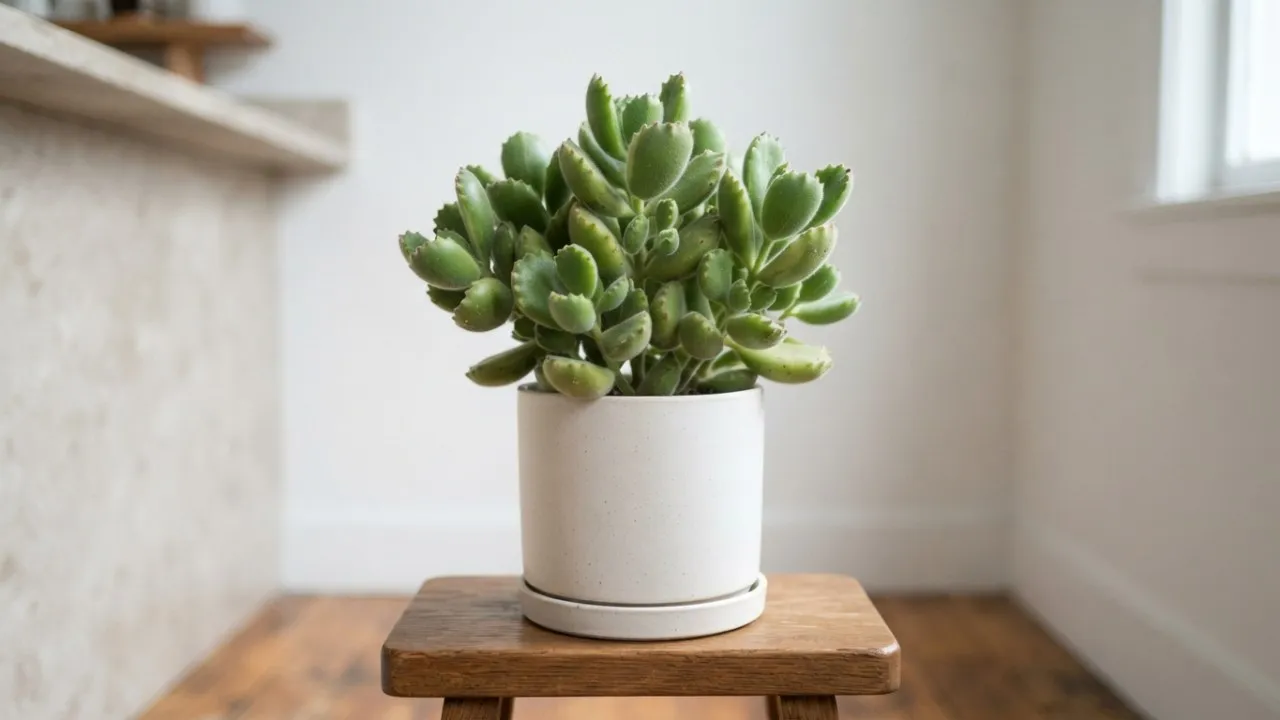
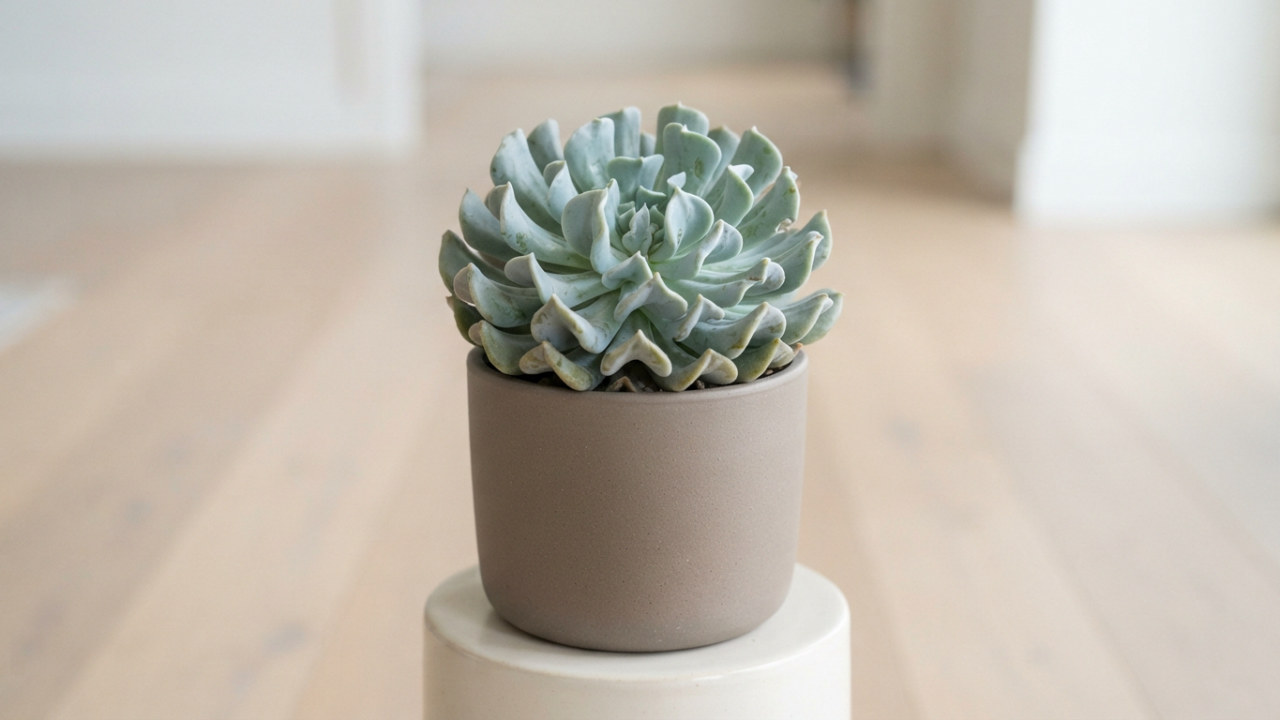
A pale blue-green, powdery rosette of spoon-like leaves that fold lengthwise and curl, as if turned inside out.
- Every 12 daysWatering
- Full sunLight
- 20–40 %Humidity
- 10–30 °CTemperature


How to care for your Echeveria 'Topsy Turvy'
Everything you need to keep your Echeveria 'Topsy Turvy' healthy: watering, light, humidity, feeding, repotting and pruning.
'Topsy Turvy' is a stable mutation of Echeveria runyonii that arose in cultivation in California. Its long, pale blue-green leaves wear a fine powdery coat, sometimes with pink tips, and they fold along their length and curl, giving the rosette a wavy, spiky look, as if turned inside out. It grows quickly, offsets freely and builds a short stem with age. Tall, arching stalks of orange and yellow flowers appear in late summer or fall.

How to recognise Echeveria 'Topsy Turvy'
A rosette of long, pale blue-green leaves under a powdery bloom, folded along their length and curling so that the plant looks turned inside out. The plain Echeveria runyonii has smooth, regular, spoon-shaped leaves, while Echeveria shaviana and 'Pink Frills' have ruffled edges instead of folded, curling blades.

Watering your Echeveria 'Topsy Turvy'
Every 12 days
Pour at the edge of the pot so the powdery leaves stay dry, and wait until the mix is dry right through each time: about every 12 days from March to October and about every four weeks in winter.
How to know it needs water
- The mix is dry throughout and the pot feels light when you lift it
- The leaves feel a touch less plump and the lowest ones begin to wrinkle slightly

How much light a Echeveria 'Topsy Turvy' needs
Full sun
Place it in your sunniest window, with four to eight hours of direct sun a day, to keep the rosette compact and powdery blue; in shade it stretches and pales.
- Direct sun tolerated
- 4 to 8 h a day
- Orientations that suit it
- South, South-east, South-west, East, West, North-east, North-west

Humidity and misting
20–40 %
Dry air, around 20 to 40%, suits it best; in damp, still air the powdery coat spots and rot can start in the center. Never mist: moisture marks the powdery coat and collects among the curled leaves and at the heart of the rosette, where rot starts.

Feeding and fertiliser
Every 28 days
One feed about every four weeks from April to September is enough; leave it unfed from October to March.
- Recommended feed
- A diluted liquid fertilizer for cacti and succulents, low in nitrogen, at half the dose on the label. · 2-7-7

Repotting your Echeveria 'Topsy Turvy'
Every 24 months
Handle it by the base to spare the powdery coat, set it in a pot just wider than the rosette with gritty cactus mix, and wait a few days before the first watering.
- When
- Spring, from March to May, as the plant starts growing again.
- Potting mix
- Cactus and succulent mix
- Mix in
- perlite, pumice, coarse sand
The tell-tale signs
- Offsets crowd the base and push against the rim of the pot
- The stem has grown tall and the rosette sits well above the mix

Pruning your Echeveria 'Topsy Turvy'
Rarely: take off lower leaves once they have dried, and cut each flower stalk when its blooms have faded. Pull dry leaves away by hand and cut the faded stalk at its base; offsets can be cut or twisted off with a little root and potted separately.

Through the year
Watering is not set once and for all: it follows the light and the growth. Allow 22 days between waterings in the depth of winter, against 10 in the growing season.
- 22 J
- 18 F
- 12 M
- 11 A
- 10 M
- 10 J
- 10 J
- 11 A
- 12 S
- 14 O
- 18 N
- 22 D
Active growth · Days between waterings

Good to know
- Its odd leaves come from a stable mutation of Echeveria runyonii, found in cultivation in California; the plain species has smooth, regular leaves.
- It flowers in late summer or fall, on tall arching stalks of orange and yellow blooms.

Frequently asked questions about the Echeveria 'Topsy Turvy'
How do you care for a Echeveria 'Topsy Turvy'?
Water it every 12 days. Give it full sun. Ideal humidity: 20–40 %. Ideal temperature: 10–30 °C. Pour at the edge of the pot so the powdery leaves stay dry, and wait until the mix is dry right through each time: about every 12 days from March to October and about every four weeks in winter.
How often should you water a Echeveria 'Topsy Turvy'?
Every 12 days Pour at the edge of the pot so the powdery leaves stay dry, and wait until the mix is dry right through each time: about every 12 days from March to October and about every four weeks in winter. How to know it needs water : The mix is dry throughout and the pot feels light when you lift it ; The leaves feel a touch less plump and the lowest ones begin to wrinkle slightly.
How much light does a Echeveria 'Topsy Turvy' need?
Full sun Place it in your sunniest window, with four to eight hours of direct sun a day, to keep the rosette compact and powdery blue; in shade it stretches and pales. 4 to 8 h a day
Is the Echeveria 'Topsy Turvy' toxic to cats and dogs?
No, the Echeveria 'Topsy Turvy' is not listed as toxic to cats and dogs. That is still no reason to let your pets chew on it.
Why are my Echeveria 'Topsy Turvy' leaves turning yellow?
Yellowing most often comes from too much water: the mix stays wet and the roots suffocate. Check that the pot drains, empty the saucer, and let the mix dry before watering again. Too little light or a cold draught cause the same symptom.
When should you repot a Echeveria 'Topsy Turvy'?
Repot every 24 months, ideally in spring, from march to may, as the plant starts growing again.. Handle it by the base to spare the powdery coat, set it in a pot just wider than the rosette with gritty cactus mix, and wait a few days before the first watering.

At a glance
- Family
- Crassulaceae
- Category
- Succulent
- Placement
- Indoor and outdoor
- Mature height
- 15 cm
- Growth
- Fast
- Temperature
- 10–30 °C
- Pot materials
- terracotta, ceramic
- Growth
- Reaches maturity in 3 years
These figures are for an average plant. In the app they are recalculated for yours, based on your room, its orientation and the season.
And for your plant, in your home?
In the app this plant becomes yours: a watering schedule tuned to your home, health tracking from photos, and reminders at the right moment.