Succulent · Asparagaceae
Ceylon Snake Plant
Dracaena zeylanica
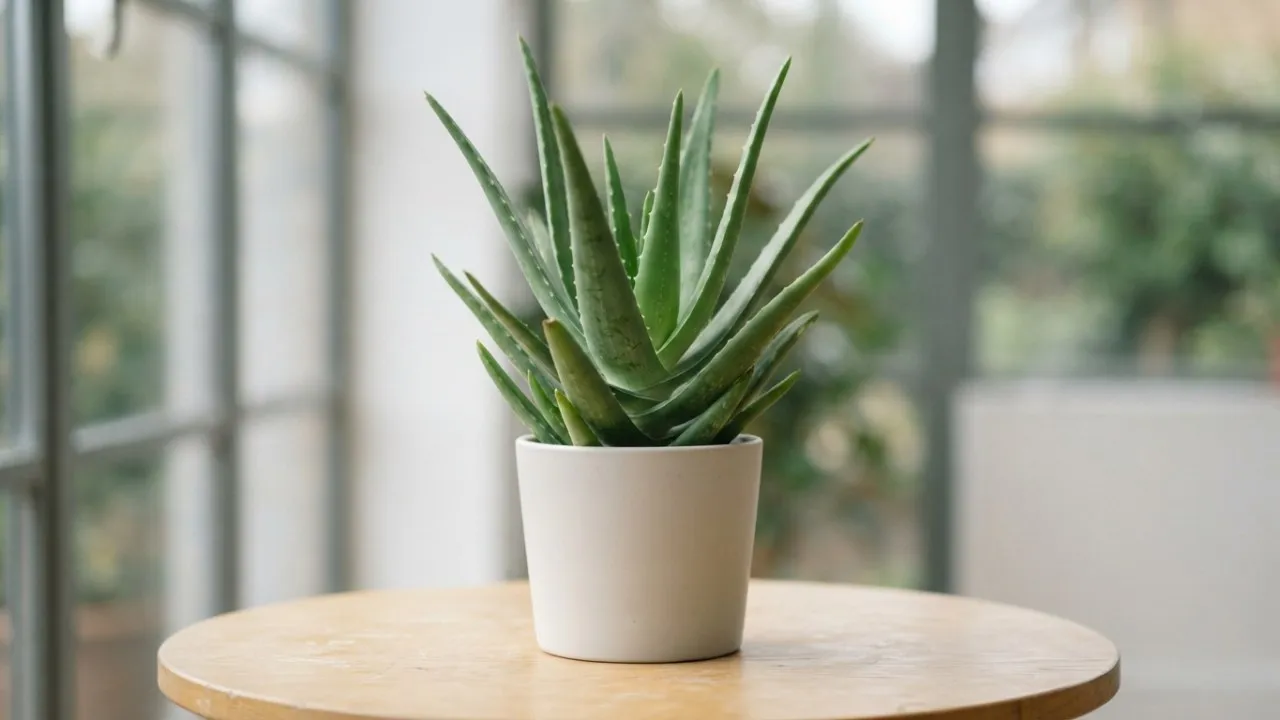
The Ceylon Snake Plant is a resilient and striking succulent known for its upright, sword-shaped leaves.
- Every 18 daysWatering
- Bright indirect lightLight
- 30–50 %Humidity
- 18–35 °CTemperature


How to care for your Ceylon Snake Plant
Everything you need to keep your Ceylon Snake Plant healthy: watering, light, humidity, feeding, repotting and pruning.
Dracaena zeylanica, often called Ceylon Snake Plant, is a popular houseplant native to Sri Lanka and southern India. It is highly valued for its ease of care and ability to thrive in a range of indoor conditions, from low to bright indirect light. Its stiff, erect leaves, typically dark green with subtle banding, make it an excellent choice for adding vertical interest to any space. As a succulent, it stores water in its leaves and rhizomes, making it very drought-tolerant.

How to recognise Ceylon Snake Plant
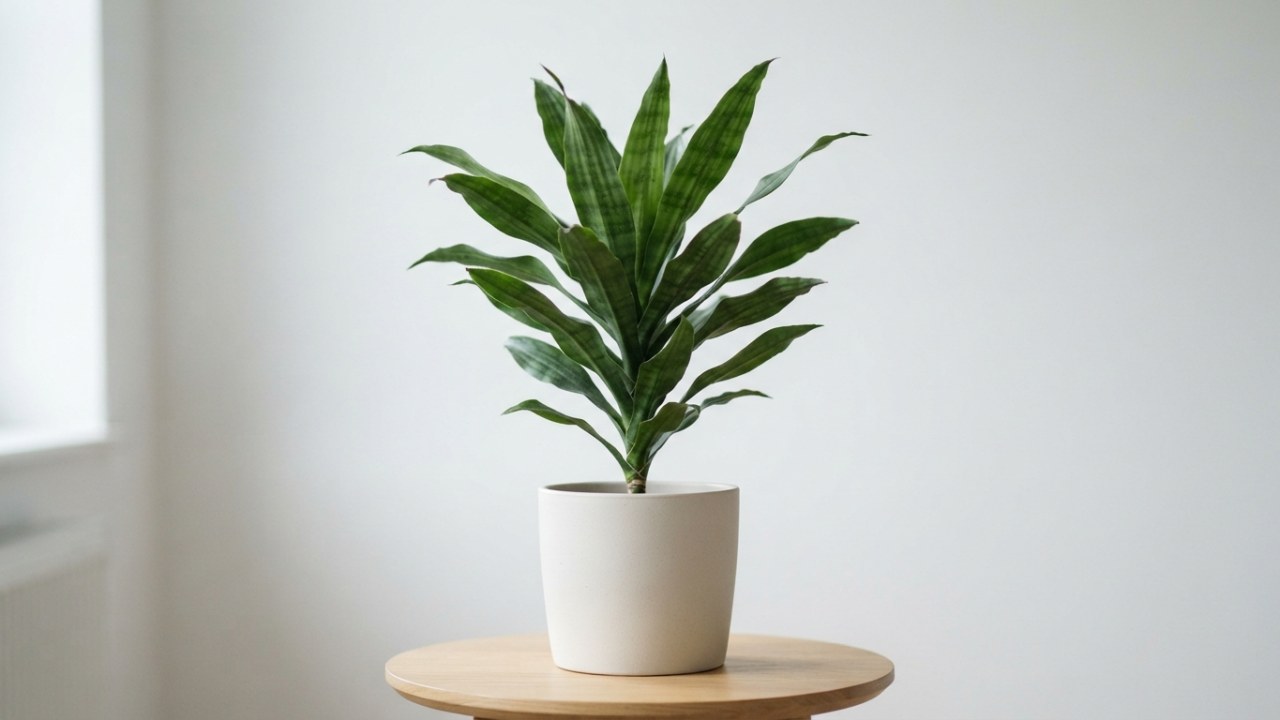
Stiff, erect, sword-shaped leaves form a clump from a creeping rhizome, dark green with subtle paler banding. It is often confused with Dracaena trifasciata, whose leaves are sharply cross-banded and often edged in yellow, while those of D. zeylanica are softly marbled with slightly wavy margins, and with Dracaena angolensis, whose leaves are round like spears.

Watering your Ceylon Snake Plant
Every 18 days
Water thoroughly until drainage runs clear, then allow the substrate to dry out completely before watering again. Water less often in autumn and winter.
How to know it needs water
- Soil completely dry
- Leaves feel slightly less firm
- Pot feels light when lifted

How much light a Ceylon Snake Plant needs
Bright indirect light
Bright indirect light; tolerates low light but growth will be slower. Avoid direct afternoon sun.
- Direct sun tolerated
- 0 to 2 h a day
- Orientations that suit it
- North, North-east, East, South-east, South, South-west, West, North-west

Humidity and misting
30–50 %
Low to medium (30 to 50%) Do not mist: it is not needed, and water left at the base of the leaves can lead to rot and fungal issues. This plant prefers dry air.

Feeding and fertiliser
Every 28 days
Apply about once a month during the growing season (April to September); withhold entirely in autumn and winter.
- Recommended feed
- Balanced NPK liquid fertilizer, diluted to half strength · 5-10-5

Repotting your Ceylon Snake Plant
Every 36 months
Repot into a container 2 to 5 cm larger using a well-draining succulent or cactus potting mix.
- When
- Spring
- Potting mix
- Cactus and succulent mix
- Mix in
- perlite, coarse sand, pumice
The tell-tale signs
- Roots emerging from drainage holes
- Plant becoming top-heavy
- Growth has significantly slowed

Pruning your Ceylon Snake Plant
Remove yellowing, damaged, or leggy leaves at any time of year. Cut cleanly at the base of the leaf with sterilised scissors or a sharp blade.

Through the year
Watering is not set once and for all: it follows the light and the growth. Allow 27 days between waterings in the depth of winter, against 14 in the growing season.
- 27 J
- 27 F
- 18 M
- 18 A
- 14 M
- 14 J
- 14 J
- 14 A
- 18 S
- 18 O
- 27 N
- 27 D
Active growth · Days between waterings

Toxicity
Toxic to cats and dogs (saponins cause gastrointestinal upset, vomiting, and diarrhea). Not toxic to humans.

Good to know
- Formerly known as Sansevieria zeylanica, it was merged into the genus Dracaena after DNA studies
- Can tolerate long periods of neglect, making it ideal for beginners
- Its upright, sword-like leaves give it a distinctive architectural look

Frequently asked questions about the Ceylon Snake Plant
How do you care for a Ceylon Snake Plant?
Water it every 18 days. Give it bright indirect light. Ideal humidity: 30–50 %. Ideal temperature: 18–35 °C. Water thoroughly until drainage runs clear, then allow the substrate to dry out completely before watering again. Water less often in autumn and winter.
How often should you water a Ceylon Snake Plant?
Every 18 days Water thoroughly until drainage runs clear, then allow the substrate to dry out completely before watering again. Water less often in autumn and winter. How to know it needs water : Soil completely dry ; Leaves feel slightly less firm ; Pot feels light when lifted.
How much light does a Ceylon Snake Plant need?
Bright indirect light Bright indirect light; tolerates low light but growth will be slower. Avoid direct afternoon sun. 0 to 2 h a day
Is the Ceylon Snake Plant toxic to cats and dogs?
Yes. Toxic to cats and dogs (saponins cause gastrointestinal upset, vomiting, and diarrhea). Not toxic to humans. Keep it out of reach of your pets and call a vet if any is swallowed.
Why are my Ceylon Snake Plant leaves turning yellow?
Yellowing most often comes from too much water: the mix stays wet and the roots suffocate. Check that the pot drains, empty the saucer, and let the mix dry before watering again. Too little light or a cold draught cause the same symptom.
When should you repot a Ceylon Snake Plant?
Repot every 36 months, ideally in spring. Repot into a container 2 to 5 cm larger using a well-draining succulent or cactus potting mix.

At a glance
- Family
- Asparagaceae
- Category
- Succulent
- Placement
- Indoor
- Mature height
- 1.2 m
- Growth
- Slow
- Temperature
- 18–35 °C
- Pot materials
- terracotta, ceramic, plastic
- Growth
- Reaches maturity in 5 years
These figures are for an average plant. In the app they are recalculated for yours, based on your room, its orientation and the season.
And for your plant, in your home?
In the app this plant becomes yours: a watering schedule tuned to your home, health tracking from photos, and reminders at the right moment.