
Variety Tropical · Asparagaceae
Corn Plant 'Golden Coast'
Dracaena fragrans 'Golden Coast' · A variety of Corn Plant
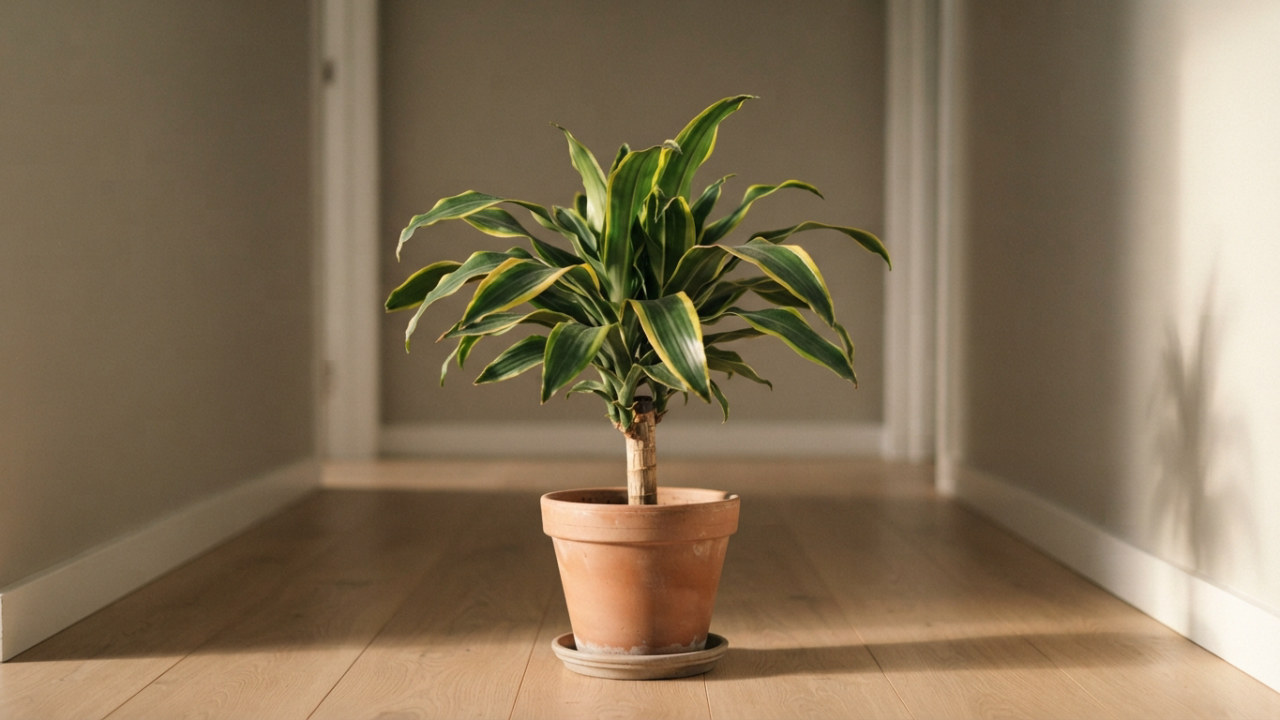
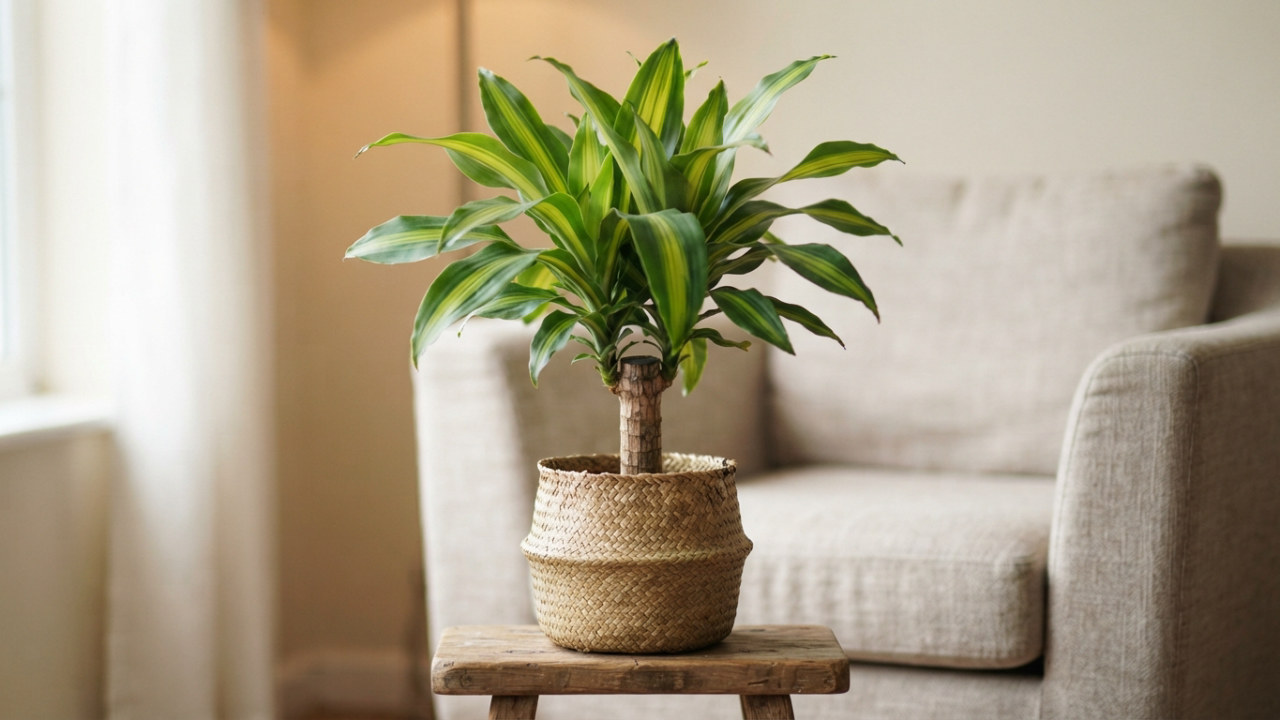
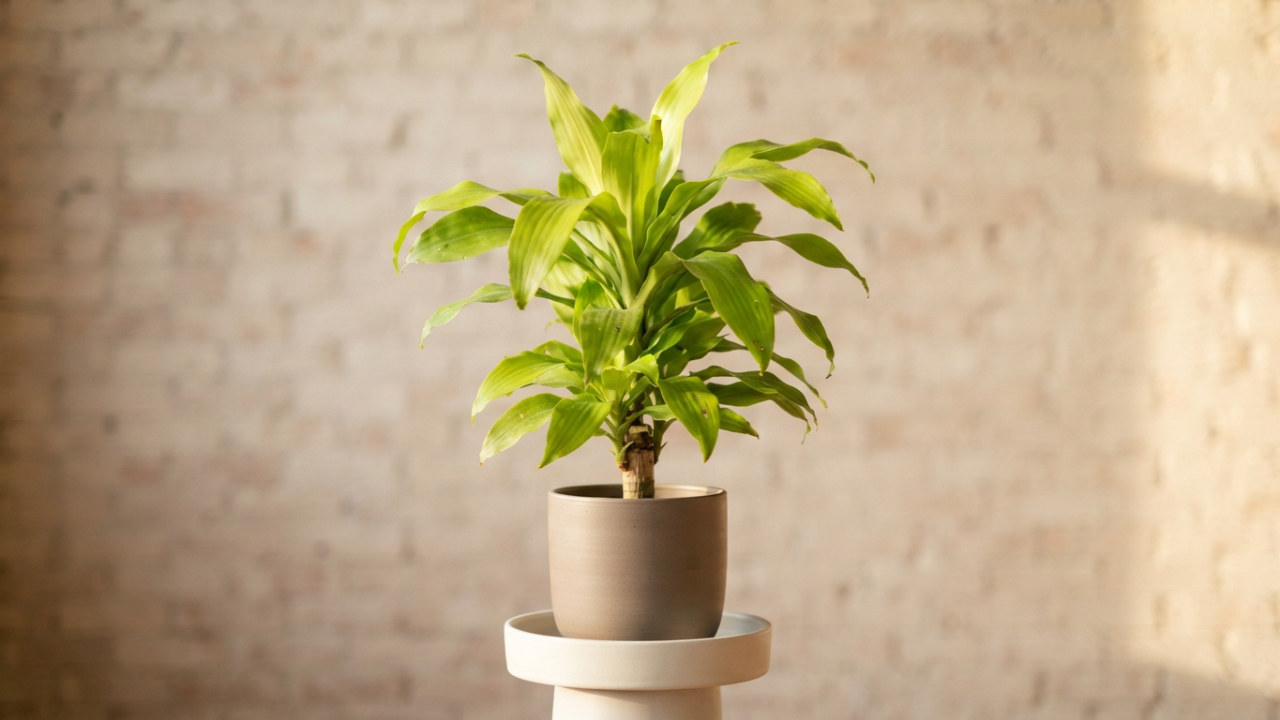
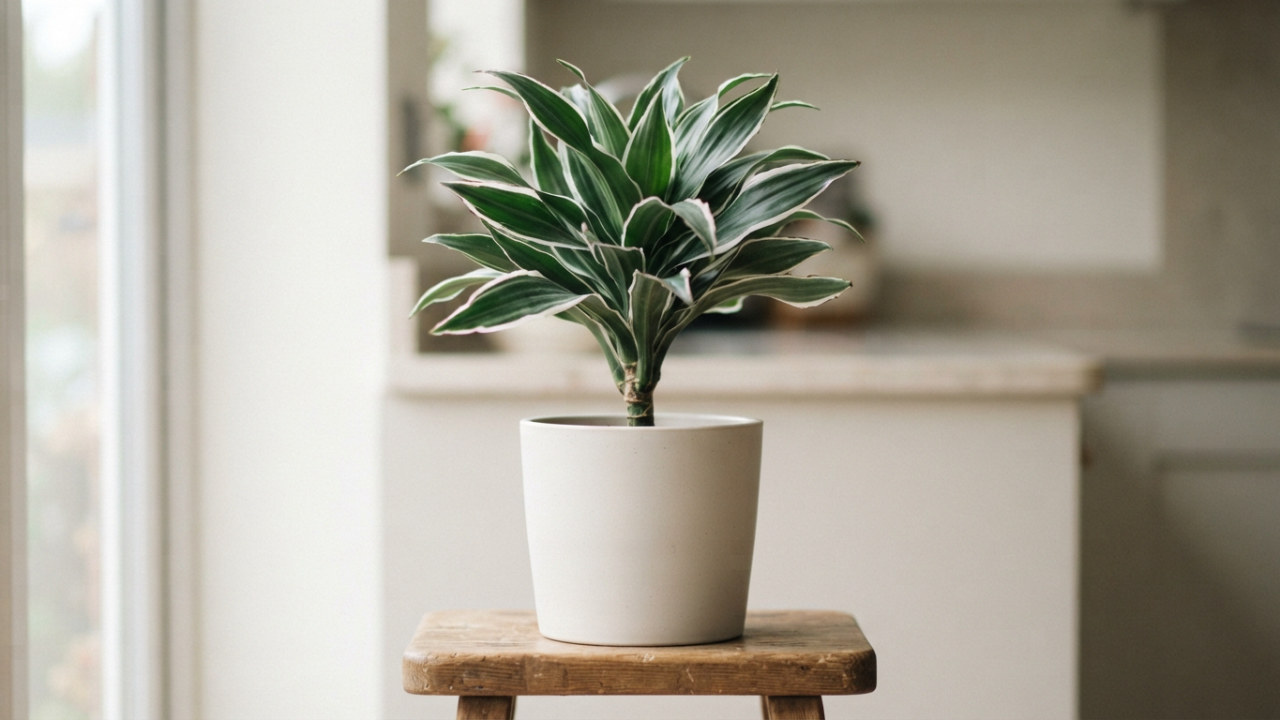
A corn plant whose thick, smooth leaves have a dark green center framed by golden-yellow edges.
- Every 10 daysWatering
- Bright indirect lightLight
- 40–50 %Humidity
- 16–27 °CTemperature


Other varieties 7
How to care for your Corn Plant 'Golden Coast'
Everything you need to keep your Corn Plant 'Golden Coast' healthy: watering, light, humidity, feeding, repotting and pruning.
'Golden Coast' has thick, smooth, sword-shaped leaves with a dark green center framed by golden-yellow edges, held fairly upright on a columnar cane. The leaves grow from about 10 to 50 cm long and 4 to 7 cm wide as the plant develops, and an indoor plant reaches roughly 1.5 to 1.8 m. It was reportedly found in the Netherlands in 1987 as a sport on a Dracaena 'Steudneri', and it needs brighter indirect light than the solid green species to keep its golden edges.

How to recognise Corn Plant 'Golden Coast'
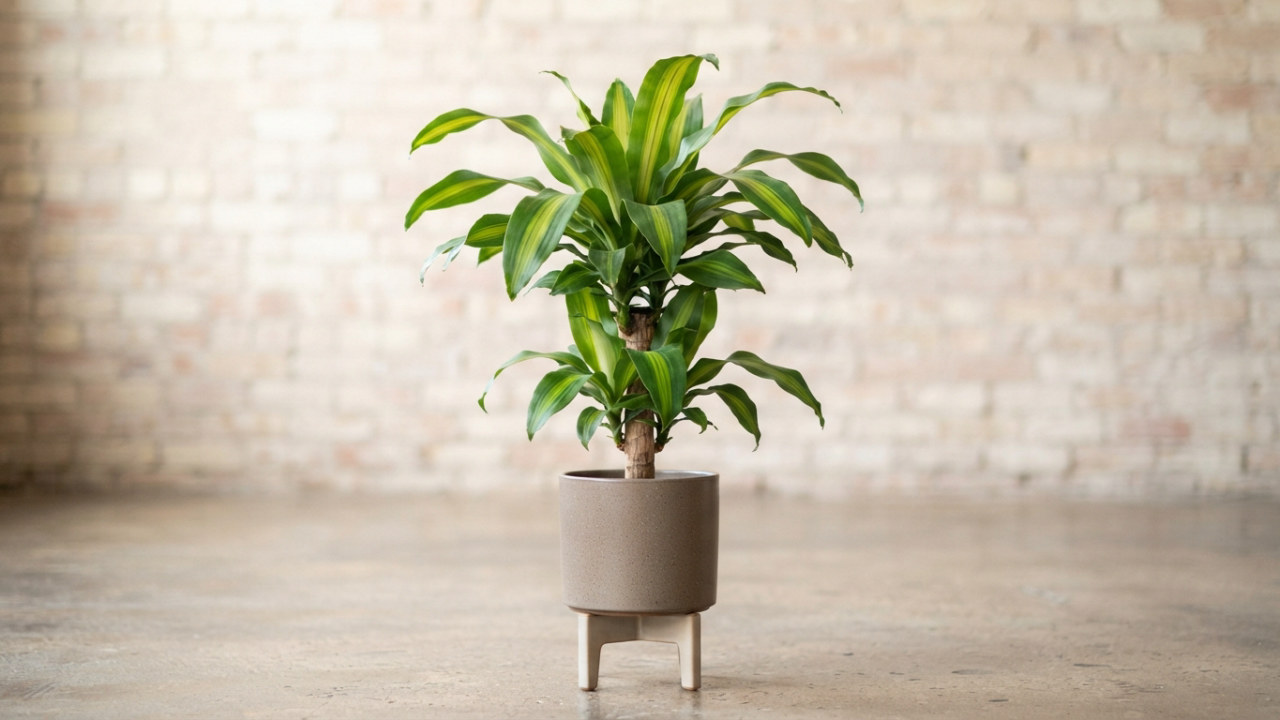
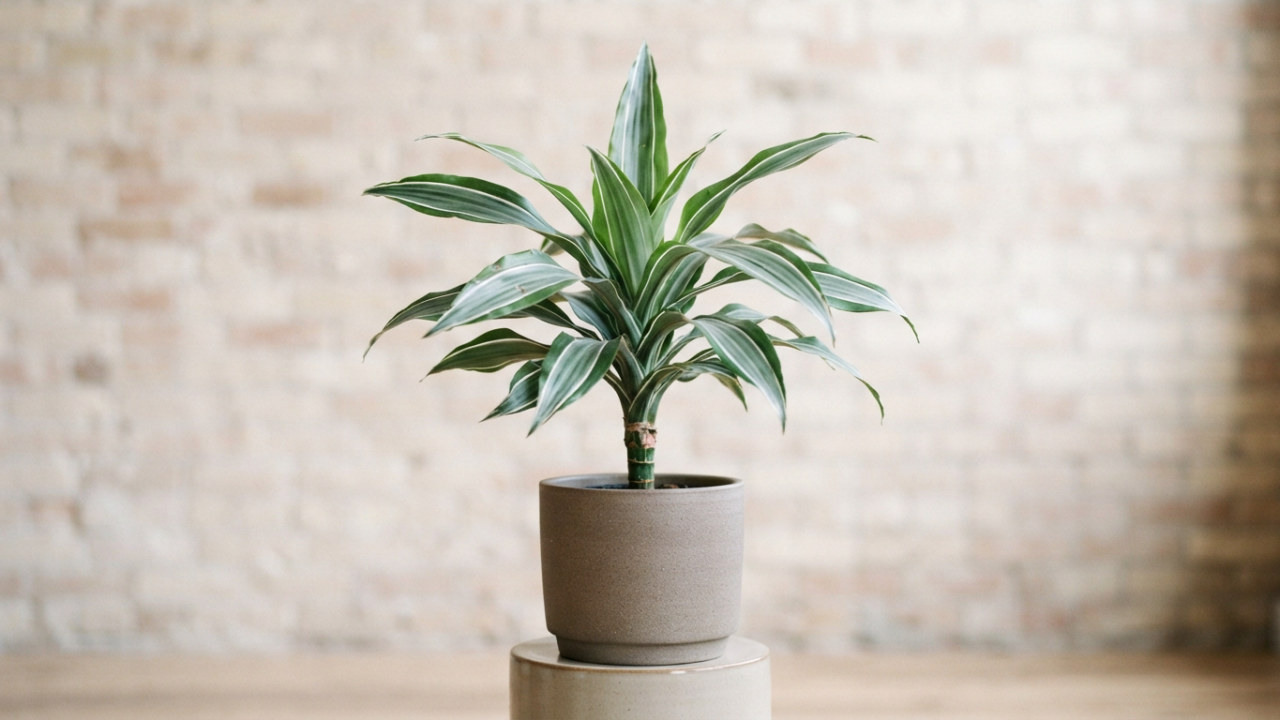
A dark green center framed by golden-yellow edges, on thick, smooth, fairly upright leaves gathered in a rosette atop a cane, unlike Dracaena reflexa 'Song of India', whose short yellow-edged leaves spiral tightly along branching stems. 'Massangeana' is the opposite, with a yellow center and green edges, while 'Lemon Lime' is striped and 'Limelight' is solid chartreuse.

Watering your Corn Plant 'Golden Coast'
Every 10 days
Water thoroughly when the top half of the mix has dried, about every 10 days from March to October and every 16 days or so in winter, and let the excess drain.
How to know it needs water
- The top half of the mix feels dry when a finger is pushed in
- The upright leaves begin to lean outward and feel less firm

How much light a Corn Plant 'Golden Coast' needs
Bright indirect light
Bright indirect light keeps the golden edges vivid, since this cultivar needs more light than the solid green species; direct sun scorches the leaves.
- Direct sun tolerated
- No direct sun
- Orientations that suit it
- North, North-east, East, North-west, West, South-east, South-west

Humidity and misting
40–50 %
Ordinary room air at around 40 to 50% humidity is enough. Misting is not needed; wipe the thick, smooth leaves with a damp cloth now and then to keep the golden edges clean.

Feeding and fertiliser
Every 28 days
Feed about every 4 weeks from April to September and stop in autumn and winter, because too much fertilizer burns the leaf tips.
- Recommended feed
- Balanced liquid fertilizer for foliage plants, at half the dose on the label. · 2-1-2

Repotting your Corn Plant 'Golden Coast'
Every 36 months
Go up one pot size only, into a free-draining potting mix, and choose a heavy pot that will keep the columnar cane steady.
- When
- Spring, from March to May.
- Potting mix
- All-purpose potting mix
- Mix in
- perlite, coco fibre, pine bark
The tell-tale signs
- Roots circle the inside of the pot or push out of the drainage holes
- The plant tips over easily because the tall cane has outgrown its pot

Pruning your Corn Plant 'Golden Coast'
In spring or early summer, when the cane has grown too tall or is bare at the base. Cut the cane at the height you want with a clean saw or pruners, and new shoots will sprout just below the cut.

Through the year
Watering is not set once and for all: it follows the light and the growth. Allow 12 days between waterings in the depth of winter, against 8 in the growing season.
- 12 J
- 11 F
- 9 M
- 8 A
- 8 M
- 8 J
- 8 J
- 8 A
- 9 S
- 10 O
- 11 N
- 12 D
Active growth · Days between waterings

Toxicity
Toxic to cats and dogs because of its saponins, which can cause vomiting and drooling if the leaves are chewed or swallowed; it is not considered toxic to people.

Good to know
- Its leaves are held fairly upright, which gives the plant a columnar outline rather than the arching crown of 'Massangeana'
- Highly fragrant flowers are possible on indoor plants, but they are rare

Frequently asked questions about the Corn Plant 'Golden Coast'
How do you care for a Corn Plant 'Golden Coast'?
Water it every 10 days. Give it bright indirect light. Ideal humidity: 40–50 %. Ideal temperature: 16–27 °C. Water thoroughly when the top half of the mix has dried, about every 10 days from March to October and every 16 days or so in winter, and let the excess drain.
How often should you water a Corn Plant 'Golden Coast'?
Every 10 days Water thoroughly when the top half of the mix has dried, about every 10 days from March to October and every 16 days or so in winter, and let the excess drain. How to know it needs water : The top half of the mix feels dry when a finger is pushed in ; The upright leaves begin to lean outward and feel less firm.
How much light does a Corn Plant 'Golden Coast' need?
Bright indirect light Bright indirect light keeps the golden edges vivid, since this cultivar needs more light than the solid green species; direct sun scorches the leaves. No direct sun
Is the Corn Plant 'Golden Coast' toxic to cats and dogs?
Yes. Toxic to cats and dogs because of its saponins, which can cause vomiting and drooling if the leaves are chewed or swallowed; it is not considered toxic to people. Keep it out of reach of your pets and call a vet if any is swallowed.
Why are my Corn Plant 'Golden Coast' leaves turning yellow?
Yellowing most often comes from too much water: the mix stays wet and the roots suffocate. Check that the pot drains, empty the saucer, and let the mix dry before watering again. Too little light or a cold draught cause the same symptom.
When should you repot a Corn Plant 'Golden Coast'?
Repot every 36 months, ideally in spring, from march to may.. Go up one pot size only, into a free-draining potting mix, and choose a heavy pot that will keep the columnar cane steady.

At a glance
- Family
- Asparagaceae
- Category
- Tropical
- Placement
- Indoor
- Mature height
- 1.8 m
- Growth
- Moderate
- Temperature
- 16–27 °C
- Pot materials
- terracotta, ceramic, plastic
- Growth
- Reaches maturity in 5 years
These figures are for an average plant. In the app they are recalculated for yours, based on your room, its orientation and the season.
And for your plant, in your home?
In the app this plant becomes yours: a watering schedule tuned to your home, health tracking from photos, and reminders at the right moment.
In the same spirit
 Every 7 days


Air Plant
Tillandsia ionantha

 Every 6 days
Alocasia amazonica
Alocasia amazonica
 Every 7 days
Alocasia baginda
Alocasia baginda
 Every 4 days
Angel Wings
Caladium bicolor
