Herb · Zingiberaceae
Turmeric
Curcuma longa
Turmeric is a tropical perennial known for its vibrant rhizomes, used as a spice and for medicinal purposes.
- Every 7 daysWatering
- Bright indirect lightLight
- 60–80 %Humidity
- 18–29 °CTemperature


How to care for your Turmeric
Everything you need to keep your Turmeric healthy: watering, light, humidity, feeding, repotting and pruning.
Curcuma longa, commonly known as Turmeric, is a tropical perennial herb native to South Asia and long cultivated across tropical Asia. It is part of the ginger family (Zingiberaceae) and is primarily cultivated for its underground rhizomes, which are processed into the well-known yellow spice. Indoors, it grows as an attractive foliage plant with broad, bright green leaves. It requires warm temperatures, high humidity, and consistent moisture during its active growing season. The plant typically goes dormant in cooler months, with its foliage dying back, only to re-emerge in spring. It is not frost hardy: it can spend the summer outdoors in a pot, but bring it indoors before nights turn cool, and never let the rhizomes freeze. With proper care, it can be a rewarding plant for home growers.

How to recognise Turmeric
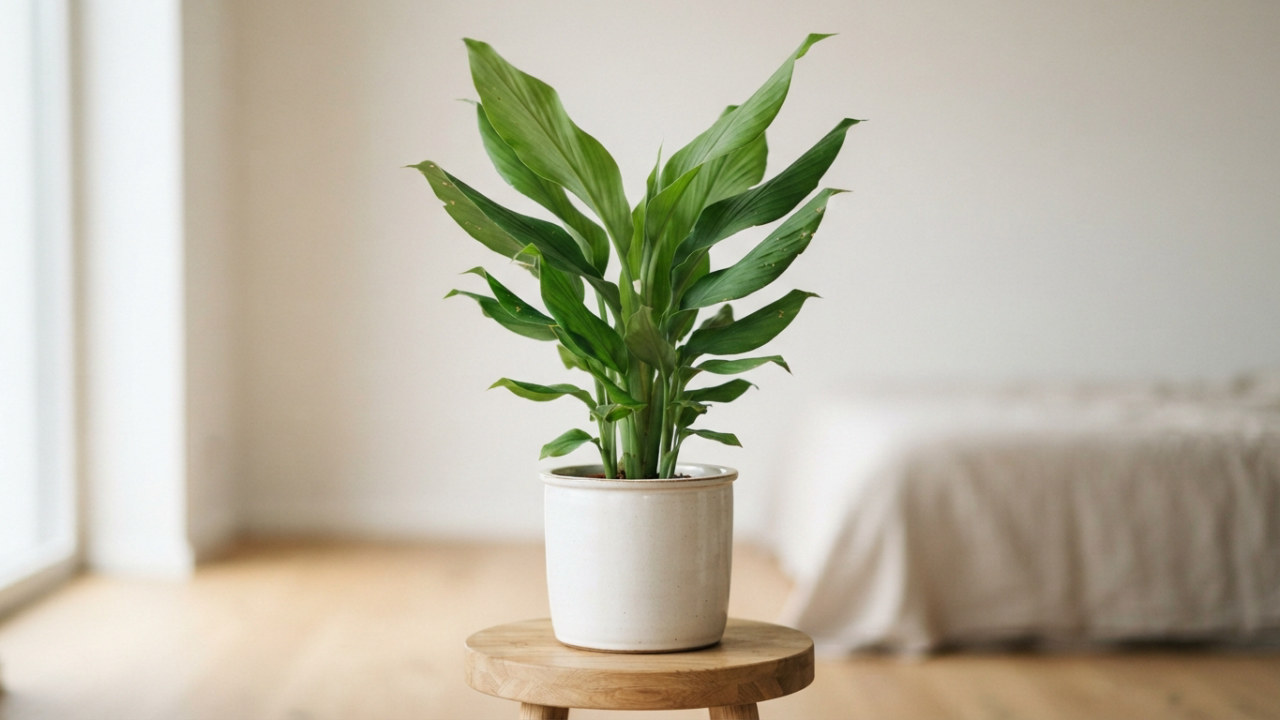
Curcuma longa is a clump-forming perennial with large, lance-shaped, bright green leaves in two ranks on upright false stems 60 to 100 cm tall, growing from branching rhizomes with a deep orange flesh. Pale flowers appear in a cone of green bracts with pinkish tips. Ginger (Zingiber officinale) has narrower, grass-like leaves and pale yellow rhizomes, and Curcuma zedoaria has a purple midrib on its leaves.

Watering your Turmeric
Every 7 days
Water thoroughly when the top 2 to 3 cm of soil feel dry, about every 4 days while it grows. Keep the soil consistently moist during the growing season, but never waterlogged. During dormancy, water only about once a month.
How to know it needs water
- Soil dry 2 to 3 cm deep
- Leaves starting to droop slightly
- Substrate feels lighter than usual

How much light a Turmeric needs
Bright indirect light
Bright indirect light; tolerates some direct morning sun. Avoid harsh afternoon sun which can scorch leaves.
- Direct sun tolerated
- 0 to 3 h a day
- Orientations that suit it
- East, North-east, North, West, North-west

Humidity and misting
60–80 %
High (60 to 80 %) Mist the foliage about every 3 days while it grows, especially in dry indoor air, or place the pot on a tray of damp pebbles. Let the leaves dry between mistings.

Feeding and fertiliser
Every 30 days
Feed every 2 weeks from April to August with a half-strength solution. Stop when the leaves start to die back, and give nothing during winter dormancy.
- Recommended feed
- Balanced NPK liquid fertilizer · 10-10-10

Repotting your Turmeric
Every 24 months
Repot every 2 years in March or April, or when the rhizomes fill the pot, using a rich, well-draining potting mix. Choose a container only slightly larger than the previous one to avoid overwatering.
- When
- Spring
- Potting mix
- All-purpose potting mix
- Mix in
- perlite, coco fibre
The tell-tale signs
- Roots emerging from drainage holes
- Growth has slowed significantly
- Substrate compact and not retaining moisture well

Pruning your Turmeric
Remove any yellowing, damaged, or spent leaves at any time of year. Cut back foliage to the ground when the plant enters dormancy in late autumn. Cut cleanly at the base of the petiole or stem using sterilised scissors or a sharp blade.

Through the year
Watering is not set once and for all: it follows the light and the growth. Allow 14 days between waterings in the depth of winter, against 6 in the growing season.
- 13 J
- 11 F
- 7 M
- 6 A
- 6 M
- 6 J
- 6 J
- 6 A
- 6 S
- 8 O
- 11 N
- 14 D
Active growth · Days between waterings

Good to know
- Curcuma longa belongs to the Zingiberaceae family, which also includes ginger and cardamom.
- The underground rhizomes are harvested to produce the vibrant yellow turmeric spice.
- Curcumin, the pigment that gives turmeric its yellow-orange color, is extracted from the rhizome.

Frequently asked questions about the Turmeric
How do you care for a Turmeric?
Water it every 7 days. Give it bright indirect light. Ideal humidity: 60–80 %. Ideal temperature: 18–29 °C. Water thoroughly when the top 2 to 3 cm of soil feel dry, about every 4 days while it grows. Keep the soil consistently moist during the growing season, but never waterlogged. During dormancy, water only about once a month.
How often should you water a Turmeric?
Every 7 days Water thoroughly when the top 2 to 3 cm of soil feel dry, about every 4 days while it grows. Keep the soil consistently moist during the growing season, but never waterlogged. During dormancy, water only about once a month. How to know it needs water : Soil dry 2 to 3 cm deep ; Leaves starting to droop slightly ; Substrate feels lighter than usual.
How much light does a Turmeric need?
Bright indirect light Bright indirect light; tolerates some direct morning sun. Avoid harsh afternoon sun which can scorch leaves. 0 to 3 h a day
Is the Turmeric toxic to cats and dogs?
No, the Turmeric is not listed as toxic to cats and dogs. That is still no reason to let your pets chew on it.
Why are my Turmeric leaves turning yellow?
Yellowing most often comes from too much water: the mix stays wet and the roots suffocate. Check that the pot drains, empty the saucer, and let the mix dry before watering again. Too little light or a cold draught cause the same symptom.
When should you repot a Turmeric?
Repot every 24 months, ideally in spring. Repot every 2 years in March or April, or when the rhizomes fill the pot, using a rich, well-draining potting mix. Choose a container only slightly larger than the previous one to avoid overwatering.

At a glance
- Family
- Zingiberaceae
- Category
- Herb
- Placement
- Indoor and outdoor
- Mature height
- 90 cm
- Growth
- Moderate
- Temperature
- 18–29 °C
- Pot materials
- ceramic, plastic
- Growth
- Reaches maturity in 2 years
These figures are for an average plant. In the app they are recalculated for yours, based on your room, its orientation and the season.
And for your plant, in your home?
In the app this plant becomes yours: a watering schedule tuned to your home, health tracking from photos, and reminders at the right moment.