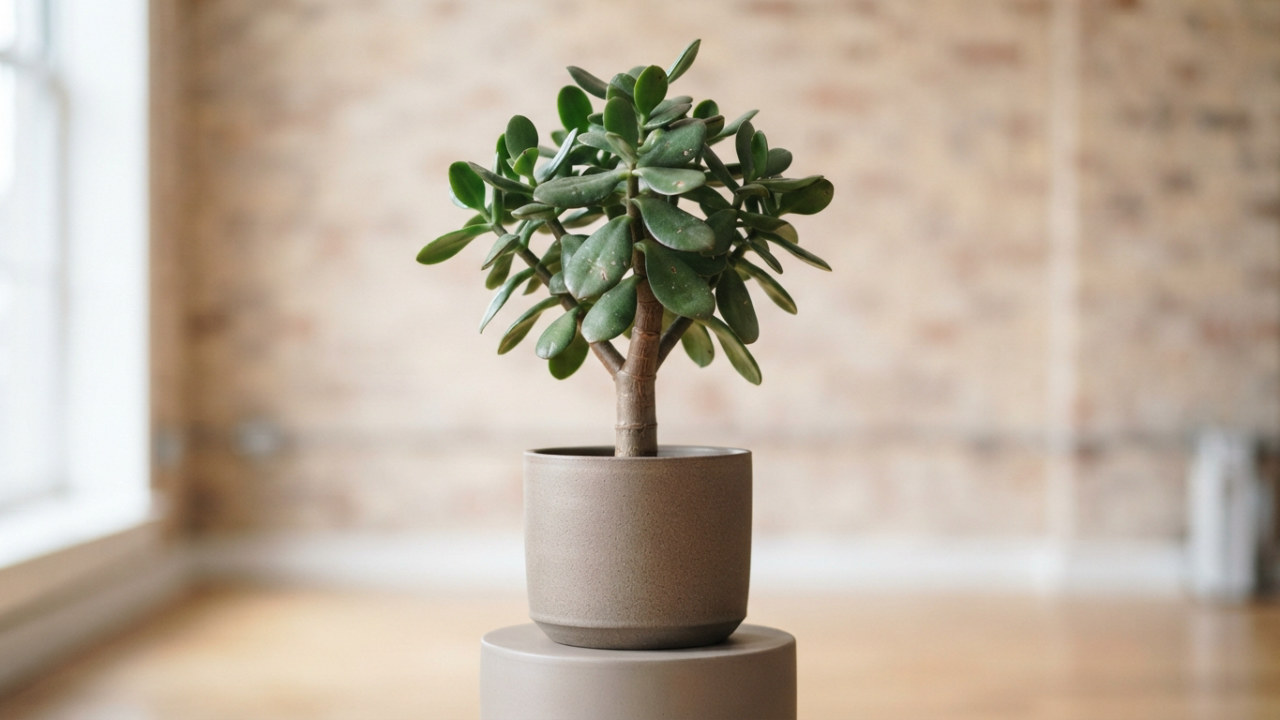
Succulent · Crassulaceae
Crassula
Crassula
A genus of South African succulents with thick, fleshy leaves, from small mats and rosettes to tree-like shrubs.
- Every 14 daysWatering
- Full sunLight
- 30–40 %Humidity
- 10–32 °CTemperature


Its varieties 1
How to care for your Crassula
Everything you need to keep your Crassula healthy: watering, light, humidity, feeding, repotting and pruning.
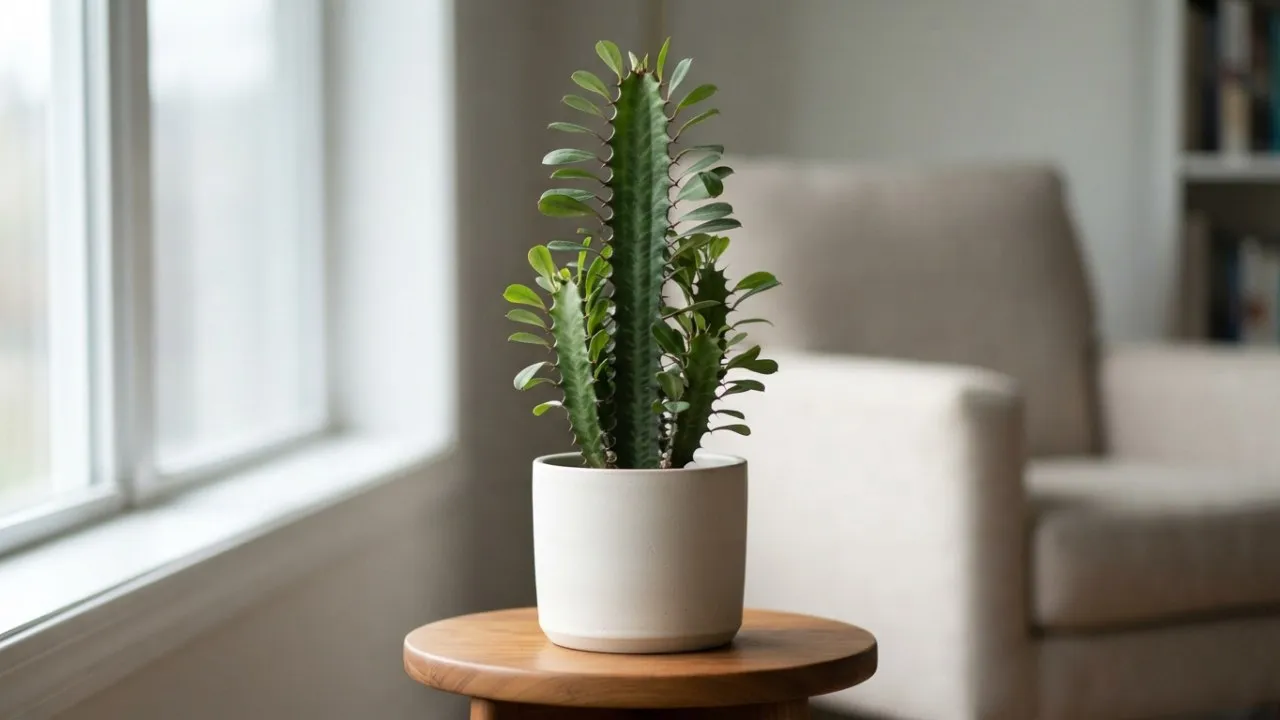
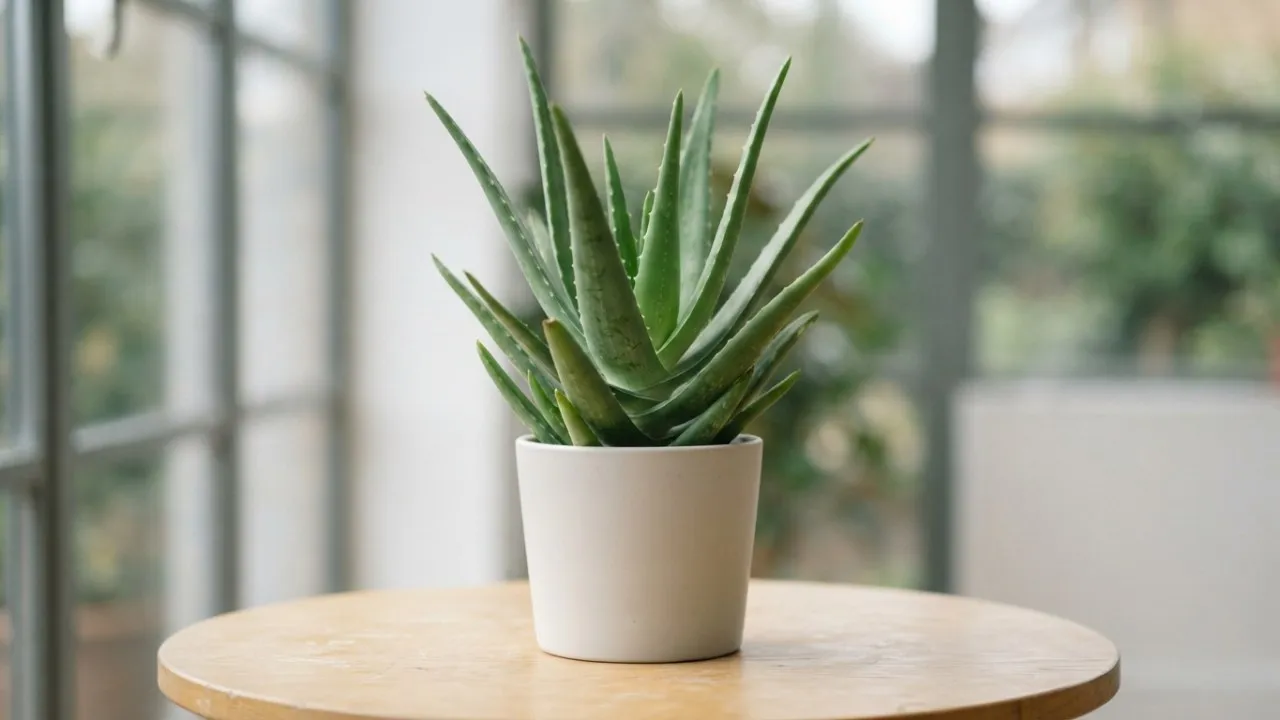
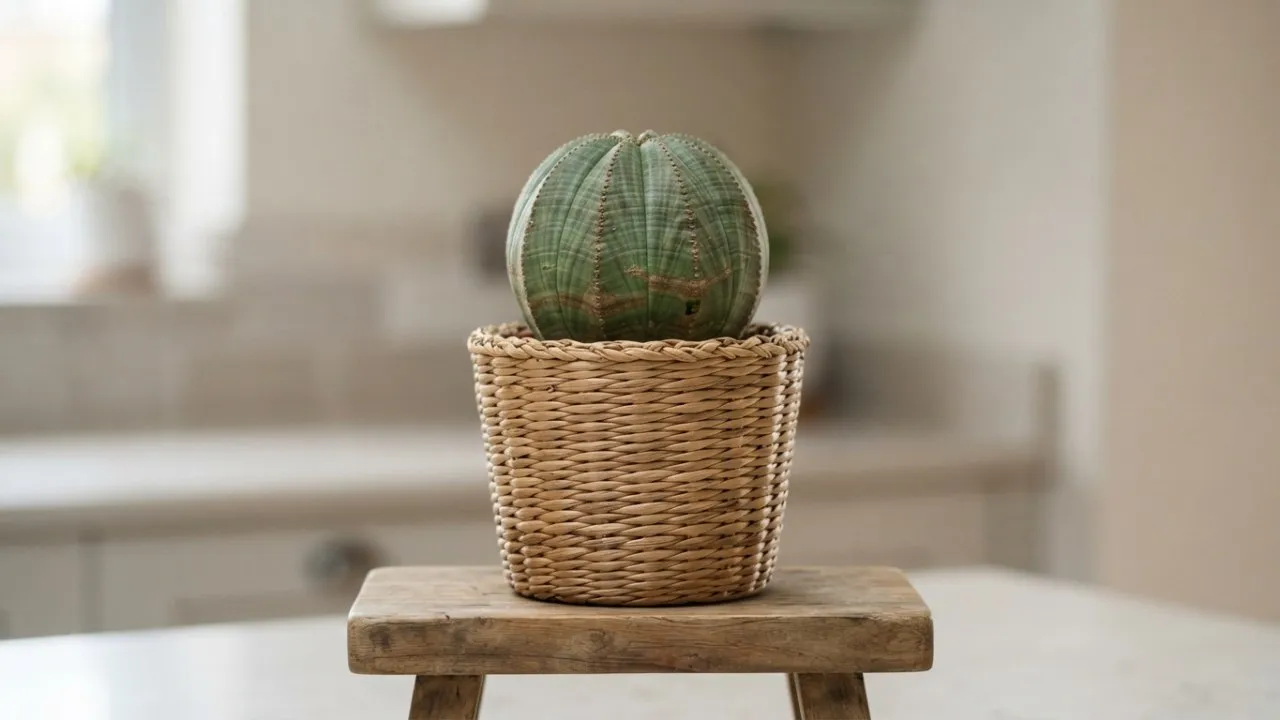
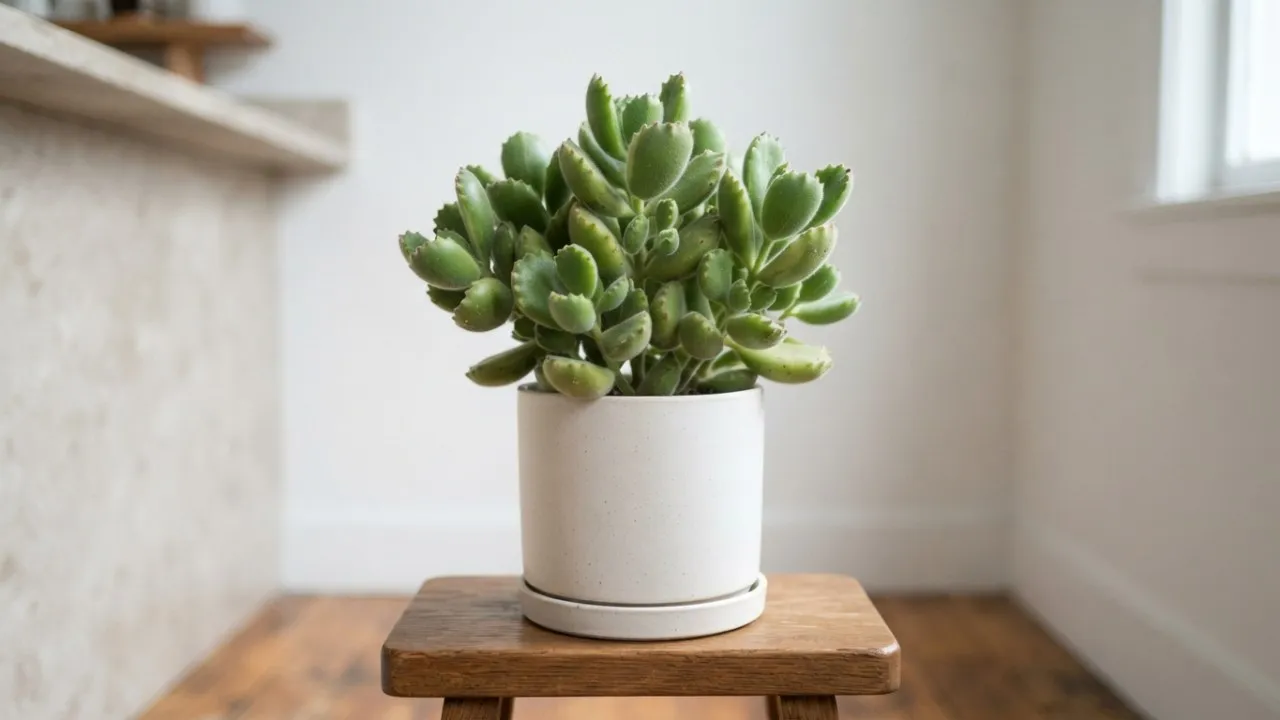
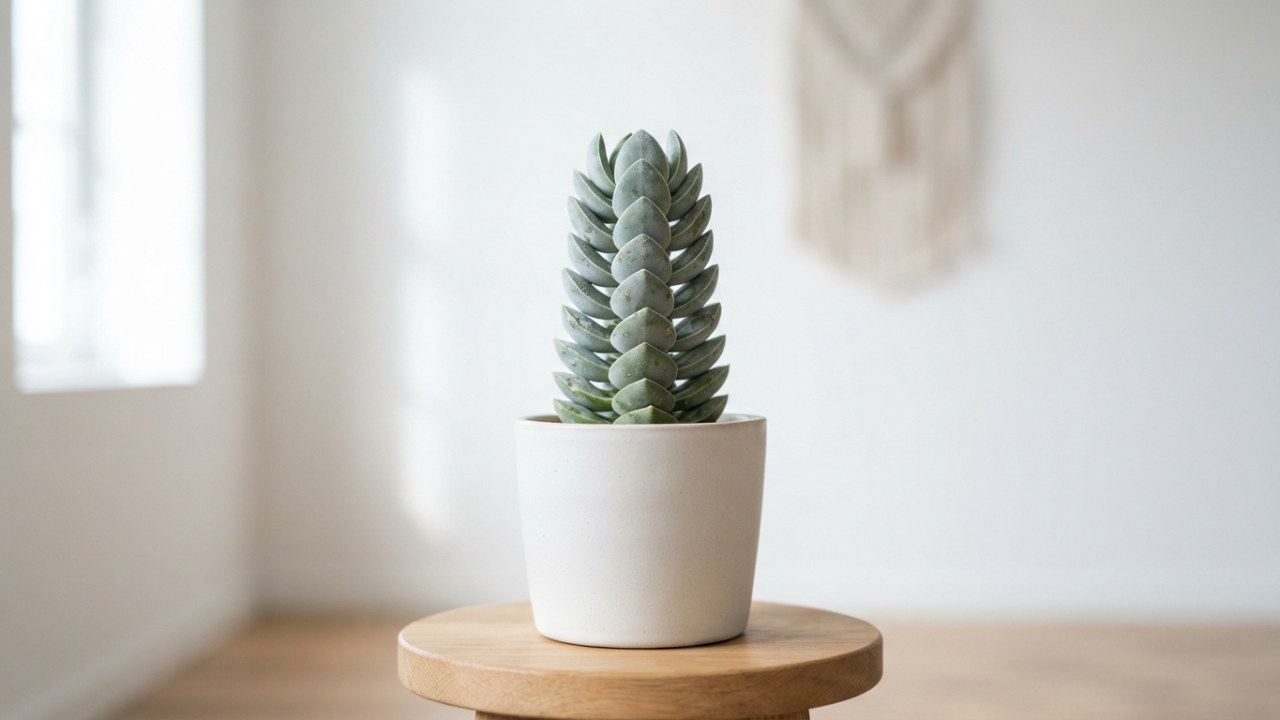
Crassula is a large genus of succulents, most of them from South Africa, many from the Eastern Cape. Their thick, water-storing leaves vary widely, oval, triangular, needle-like or sickle-shaped, from jade green to silvery gray, often blushing red in strong light. The habit runs from low ground covers to branching shrubs that look like small trees. Indoors they grow slowly and need little care. Flowers are small stars in white, pink or red, and not always produced.

How to recognise Crassula
Thick, fleshy leaves set in opposite pairs along woody or fleshy stems, often stacked, with small starry flowers in clusters. Sedum has alternate or whorled leaves, Echeveria forms ground-level rosettes, and Haworthia has stiff rosettes of firm leaves, often with pale warts or stripes.

Watering your Crassula
Every 14 days
Water the soil thoroughly once it has dried out completely, and space the waterings out in winter.
How to know it needs water
- The soil is dry all the way down
- The leaves lose their plumpness and feel a little soft

How much light a Crassula needs
Full sun
Most do best in bright light with some direct sun, which keeps them compact and brings out red edges; in dim light they stretch and the leaves turn plain green.
- Direct sun tolerated
- 4 to 8 h a day
- Orientations that suit it
- South, South-west, West, South-east, East

Humidity and misting
30–40 %
Dry to average household air is fine, and damp, still air encourages rot. Never mist, as water on the fleshy leaves and between the stems can start rot.

Feeding and fertiliser
Every 28 days
Feed lightly in spring and summer only, as rich feeding gives soft, weak growth.
- Recommended feed
- A cactus or succulent fertilizer diluted to half strength. · 2-7-7

Repotting your Crassula
Every 36 months
Use a gritty cactus mix in a heavy pot just a little larger, since top-heavy plants tip over easily.
- When
- Spring, when growth restarts.
- Potting mix
- Cactus and succulent mix
- Mix in
- perlite, pumice, coarse sand
The tell-tale signs
- Roots show at the drainage holes
- The plant is top-heavy and tips its pot over

Pruning your Crassula
In spring or summer, to shape a branching plant or take cuttings. Cut just above a pair of leaves, and let any cutting dry for a few days before setting it on dry mix.

Through the year
Watering is not set once and for all: it follows the light and the growth. Allow 21 days between waterings in the depth of winter, against 11 in the growing season.
- 21 J
- 21 F
- 14 M
- 11 A
- 11 M
- 11 J
- 11 J
- 11 A
- 14 S
- 17 O
- 21 N
- 21 D
Active growth · Days between waterings

Toxicity
The jade plant, Crassula ovata, is documented as mildly toxic to cats and dogs, with vomiting and lethargy if eaten, and the toxicity of many other species is not well documented, so keep all of them away from pets.

Good to know
- The genus name comes from the Latin for thick, a nod to its fleshy leaves.
- Most species are native to South Africa, and many come from the Eastern Cape.

Frequently asked questions about the Crassula
How do you care for a Crassula?
Water it every 14 days. Give it full sun. Ideal humidity: 30–40 %. Ideal temperature: 10–32 °C. Water the soil thoroughly once it has dried out completely, and space the waterings out in winter.
How often should you water a Crassula?
Every 14 days Water the soil thoroughly once it has dried out completely, and space the waterings out in winter. How to know it needs water : The soil is dry all the way down ; The leaves lose their plumpness and feel a little soft.
How much light does a Crassula need?
Full sun Most do best in bright light with some direct sun, which keeps them compact and brings out red edges; in dim light they stretch and the leaves turn plain green. 4 to 8 h a day
Is the Crassula toxic to cats and dogs?
Yes. The jade plant, Crassula ovata, is documented as mildly toxic to cats and dogs, with vomiting and lethargy if eaten, and the toxicity of many other species is not well documented, so keep all of them away from pets. Keep it out of reach of your pets and call a vet if any is swallowed.
Why are my Crassula leaves turning yellow?
Yellowing most often comes from too much water: the mix stays wet and the roots suffocate. Check that the pot drains, empty the saucer, and let the mix dry before watering again. Too little light or a cold draught cause the same symptom.
When should you repot a Crassula?
Repot every 36 months, ideally in spring, when growth restarts.. Use a gritty cactus mix in a heavy pot just a little larger, since top-heavy plants tip over easily.

At a glance
- Family
- Crassulaceae
- Category
- Succulent
- Placement
- Indoor and outdoor
- Mature height
- 90 cm
- Growth
- Slow
- Temperature
- 10–32 °C
- Pot materials
- terracotta, ceramic
- Growth
- Reaches maturity in 10 years
These figures are for an average plant. In the app they are recalculated for yours, based on your room, its orientation and the season.
And for your plant, in your home?
In the app this plant becomes yours: a watering schedule tuned to your home, health tracking from photos, and reminders at the right moment.