
Variety Tropical · Asparagaceae
Cordyline 'Albertii'
Cordyline australis 'Albertii' · A variety of Cabbage Tree
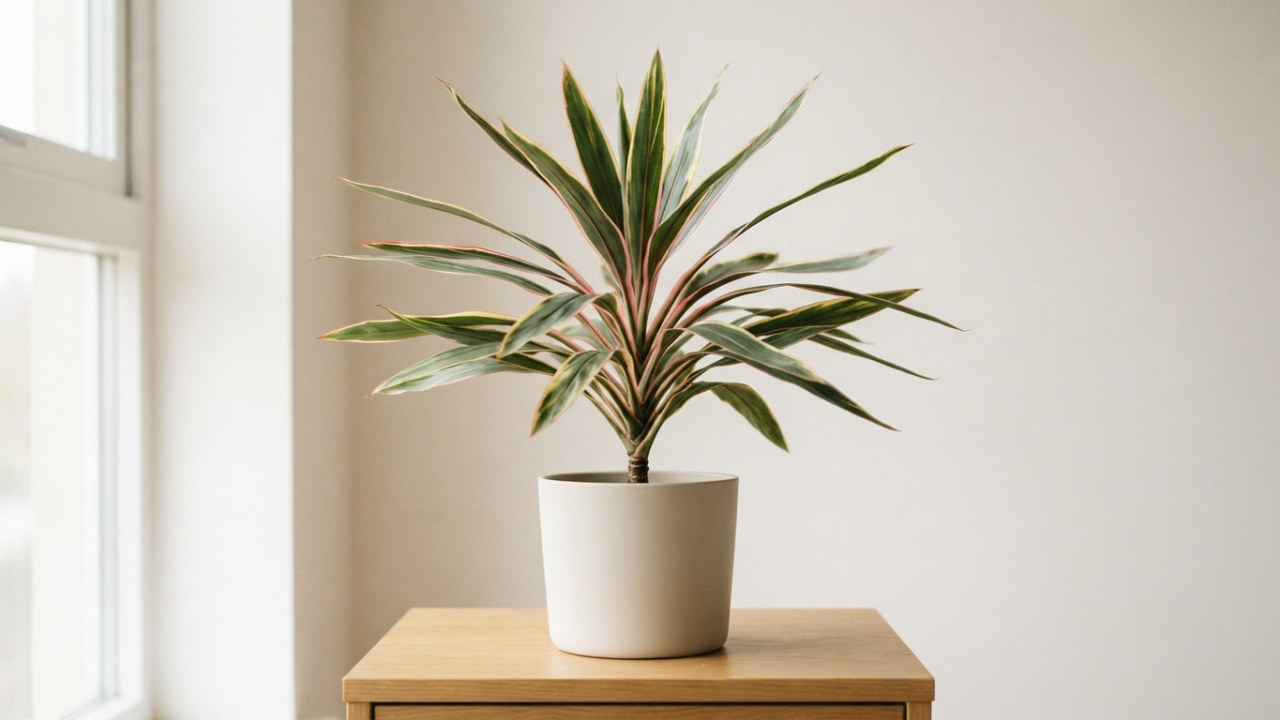
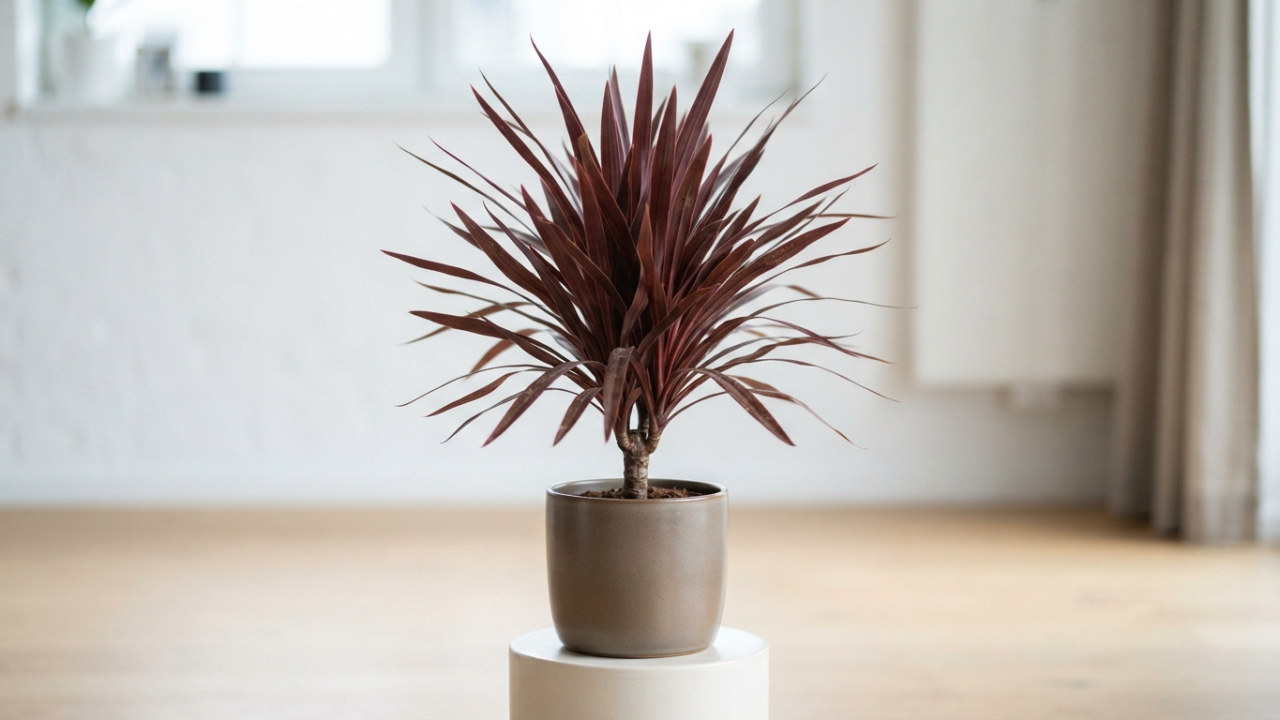
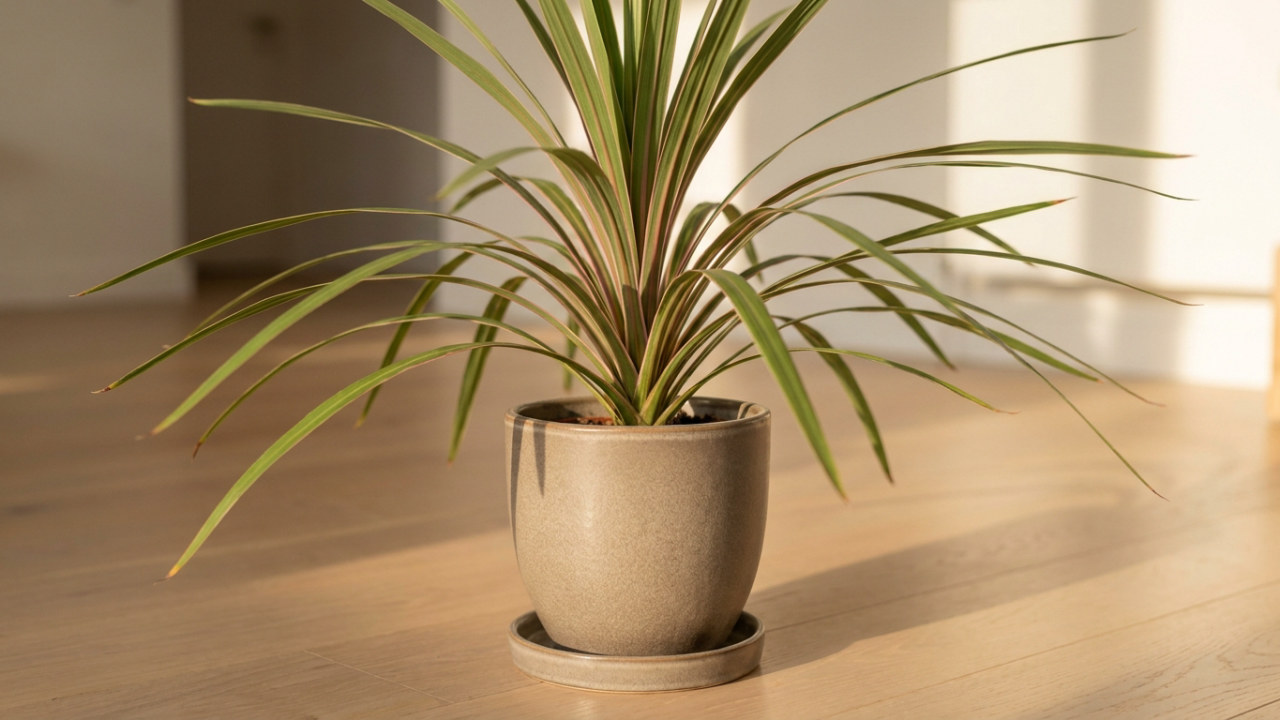
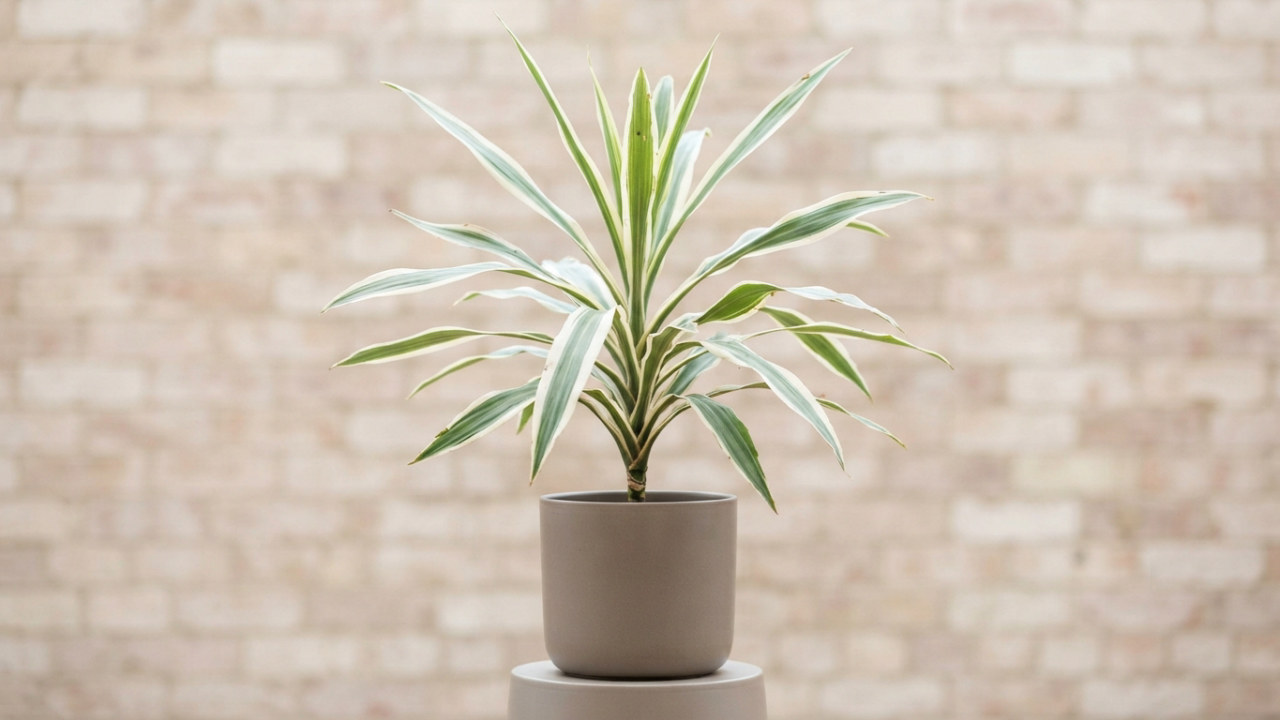
An older variegated cabbage palm with dark green leaves, a pink midrib and creamy yellow edges, slow and upright.
- Every 6 daysWatering
- Full sunLight
- 50–70 %Humidity


Other varieties 6
How to care for your Cordyline 'Albertii'
Everything you need to keep your Cordyline 'Albertii' healthy: watering, light, humidity, feeding, repotting and pruning.
'Albertii' is reported to have been found in a Belgian nursery in the late 1800s among seedlings of the New Zealand cabbage tree. Its arching, sword-shaped leaves are dark green with a pink midrib and creamy yellow edges, and new growth often has a pinkish tinge. It grows slowly into a palm-like plant, and in a container it reaches about two meters.

How to recognise Cordyline 'Albertii'
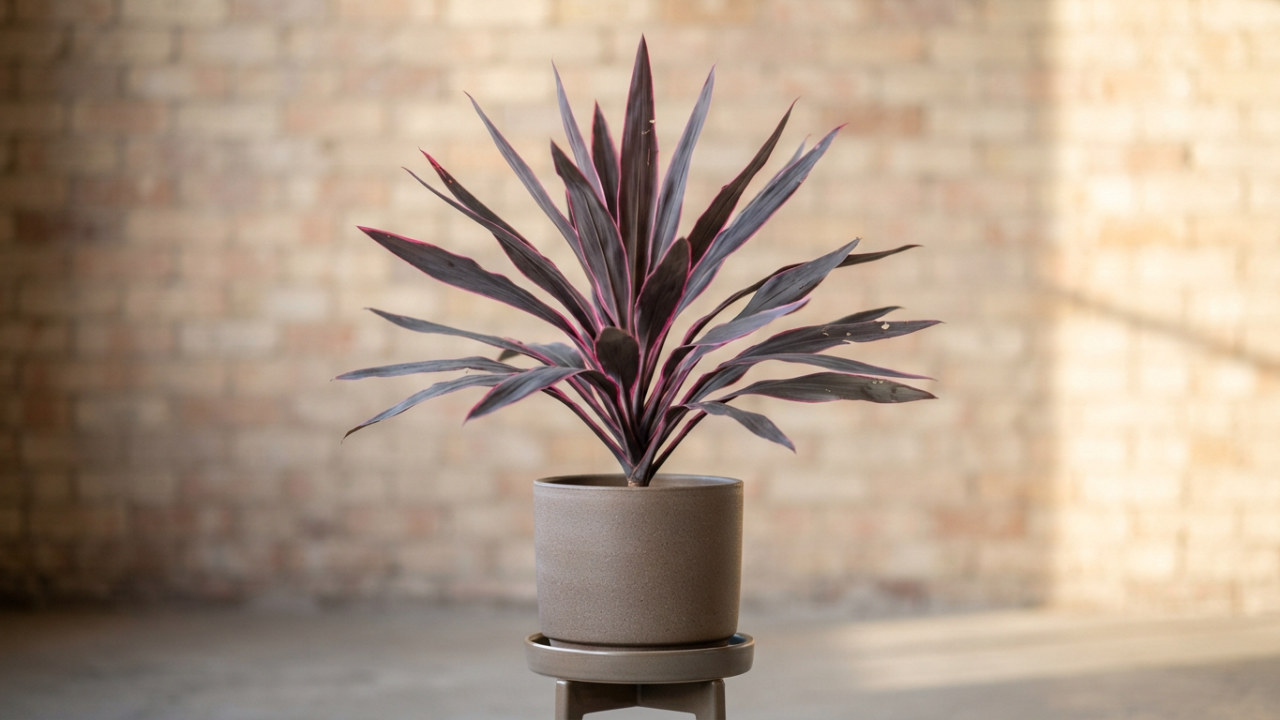
Narrow dark green leaves with a pink midrib, creamy yellow edges and a faint red margin. 'Torbay Dazzler' is the closest, but its leaves are broader, with bolder cream margins and no red edge; 'Sundance' has a pink stripe and no cream, and 'Red Star' is solid bronze-red. Cordyline indivisa is a larger plant with much broader leaves and a thick orange midrib.

Watering your Cordyline 'Albertii'
Every 6 days
Water at the base until the excess drains, then let the top of the mix dry before the next watering.
How to know it needs water
- The top few centimeters of the mix feel dry.
- The pink midrib looks dull and the leaf tips droop.

How much light a Cordyline 'Albertii' needs
Full sun
Give it bright light with some sun, shaded from the hottest afternoon sun that scorches the pale edges.
- Direct sun tolerated
- 6 to 8 h a day
- Orientations that suit it
- North, North-east, East, South-east, South, South-west, West, North-west

Humidity and misting
50–70 %
Ordinary outdoor humidity suits it, roughly 50 to 70 percent, and it copes with dry air. Misting is not needed, since the leathery leaves tolerate dry air.

Feeding and fertiliser
Every 28 days
Feed about once a month from April to August, and stop in autumn and winter.
- Recommended feed
- A balanced slow-release or liquid fertilizer for foliage plants suits it. · 3-1-2

Repotting your Cordyline 'Albertii'
Every 36 months
Move it to a pot a size larger with free-draining mix, keeping the crown at the same level.
- When
- Spring, from March to May, as growth restarts.
- Potting mix
- All-purpose potting mix
- Mix in
- perlite, pine bark, coco fibre
The tell-tale signs
- Roots show at the drainage holes.
- Growth stalls although the plant is fed and watered.

Pruning your Cordyline 'Albertii'
In spring, once the risk of hard frost has passed. Cut off dried or damaged lower leaves close to the trunk with clean pruners.

Through the year
Watering is not set once and for all: it follows the light and the growth. Allow 10 days between waterings in the depth of winter, against 5 in the growing season.
- 9 J
- 7 F
- 5 M
- 5 A
- 5 M
- 5 J
- 5 J
- 5 A
- 5 S
- 6 O
- 8 N
- 10 D
Active growth · Days between waterings

Toxicity
The saponins in the leaves can cause vomiting, drooling and lethargy in cats and dogs that chew them.

Good to know
- It is one of the older variegated forms of Cordyline australis.
- Its new leaves often show a pinkish tinge before they turn green.

Frequently asked questions about the Cordyline 'Albertii'
How do you care for a Cordyline 'Albertii'?
Water it every 6 days. Give it full sun. Ideal humidity: 50–70 %. Water at the base until the excess drains, then let the top of the mix dry before the next watering.
How often should you water a Cordyline 'Albertii'?
Every 6 days Water at the base until the excess drains, then let the top of the mix dry before the next watering. How to know it needs water : The top few centimeters of the mix feel dry. ; The pink midrib looks dull and the leaf tips droop..
How much light does a Cordyline 'Albertii' need?
Full sun Give it bright light with some sun, shaded from the hottest afternoon sun that scorches the pale edges. 6 to 8 h a day
Is the Cordyline 'Albertii' toxic to cats and dogs?
Yes. The saponins in the leaves can cause vomiting, drooling and lethargy in cats and dogs that chew them. Keep it out of reach of your pets and call a vet if any is swallowed.
Why are my Cordyline 'Albertii' leaves turning yellow?
Yellowing most often comes from too much water: the mix stays wet and the roots suffocate. Check that the pot drains, empty the saucer, and let the mix dry before watering again. Too little light or a cold draught cause the same symptom.
When should you repot a Cordyline 'Albertii'?
Repot every 36 months, ideally in spring, from march to may, as growth restarts.. Move it to a pot a size larger with free-draining mix, keeping the crown at the same level.

At a glance
- Family
- Asparagaceae
- Category
- Tropical
- Placement
- Outdoor
- Mature height
- 2 m
- Growth
- Slow
- Pot materials
- terracotta, ceramic, plastic, wood
- Growth
- Reaches maturity in 10 years
These figures are for an average plant. In the app they are recalculated for yours, based on your room, its orientation and the season.
And for your plant, in your home?
In the app this plant becomes yours: a watering schedule tuned to your home, health tracking from photos, and reminders at the right moment.
In the same spirit
 Every 7 days


Air Plant
Tillandsia ionantha

 Every 6 days
Alocasia amazonica
Alocasia amazonica
 Every 7 days
Alocasia baginda
Alocasia baginda
 Every 4 days
Angel Wings
Caladium bicolor
