
Variety Tropical · Euphorbiaceae
Croton 'Gold Dust'
Codiaeum variegatum 'Gold Dust' · A variety of Croton
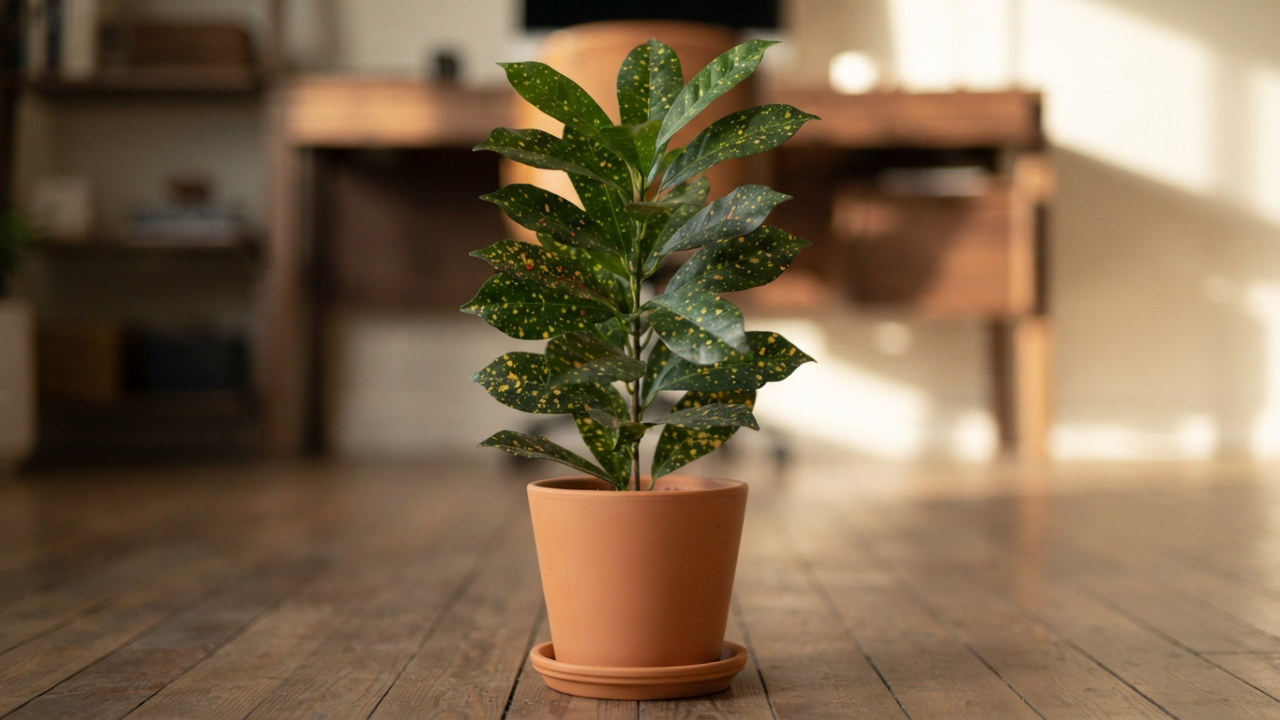
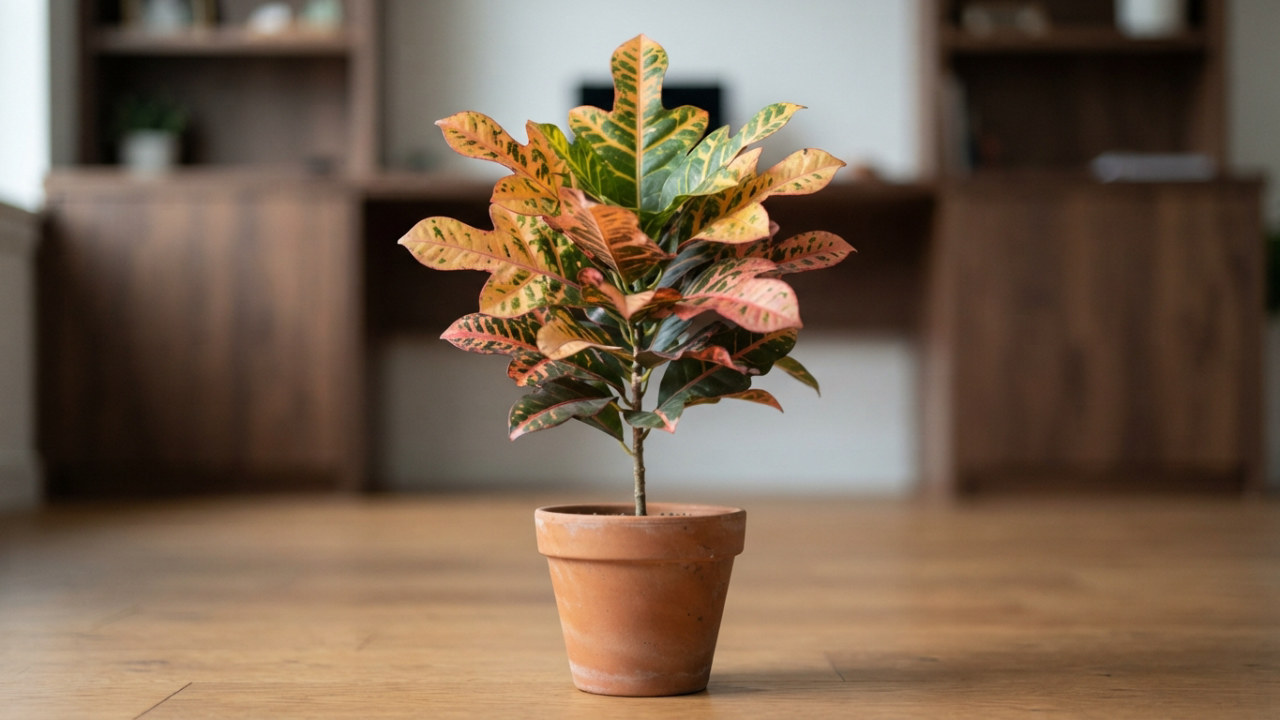
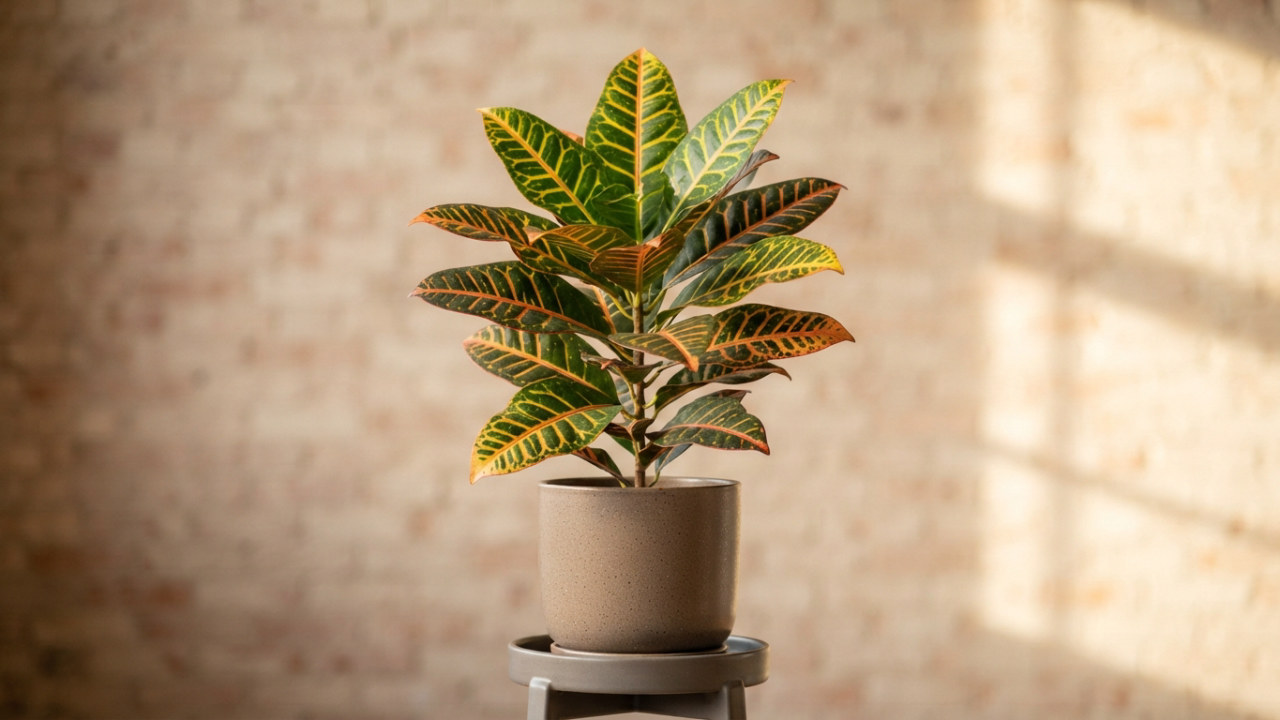
Compact croton with glossy dark green oval leaves dusted with tiny golden-yellow speckles.
- Every 5 daysWatering
- Full sunLight
- 50–70 %Humidity
- 18–29 °CTemperature


Other varieties 10
How to care for your Croton 'Gold Dust'
Everything you need to keep your Croton 'Gold Dust' healthy: watering, light, humidity, feeding, repotting and pruning.
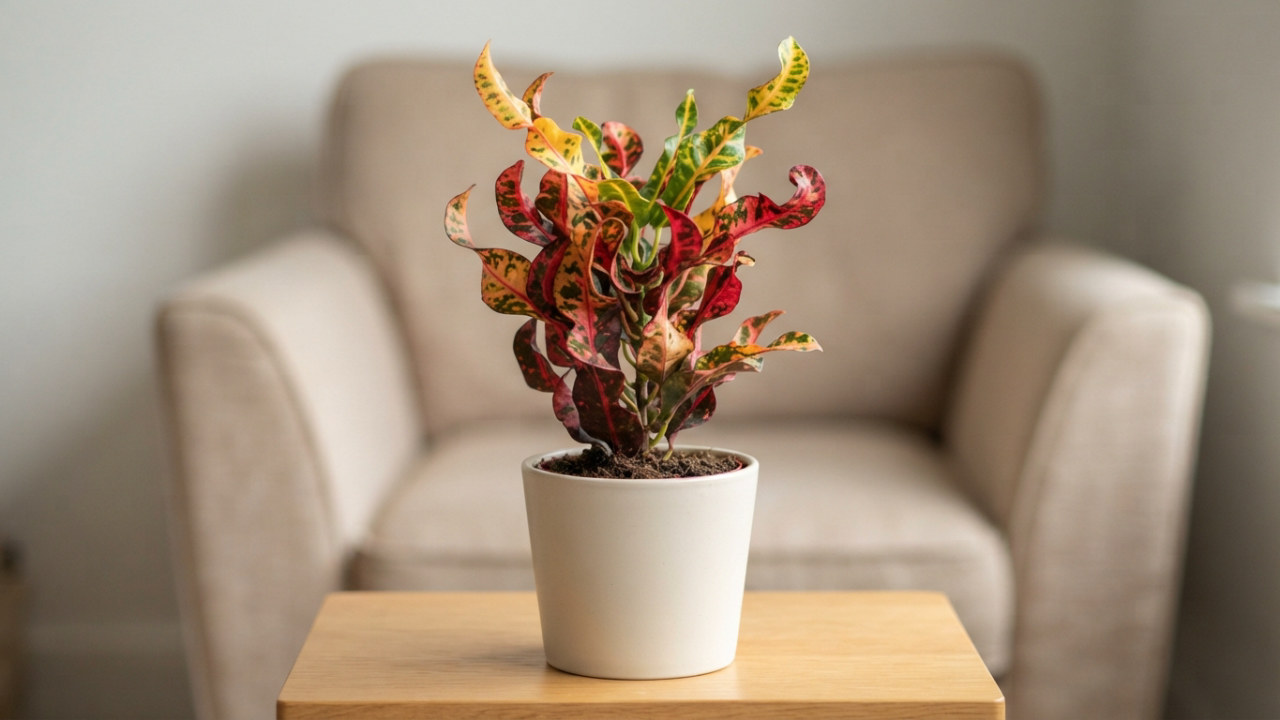
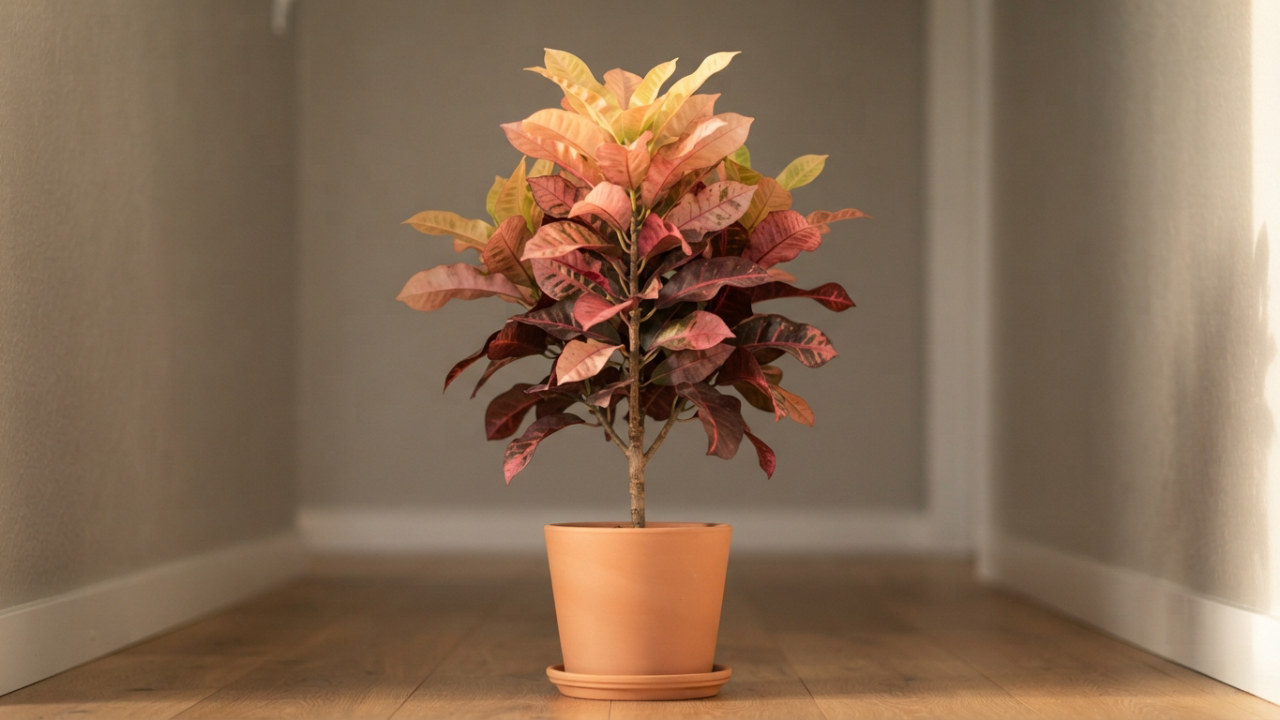
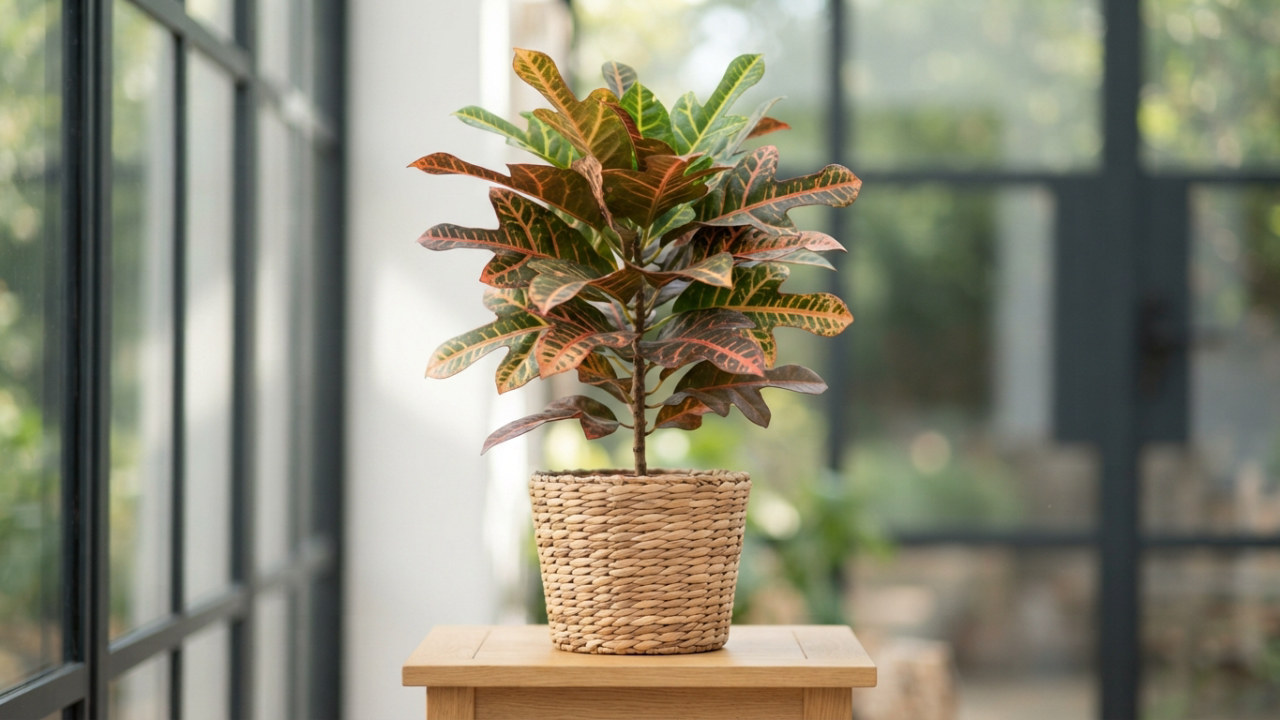
'Gold Dust' is the calm croton: where most cultivars flare in red and orange, its glossy, leathery, oval leaves are dark green sprinkled all over with fine golden-yellow dots, giving a gold-dust effect. Leaves reach about 12 cm long and 3 cm wide. The plant is upright, bushy and compact, growing slowly to moderately to 0.6 to 1.2 m. Like other speckled crotons it needs bright light, or the speckles fade and the leaves turn plain green.

How to recognise Croton 'Gold Dust'
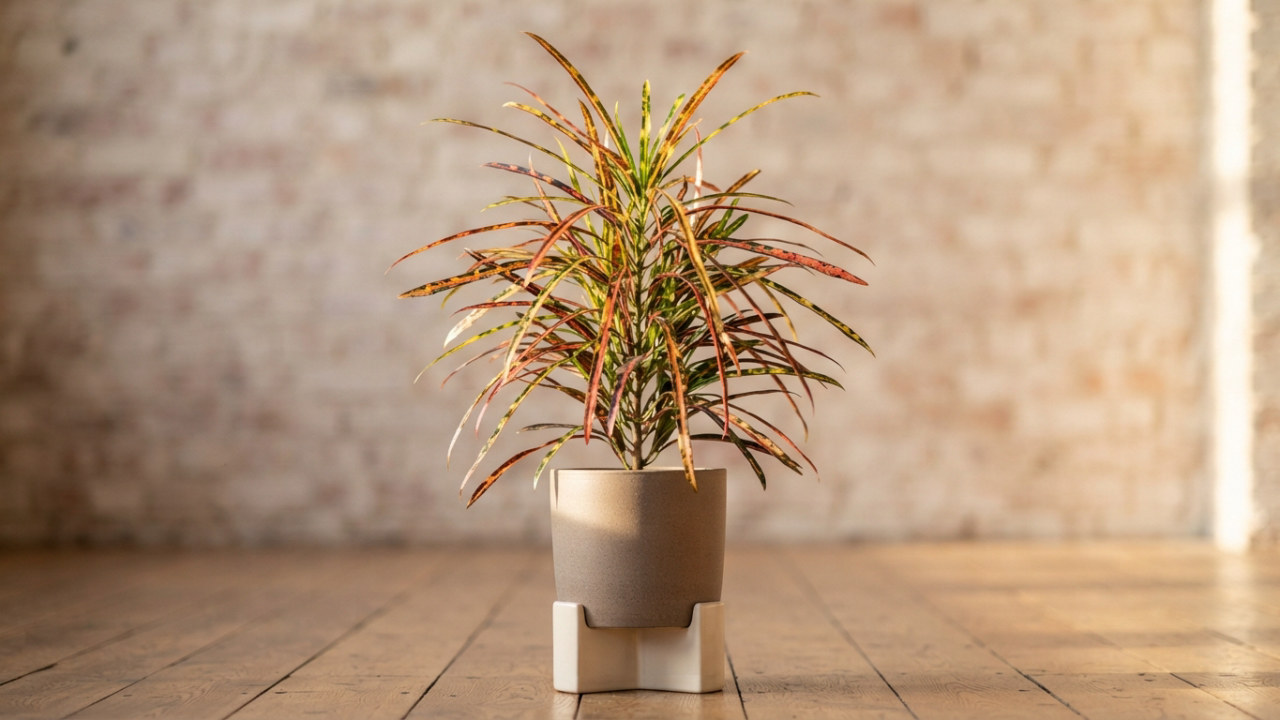
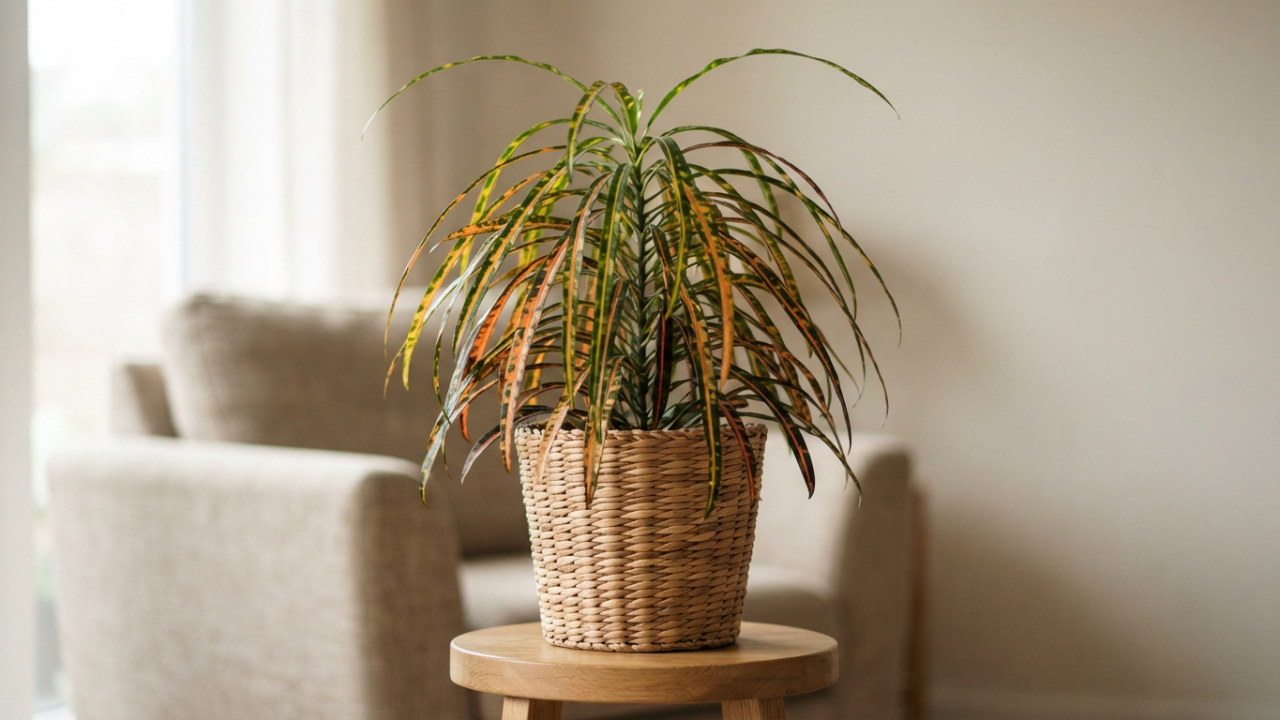
Flat, glossy, elliptical dark green leaves densely speckled with small golden-yellow dots and little red. 'Eleanor Roosevelt' has the same spots on much narrower leaves; 'Petra' has bold veins instead of speckles.

Watering your Croton 'Gold Dust'
Every 5 days
Water with lukewarm water once the top inch of mix is dry, about every 5 days in growth and every 9 days in winter.
How to know it needs water
- The top inch of mix feels dry
- Leaves start to droop and soften

How much light a Croton 'Gold Dust' needs
Full sun
Give it your brightest spot, with 4 to 6 hours of direct sun, ideally at a south, east or west window.
- Direct sun tolerated
- 4 to 6 h a day
- Orientations that suit it
- South, South-east, South-west, East, West

Humidity and misting
50–70 %
Keep the air between 50 and 70 percent humidity. Mist about every 4 days when the air is dry, and wipe the leaves now and then to discourage spider mites.

Feeding and fertiliser
Every 21 days
Feed every 3 weeks from April to September at half strength, and stop in winter.
- Recommended feed
- Balanced liquid fertilizer for foliage plants. · 3-1-2

Repotting your Croton 'Gold Dust'
Every 24 months
Move up one pot size into a rich, well-draining mix, wear gloves against the sap and handle the roots gently.
- When
- Spring, from March to May.
- Potting mix
- All-purpose potting mix
- Mix in
- perlite, coco fibre
The tell-tale signs
- Roots grow out of the drainage holes
- The mix dries out within a day or two of watering

Pruning your Croton 'Gold Dust'
In spring, when the plant turns leggy or grows too tall. Wearing gloves, cut stems just above a leaf and blot the sap; new shoots branch out below the cut.

Through the year
Watering is not set once and for all: it follows the light and the growth. Allow 7 days between waterings in the depth of winter, against 4 in the growing season.
- 7 J
- 6 F
- 5 M
- 5 A
- 4 M
- 4 J
- 4 J
- 5 A
- 5 S
- 6 O
- 6 N
- 7 D
Active growth · Days between waterings

Toxicity
The milky sap irritates skin, and eating the plant is toxic to cats and dogs (vomiting, diarrhea); for people it is mildly irritating, not seriously dangerous.

Good to know
- The cultivar is said to come from laboratory crosses and selection of several croton varieties.
- In weak light the golden speckles fade and the leaves revert to solid green.

Frequently asked questions about the Croton 'Gold Dust'
How do you care for a Croton 'Gold Dust'?
Water it every 5 days. Give it full sun. Ideal humidity: 50–70 %. Ideal temperature: 18–29 °C. Water with lukewarm water once the top inch of mix is dry, about every 5 days in growth and every 9 days in winter.
How often should you water a Croton 'Gold Dust'?
Every 5 days Water with lukewarm water once the top inch of mix is dry, about every 5 days in growth and every 9 days in winter. How to know it needs water : The top inch of mix feels dry ; Leaves start to droop and soften.
How much light does a Croton 'Gold Dust' need?
Full sun Give it your brightest spot, with 4 to 6 hours of direct sun, ideally at a south, east or west window. 4 to 6 h a day
Is the Croton 'Gold Dust' toxic to cats and dogs?
Yes. The milky sap irritates skin, and eating the plant is toxic to cats and dogs (vomiting, diarrhea); for people it is mildly irritating, not seriously dangerous. Keep it out of reach of your pets and call a vet if any is swallowed.
Why are my Croton 'Gold Dust' leaves turning yellow?
Yellowing most often comes from too much water: the mix stays wet and the roots suffocate. Check that the pot drains, empty the saucer, and let the mix dry before watering again. Too little light or a cold draught cause the same symptom.
When should you repot a Croton 'Gold Dust'?
Repot every 24 months, ideally in spring, from march to may.. Move up one pot size into a rich, well-draining mix, wear gloves against the sap and handle the roots gently.

At a glance
- Family
- Euphorbiaceae
- Category
- Tropical
- Placement
- Indoor
- Mature height
- 90 cm
- Growth
- Moderate
- Temperature
- 18–29 °C
- Pot materials
- terracotta, ceramic, plastic
- Growth
- Reaches maturity in 5 years
These figures are for an average plant. In the app they are recalculated for yours, based on your room, its orientation and the season.
And for your plant, in your home?
In the app this plant becomes yours: a watering schedule tuned to your home, health tracking from photos, and reminders at the right moment.
In the same spirit
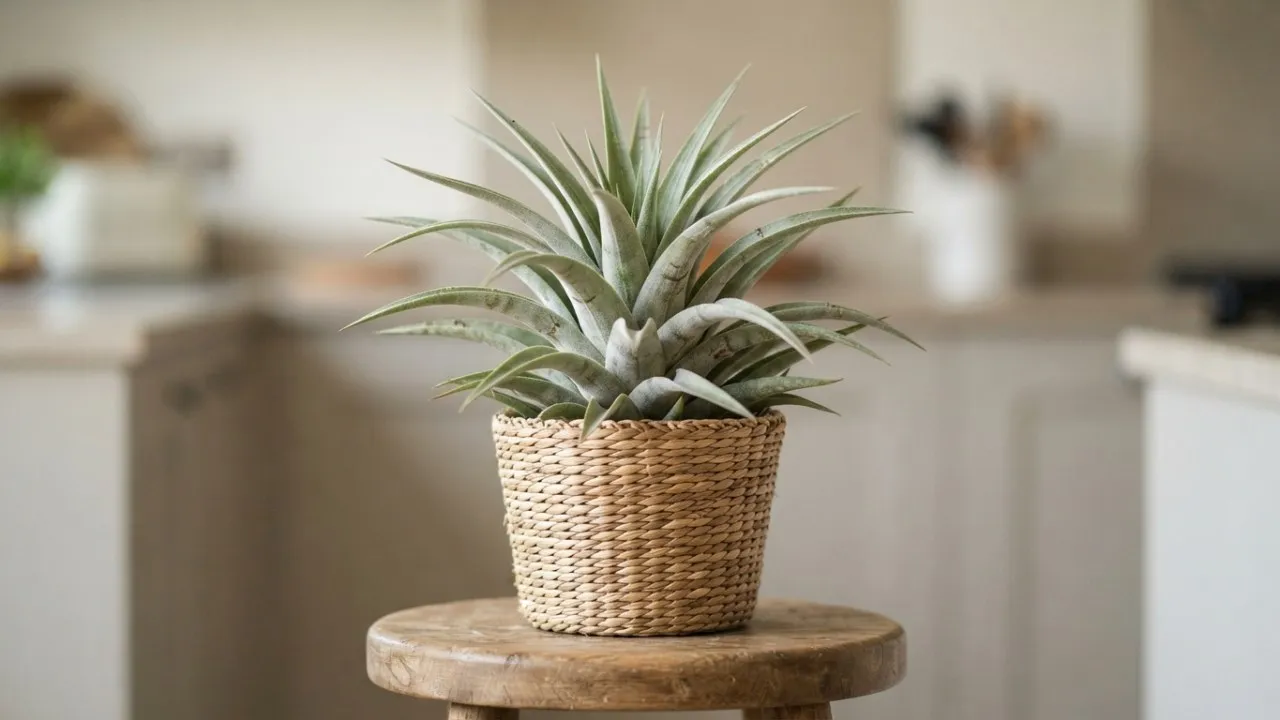 Every 7 days


Air Plant
Tillandsia ionantha

 Every 6 days
Alocasia amazonica
Alocasia amazonica
 Every 7 days
Alocasia baginda
Alocasia baginda
 Every 4 days
Angel Wings
Caladium bicolor
