Succulent · Apocynaceae
Parachute Plant
Ceropegia sandersonii
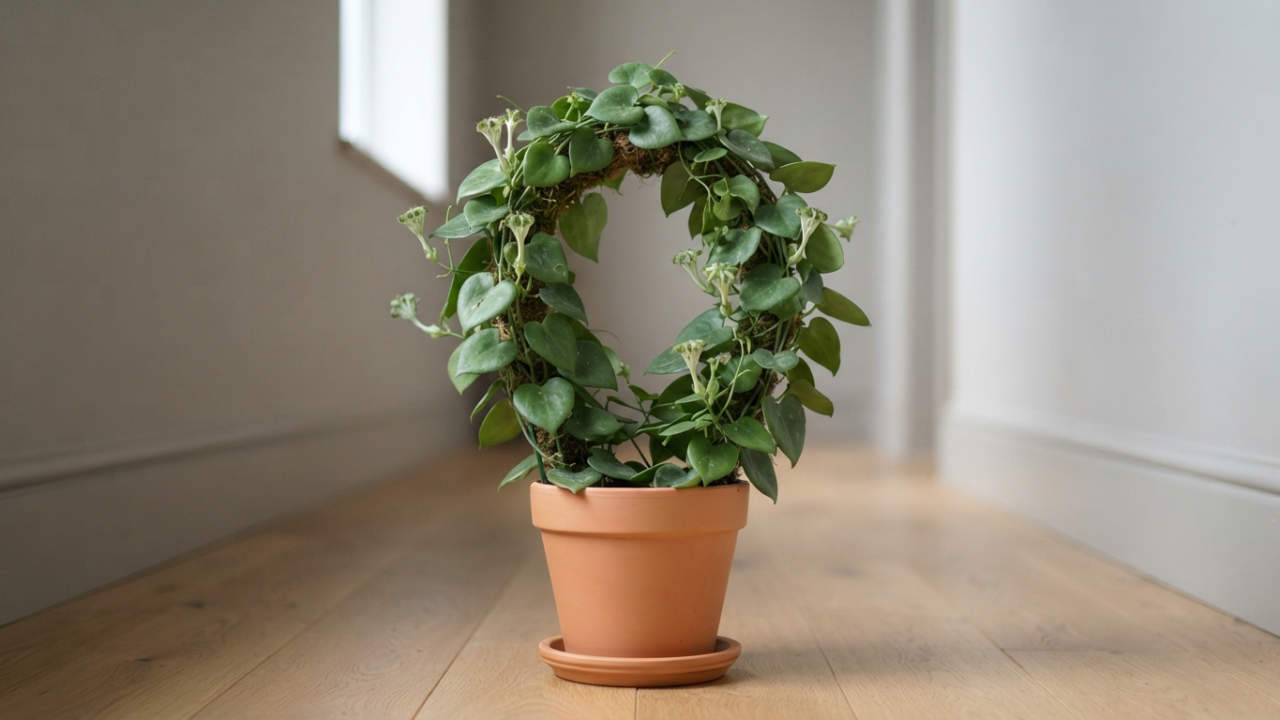
The Parachute Plant is a fascinating succulent known for its distinctive, parachute-shaped flowers.
- Every 8 daysWatering
- Bright indirect lightLight
- 30–50 %Humidity
- 18–27 °CTemperature


How to care for your Parachute Plant
Everything you need to keep your Parachute Plant healthy: watering, light, humidity, feeding, repotting and pruning.
Ceropegia sandersonii, often called the Parachute Plant, is a unique succulent vine native to Southern Africa. It is highly prized for its unusual, intricately patterned flowers that resemble small green and white parachutes, with hairs that guide insects inside. This easy-to-care-for plant thrives in bright, indirect light and prefers well-draining soil, making it an excellent choice for windowsills or hanging baskets. Its vining habit can reach impressive lengths, creating a beautiful display.

How to recognise Parachute Plant
A twining vine with thin stems and fleshy, plain green, heart-shaped leaves, 3 to 5 cm long. Its flowers are the giveaway: a green funnel with five lobes joined into a mottled, parachute-like canopy. Ceropegia woodii has smaller leaves marbled with silver, purple stems and little aerial tubers, and Hoya kerrii has single, very thick heart-shaped leaves on a woody stem.

Watering your Parachute Plant
Every 8 days
Water thoroughly when the upper half of the soil is dry, about every 8 days in the growing season. Allow excess water to drain away, and water less often, about every 16 days, in the rest period.
How to know it needs water
- Upper half of the soil dry
- Leaves feel slightly soft
- Pot feels light

How much light a Parachute Plant needs
Bright indirect light
Bright indirect light; tolerates some direct morning or late afternoon sun.
- Direct sun tolerated
- 0 to 2 h a day
- Orientations that suit it
- North, North-east, East, South-east, South, South-west, West, North-west

Humidity and misting
30–50 %
Low to medium (30 to 50 %) Avoid misting as it prefers drier conditions and can be prone to fungal issues with excessive moisture.

Feeding and fertiliser
Every 28 days
Apply monthly from April to September; stop in autumn and winter.
- Recommended feed
- Balanced liquid fertilizer, diluted to half strength · 1-2-1

Repotting your Parachute Plant
Every 24 months
Repot into a container only slightly larger, using a well-draining succulent or cactus mix. Handle stems gently.
- When
- Spring
- Potting mix
- Cactus and succulent mix
- Mix in
- perlite, pumice, coarse sand
The tell-tale signs
- Roots emerging from drainage holes
- Growth has slowed significantly
- Plant appears top-heavy or unstable

Pruning your Parachute Plant
Prune to shape or remove leggy growth at any time, especially in spring. Use clean, sharp scissors to cut stems just above a node. Cuttings can be easily propagated.

Through the year
Watering is not set once and for all: it follows the light and the growth. Allow 14 days between waterings in the depth of winter, against 6 in the growing season.
- 12 J
- 10 F
- 8 M
- 7 A
- 6 M
- 6 J
- 6 J
- 7 A
- 8 S
- 10 O
- 12 N
- 14 D
Active growth · Days between waterings

Good to know
- Its unique flowers resemble small parachutes or lanterns
- The flower acts as a temporary trap: small flies enter, are held by downward-pointing hairs, and are released later covered in pollen
- It is native to southern Africa, including South Africa, Eswatini and Mozambique

Frequently asked questions about the Parachute Plant
How do you care for a Parachute Plant?
Water it every 8 days. Give it bright indirect light. Ideal humidity: 30–50 %. Ideal temperature: 18–27 °C. Water thoroughly when the upper half of the soil is dry, about every 8 days in the growing season. Allow excess water to drain away, and water less often, about every 16 days, in the rest period.
How often should you water a Parachute Plant?
Every 8 days Water thoroughly when the upper half of the soil is dry, about every 8 days in the growing season. Allow excess water to drain away, and water less often, about every 16 days, in the rest period. How to know it needs water : Upper half of the soil dry ; Leaves feel slightly soft ; Pot feels light.
How much light does a Parachute Plant need?
Bright indirect light Bright indirect light; tolerates some direct morning or late afternoon sun. 0 to 2 h a day
Is the Parachute Plant toxic to cats and dogs?
No, the Parachute Plant is not listed as toxic to cats and dogs. That is still no reason to let your pets chew on it.
Why are my Parachute Plant leaves turning yellow?
Yellowing most often comes from too much water: the mix stays wet and the roots suffocate. Check that the pot drains, empty the saucer, and let the mix dry before watering again. Too little light or a cold draught cause the same symptom.
When should you repot a Parachute Plant?
Repot every 24 months, ideally in spring. Repot into a container only slightly larger, using a well-draining succulent or cactus mix. Handle stems gently.

At a glance
- Family
- Apocynaceae
- Category
- Succulent
- Placement
- Indoor
- Mature height
- 30 cm
- Growth
- Moderate
- Temperature
- 18–27 °C
- Pot materials
- terracotta, ceramic, plastic
- Growth
- Reaches maturity in 3 years
These figures are for an average plant. In the app they are recalculated for yours, based on your room, its orientation and the season.
And for your plant, in your home?
In the app this plant becomes yours: a watering schedule tuned to your home, health tracking from photos, and reminders at the right moment.