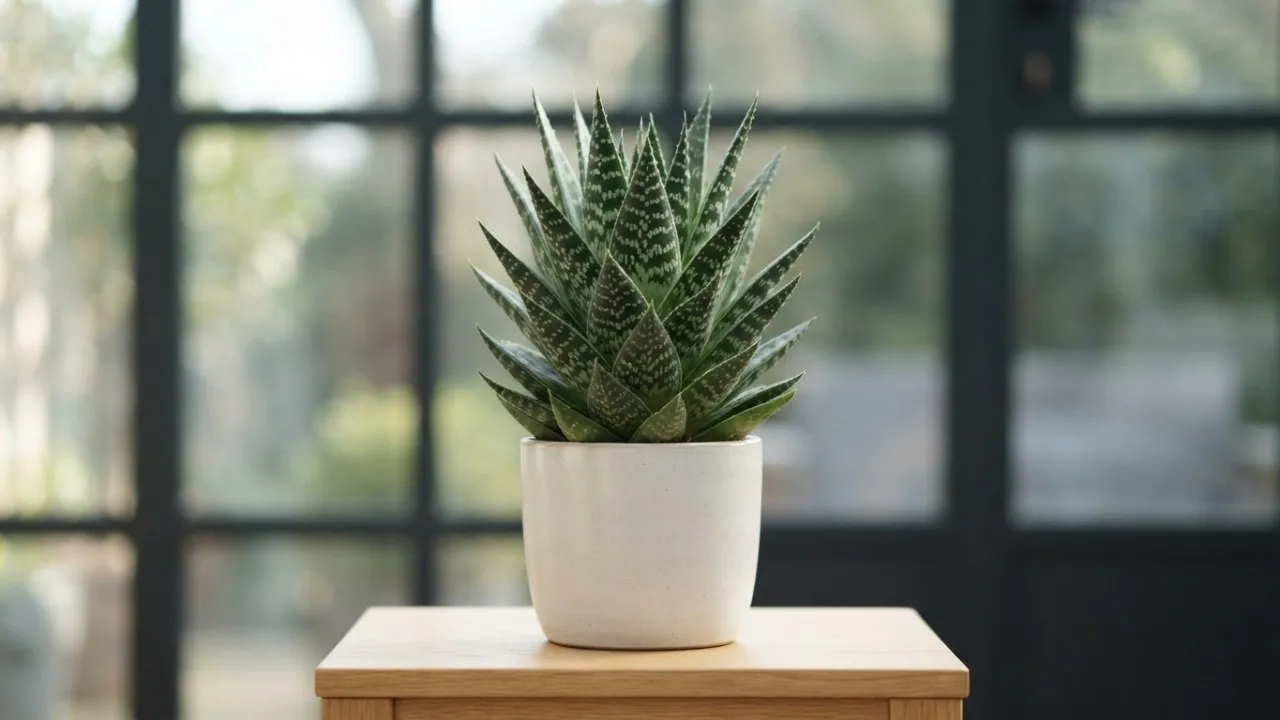
Tiger Aloe
Aloe variegata
A distinctive aloe with triangular, dark green leaves banded with irregular white markings.
The essentials at a glance
-
Watering
Every 14 days
-
Light
Bright indirect light
-
Humidity
30–50 %
-
Temperature
7–27 °C


How to care for your Tiger Aloe
Everything you need to keep your Tiger Aloe healthy: watering, light, humidity, feeding, repotting and pruning.
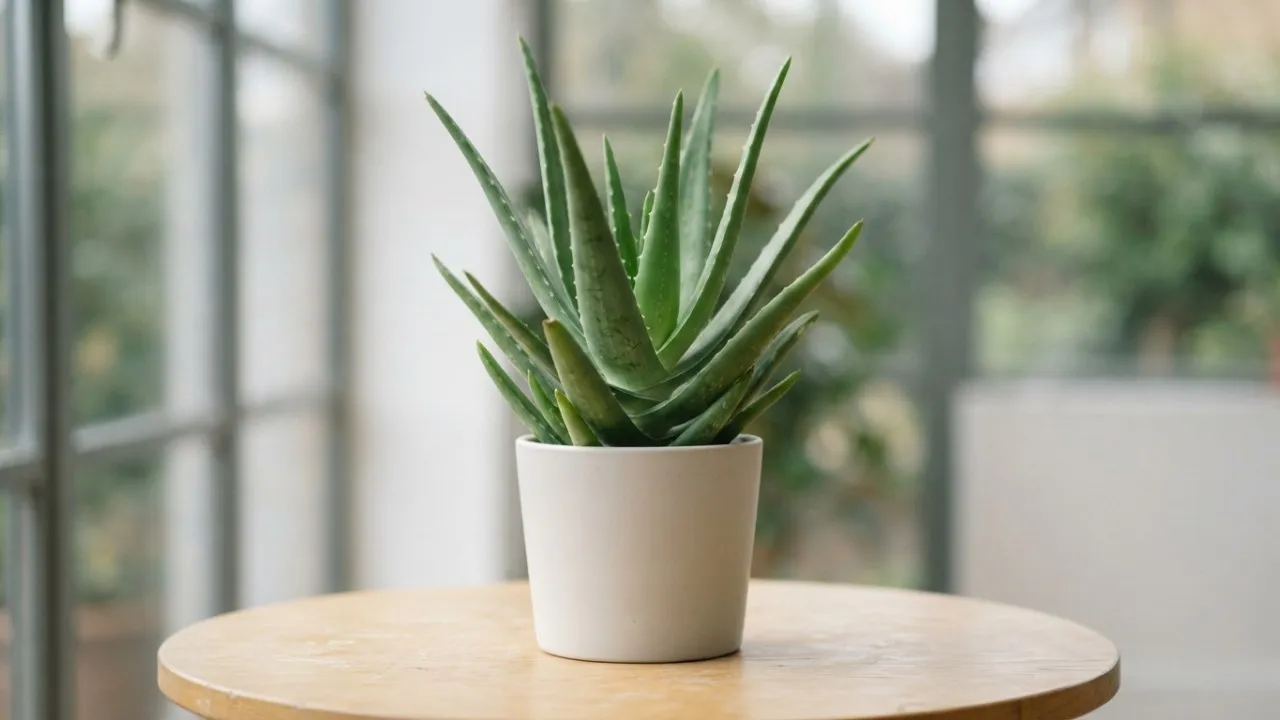
Aloe variegata, commonly known as Tiger Aloe or Partridge Breast Aloe, is a highly ornamental and compact succulent. Its unique stacked, triangular leaves are deep green with prominent, irregular white bands or spots, creating a striking pattern. This hardy aloe is perfect for small pots, windowsills, or mixed succulent arrangements. It produces charming salmon-pink to orange tubular flowers on tall, unbranched stalks, typically in late winter or early spring, adding to its year-round appeal.

Watering your Tiger Aloe
Every 14 days
Water thoroughly, allowing soil to dry completely between waterings.
How to know it needs water
- Soil feels completely dry
- Leaves may feel slightly softer

How much light a Tiger Aloe needs
Bright indirect light
Bright indirect light to partial sun.
- Direct sun tolerated
- 2 to 4 h a day
- Orientations that suit it
- North, North-east, East, South-east, South, South-west, West, North-west

Humidity and misting
30–50 %
Low (30-50%) Not needed; can lead to water retention in leaf crevices and rot.

Feeding and fertiliser
Every 90 days
Fertilize lightly once or twice during spring/summer; none in winter.
- Recommended feed
- Diluted liquid succulent or cactus fertilizer. · 2-7-7

Repotting your Tiger Aloe
Every 24 months
Gently unpot, separate offsets, replant in well-draining succulent mix.
- When
- Spring
- Potting mix
- Cactus and succulent mix
- Mix in
- perlite, pumice, coarse sand
The tell-tale signs
- Roots filling the pot
- Offsets crowding the main plant
- Stunted growth

Pruning your Tiger Aloe
Remove spent flower stalks or any damaged/dead leaves. Cut cleanly at the base with a sterile blade.

Through the year
Watering is not set once and for all: it follows the light and the growth. Allow 25 days between waterings in the depth of winter, against 13 in the growing season.
- 21 J
- 21 F
- 17 M
- 14 A
- 13 M
- 13 J
- 13 J
- 13 A
- 14 S
- 17 O
- 21 N
- 25 D
Active growth · Days between waterings

Toxicity
Mildly toxic to pets; ingestion can cause vomiting and diarrhea. Handle with care.

Good to know
- Its striking foliage resembles a tiger's stripes or a bird's breast.
- Produces salmon-pink to orange flowers on a tall stalk.

Frequently asked questions about the Tiger Aloe
How do you care for a Tiger Aloe?
Water it every 14 days. Give it bright indirect light. Ideal humidity: 30–50 %. Ideal temperature: 7–27 °C. Water thoroughly, allowing soil to dry completely between waterings.
How often should you water a Tiger Aloe?
Every 14 days Water thoroughly, allowing soil to dry completely between waterings. How to know it needs water : Soil feels completely dry ; Leaves may feel slightly softer.
How much light does a Tiger Aloe need?
Bright indirect light Bright indirect light to partial sun. 2 to 4 h a day
Is the Tiger Aloe toxic to cats and dogs?
Yes. Mildly toxic to pets; ingestion can cause vomiting and diarrhea. Handle with care. Keep it out of reach of your pets and call a vet if any is swallowed.
Why are my Tiger Aloe leaves turning yellow?
Yellowing most often comes from too much water: the mix stays wet and the roots suffocate. Check that the pot drains, empty the saucer, and let the mix dry before watering again. Too little light or a cold draught cause the same symptom.
When should you repot a Tiger Aloe?
Repot every 24 months, ideally in spring. Gently unpot, separate offsets, replant in well-draining succulent mix.

At a glance
- Family
- Asphodelaceae
- Category
- Succulent
- Placement
- Indoor and outdoor
- Mature height
- 30 cm
- Growth
- Slow
- Temperature
- 7–27 °C
- Pot materials
- terracotta, ceramic, plastic
- Growth
- Reaches maturity in 5 years
These figures are for an average plant. In the app they are recalculated for yours, based on your room, its orientation and the season.
And for your plant, in your home?
In the app this plant becomes yours: a watering schedule tuned to your home, health tracking from photos, and reminders at the right moment.