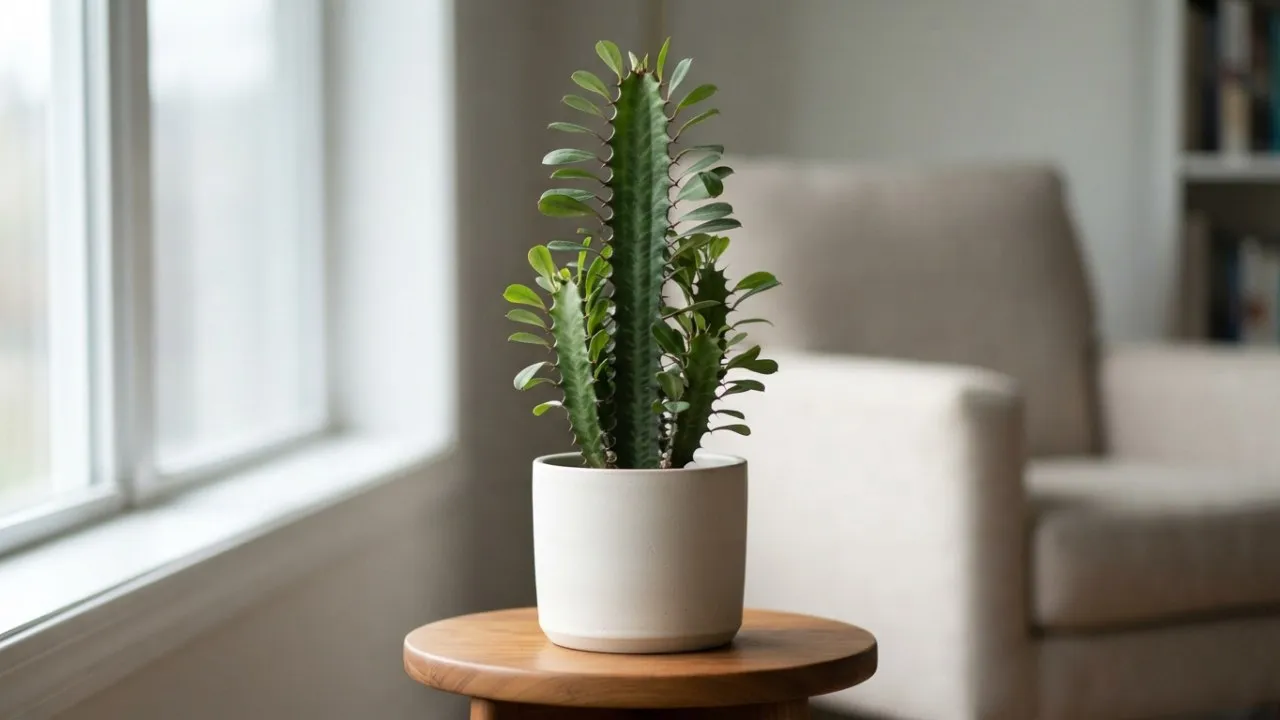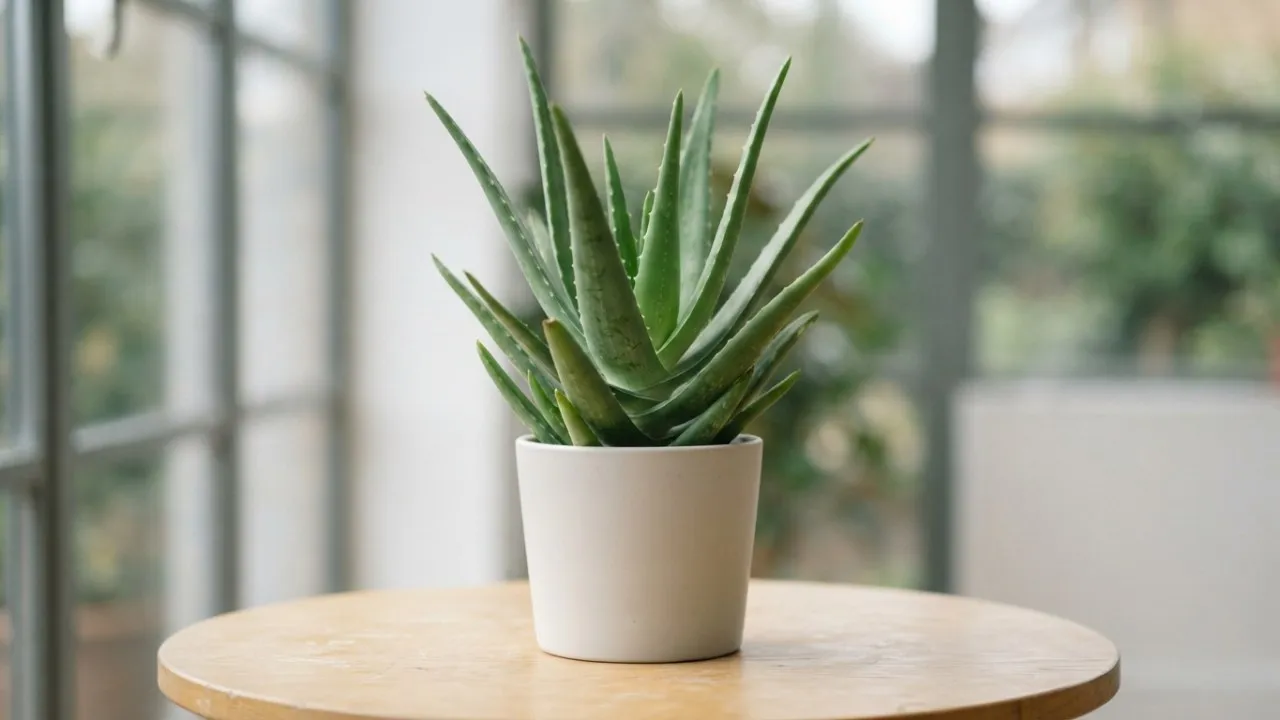
Succulent · Asphodelaceae
Red Aloe
Aloe cameronii
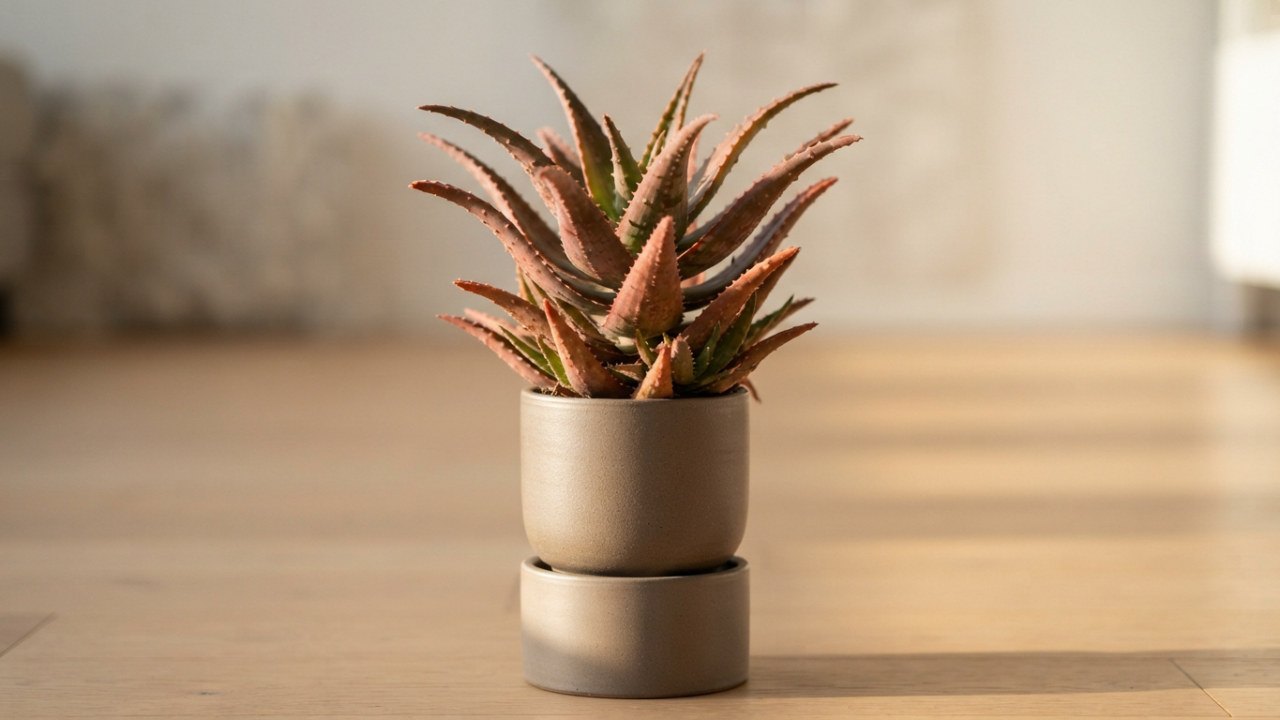
A shrubby, suckering aloe from southern Africa whose long, curving leaves turn coppery red in strong sun or when dry.
- Every 12 daysWatering
- Full sunLight
- 30–40 %Humidity
- 7–35 °CTemperature


How to care for your Red Aloe
Everything you need to keep your Red Aloe healthy: watering, light, humidity, feeding, repotting and pruning.
Red aloe grows in crevices on granite hills and cliffs in Malawi, Zimbabwe, Mozambique and Zambia. It is a shrubby, suckering aloe that branches from the base into clumps of open rosettes on upright stems 30 to 60 centimeters tall. The lance-shaped leaves, up to 50 centimeters long, are medium to dark green and turn coppery red in full sun or when kept dry. Bright red flowers open on tall spikes from late fall into winter. It grows at a moderate pace.

How to recognise Red Aloe
A shrubby, multi-stemmed aloe with open rosettes of long, curving, lance-shaped leaves up to 50 centimeters, dark green turning coppery red in sun or when dry, with small brown-tipped teeth and bright red flowers in winter. Aloe dorotheae, the closest look-alike, forms low clumps of shorter, glossy leaves, spotted white when young, with pale teeth; Aloe vera is a stemless gray-green rosette, and Aloe arborescens is a much taller shrub.

Watering your Red Aloe
Every 12 days
Give a deep watering, empty the saucer, and wait until the mix is dry right through before the next one; in the winter rest, water much less, since that dry spell helps it flower.
How to know it needs water
- The mix is dry throughout the pot, not only at the surface
- The leaves feel slightly softer and thinner than usual

How much light a Red Aloe needs
Full sun
Six to twelve hours of direct sun a day, on a sunny south, east or west window or outdoors in summer, bring out the coppery red, while bright indirect light keeps the leaves green; move a plant out of shade into strong sun gradually, since the copper-red flush is harmless but leaves that are not acclimated can scorch.
- Direct sun tolerated
- 6 to 12 h a day
- Orientations that suit it
- South, South-east, South-west, East, West

Humidity and misting
30–40 %
Ordinary, fairly dry room air, around 30 to 40%, suits it well. Do not mist: damp leaf bases and rosette centers invite rot, and the plant has no use for humid air.

Feeding and fertiliser
Every 28 days
Feed about once a month from April to September, and not in fall and winter, when growth slows.
- Recommended feed
- A diluted liquid fertilizer for cacti and succulents, low in nitrogen. · 2-7-7

Repotting your Red Aloe
Every 24 months
Pick a wide, stable pot, since the stems sprawl, fill it with gritty cactus mix, and set the plant at its former depth; separate rooted suckers if you want more plants.
- When
- Spring, from March to May.
- Potting mix
- Cactus and succulent mix
- Mix in
- perlite, coarse sand, pumice
The tell-tale signs
- The sprawling stems pull the plant toward one side or tip the pot
- Roots appear at the drainage holes or circle the inside of the pot

Pruning your Red Aloe
In spring, when stems have grown long and leggy, and after the flower spikes have faded. Cut a long stem back to a lower leaf or side shoot with clean shears, and cut spent spikes off at their base.

Through the year
Watering is not set once and for all: it follows the light and the growth. Allow 19 days between waterings in the depth of winter, against 10 in the growing season.
- 18 J
- 14 F
- 12 M
- 11 A
- 10 M
- 10 J
- 10 J
- 11 A
- 12 S
- 13 O
- 16 N
- 19 D
Active growth · Days between waterings

Toxicity
Toxic to cats, dogs and people if eaten: the yellow latex under the leaf skin, which holds aloin, irritates the digestive tract, causing diarrhea in people and vomiting and lethargy in cats and dogs, while handling the plant is harmless.

Good to know
- It is named for Kenneth J. Cameron, who found it in Malawi and sent it to Kew; it was formally described in 1903.
- Its leaves turn coppery red in full sun or when kept dry, and stay green in lower light.

Frequently asked questions about the Red Aloe
How do you care for a Red Aloe?
Water it every 12 days. Give it full sun. Ideal humidity: 30–40 %. Ideal temperature: 7–35 °C. Give a deep watering, empty the saucer, and wait until the mix is dry right through before the next one; in the winter rest, water much less, since that dry spell helps it flower.
How often should you water a Red Aloe?
Every 12 days Give a deep watering, empty the saucer, and wait until the mix is dry right through before the next one; in the winter rest, water much less, since that dry spell helps it flower. How to know it needs water : The mix is dry throughout the pot, not only at the surface ; The leaves feel slightly softer and thinner than usual.
How much light does a Red Aloe need?
Full sun Six to twelve hours of direct sun a day, on a sunny south, east or west window or outdoors in summer, bring out the coppery red, while bright indirect light keeps the leaves green; move a plant out of shade into strong sun gradually, since the copper-red flush is harmless but leaves that are not acclimated can scorch. 6 to 12 h a day
Is the Red Aloe toxic to cats and dogs?
Yes. Toxic to cats, dogs and people if eaten: the yellow latex under the leaf skin, which holds aloin, irritates the digestive tract, causing diarrhea in people and vomiting and lethargy in cats and dogs, while handling the plant is harmless. Keep it out of reach of your pets and call a vet if any is swallowed.
Why are my Red Aloe leaves turning yellow?
Yellowing most often comes from too much water: the mix stays wet and the roots suffocate. Check that the pot drains, empty the saucer, and let the mix dry before watering again. Too little light or a cold draught cause the same symptom.
When should you repot a Red Aloe?
Repot every 24 months, ideally in spring, from march to may.. Pick a wide, stable pot, since the stems sprawl, fill it with gritty cactus mix, and set the plant at its former depth; separate rooted suckers if you want more plants.

At a glance
- Family
- Asphodelaceae
- Category
- Succulent
- Placement
- Indoor and outdoor
- Mature height
- 45 cm
- Growth
- Moderate
- Temperature
- 7–35 °C
- Pot materials
- terracotta, ceramic
- Growth
- Reaches maturity in 3 years
These figures are for an average plant. In the app they are recalculated for yours, based on your room, its orientation and the season.
And for your plant, in your home?
In the app this plant becomes yours: a watering schedule tuned to your home, health tracking from photos, and reminders at the right moment.