Herb · Amaryllidaceae
Chives
Allium schoenoprasum
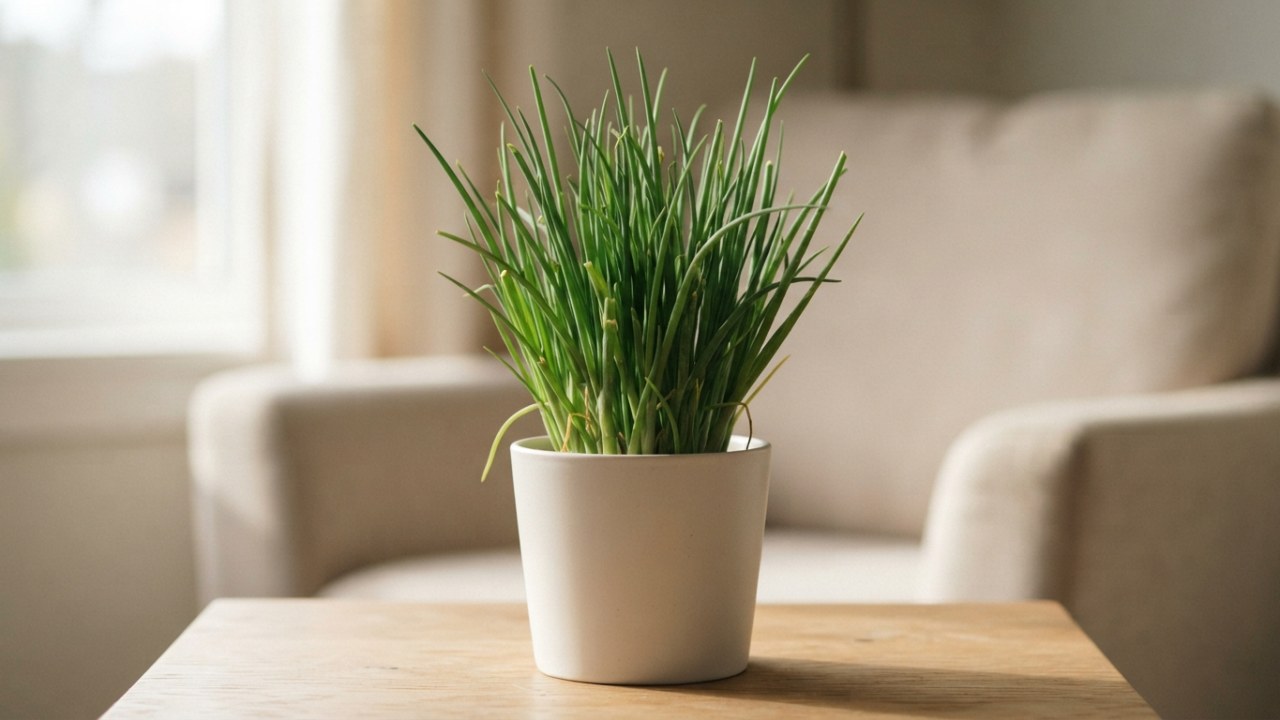
Chives are a popular, very hardy perennial herb with a delicate onion flavor and slender, grass-like hollow leaves.
- Every 3 daysWatering
- Full sunLight
- 40–60 %Humidity
- 10–25 °CTemperature


How to care for your Chives
Everything you need to keep your Chives healthy: watering, light, humidity, feeding, repotting and pruning.
Allium schoenoprasum, commonly known as chives, is a hardy perennial herb native to Europe, Asia and North America. It forms dense clumps of slender, hollow, green leaves that are prized for their mild onion flavor. Chives are easy to grow, thriving in full sun and well-draining soil that stays slightly moist, and they suit herb gardens, containers or edible borders. Regular harvesting encourages new growth, and in late spring to early summer the plant bears round purple flower heads that are also edible. Outdoors it is very frost hardy, down to about -30 °C: the leaves die back in winter and return in spring. In a pot, keep the container in a sheltered spot, wrap it in the coldest weeks, and water only a little during the rest.

How to recognise Chives
Thin, round, hollow, grass-like leaves forming a dense clump from small white bulbs, with round heads of purple flowers in late spring. Garlic chives (Allium tuberosum) have flat leaves and white flowers, and the green onion (Allium fistulosum) is taller, with much thicker, swollen leaves.

Watering your Chives
Every 3 days
Keep the mix slightly moist at all times and water as soon as the surface starts to dry, with good drainage to prevent root rot; water less often in autumn and winter.
How to know it needs water
- The top 1 to 2 cm of mix start to dry
- The leaves look slightly dull
- The pot feels lighter than usual

How much light a Chives needs
Full sun
Full sun to bright indirect light; it does best with at least 6 hours of direct sun a day.
- Direct sun tolerated
- 6 to 12 h a day
- Orientations that suit it
- South, South-east, South-west, East, West

Humidity and misting
40–60 %
Average air, between 40 and 60%; it is not fussy about humidity. Misting is not needed for chives; they prefer good air circulation.

Feeding and fertiliser
Every 28 days
Feed about once a month from April to August with a half-strength fertilizer; stop in autumn and winter.
- Recommended feed
- A liquid fertilizer for aromatic plants, or compost tea, at half the dose on the label. · 3-1-2

Repotting your Chives
Every 24 months
Repot into a container 2 to 5 cm wider with a well-draining potting mix. Chives can also be divided at repotting to make new plants.
- When
- Spring, from March to May.
- Potting mix
- All-purpose potting mix
- Mix in
- perlite
The tell-tale signs
- Roots come out of the drainage holes
- The plant looks root-bound
- Growth has slowed clearly

Pruning your Chives
Harvest regularly by snipping leaves near the base, or cut back to encourage new growth and delay flowering; tidy the dead leaves in late winter. Use clean scissors to cut the leaves 2 to 3 cm above the soil, and remove any yellowed or damaged foliage.

Through the year
Watering is not set once and for all: it follows the light and the growth. Allow 5 days between waterings in the depth of winter, against 2 in the growing season.
- 5 J
- 4 F
- 3 M
- 2 A
- 2 M
- 2 J
- 2 J
- 2 A
- 3 S
- 4 O
- 5 N
- 5 D
Active growth · Days between waterings

Toxicity
Safe for people in food amounts, but toxic to cats and dogs: thiosulfates can cause digestive upset, red blood cell damage and anemia when eaten in quantity, so keep pets from chewing it.

Good to know
- The species name schoenoprasum comes from the Greek skhoinos, 'rush', and prason, 'leek'.
- Chives are the smallest of the edible onions, and their flowers are edible too, with a mild onion taste.
- They are one of the few Allium species native to both the Old World and North America.

Frequently asked questions about the Chives
How do you care for a Chives?
Water it every 3 days. Give it full sun. Ideal humidity: 40–60 %. Ideal temperature: 10–25 °C. Keep the mix slightly moist at all times and water as soon as the surface starts to dry, with good drainage to prevent root rot; water less often in autumn and winter.
How often should you water a Chives?
Every 3 days Keep the mix slightly moist at all times and water as soon as the surface starts to dry, with good drainage to prevent root rot; water less often in autumn and winter. How to know it needs water : The top 1 to 2 cm of mix start to dry ; The leaves look slightly dull ; The pot feels lighter than usual.
How much light does a Chives need?
Full sun Full sun to bright indirect light; it does best with at least 6 hours of direct sun a day. 6 to 12 h a day
Is the Chives toxic to cats and dogs?
Yes. Safe for people in food amounts, but toxic to cats and dogs: thiosulfates can cause digestive upset, red blood cell damage and anemia when eaten in quantity, so keep pets from chewing it. Keep it out of reach of your pets and call a vet if any is swallowed.
Why are my Chives leaves turning yellow?
Yellowing most often comes from too much water: the mix stays wet and the roots suffocate. Check that the pot drains, empty the saucer, and let the mix dry before watering again. Too little light or a cold draught cause the same symptom.
When should you repot a Chives?
Repot every 24 months, ideally in spring, from march to may.. Repot into a container 2 to 5 cm wider with a well-draining potting mix. Chives can also be divided at repotting to make new plants.

At a glance
- Family
- Amaryllidaceae
- Category
- Herb
- Placement
- Indoor and outdoor
- Mature height
- 30 cm
- Growth
- Moderate
- Temperature
- 10–25 °C
- Pot materials
- terracotta, ceramic, plastic
- Growth
- Reaches maturity in 1 years
These figures are for an average plant. In the app they are recalculated for yours, based on your room, its orientation and the season.
And for your plant, in your home?
In the app this plant becomes yours: a watering schedule tuned to your home, health tracking from photos, and reminders at the right moment.