Succulent · Crassulaceae
Tree Aeonium
Aeonium arboreum
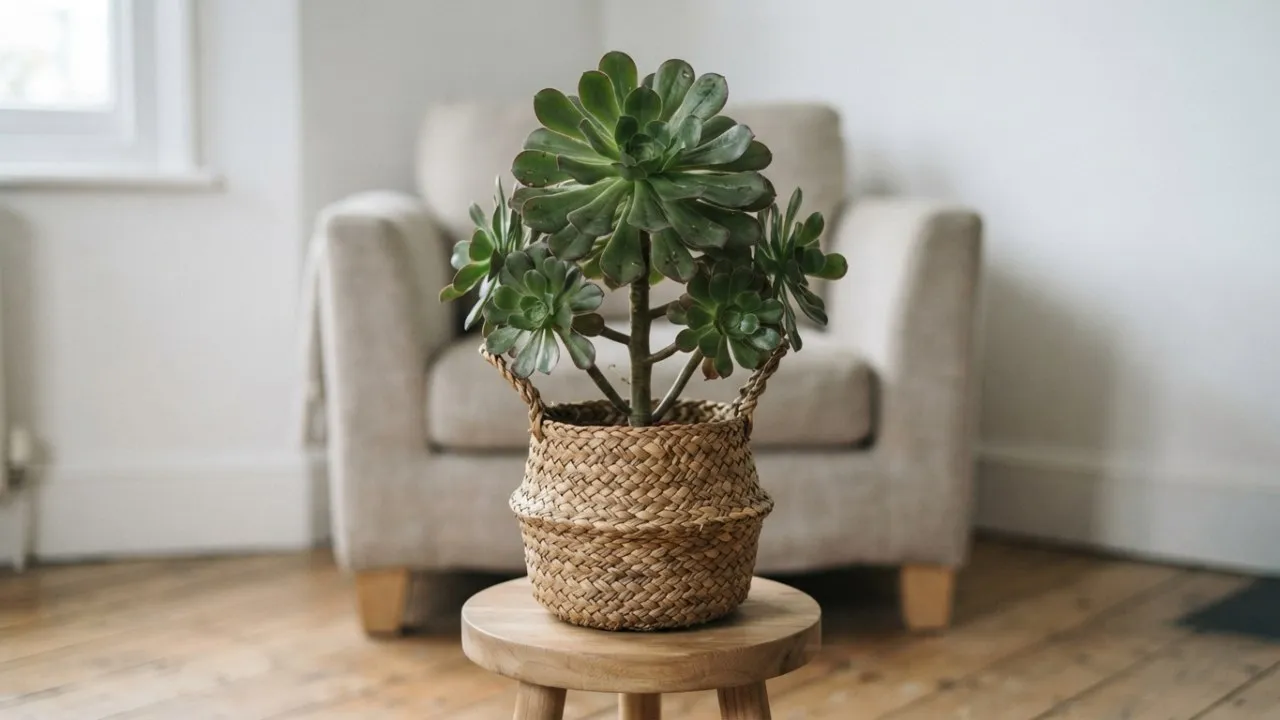
A striking succulent that forms large, often darkly colored, rosettes atop thick, woody, branching stems, resembling a miniature tree.
- Every 10 daysWatering
- Full sunLight
- 30–50 %Humidity
- 18–24 °CTemperature


Its varieties 3
How to care for your Tree Aeonium
Everything you need to keep your Tree Aeonium healthy: watering, light, humidity, feeding, repotting and pruning.
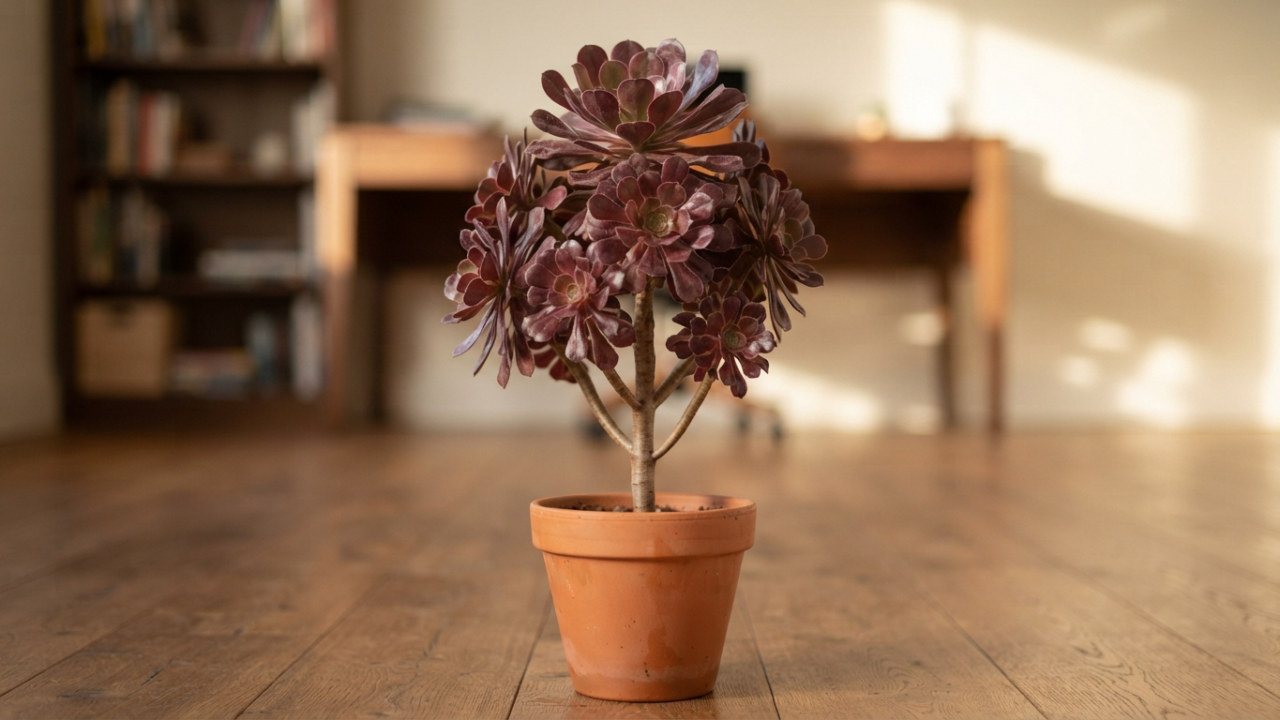
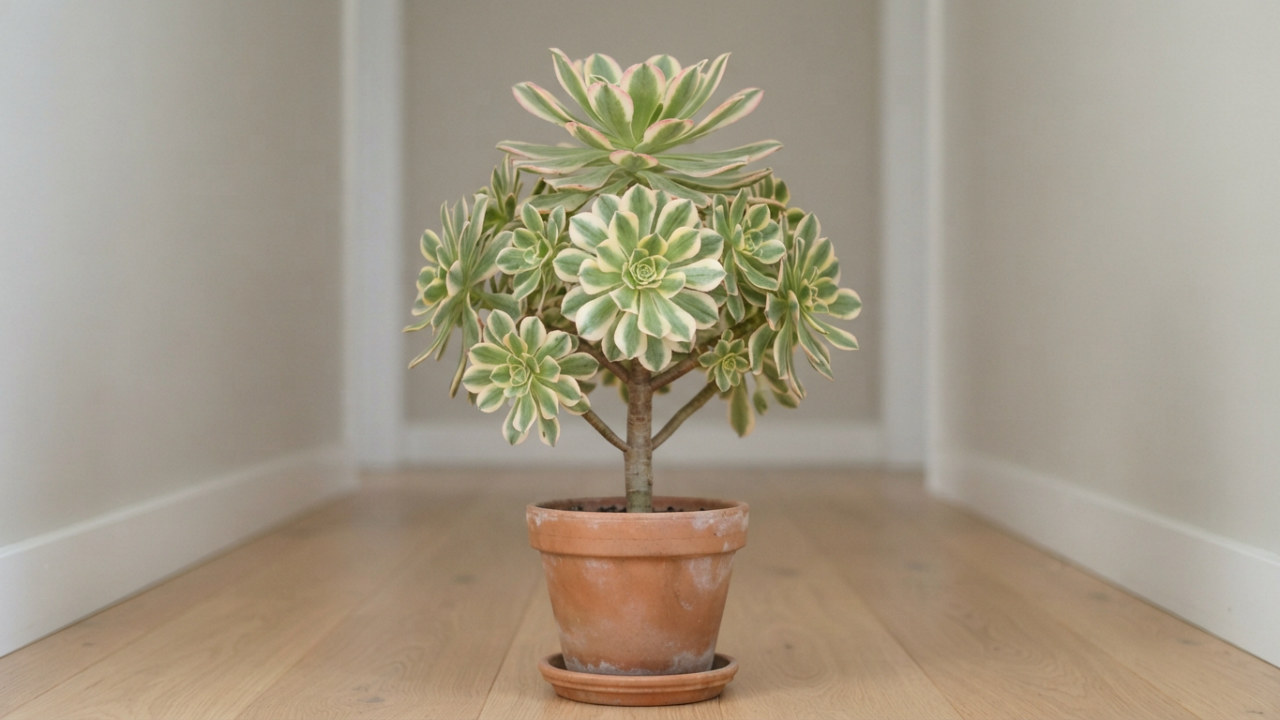
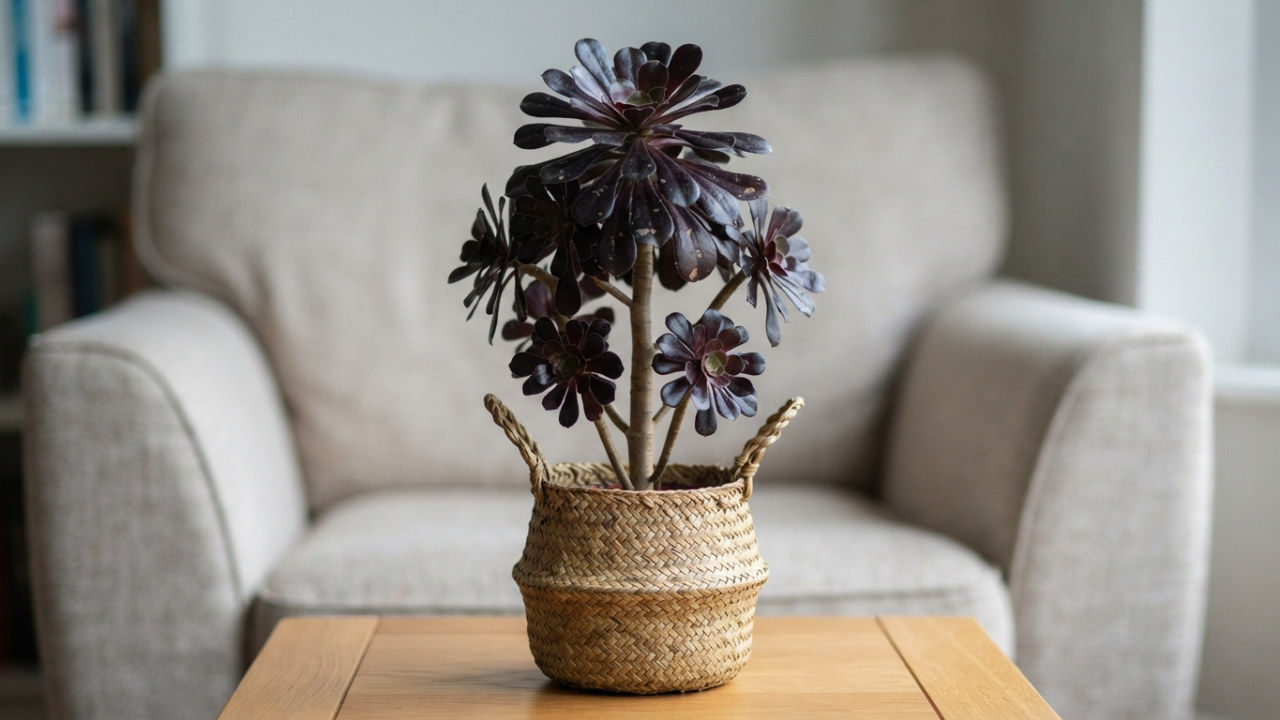
Native to the Canary Islands and Morocco, Aeonium arboreum is a popular succulent cherished for its tree-like growth habit and dramatic rosettes. It develops upright, woody stems that branch to support clusters of fleshy, spoon-shaped leaves arranged in tight rosettes, which can vary in color from bright green to deep burgundy-black, especially in cultivars like 'Zwartkop'. This species actively grows during the cooler, wetter months of fall through spring and enters a period of dormancy during hot, dry summers, often curling its leaves to conserve moisture. It tolerates only very light, brief frost (about -3 °C when dry): in a pot, bring it indoors or into a bright frost-free spot before winter frosts, and keep it out of cold rain. Mature plants can produce tall, conical inflorescences of small, star-shaped yellow flowers, after which the flowering rosette dies, though the plant typically continues from offsets.

How to recognise Tree Aeonium
An upright, branching succulent up to about 1 m tall, with bare grey-brown woody stems topped by glossy, spoon-shaped leaves in flat rosettes 10 to 20 cm wide, green or purple-black as in 'Zwartkop'. Aeonium haworthii is a smaller, bushier plant with blue-green, red-edged rosettes about 10 cm wide, and Echeveria forms stemless or short-stemmed rosettes without tall woody branches.

Watering your Tree Aeonium
Every 10 days
Water thoroughly during its active growing season (September to May), about every 10 days, and let the soil dry out completely between waterings. In summer dormancy (June to August), water only about every 3 weeks, just enough to keep the leaves from shriveling.
How to know it needs water
- Soil is completely dry to the touch
- Leaves may start to curl inward or feel less plump

How much light a Tree Aeonium needs
Full sun
Full sun to partial shade. Needs bright light to maintain compact rosettes and vibrant leaf color, especially for dark-leaved cultivars.
- Direct sun tolerated
- 4 to 8 h a day
- Orientations that suit it
- South, South-east, South-west, East, West

Humidity and misting
30–50 %
Low to medium (30 to 50 %); tolerates average household humidity well. Do not mist: water standing in the rosettes promotes rot and fungal diseases.

Feeding and fertiliser
Every 28 days
Fertilize about monthly in September, October, March and April only, at half strength. Do not fertilize during summer dormancy or in midwinter.
- Recommended feed
- Diluted liquid succulent or cactus fertilizer. · 2-7-7

Repotting your Tree Aeonium
Every 24 months
Repot into a slightly larger container with fresh, well-draining succulent potting mix. Consider trimming leggy stems for propagation.
- When
- Fall
- Potting mix
- Cactus and succulent mix
- Mix in
- perlite, pumice, coarse sand
The tell-tale signs
- Plant is root-bound
- Has become top-heavy or leggy
- Soil appears depleted or compacted

Pruning your Tree Aeonium
Late fall or early winter, during active growth, or after flowering. Pinch or cut back leggy stems to encourage branching and a fuller shape. Remove spent flower stalks at their base. Cuttings root easily.

Through the year
Watering is not set once and for all: it follows the light and the growth. Allow 25 days between waterings in the depth of winter, against 8 in the growing season.
- 15 J
- 12 F
- 10 M
- 8 A
- 18 M
- 25 J
- 25 J
- 20 A
- 8 S
- 9 O
- 10 N
- 12 D
Active growth · Days between waterings

Good to know
- Many Aeoniums, including this species, are winter growers and go dormant in the summer, unlike many other succulents.
- The rosettes are monocarpic, meaning the individual rosette will die after flowering, but the plant typically produces offsets from the base or stem.

Frequently asked questions about the Tree Aeonium
How do you care for a Tree Aeonium?
Water it every 10 days. Give it full sun. Ideal humidity: 30–50 %. Ideal temperature: 18–24 °C. Water thoroughly during its active growing season (September to May), about every 10 days, and let the soil dry out completely between waterings. In summer dormancy (June to August), water only about every 3 weeks, just enough to keep the leaves from shriveling.
How often should you water a Tree Aeonium?
Every 10 days Water thoroughly during its active growing season (September to May), about every 10 days, and let the soil dry out completely between waterings. In summer dormancy (June to August), water only about every 3 weeks, just enough to keep the leaves from shriveling. How to know it needs water : Soil is completely dry to the touch ; Leaves may start to curl inward or feel less plump.
How much light does a Tree Aeonium need?
Full sun Full sun to partial shade. Needs bright light to maintain compact rosettes and vibrant leaf color, especially for dark-leaved cultivars. 4 to 8 h a day
Is the Tree Aeonium toxic to cats and dogs?
No, the Tree Aeonium is not listed as toxic to cats and dogs. That is still no reason to let your pets chew on it.
Why are my Tree Aeonium leaves turning yellow?
Yellowing most often comes from too much water: the mix stays wet and the roots suffocate. Check that the pot drains, empty the saucer, and let the mix dry before watering again. Too little light or a cold draught cause the same symptom.
When should you repot a Tree Aeonium?
Repot every 24 months, ideally in fall. Repot into a slightly larger container with fresh, well-draining succulent potting mix. Consider trimming leggy stems for propagation.

At a glance
- Family
- Crassulaceae
- Category
- Succulent
- Placement
- Indoor and outdoor
- Mature height
- 90 cm
- Growth
- Moderate
- Temperature
- 18–24 °C
- Pot materials
- terracotta, ceramic
- Growth
- Reaches maturity in 3 years
These figures are for an average plant. In the app they are recalculated for yours, based on your room, its orientation and the season.
And for your plant, in your home?
In the app this plant becomes yours: a watering schedule tuned to your home, health tracking from photos, and reminders at the right moment.