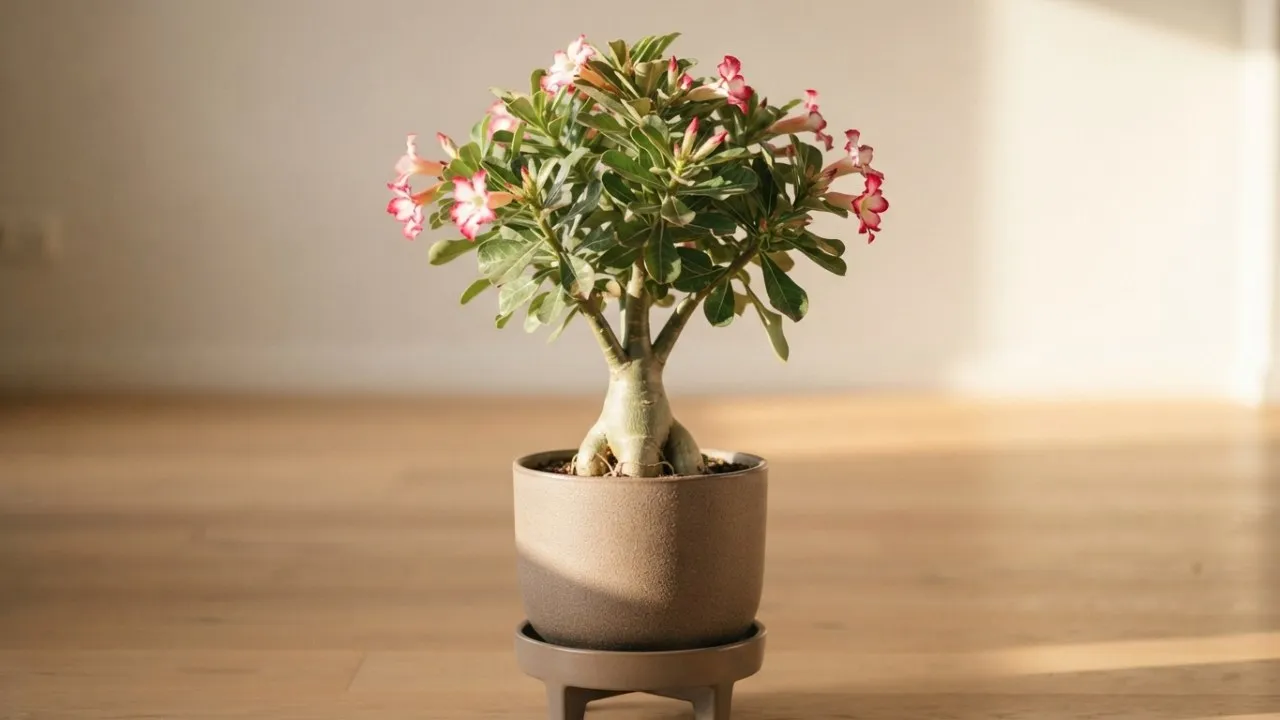
Desert Rose
Adenium obesum
A beautiful succulent shrub known for its swollen, distinctive caudex (trunk) and stunning, trumpet-shaped flowers in shades of pink, red, or white.
The essentials at a glance
-
Watering
Every 7 days
-
Light
Full sun
-
Humidity
30–50 %
-
Temperature
25–35 °C


How to care for your Desert Rose
Everything you need to keep your Desert Rose healthy: watering, light, humidity, feeding, repotting and pruning.
Native to the Sahel regions of Africa south of the Sahara and the Arabian Peninsula, *Adenium obesum* is a truly captivating succulent often cultivated as an ornamental. It is instantly recognizable by its unique, often grotesquely swollen base, or caudex, which serves as a water storage organ and gives each plant an individual, sculptural form. From this caudex emerge thick, fleshy branches topped with glossy green leaves. Its main appeal lies in its prolific and vibrant trumpet-shaped flowers, which bloom in shades of pink, red, or white, often with contrasting throats, during the warmer months. While stunning, it is important to remember that all parts of the plant contain highly toxic sap, requiring careful handling.

Watering your Desert Rose
Every 7 days
Water thoroughly when the soil is completely dry to the touch. During winter dormancy (when leaves drop), reduce watering significantly or stop entirely.
How to know it needs water
- Soil is completely dry to the touch throughout the pot
- Caudex may feel slightly softer or plant may shed leaves during dormancy

How much light a Desert Rose needs
Full sun
Full sun. Requires at least 6 hours of direct sunlight daily for optimal growth and abundant flowering.
- Direct sun tolerated
- 6 to 12 h a day
- Orientations that suit it
- South, South-east, South-west, East, West

Humidity and misting
30–50 %
Low; prefers dry, warm conditions. Misting is not necessary and can lead to fungal issues, especially on the caudex.

Feeding and fertiliser
Every 14 days
Fertilize every two weeks during the active growing and blooming season (spring and summer). Reduce or stop entirely in fall and winter.
- Recommended feed
- High-potassium liquid fertilizer to promote blooming. · 2-7-7

Repotting your Desert Rose
Every 12 months
Repot into a slightly larger container with fresh, well-draining succulent potting mix. You can carefully lift the caudex slightly above the soil line each time to expose more of its unique shape. Wear gloves due to toxic sap.
- When
- Spring
- Potting mix
- Cactus and succulent mix
- Mix in
- perlite, pumice, coarse sand
The tell-tale signs
- Plant is root-bound with roots growing out of drainage holes
- Growth has slowed significantly
- Pot is outgrown by the caudex

Pruning your Desert Rose
Late winter or early spring, before new growth begins. Prune to shape the plant, encourage branching, and promote more flowers. Use sharp, sterile tools. Wear gloves and eye protection to avoid contact with the toxic sap. Cuttings can be rooted.

Through the year
Watering is not set once and for all: it follows the light and the growth. Allow 14 days between waterings in the depth of winter, against 6 in the growing season.
- 13 J
- 11 F
- 7 M
- 6 A
- 6 M
- 6 J
- 6 J
- 6 A
- 6 S
- 7 O
- 11 N
- 14 D
Active growth · Days between waterings

Toxicity
All parts of the plant, especially the sap and swollen caudex, are highly toxic. They contain cardiac glycosides similar to those found in oleander. Ingestion can cause severe gastrointestinal upset (vomiting, diarrhea), lethargy, cardiac dysfunction, and can be fatal to humans and pets. Handle with extreme caution and wear gloves.

Good to know
- Its common name 'Desert Rose' refers to its desert habitat and beautiful, rose-like flowers.
- The swollen base or caudex stores water, allowing the plant to survive long periods of drought.
- In some cultures, extracts from the plant have been used as arrow poison.

Frequently asked questions about the Desert Rose
How do you care for a Desert Rose?
Water it every 7 days. Give it full sun. Ideal humidity: 30–50 %. Ideal temperature: 25–35 °C. Water thoroughly when the soil is completely dry to the touch. During winter dormancy (when leaves drop), reduce watering significantly or stop entirely.
How often should you water a Desert Rose?
Every 7 days Water thoroughly when the soil is completely dry to the touch. During winter dormancy (when leaves drop), reduce watering significantly or stop entirely. How to know it needs water : Soil is completely dry to the touch throughout the pot ; Caudex may feel slightly softer or plant may shed leaves during dormancy.
How much light does a Desert Rose need?
Full sun Full sun. Requires at least 6 hours of direct sunlight daily for optimal growth and abundant flowering. 6 to 12 h a day
Is the Desert Rose toxic to cats and dogs?
Yes. All parts of the plant, especially the sap and swollen caudex, are highly toxic. They contain cardiac glycosides similar to those found in oleander. Ingestion can cause severe gastrointestinal upset (vomiting, diarrhea), lethargy, cardiac dysfunction, and can be fatal to humans and pets. Handle with extreme caution and wear gloves. Keep it out of reach of your pets and call a vet if any is swallowed.
Why are my Desert Rose leaves turning yellow?
Yellowing most often comes from too much water: the mix stays wet and the roots suffocate. Check that the pot drains, empty the saucer, and let the mix dry before watering again. Too little light or a cold draught cause the same symptom.
When should you repot a Desert Rose?
Repot every 12 months, ideally in spring. Repot into a slightly larger container with fresh, well-draining succulent potting mix. You can carefully lift the caudex slightly above the soil line each time to expose more of its unique shape. Wear gloves due to toxic sap.

At a glance
- Family
- Apocynaceae
- Category
- Succulent
- Placement
- Indoor
- Mature height
- 90 cm
- Growth
- Moderate
- Temperature
- 25–35 °C
- Pot materials
- terracotta, ceramic
- Growth
- Reaches maturity in 5 years
These figures are for an average plant. In the app they are recalculated for yours, based on your room, its orientation and the season.
And for your plant, in your home?
In the app this plant becomes yours: a watering schedule tuned to your home, health tracking from photos, and reminders at the right moment.